
Introduction
Mobile phones have become an essential part of everyday life in Pakistan. Whether you use your mobile number for banking, online shopping, social media, business communication, or government services, keeping your SIM registration accurate and secure is extremely important. This is why CNIC SIM Check has become one of the most searched telecom-related topics in Pakistan.
Many people want to know how many SIM cards are registered against their Computerized National Identity Card (CNIC), how the verification process works, and what official options are available for checking their mobile connections. At the same time, there is a lot of misinformation on the internet. Some websites claim to provide private subscriber information or unofficial databases, which can confuse users and create privacy concerns.
This guide explains CNIC SIM Check from A to Z using official guidance and general best practices. You will learn why SIM verification matters, how the registration process works, the role of telecom operators, practical security advice, common scams to avoid, and answers to frequently asked questions. The goal is to help you understand the topic clearly while encouraging the use of official verification methods.
Table of Contents
- What is CNIC SIM Check?
- Why People Check SIMs on Their CNIC
- How SIM Registration Works
- Official Verification Methods
- PTA Guidelines
- NADRA’s Role in Identity Verification
- Mobile Network Operators
- SIM Limits on One CNIC
- Step-by-Step Verification Guide
- Biometric Verification
- Required Documents
- Common Problems
- Advantages
- Disadvantages
- Important Precautions
- Security Tips
- SIM Fraud & Scam Awareness
- Common Mistakes
- Frequently Asked Questions
- Final Conclusion
Featured Snippet
What is CNIC SIM Check?

CNIC SIM Check is the process of verifying how many mobile SIM cards are registered against your own Computerized National Identity Card (CNIC). In Pakistan, users can use official telecom verification services to confirm the number of SIMs associated with their CNIC and identify any unauthorized registrations.
Why is CNIC SIM Check Important?
Checking the SIMs registered against your CNIC is an important part of protecting your digital identity. Many people perform a CNIC SIM Check after purchasing a new SIM, changing mobile operators, or simply to make sure that no unknown SIM cards have been issued using their identity.
Regular verification provides several benefits:
- Helps detect unauthorized SIM registrations.
- Improves personal security.
- Reduces the risk of identity misuse.
- Supports secure banking and online services linked to your mobile number.
- Keeps your mobile records up to date.
Making CNIC SIM verification a regular habit is a simple step that can help protect your personal information.
Understanding the Importance of Mobile Identity
Today, a mobile number is connected to many essential services, including banking, government portals, two-factor authentication, e-commerce accounts, and digital wallets. Because of this, keeping your mobile registration accurate is just as important as protecting your CNIC or banking credentials.
If an unknown SIM is linked to your identity, it may create unnecessary complications. Reviewing your registered SIM count through official methods allows you to stay informed and take action if something appears incorrect.
Who Should Perform a CNIC SIM Check?
Almost every mobile user can benefit from periodically reviewing the SIMs registered against their own CNIC.
This is especially useful for:
- Individuals purchasing a new SIM card.
- Users who have changed their telecom operator.
- Business owners managing multiple mobile numbers.
- People who have lost their mobile phones in the past.
- Users concerned about identity misuse.
- Anyone who wants to keep their mobile records accurate.
Even if you have never experienced any issues, checking your registered SIM count occasionally is a good digital security practice.
Quick Overview
| Topic | Details |
|---|---|
| Focus | CNIC SIM Check |
| Country | Pakistan |
| Purpose | Verify SIMs registered against your own CNIC |
| Verification | Official telecom verification methods |
| Security | Helps identify unauthorized registrations |
| Recommended | Periodic verification using official services |
What You Will Learn in This Guide
By the end of this article, you will understand:
- What CNIC SIM Check means.
- Why people search for it.
- How SIM registration works in Pakistan.
- Official ways to verify SIM registrations.
- The importance of biometric verification.
- Common mistakes users make.
- Privacy and security considerations.
- Practical tips for protecting your mobile identity.
- Frequently asked questions.
- Best practices for responsible SIM management.
What Is CNIC SIM Check?
A CNIC SIM Check is the process of confirming how many mobile SIM cards are registered against your own Computerized National Identity Card (CNIC). In Pakistan, every active SIM card must be issued after identity verification, helping ensure that each mobile connection is linked to the correct subscriber.
People usually perform a CNIC SIM Check to review the number of mobile connections associated with their identity, identify any unfamiliar registrations, and keep their mobile records accurate. Regular verification is considered a good digital security practice because mobile numbers are now connected to banking, online accounts, government services, and two-factor authentication.
It is important to understand that official verification services are designed to help users verify SIMs registered on their own CNIC. Personal subscriber information is protected by privacy laws and should not be accessed through unofficial or unauthorized sources.
Why Do People Search for CNIC SIM Check?
Millions of people search for CNIC SIM Check every year for different reasons. As smartphones and online services become more important, users want to make sure their mobile identity remains secure.
The most common reasons include:
1. Checking Registered SIM Cards
Many users simply want to know how many SIM cards are currently registered against their CNIC. This helps them maintain accurate records and detect any unexpected mobile connections.
2. Identity Protection
Your CNIC is one of your most valuable identity documents. Since every mobile number is linked with identity verification, reviewing your registered SIM count helps reduce the chances of identity misuse.
3. Mobile Security
If a mobile phone is lost, stolen, or replaced, many users perform a CNIC SIM Check to confirm that all registered connections are correct and properly managed.
4. Banking & Digital Services
Today, mobile numbers are connected with:
- Internet Banking
- Mobile Wallets
- OTP Verification
- Government Portals
- Social Media Accounts
- Business Accounts
Keeping your registered SIM information accurate helps support the security of these services.
5. General Awareness
Some users simply want to understand how Pakistan’s SIM registration system works, what the official verification process is, and which services are officially available.
Evolution of SIM Registration in Pakistan
Pakistan’s SIM registration system has changed significantly over the years. Earlier registration methods relied mainly on manual documentation, which created opportunities for errors and misuse.
To improve security and strengthen identity verification, biometric verification was introduced for new SIM registrations. This improvement increased the accuracy of customer verification and made the registration process more secure.
Modern SIM registration focuses on:
- Accurate identity verification
- Biometric authentication
- Secure subscriber records
- Reduced fraudulent registrations
- Better telecom security
These improvements have helped create a more reliable mobile ecosystem for users across Pakistan.
How SIM Registration Works
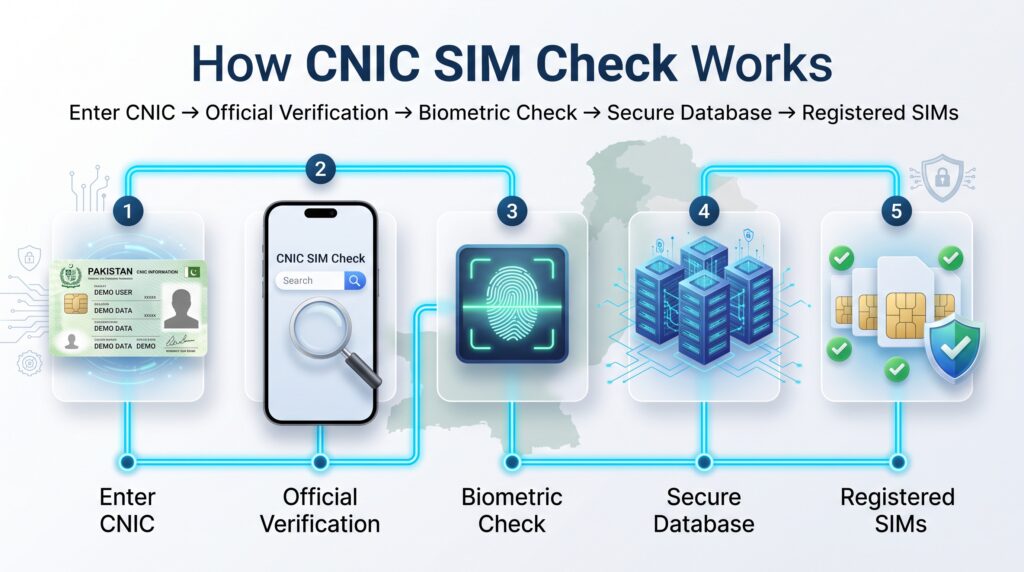
When someone applies for a new SIM card through a licensed telecom operator, the registration process generally includes several important steps.
Step 1 – Identity Verification
The customer presents their original CNIC to begin the registration process.
Step 2 – Biometric Verification
Fingerprint verification is completed to confirm the applicant’s identity.
Step 3 – Customer Information Validation
The operator verifies the registration details before activating the connection.
Step 4 – Network Registration
After successful verification, the SIM is added to the operator’s network.
Step 5 – SIM Activation
Once all verification steps are completed successfully, the SIM becomes active.
This structured process helps improve security and reduce unauthorized registrations.
Why Biometric Verification Matters
Biometric verification has become one of the most important parts of Pakistan’s telecom registration system.
It provides several benefits:
- Improves identity verification.
- Helps reduce fraudulent registrations.
- Strengthens telecom security.
- Supports safer digital services.
- Improves trust in mobile communication.
Because fingerprints are unique to each individual, biometric verification adds an extra layer of protection during SIM registration.
Key Benefits of CNIC SIM Check
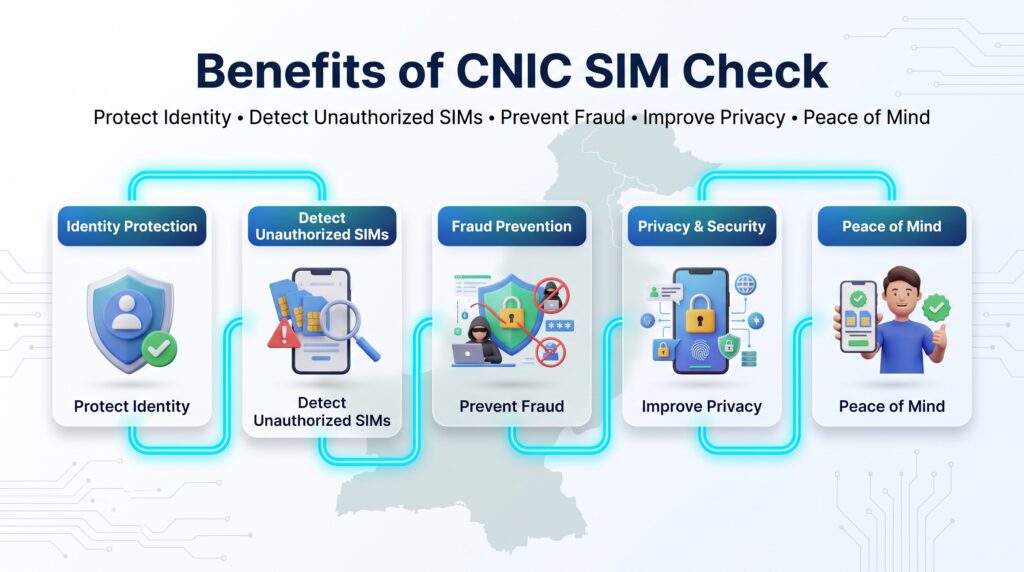
Regularly reviewing the SIMs registered against your own CNIC offers several practical benefits.
Better Security
It helps users stay aware of their registered mobile connections.
Identity Protection
It reduces the risk of unknown or unauthorized SIM registrations going unnoticed.
Digital Safety
Many banking and online services depend on verified mobile numbers, making accurate SIM records increasingly important.
Peace of Mind
Knowing that your registered SIM count matches your own records provides greater confidence in your mobile identity.
Responsible Mobile Usage
Regular checks encourage users to manage their mobile connections responsibly and stay informed about their registrations.
Quick Summary
| Topic | Explanation |
|---|---|
| Purpose | Verify SIMs registered against your own CNIC |
| Identity | Based on verified customer information |
| Security | Helps identify unexpected registrations |
| Registration | Uses biometric verification |
| Recommendation | Use official verification methods only |
Pakistan Telecommunication Authority (PTA) and CNIC SIM Check

The Pakistan Telecommunication Authority (PTA) is the national regulator responsible for overseeing Pakistan’s telecom sector. Its responsibilities include regulating licensed mobile operators, promoting secure communication services, and establishing policies that support lawful SIM registration and subscriber protection.
One of PTA’s major objectives is to ensure that every active mobile SIM is issued through proper identity verification procedures. This helps strengthen public trust, improve telecom security, and reduce fraudulent registrations.
For users, PTA encourages the use of official verification methods to review SIMs associated with their own CNIC. Relying on authorized services helps protect privacy and ensures that verification is performed through legitimate channels.
Why PTA Matters
PTA plays an important role in maintaining a secure telecom ecosystem by:
- Regulating licensed telecom operators.
- Promoting secure SIM registration.
- Supporting biometric verification procedures.
- Encouraging responsible mobile usage.
- Raising public awareness about telecom security.
- Working to reduce misuse of mobile connections.
These efforts contribute to a safer digital environment for individuals and businesses.
NADRA’s Role in Identity Verification
The National Database and Registration Authority (NADRA) is responsible for maintaining Pakistan’s national identity records. While telecom operators manage SIM registrations, identity verification relies on authenticated national identity information.
When a new SIM is registered, the applicant’s identity is verified through established procedures that help ensure the connection is issued to the correct individual.
Accurate identity verification supports:
- Reliable customer identification.
- Secure SIM registration.
- Reduced identity misuse.
- Better public confidence in telecom services.
Although users may hear PTA and NADRA mentioned together, their responsibilities are different. PTA regulates telecom services, while NADRA manages national identity records.
NCCIA and Cybercrime Awareness
The National Cyber Crime Investigation Agency (NCCIA) works to investigate cybercrime and raise awareness about online threats. While NCCIA does not register SIM cards, it plays an important role in addressing digital crimes that may involve identity misuse, online fraud, phishing, or illegal access to personal information.
Users should remain cautious if they encounter:
- Fake SIM verification websites.
- Phishing messages requesting CNIC information.
- Calls asking for OTP codes.
- Fraudulent social media pages.
- Requests to share biometric information.
- Websites claiming to reveal private subscriber data.
If you suspect cyber fraud or identity misuse, use official reporting channels rather than responding to suspicious messages or websites.
Official Ways to Verify SIM Information
Users should always rely on official verification methods provided through authorized telecom services.
Official verification generally helps users:
- Confirm SIMs registered against their own CNIC.
- Review registered mobile connections.
- Identify unfamiliar registrations.
- Keep their mobile records updated.
Using official services helps protect privacy while reducing the risks associated with unofficial or misleading websites.
Why You Should Avoid Unofficial Websites
Many websites on the internet claim they can provide complete SIM owner information or private subscriber records. Such claims should be treated with caution.
Possible risks include:
- Privacy violations.
- Identity theft.
- Fake information.
- Malware.
- Phishing attacks.
- Financial fraud.
- Misleading results.
Always verify information using official sources and avoid sharing personal details with unknown websites.
Mobile Network Operators in Pakistan
Pakistan’s telecom industry includes several licensed mobile operators that provide nationwide communication services.
These operators include:
- Jazz
- Zong
- Ufone
- Telenor Pakistan
- SCO (Special Communications Organization)
Each operator follows applicable regulatory requirements for customer registration and identity verification.
SIM Registration Limits
Pakistan has policies regarding the number of SIM cards that may be associated with an individual’s identity under applicable regulations.
Users should always:
- Keep track of their registered SIMs.
- Deactivate SIMs they no longer use.
- Report lost SIM cards promptly.
- Verify their registered SIM count periodically.
Managing active connections responsibly helps improve security and reduces unnecessary risks.
Benefits of Official Verification
Official verification provides several advantages:
Reliable Information
Users receive information through authorized verification systems.
Better Privacy Protection
Personal subscriber information remains protected.
Improved Security
Official verification reduces exposure to fraudulent websites.
Greater Confidence
Users can manage their mobile identity more responsibly.
Expert Recommendations
Security experts generally recommend that users:
- Review registered SIMs periodically.
- Keep CNIC information confidential.
- Avoid unofficial verification websites.
- Never share OTP codes.
- Use strong passwords for online accounts.
- Enable two-factor authentication where available.
- Report suspicious activity immediately.
- Keep mobile software updated.
These simple habits can significantly improve overall digital security.
Comparison Table
| Official Verification | Unofficial Websites |
|---|---|
| Uses authorized services | Unknown sources |
| Better privacy protection | Higher privacy risks |
| More reliable information | Information may be inaccurate |
| Supports telecom regulations | May violate privacy expectations |
| Safer for users | Higher risk of scams |
Key Takeaways
- PTA regulates Pakistan’s telecom sector.
- NADRA supports identity verification processes.
- NCCIA addresses cybercrime awareness and investigations.
- Official verification methods are the safest option.
- Avoid websites claiming to reveal private subscriber information.
- Regular CNIC SIM Check helps users manage their registered mobile connections responsibly.
Biometric Verification for SIM Registration
Biometric verification is one of the most important security measures in Pakistan’s mobile registration system. Instead of relying only on identity documents, telecom operators verify the customer’s identity through fingerprint authentication before activating a new SIM card.
This additional verification step helps ensure that every SIM card is issued to the correct individual and reduces the chances of unauthorized registrations.
Biometric verification has significantly improved the transparency and security of Pakistan’s telecom industry by making identity confirmation more reliable than traditional manual verification methods.
How Biometric Verification Works
Although the exact procedure may vary slightly between operators, the overall process generally follows these steps:
Step 1 – Visit an Authorized Franchise
The applicant visits an authorized customer service center or franchise of a licensed telecom operator.
Step 2 – Present Original CNIC
The original Computerized National Identity Card (CNIC) is presented for identity verification.
Step 3 – Fingerprint Authentication
The applicant’s fingerprint is scanned using biometric equipment to confirm identity.
Step 4 – Verification Process
The operator completes the required verification process before approving the registration.
Step 5 – SIM Activation
Once verification is successfully completed, the SIM card is activated.
Why Biometric Verification Is Important
Biometric verification provides several important advantages.
Better Identity Protection
Fingerprint verification helps confirm that the SIM is issued to the correct individual.
Reduced Fraud
It significantly reduces fraudulent SIM registrations.
Improved Public Security
Verified subscriber information helps strengthen Pakistan’s telecom ecosystem.
Better Customer Records
Accurate registration improves customer support and account management.
Secure Digital Services
Many banking and financial services rely on verified mobile numbers, making proper registration increasingly important.
Advantages of CNIC SIM Check
Regularly checking the SIMs registered against your own CNIC offers several benefits.
Personal Security
You remain aware of every mobile connection linked with your identity.
Identity Protection
Unknown or unexpected registrations can be identified more quickly.
Better Mobile Management
Inactive or unused SIM cards can be reviewed and managed appropriately.
Banking Safety
Verified mobile numbers help support secure banking and online transactions.
Peace of Mind
Knowing your registration status reduces unnecessary concerns about identity misuse.
Possible Limitations
Although CNIC SIM Check is useful, users should also understand its limitations.
- It is intended for checking SIMs associated with your own identity.
- Personal subscriber information of other individuals is protected.
- Official services focus on authorized verification rather than revealing private customer information.
- Users should always respect privacy laws and telecom regulations.
Common Problems Users Face
Some users experience issues during verification or registration.
Fingerprint Verification Failure
Fingerprints may not be recognized immediately due to physical conditions or technical reasons.
Old Registration Records
Users who have changed operators or replaced SIM cards may wish to review their registered connections.
Lost SIM Cards
If a SIM card has been permanently lost, users should contact their mobile operator to receive appropriate assistance.
Incorrect Customer Information
Outdated customer records should be updated through official operator procedures.
Network Delays
Verification services may occasionally experience temporary delays.
Practical Solutions
If you encounter verification issues:
- Visit an authorized franchise.
- Carry your original CNIC.
- Follow official operator guidance.
- Avoid unofficial third-party services.
- Verify information using authorized channels.
Important Precautions
To protect your mobile identity, always follow these precautions.
Never Share OTP Codes
One-time passwords should never be shared with unknown individuals.
Keep Your CNIC Secure
Avoid sending CNIC copies through untrusted websites or messaging platforms.
Verify Unknown Calls
Fraudsters sometimes pretend to represent telecom companies.
Always verify before sharing information.
Use Official Websites
Only use official telecom resources when checking SIM-related information.
Monitor Registered SIMs
Periodically reviewing your registered SIM count helps maintain better control over your mobile identity.
Privacy Protection Tips
Good privacy habits can greatly improve digital security.
Protect Personal Information
Avoid publicly sharing:
- CNIC Number
- Mobile Number
- OTP Codes
- Biometric Information
Secure Your Smartphone
Enable:
- Screen Lock
- Fingerprint Lock
- Face Unlock
- Device Encryption
Enable Two-Factor Authentication
Whenever available, activate two-factor authentication for banking, email, and social media accounts.
Update Mobile Software
Keeping your phone updated helps protect against newly discovered security vulnerabilities.
Best Practices for Mobile Security
Experts recommend following these habits.
✅ Review registered SIMs regularly.
✅ Keep personal information private.
✅ Use strong passwords.
✅ Enable biometric security on your device.
✅ Install applications only from trusted sources.
✅ Avoid suspicious links.
✅ Verify telecom messages before responding.
✅ Report suspicious activity promptly.
Quick Comparison
| Good Practice | Risky Practice |
|---|---|
| Official SIM Verification | Unknown Websites |
| Protect OTP | Share OTP |
| Secure Smartphone | No Screen Lock |
| Authorized Franchise | Unknown Agents |
| Official Information | Social Media Rumors |
Expert Advice
Digital security is not only about protecting your mobile phone—it is also about protecting your identity.
By combining regular CNIC SIM Check, biometric verification, secure passwords, software updates, and awareness of online scams, users can significantly reduce the chances of identity misuse and enjoy safer mobile services.
SIM Fraud and Scam Awareness

As mobile technology has become an important part of daily life, cybercriminals have also developed new ways to target users. Fraudsters often try to exploit trust, curiosity, or urgency to obtain personal information such as CNIC details, verification codes, or banking credentials.
Understanding common SIM-related scams helps users recognize suspicious activities and respond safely.
Common Types of SIM Scams
Fake Verification Calls
Scammers sometimes pretend to represent a telecom company, government department, or financial institution. They may ask for your CNIC number, OTP, passwords, or other confidential information.
Remember:
- Legitimate organizations do not normally ask for OTP codes over unsolicited calls.
- Never share confidential information with unknown callers.
Fake SMS Messages
Fraudulent SMS messages often claim that:
- Your SIM will be blocked.
- Your account requires urgent verification.
- You have won a prize.
- Your banking account needs confirmation.
These messages usually encourage users to click suspicious links or provide personal information.
Phishing Websites
Some websites imitate official portals and ask visitors to enter sensitive information.
Warning signs include:
- Poor website design.
- Suspicious domain names.
- Requests for OTP or passwords.
- Unrealistic promises.
Always verify that you are using the official website before submitting personal information.
Social Engineering
Social engineering is a technique where attackers manipulate people into revealing confidential information.
Examples include:
- Pretending to be customer support.
- Claiming there is an emergency.
- Offering fake rewards.
- Creating unnecessary panic.
Staying calm and verifying information through official channels is the best defense.
Identity Theft
Identity theft occurs when someone attempts to misuse another person’s identity information.
Protecting your CNIC, mobile number, and personal documents helps reduce this risk.
Warning Signs of Fraud
Be cautious if someone:
- Requests OTP codes.
- Asks for biometric information.
- Promises instant SIM activation without verification.
- Claims to provide private subscriber information.
- Requests payment before verification.
- Uses pressure or urgency.
If something seems suspicious, verify it through official sources.
How to Protect Yourself
Simple habits can greatly improve your digital security.
Protect Your CNIC
Keep your CNIC secure and avoid sharing copies unnecessarily.
Never Share OTP Codes
OTP codes are private and should never be shared with anyone.
Verify Official Communications
Always confirm messages through official telecom channels before taking action.
Use Strong Device Security
Enable:
- Screen Lock
- Fingerprint Lock
- Face Unlock
- Device Encryption
Keep Your Applications Updated
Install updates regularly to receive important security improvements.
What to Do if You Suspect Fraud
If you believe someone is attempting to misuse your identity or mobile information:
- Contact your telecom operator.
- Review your registered SIMs.
- Secure important online accounts.
- Change passwords if necessary.
- Enable two-factor authentication.
- Report cybercrime through the appropriate official channels if applicable.
Taking action quickly helps reduce potential risks.
Do’s and Don’ts
Do
- Use official verification methods.
- Keep personal information private.
- Verify suspicious communications.
- Review registered SIMs periodically.
- Update your mobile software.
- Enable strong device security.
Don’t
- Share OTP codes.
- Share passwords.
- Trust unofficial SIM databases.
- Click suspicious links.
- Respond to unknown callers requesting confidential information.
- Install applications from unknown sources.
Expert Recommendations
Digital security specialists generally recommend:
- Periodically reviewing SIM registrations.
- Maintaining updated contact information.
- Using unique passwords.
- Activating two-factor authentication.
- Remaining cautious of unexpected messages.
- Staying informed about common cyber threats.
Consistent security habits provide better long-term protection than reacting only after a problem occurs.
Comparison Table
| Safe Practice | Unsafe Practice |
|---|---|
| Official verification | Unknown websites |
| Strong passwords | Weak passwords |
| Screen lock enabled | No device security |
| Official customer support | Unknown callers |
| Secure Wi-Fi | Public unsecured Wi-Fi |
| Updated software | Outdated devices |
Quick Security Checklist

Before finishing this guide, review the following checklist:
✅ My CNIC information is protected.
✅ I know how many SIMs are registered against my identity.
✅ I never share OTP verification codes.
✅ I use strong passwords.
✅ My smartphone has screen lock enabled.
✅ I verify suspicious calls.
✅ I avoid unofficial verification websites.
✅ My applications are regularly updated.

Frequently Asked Questions (FAQ)
1. What is a CNIC SIM Check?
A CNIC SIM Check allows users to verify how many SIM cards are registered against their own Computerized National Identity Card (CNIC). Reviewing your registered SIM count is a useful way to stay aware of your mobile connections and support good digital security practices.
2. Why should I perform a CNIC SIM Check?
Checking the SIMs associated with your own CNIC can help you identify unfamiliar registrations, manage your active connections, and maintain accurate mobile records.
3. Can I check another person’s SIM information?
No. Personal subscriber information is protected by privacy laws. Official verification services are intended for checking SIMs associated with your own identity.
4. Is biometric verification necessary?
Biometric verification is an important part of the SIM registration process and helps confirm the identity of the applicant during registration.
5. Which organizations are involved in SIM registration?
Several organizations have different responsibilities:
- PTA regulates the telecom sector.
- NADRA manages national identity records.
- Licensed telecom operators register SIM cards according to applicable regulations.
- NCCIA investigates cybercrime and raises awareness about online fraud.
6. What should I do if I notice an unfamiliar SIM linked to my CNIC?
Contact your mobile operator through official customer support or visit an authorized franchise to review your registered connections and request guidance.
7. How often should I check my registered SIMs?
There is no fixed schedule, but checking periodically—especially after replacing a SIM card, changing operators, or recovering from a lost phone—is a sensible security habit.
8. Are unofficial SIM verification websites safe?
Be cautious. Some websites make misleading claims or request sensitive information. Use official verification methods whenever possible.
9. Can SIM registration improve mobile security?
Accurate registration and periodic verification help users manage their mobile identity more responsibly and reduce the chances of identity misuse.
10. What information should never be shared?
Never share:
- OTP codes
- Passwords
- PIN codes
- Biometric information
- Sensitive personal documents with untrusted sources
Best Practices
To keep your mobile identity secure, follow these recommendations:
- Review SIMs registered against your own CNIC from time to time.
- Use official verification methods only.
- Protect your CNIC and personal documents.
- Keep your smartphone updated.
- Enable biometric lock or screen lock.
- Use strong, unique passwords.
- Enable two-factor authentication where available.
- Be cautious of unexpected messages or calls.
- Report suspicious activity through the appropriate official channels.
Official Resources
For accurate and up-to-date information, always rely on official sources:
- Pakistan Telecommunication Authority (PTA)
- Official SIM Information System
- NADRA
- NCCIA
- Licensed telecom operators
These organizations provide guidance on telecom services, identity verification, and cyber safety.
Key Takeaways
Before finishing, remember these important points:
- CNIC SIM Check helps users review SIMs associated with their own identity.
- Official verification methods are the safest option.
- Biometric verification improves registration security.
- Protecting your CNIC and OTP codes is essential.
- Avoid unofficial websites claiming to reveal private subscriber information.
- Regular verification supports better digital security and responsible mobile usage.
Final Conclusion
Mobile numbers have become an essential part of modern life, connecting users with banking, communication, online services, and digital identity. Because of this, reviewing the SIMs associated with your own CNIC is an important security practice.
A CNIC SIM Check helps users stay informed about their registered mobile connections while encouraging responsible telecom usage. By relying on official verification methods, protecting personal information, and following basic cybersecurity practices, users can better safeguard their digital identity.
As technology continues to evolve, awareness remains one of the strongest forms of protection. Staying informed, using trusted resources, and practicing good mobile security habits can help create a safer digital experience for everyone.
Leave a Reply