Searching for Zong SIM Owner Details can mean much more than simply trying to find the name associated with a mobile number. In Pakistan, people use this search when they want to understand SIM registration, verify a connection they personally use, review CNIC-linked registrations, manage an old number, or learn what to do when a SIM-related problem occurs.
The first thing to understand is that SIM registration, mobile-number usage, and private subscriber information are separate concepts. A person may use a Zong SIM without that fact alone establishing them as the officially registered subscriber. Likewise, knowing someone’s mobile number does not automatically provide legitimate access to their confidential identity information.
For official information about mobile services, SIM registration, subscriber-related regulations, and telecommunications in Pakistan, users should refer to the Pakistan Telecommunication Authority (PTA) and its official resources. Using an authorized source helps users understand applicable requirements without relying on unverified third-party SIM information websites.
What Are Zong SIM Owner Details?
The term Zong SIM Owner Details generally refers to information connected with the registration of a Zong mobile connection. For an individual checking their own connection, the practical objective is usually to understand whether the SIM is properly associated with their identity and whether their registration records are accurate.
This can become particularly important when a person has owned several numbers over the years.
Someone may have:
- A currently active Zong SIM
- An older number that is no longer used
- A replacement SIM
- A number that was transferred or changed
- A connection they do not immediately recognize
Instead of treating all of these situations as an “owner-name lookup,” it is better to identify the exact problem first.
Why People Search for Zong SIM Owner Information
The search intent behind this keyword varies considerably.
A user might be asking:
“How can I verify my own Zong SIM?”
Another person may want to know:
“Which SIMs are registered against my CNIC?”
Someone else may be dealing with an unfamiliar connection and asking:
“What should I do if a Zong SIM appears in my registration records?”
These are legitimate mobile-management questions and require different procedures.
A separate category involves searches such as Zong SIM Owner Name by Number. Such searches can lead to websites claiming that they can reveal complete subscriber profiles from a mobile number. Users should evaluate these claims carefully because a search result or database website is not automatically an official source.
Your Own Registration Should Be the Starting Point
If your purpose is to check a Zong connection that you personally use, focus on verification and registration management.
You may need to determine whether:
- Your Zong number is registered correctly
- An old connection remains associated with your identity
- A recently obtained SIM has been properly registered
- An unfamiliar registration needs investigation
- A number should be transferred or disowned
Using the appropriate official telecom process is safer than submitting sensitive information to an unknown lookup website.
Your CNIC, OTPs, passwords, banking credentials, and other authentication information should also remain private.
What This Guide Will Cover
This complete Zong SIM Owner Details Pakistan guide will examine SIM registration, CNIC-based checks, verification methods, ownership changes, disowning, lost and inactive connections, biometric verification, network-related questions, privacy, security threats, fake SIM databases, third-party lookup claims, customer support, and practical self-checks.
The purpose is not simply to explain how a SIM is registered. It is to help users understand what can legitimately be checked, which method fits each situation, and how to protect their own mobile identity while managing a Zong connection responsibly.
How Zong SIM Registration Is Linked to Subscriber Identity
A Zong SIM is connected to a subscriber through a registration process in which the required identity information is associated with the mobile connection. This registration framework is the foundation for understanding Zong SIM Owner Details, because the person using a number and the person recorded as its registered subscriber are not necessarily identical.
Registration Creates the Subscriber Record
When a SIM is obtained through the proper procedure, the subscriber’s identity is verified according to the applicable requirements. The resulting registration connects the mobile connection with the identity information supplied during the process.
This provides a basis for managing the connection later, including situations involving replacement, ownership changes, blocking, or other subscriber-related requests.
For this reason, registration should not be viewed as a one-time technical step. It is part of the relationship between the subscriber and the mobile connection.
Using a Zong SIM Is Not the Same as Registering It
Consider a situation where one person obtains a Zong number and later allows another family member to use it.
The second person may become the everyday user of the connection, but that does not automatically establish that the official subscriber record has changed.
This distinction matters whenever the number needs to be replaced, transferred, blocked, or otherwise managed.
Why Accurate Registration Is Useful
Keeping your own mobile registrations organized can make several situations easier to handle.
For example, you may need to know which connections:
- You currently use
- You previously used
- You have replaced
- You no longer require
- You cannot immediately recognize
A periodic review can help identify unnecessary or unfamiliar registrations before they create confusion.
Registration and Privacy
The identity information used during SIM registration should be treated as sensitive. A person should not assume that entering a mobile number into an online search gives them legitimate access to another subscriber’s confidential records.
This is particularly important when websites advertise Zong SIM Owner Details by Number or similar services.
The legitimate purpose of checking your own registration is very different from attempting to obtain another person’s private identity information.
Keep Your Own Records Clear
If you regularly use multiple mobile connections, maintain a simple personal record of the numbers you recognize and the purpose of each one.
When you stop using a connection permanently, investigate the appropriate procedure for managing its registration rather than simply forgetting about it.
Understanding how registration works provides the foundation for everything else in this guide, including CNIC-based checks, verification, ownership transfer, disowning, security, and handling unfamiliar Zong connections.
Zong SIM Owner Name: What the Search Really Means
The phrase Zong SIM Owner Name often appears alongside searches for Zong SIM information, but the meaning behind the query is not always the same. Some users want to confirm the registration of their own number, while others are attempting to identify an unfamiliar caller.
These situations need to be treated differently.
Registered Subscriber vs. Current User
The registered subscriber is the person associated with the connection through the applicable registration process. The current user, meanwhile, is simply the person who is using the phone or SIM.
In some cases, both are the same person. In others, a number may be used by a family member, employee, or another individual while remaining registered under the original subscriber.
Therefore, seeing someone use a Zong number does not by itself establish that they are its registered subscriber.
Can a Zong Number Reveal the Owner’s Full Identity?
A mobile number should not be considered a public key to someone’s complete personal record.
Knowing a number does not automatically provide legitimate access to information such as:
- CNIC details
- Home address
- Call history
- Private messages
- Banking information
- Account passwords
- Real-time whereabouts
Websites promising all of these through a simple number search should be approached with caution.
Why Online Results Can Be Misleading
Third-party websites sometimes use attractive terms such as Zong SIM Owner Details, “owner name check,” or “SIM database” to encourage visitors to submit a number.
Even when a website displays a result, that does not establish that the information is current, official, or accurately connected to the person being searched.
An outdated or incorrectly attributed record can create unnecessary confusion.
What If You Need to Identify an Unknown Number?
If an unfamiliar Zong number contacts you, consider the reason you want to identify it.
If you simply want to know whether the call is legitimate, focus on the communication itself and avoid sharing sensitive information.
If the caller requests an OTP, banking credentials, CNIC information, or payment, do not provide it merely because they claim to know your name or mobile details.
For suspected fraud or harassment, use appropriate telecom or cybercrime reporting channels rather than attempting to obtain private subscriber records yourself.
The Better Approach
For your own Zong number, concentrate on registration verification and subscriber management.
For someone else’s number, respect privacy and use legitimate reporting or verification channels when there is a genuine concern.
This distinction makes the term Zong SIM Owner Details more meaningful: it is primarily about understanding legitimate SIM registration and managing your own connection, not about unrestricted access to another person’s private identity.
Zong SIM Registration Check: Finding the Right Information
A Zong SIM registration check is useful when you want to understand the registration status of a connection associated with you. Before checking anything, identify whether you need information about one particular SIM or a broader view of connections associated with your identity.
These two objectives should not be confused because they involve different types of information.
Checking a Specific Connection
If you are using a Zong SIM and want to confirm its registration, focus on the verification process applicable to that connection.
This can be especially useful after:
- Activating a new SIM
- Replacing an existing card
- Changing your mobile setup
- Recovering a previously used number
- Encountering an unexpected registration issue
Use the appropriate official channel and follow the instructions provided for the particular request.
Reviewing SIMs Associated With Your Identity
If your concern is broader, you may want to review the mobile connections associated with your own identity.
This can help you recognize:
- Current numbers
- Older connections
- Replaced SIMs
- Unused registrations
- Entries requiring clarification
Keeping this information organized can reduce problems when you later need to activate another connection, remove an unwanted registration, or investigate an unfamiliar entry.
Do Not Enter Your CNIC Everywhere
Your identity information is sensitive. A website offering Zong SIM Owner Details is not automatically trustworthy simply because it asks for a CNIC or mobile number.
Before entering personal information, determine whether the service is an appropriate official source for the task.
Be particularly cautious if a service asks for an OTP, banking credentials, passwords, or payment while claiming that these are necessary to reveal private subscriber information.
What If the Result Looks Unexpected?
An unfamiliar entry should be investigated carefully rather than immediately interpreted as identity misuse.
Think about old numbers, previous SIM replacements, family arrangements, or other legitimate explanations.
If you still cannot identify the connection, contact the relevant operator or authorized service channel and ask about the available procedure for clarification or removal.
Choose the Check According to Your Goal
A useful way to approach Zong SIM Owner Details is to ask one question first:
“What exactly am I trying to verify?”
If the answer concerns your own registration, use an appropriate personal verification method.
If the issue involves an unwanted or unfamiliar registration, follow the proper resolution process.
If you simply need network information, use a network-check method rather than an owner lookup.
This purpose-based approach keeps SIM management straightforward while reducing unnecessary exposure of personal information.
Zong SIM Owner Details by Number: What a Number Can and Cannot Tell You
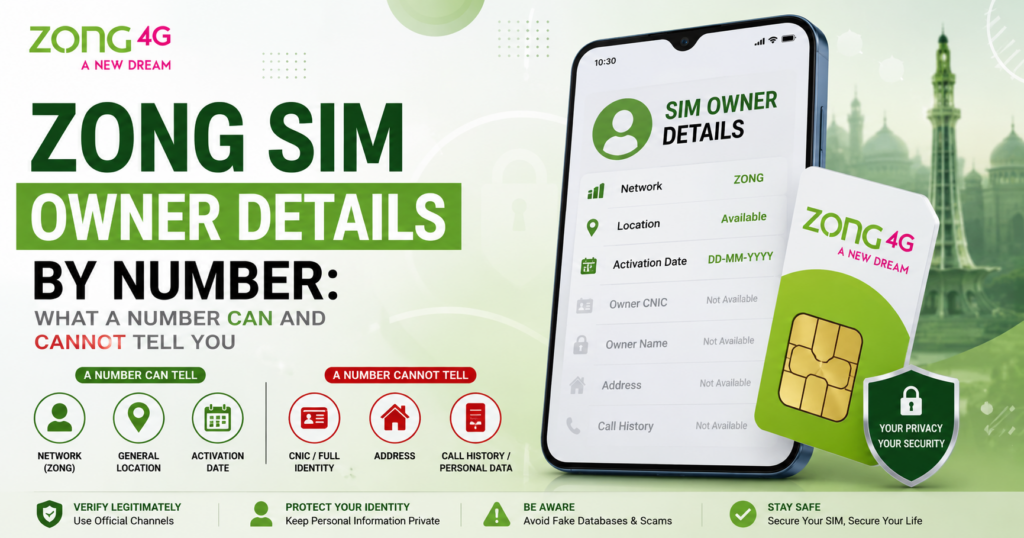
A search for Zong SIM Owner Details by Number often starts with a simple assumption: if someone knows a mobile number, they should be able to discover everything connected with it. In reality, a mobile number is only one part of the wider subscriber and telecommunications system.
A Number Identifies a Connection
A Zong mobile number is primarily used to identify a telecommunications connection. It can be relevant for calling, messaging, mobile internet, account recovery, and other services.
However, knowing the number does not automatically provide unrestricted access to the private information associated with its subscriber.
Information such as a person’s:
- CNIC record
- Residential address
- Private communications
- Call history
- Banking credentials
- Account passwords
- Real-time location
should not be treated as ordinary public information.
Why Owner-Name Searches Cause Confusion
People searching for Zong SIM Owner Name may encounter websites claiming that entering a mobile number will instantly reveal the subscriber’s identity.
The presence of a result does not necessarily prove that the information is official, current, or accurate.
A third-party database can contain outdated information, incorrect associations, incomplete records, or information presented without proper context. Users should therefore avoid treating an online lookup as equivalent to an official registration record.
When Number-Based Information Is Useful
There are legitimate reasons to investigate a Zong number without attempting to expose someone’s confidential identity.
For example, you may want to:
- Confirm a number you personally use
- Determine network-related information
- Recognize an old connection
- Investigate an unfamiliar contact for security purposes
- Report suspicious communication
The appropriate action depends on the purpose of the check.
If an Unknown Number Contacts You
You do not need to obtain someone’s private subscriber profile simply because you received a call or message.
Instead, evaluate the communication itself.
If the person requests an OTP, banking information, CNIC details, passwords, or money, do not provide it. If the communication appears fraudulent or threatening, use the appropriate telecom or cybercrime reporting channel.
Protect Your Own Information
Ironically, people searching for Zong SIM Owner Details can sometimes expose their own information while trying to identify someone else.
Avoid entering your CNIC, OTP, banking credentials, or account passwords into unfamiliar lookup websites.
A service promising an instant owner name is not worth compromising your own identity or account security.
The Key Principle
A mobile number can help identify a connection, but it should not be treated as unrestricted access to another subscriber’s private identity.
For your own Zong registration, use the appropriate official verification route. For an unfamiliar number, prioritize safety and legitimate reporting rather than relying on questionable owner databases.
Zong SIM Verification and Subscriber Confirmation
Verifying a Zong connection is most useful when the purpose is clearly defined. A subscriber may want to confirm the status of a number they use personally, understand its registration, or resolve an issue involving an existing connection. Each situation can require a different procedure.
Confirm the Purpose Before Checking
Instead of beginning with a search for a supposed Zong SIM Owner Details database, identify the exact question.
You might be asking:
- Is this my registered Zong connection?
- Are my mobile registrations accurate?
- Does an old number still need attention?
- Is a SIM replacement required?
- Does an ownership issue need to be resolved?
Once the objective is clear, it becomes easier to choose the appropriate official route.
Verification Protects Against Assumptions
People sometimes rely on the name displayed by a contact application or information received from another person. Such information should not automatically be considered proof of official SIM registration.
Subscriber registration is a separate matter.
If you need certainty about your own connection, use the relevant verification process rather than relying on labels shown by unrelated applications.
Keep Verification Personal
When performing a registration check, use your own information and follow the applicable identity-verification requirements.
Avoid asking an unknown individual to perform the check using your CNIC or other sensitive credentials. Giving another person access to your identity information can create a separate privacy problem.
If Your Details Need Correction
A discrepancy should be handled through the operator’s authorized process.
For example, if a number is being used by you but its registration does not reflect the situation you expect, ask Zong about the applicable ownership or registration procedure.
Do not attempt to “fix” the record through an unofficial database or an online intermediary.
Verification Does Not Mean Full Data Access
A legitimate verification process should not be interpreted as permission to obtain every piece of information connected with a subscriber.
There is a significant difference between confirming a registration and accessing confidential records such as private communications, financial information, or detailed identity data.
A Better Verification Habit
Treat SIM verification as a personal account-management task.
Use trusted channels, provide only necessary information, preserve any confirmation received, and seek clarification when the result does not match your records.
This approach gives users a more accurate understanding of Zong SIM Owner Details while reducing dependence on questionable third-party lookup services.
Zong SIM Registration Through CNIC
For many people, the real purpose behind searching Zong SIM Owner Details is to understand which mobile connections are associated with their own CNIC. This is different from trying to identify the subscriber behind an unrelated number.
A CNIC-based review is primarily about managing your own registration record and recognizing the connections you are responsible for.
Why Review Your CNIC-Linked Connections?
Mobile users can accumulate registrations over time. You may have activated several numbers, replaced older SIMs, stopped using certain connections, or moved between networks.
As a result, your current phone may not represent every connection associated with your identity.
A periodic review can help you recognize:
- Your active Zong number
- Older connections
- Replaced SIMs
- Unused registrations
- Entries that require clarification
What If You See an Unfamiliar Zong Registration?
Do not immediately assume that an unknown entry proves identity theft.
First, think about your previous mobile history. An old number that you forgot about can easily appear unfamiliar.
If you still cannot establish a legitimate reason for the registration, contact the appropriate official telecom channel and ask how the matter can be investigated or resolved.
If the connection does not belong to you, ask about the applicable procedure for removing or disowning it.
Protect Your CNIC Information
Your CNIC is sensitive identity information. Avoid entering it into random websites advertising Zong SIM Owner Details or “complete SIM data.”
A website asking for personal information does not automatically have legitimate access to official registration records.
Never provide an OTP, banking PIN, account password, or wallet credentials as part of an unofficial SIM lookup.
CNIC Check vs. Number Lookup
These two searches have very different purposes.
CNIC-based review:
Helps you understand registrations associated with your own identity.
Number-based owner search:
Attempts to determine information about the subscriber associated with a particular number.
The first is a personal registration-management task. The second can involve another person’s privacy and should not be treated as an unrestricted public lookup.
Keep Your Registration Record Organized
After reviewing your own connections, maintain a simple list of the numbers you recognize and actively use.
If a connection is no longer required, investigate the appropriate official procedure rather than leaving it forgotten indefinitely.
A clear registration record gives you better control over your mobile identity and makes future SIM-related decisions easier.
Zong SIM Owner Details and the Difference Between Registration and Usage
A mobile connection can have several layers of information attached to it, and confusing those layers is one of the main reasons people misunderstand Zong SIM Owner Details. The number displayed on a phone, the network providing service, the person using the device, and the registered subscriber are not necessarily interchangeable.
The Mobile Number
The number is the communication identifier people use to call or message the connection. It can remain familiar even when other circumstances surrounding the connection change.
For example, a subscriber may retain the same number while replacing the physical SIM or moving the connection through an applicable network-porting process.
The Physical SIM
The SIM is the physical or electronic subscriber module used to connect a compatible device to the mobile network.
Replacing that module does not automatically mean that the registered subscriber has changed. A replacement can simply restore access to an existing connection, depending on the circumstances.
The Person Using the Phone
The everyday user may be different from the person recorded as the subscriber.
This can happen when a parent gives a number to a child, an employee uses a business connection, or a family member temporarily uses someone else’s SIM.
Therefore, observing who currently uses a number is not a reliable method for establishing its registration status.
The Registered Subscriber
The registered subscriber is the person associated with the connection through the applicable registration process.
This is the concept that matters most when discussing ownership, transfer, disowning, replacement, and other subscriber-management actions.
Why Keeping These Concepts Separate Helps
Imagine a Zong number that has been used by the same family for several years. The original subscriber may no longer be the person who carries the phone every day.
If that number later needs an ownership change or replacement, simply knowing who currently uses it may not be enough to determine which procedure applies.
Understanding the distinction beforehand can prevent unnecessary confusion.
A Useful Way to Think About It
You can view a mobile connection through four separate questions:
Which number is it?
Which network currently provides the service?
Who is using it?
Who is it officially registered to?
These answers may sometimes point to the same person and network, but they do not have to.
This distinction is particularly useful when evaluating online claims about Zong SIM Owner Details by Number. A number can identify a communication connection without becoming a public gateway to confidential subscriber information.
Zong SIM Verification: Avoiding Unreliable Information
When looking into Zong SIM Owner Details, users may encounter different websites, apps, and online services offering SIM-related searches. Some present themselves as quick verification tools, while others advertise access to extensive subscriber databases.
The important question is not simply whether a website produces a result. The more useful question is whether the information comes from a trustworthy and appropriate source.
Search Results Are Not Proof of Ownership
A name displayed beside a mobile number on an unrelated website should not automatically be treated as confirmation of the registered subscriber.
Information published by third parties can be:
- Outdated
- Incomplete
- Incorrectly associated
- Missing important context
- Presented without a verifiable source
For matters involving your own registration, an appropriate official verification route provides a stronger basis for making decisions.
Be Careful With “Complete Details” Claims
Some services use phrases such as:
Zong SIM Owner Details
Zong Number Owner Name
Zong SIM Database
Zong SIM Data
These phrases may sound authoritative, but terminology alone does not establish that a service has legitimate access to current subscriber records.
A particularly strong warning sign is a service promising a full identity profile from nothing more than a mobile number.
Protect the Information You Enter
Before using any SIM-related website, examine what it asks you to submit.
Avoid providing unnecessary:
- CNIC information
- OTP codes
- Banking credentials
- Wallet PINs
- Account passwords
- Identity documents
An attempt to obtain someone else’s information should never result in exposing your own sensitive credentials.
Apps Require the Same Caution
The same principle applies to mobile applications. An app advertising Zong owner searches should not receive broad device permissions merely because it promises a quick lookup.
Check the application’s source, permissions, reputation, and stated purpose before installation.
Unknown APK files deserve additional caution because installing software outside trusted distribution channels can introduce security risks.
Use Verification for a Specific Purpose
A better approach is to decide what you need before searching.
If you want to review your own registration, use an appropriate personal verification method.
If you have discovered an unfamiliar connection, investigate it through the relevant telecom process.
If an unknown number is contacting you suspiciously, focus on protecting yourself and reporting the issue rather than attempting to obtain confidential subscriber records.
This keeps Zong SIM Owner Details focused on accurate registration awareness instead of unreliable online identity claims.
Zong SIM Owner Details and Ownership Transfer
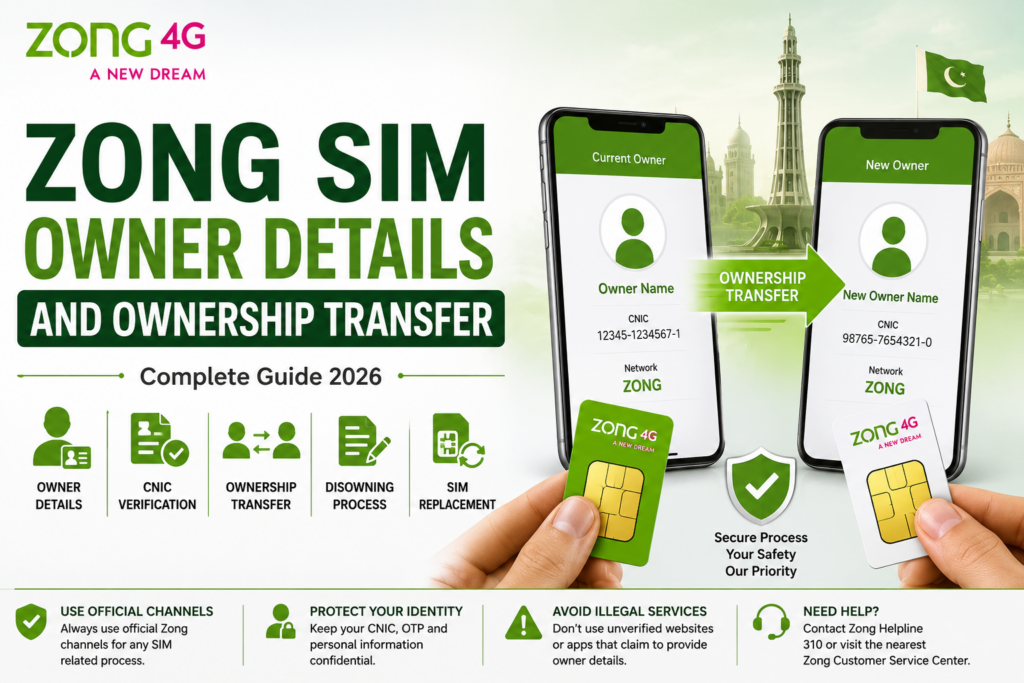
When a Zong number is going to be permanently used by another person, the change should be handled as an ownership-transfer matter rather than an informal handover of the physical SIM.
This distinction is important because the person carrying the SIM and the subscriber recorded in the registration system can be different.
When a Transfer May Be Relevant
An ownership change may become necessary when:
- A family member permanently takes responsibility for a number.
- A business connection is assigned to another authorized user.
- The original subscriber no longer intends to retain the connection.
- A number is being formally handed over to another eligible subscriber.
The appropriate procedure should be confirmed with Zong because requirements can depend on the specific circumstances and current rules.
Do Not Confuse Transfer With SIM Replacement
A replacement deals primarily with restoring access to an existing connection when the physical SIM is lost, damaged, or otherwise unusable.
An ownership transfer has a different purpose: changing the subscriber associated with the connection.
Replacing a SIM therefore should not be assumed to have changed the registered owner.
Prepare Before the Change
Before transferring a number, review services that depend on it.
The number may be connected to:
- Banking alerts
- Digital wallets
- Email recovery
- Messaging accounts
- Business platforms
- Login verification
Important accounts should be updated where necessary so that the incoming user does not inherit access to services that belong to the previous subscriber.
Identity Verification
An ownership change may involve identity verification for the parties involved. Follow the requirements provided by an authorized Zong service channel and avoid using intermediaries who promise to complete the process without proper verification.
Keep any receipt, confirmation, or reference information supplied after the transaction.
What If You Do Not Want to Transfer It?
If you no longer need the number and nobody else is taking responsibility for it, a disowning or closure-related procedure may be more appropriate.
The correct choice depends on what you intend to happen with the connection.
Why Proper Transfer Matters
Keeping the registration aligned with the legitimate subscriber reduces confusion during future replacement, blocking, recovery, or account-related situations.
For anyone researching Zong SIM Owner Details, the key lesson is simple: a permanent change of user should be handled through the applicable official ownership process rather than by merely passing the SIM from one person to another.
Zong SIM Disowning: Removing a Connection You No Longer Need
When a Zong connection is no longer required, leaving it unused is not always the best approach. A subscriber may have accumulated old numbers over time, replaced a previous SIM, or stopped using a connection after changing their mobile arrangements.
For this reason, SIM disowning is an important part of responsible mobile-registration management.
When Disowning Makes Sense
You may consider asking about the applicable disowning procedure when:
- You have permanently stopped using a Zong number.
- An old connection is no longer required.
- You have moved to another number and no longer need the previous one.
- You discover a registration that genuinely does not belong to you.
- You want to keep your identity-linked mobile registrations organized.
If another eligible person is taking over the number permanently, however, ownership transfer may be more suitable than simply removing the connection.
Disowning Is Different From Removing the SIM
Taking a physical SIM out of your phone does not necessarily mean that its registration has been formally removed.
Similarly, deleting a number from your contacts does not affect its subscriber registration.
If you want a connection removed from your identity, use the applicable official process and follow the instructions provided by the operator.
Before Disowning a Number
Check whether the number is connected to important services.
It may be used for:
- Banking alerts
- Mobile wallets
- Email recovery
- Messaging accounts
- Business communication
- Login verification
Update those services before permanently giving up the connection.
What If You Find an Unknown Registration?
If an unfamiliar Zong connection appears during a personal registration review, first consider whether it could be an old number or a connection you previously used.
If you cannot explain it, contact the appropriate official channel and ask how the registration can be investigated.
Do not attempt to identify another person through an unofficial Zong SIM database.
Keep Evidence
After completing any registration-management request, retain the confirmation message, receipt, complaint reference, or other documentation provided by the authorized service channel.
This gives you a useful record if the matter needs follow-up later.
Choose the Correct Action
The basic distinction is simple:
No longer need the number? Ask about disowning.
Another person is taking it permanently? Ask about ownership transfer.
SIM is lost or damaged? Ask about blocking or replacement.
Choosing the appropriate procedure helps keep your Zong SIM Owner Details accurate and reduces future registration confusion.
Zong SIM Owner Details and Biometric Verification
Biometric verification is an important part of SIM-related identity confirmation in Pakistan. For Zong subscribers, it may become relevant during certain registration and subscriber-management activities where the identity of the person making the request needs to be established.
Why Biometric Verification Is Used
A biometric process adds an identity-confirmation layer to selected telecom transactions. Instead of relying only on information entered into a form, the process can help establish that the person making the request is the legitimate individual associated with the required identity record.
This can be relevant when dealing with activities such as:
- New SIM registration
- Certain SIM replacement requests
- Ownership-related transactions
- Other subscriber-management services requiring identity confirmation
The exact requirement depends on the transaction and the applicable current procedure.
What Subscribers Should Expect
If a Zong service requires biometric verification, follow the instructions provided through an authorized service channel.
Bring the identification documents requested for the transaction and make sure you are dealing with a legitimate Zong outlet or authorized representative.
Avoid giving your identity documents to an unknown intermediary who claims they can complete the process faster.
Failed Verification Does Not Automatically Mean Wrong Ownership
A verification attempt that does not complete successfully should not immediately be interpreted as proof that your Zong SIM Owner Details are incorrect.
There can be practical reasons for an unsuccessful attempt. Rather than searching for an unofficial workaround, ask the authorized service representative what procedure is available next.
Protect Biometric and Identity Information
Biometric-related information and identity documents are sensitive. Do not upload them to random websites advertising Zong owner-name searches or SIM databases.
Likewise, never provide an OTP, banking PIN, password, or wallet credentials to someone claiming that these are required to complete biometric verification.
Why This Matters for SIM Ownership
Proper identity verification helps maintain a clearer connection between a subscriber and the mobile service being managed.
For users, the important principle is straightforward: complete identity-sensitive SIM transactions through appropriate authorized channels and keep your personal information under your control.
This approach supports safer management of Zong connections while reducing the risks associated with unofficial SIM lookup and registration services.
Zong SIM Owner Details and SIM Replacement
A damaged, lost, or malfunctioning SIM does not necessarily mean that a subscriber needs to obtain a completely different mobile number. In many situations, the existing connection may be recoverable through the operator’s applicable replacement process.
Understanding this distinction is useful when managing Zong SIM Owner Details, particularly when the number is connected to important personal or financial services.
When a Replacement May Be Needed
A subscriber may need to request a replacement when:
- The physical SIM has been damaged.
- The SIM has been lost.
- The card no longer works properly.
- A compatible replacement is required for a particular device.
- The subscriber needs to restore access to an existing connection.
The exact requirements depend on the reason for replacement and the operator’s current procedures.
Identity Verification During Replacement
Because a replacement can restore access to an existing mobile connection, identity verification may be required.
If you are the legitimate subscriber, use the authorized Zong service channel and follow the instructions provided for your situation.
Avoid asking an unknown individual to arrange a replacement using your CNIC or other personal credentials.
Lost SIMs Require Prompt Action
If your Zong SIM has been lost or stolen, do not wait unnecessarily before contacting the operator.
A missing SIM can potentially receive calls, SMS messages, and verification codes. If your number is connected to important accounts, unauthorized access to the connection may create additional risks.
Ask Zong about the appropriate blocking and replacement options.
Replacement Is Not Ownership Transfer
A SIM replacement should not automatically be interpreted as an ownership change.
If the same subscriber is restoring their connection, the purpose is generally to regain access to the existing service.
If another person is permanently taking responsibility for the number, an ownership-transfer process is a separate matter.
Keeping these two situations separate helps prevent mistakes in subscriber management.
Review Accounts After Recovery
Once access to your number has been restored, check important services that depend on it.
Pay particular attention to:
- Banking notifications
- Mobile-wallet accounts
- Email recovery
- Messaging applications
- Login verification
If anything unusual occurred while the SIM was missing, contact the relevant service provider through its official channel.
Keep the Process Documented
Retain any confirmation, receipt, or reference information provided during the replacement request.
A clear record can help if you later need to discuss the transaction with customer support.
For Zong SIM Owner Details, the key principle is simple: protect a lost connection quickly, complete replacement through an authorized process, and distinguish restoring a SIM from changing its registered subscriber.
If you need to verify identity-related information for an official document, registration matter, or other government service, it is important to use the authorized channels provided by the relevant authority. For identity and registration services in Pakistan, you can refer to the National Database and Registration Authority (NADRA) for official information and guidance.
Zong SIM Owner Details and Network Changes
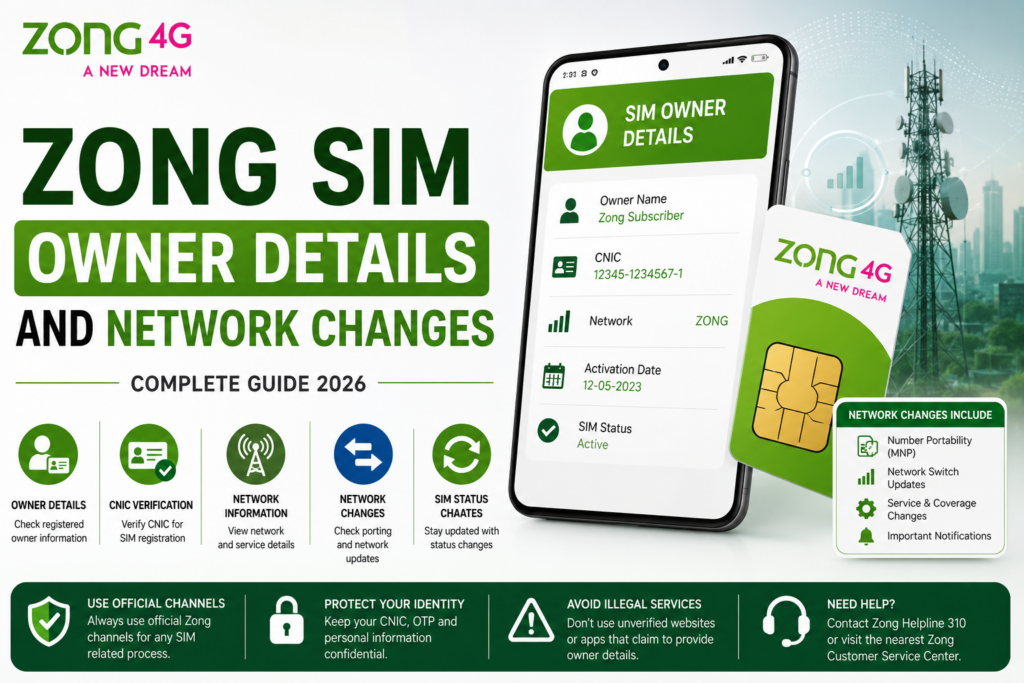
A mobile number can remain familiar even when the network service associated with it changes. This is possible through Mobile Number Portability (MNP), which allows eligible subscribers to retain their existing number when moving between participating networks.
This matters when interpreting Zong SIM Owner Details, because a number’s prefix alone should not always be treated as definitive evidence of its current network.
Number and Network Are Different
A mobile number identifies the connection used for communication, while the network represents the operator currently providing service.
These two elements should therefore be considered separately.
For example, a subscriber may move an existing number to Zong while continuing to use the same digits. Someone looking only at the number may assume the original network is still providing the service, even though the connection has changed through portability.
Does Changing Networks Change the Subscriber?
Moving a number between networks does not automatically mean that its registered subscriber has changed.
Network migration and ownership transfer are separate concepts.
If the same person ports their number to Zong, the network service changes while the subscriber relationship can remain associated with that person.
If the number is later handed permanently to another eligible subscriber, a separate ownership procedure may apply.
Why This Matters When Checking a Number
Suppose you receive a number that appears to belong to another network based on its prefix. That information alone may not accurately represent its current service provider.
If you need current network information, use an appropriate network-check method.
If your concern is subscriber registration, use a registration-focused process instead.
Trying to answer both questions with the same lookup can lead to inaccurate assumptions.
MNP and Account Security
Before changing networks, review services that depend heavily on your mobile number.
These can include:
- Banking notifications
- Mobile wallets
- Account recovery
- Verification services
- Business communication
Make sure you understand how the transition may affect these services and retain relevant confirmation from the operator.
A Simple Way to Remember It
Think of the connection in three layers:
Number: the communication identifier.
Network: the operator currently providing service.
Subscriber: the person associated with the registration.
One layer can change without automatically changing the others.
Understanding this distinction prevents network information from being mistaken for Zong SIM Owner Details and helps users choose the correct method when checking or managing their own mobile connection.
Zong SIM Owner Details and Unwanted SIM Registrations
An unexpected Zong connection associated with your identity deserves attention, particularly when you have no recollection of activating or using the number. The correct response is to investigate the registration through an appropriate channel rather than attempting to discover the supposed subscriber through an unofficial database.
First, Check Your Own Records
Before assuming something is wrong, review your previous mobile connections.
Think about numbers you may have:
- Used several years ago
- Replaced after damage or loss
- Stopped using without formally managing
- Given up after changing your primary number
- Used temporarily for another purpose
An unfamiliar entry may have a straightforward explanation.
When the Registration Still Cannot Be Explained
If you genuinely cannot connect the Zong number with your mobile history, seek clarification through the relevant official telecom process.
Explain that the connection is unfamiliar and ask what procedure is available for reviewing or resolving the registration.
If the connection is confirmed as unnecessary or unauthorized in relation to your identity, follow the applicable process for removing it.
Do Not Investigate Through Private Databases
An unfamiliar registration can tempt users to search for the person’s name, CNIC, or address online.
That is not a safe solution.
Third-party websites claiming to provide Zong SIM Owner Details by Number may display inaccurate information or request sensitive data from you in return.
The better approach is to address the registration itself through the appropriate authority.
Protect Your Identity During the Process
Keep your personal documents and authentication information under your control.
Never share:
- OTPs
- Banking passwords
- Wallet PINs
- Login credentials
- Unnecessary CNIC copies
with someone claiming they can remove or investigate the SIM for you.
Keep a Record of the Resolution
If you submit a request or complaint, retain the reference number, receipt, confirmation message, or other evidence provided.
A documented record can be useful if you need to follow up later.
Review Your Mobile Connections Periodically
A personal SIM audit does not need to be complicated. Keep track of the numbers you currently recognize and periodically review whether older connections still need to remain associated with you.
The objective is simple: know which mobile connections belong to your registration, address unexplained entries through legitimate channels, and protect the identity information used during the process.
Zong SIM Owner Details and Number Ownership Changes
A mobile number can have a long history, particularly when it has been used for personal communication, business activity, or account recovery. When responsibility for that number moves from one subscriber to another, the change should be handled through the applicable ownership procedure rather than through an informal exchange of the SIM card.
When Ownership May Need to Change
A formal change may be relevant when a Zong number is permanently moving to another eligible subscriber.
Examples include:
- A number being handed over within a family
- A business connection being assigned to another responsible user
- A subscriber permanently giving up control of a number
- A long-term change in who will manage the connection
The exact requirements should be confirmed through an authorized Zong channel because procedures can depend on the circumstances and current rules.
Review Connected Services Beforehand
A mobile number can remain attached to online accounts long after the owner stops thinking about them.
Before transferring a number, review services that use it for:
- Password recovery
- Login verification
- Banking alerts
- Mobile-wallet notifications
- Messaging accounts
- Business communication
Remove or replace the old number wherever necessary before completing the ownership change.
Registration Should Match the Intended Subscriber
The purpose of an ownership procedure is to keep the registration record aligned with the person who will be responsible for the connection.
Simply handing someone the SIM does not provide the same clarity as completing the applicable official process.
This becomes especially important if the number later needs replacement, blocking, recovery, or another subscriber-related service.
Keep Transaction Evidence
After completing an ownership-related request, retain any receipt, confirmation message, reference number, or other documentation supplied by the authorized service channel.
Do not rely solely on verbal assurances from an intermediary.
What If the Number Is No Longer Needed?
If nobody is taking over the connection, an ownership transfer may not be the appropriate solution. Instead, ask about the applicable procedure for ending or disowning the registration.
Choosing the correct action depends on what you want to happen to the number.
A Practical Rule
Permanent new subscriber = consider ownership transfer.
No longer required = investigate disowning or closure.
Same subscriber with a damaged or lost SIM = investigate replacement.
Keeping these situations separate makes Zong SIM Owner Details easier to manage and reduces confusion when a mobile number changes hands.
Zong SIM Owner Details and Lost or Stolen SIMs
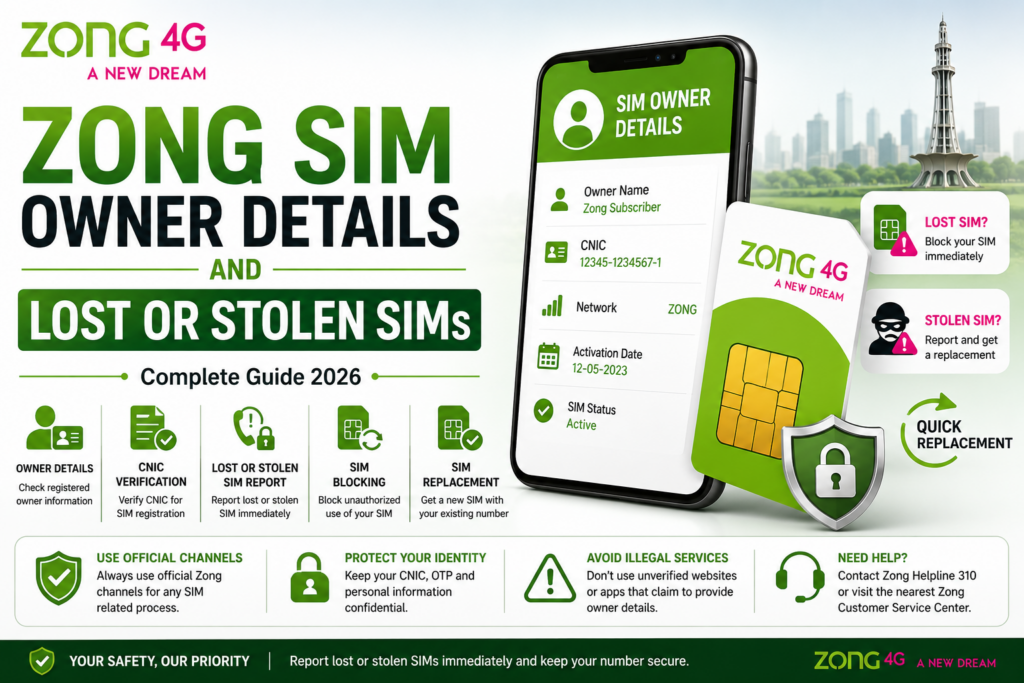
Losing a Zong SIM can create both practical and security concerns, particularly when the number is connected to important online or financial services. The priority should be to protect the connection quickly rather than attempting to find the missing SIM through an unofficial tracking service.
Report the Missing Connection
If your Zong SIM has been lost or stolen, contact Zong through an appropriate official channel and ask about the available blocking and replacement options.
Depending on the circumstances, you may need to complete identity verification before the request can be processed.
Acting promptly can help prevent unauthorized use of the missing SIM.
Why a Lost Number Matters
A mobile connection may receive more than ordinary calls and messages. It can also be used for:
- Banking notifications
- Mobile-wallet alerts
- Account recovery
- Verification codes
- Business communication
- Personal messages
If another person gains control of the physical SIM, they may potentially receive communications intended for you.
Secure Important Accounts
After losing the SIM, think about the services that depend on your number.
If you notice unusual account activity, contact the relevant bank, wallet provider, email service, or other platform through its official support channel.
Do not wait for a suspicious transaction before reviewing the accounts associated with the missing number.
Never Give Away an OTP
A lost SIM situation can sometimes attract impersonation attempts.
Someone may claim that they need an OTP, CNIC information, password, or banking details to “restore” your Zong connection.
Do not provide such information simply because the person claims to represent the operator.
Use a trusted official channel to verify any request.
Replacement and Ownership Are Different
If you remain the legitimate subscriber and only the physical SIM has disappeared, the relevant solution may involve blocking and replacing the connection.
If another person is permanently taking over the number, that is a separate ownership matter and should be handled through the applicable procedure.
Keep the Confirmation
After submitting a blocking or replacement request, save the reference number, receipt, confirmation message, or other evidence provided by the operator.
This can make follow-up easier if the issue continues.
The Main Safety Rule
For Zong SIM Owner Details, remember that protecting the number is more important than trying to track the physical SIM.
Report the loss, secure the connection, protect linked accounts, complete authorized verification, and keep your credentials private.
Zong SIM Owner Details and SIM Replacement After Loss
When a Zong subscriber loses a SIM, replacing the physical card may restore access to the same mobile connection. This situation is different from obtaining a completely new number, and it should also be distinguished from transferring the registration to another person.
What a Replacement Is Intended to Do
A replacement generally addresses the physical SIM rather than creating a new subscriber relationship.
This can be relevant when:
- The card has been lost.
- The SIM has been stolen.
- The physical card is damaged.
- The connection needs to be restored through an authorized replacement process.
The applicable requirements should always be confirmed through Zong’s current official procedure.
Identity Confirmation May Be Required
Because SIM replacement can restore access to an existing number, the operator may require identity verification before processing the request.
If you are the legitimate subscriber, follow the instructions provided by the authorized service channel.
Avoid using unofficial intermediaries who promise replacement without proper verification.
What Happens to the Number?
A replacement process may allow the subscriber to retain the existing number where applicable, but the outcome depends on the connection’s status and the operator’s current rules.
Do not assume that every inactive or long-unused number can automatically be recovered.
Review Services Connected to the Number
Before or after recovering a lost connection, review important services associated with the number.
These may include:
- Banking alerts
- Mobile wallets
- Email recovery
- Messaging applications
- Two-factor authentication
If the SIM was missing for an extended period, pay attention to unexpected security notifications or account activity.
Replacement Is Not a Transfer
If you are keeping the number yourself, a replacement addresses access to the connection.
If another person is permanently becoming the subscriber, an ownership-transfer process is a separate matter.
Confusing these two procedures can leave the registration record inconsistent with the intended user.
Keep Your Documentation
After completing the replacement, retain any receipt, reference number, confirmation message, or other record provided by Zong.
Having evidence of the transaction can be useful if you later need customer support.
For anyone researching Zong SIM Owner Details, the practical lesson is that a lost physical SIM should be handled through an authorized replacement process, while ownership changes should be treated separately.
Zong SIM Owner Details and Inactive Numbers
A Zong number that has not been used for some time can create uncertainty for the subscriber, particularly when an old connection is no longer part of everyday mobile use. Instead of assuming that an unused SIM has automatically disappeared from every record, it is better to determine its current status through the appropriate channel.
Why Old Numbers Can Cause Confusion
Mobile users frequently change numbers, replace SIM cards, or move to another connection. Over time, they may forget which registrations were associated with their identity.
An old Zong number may therefore become difficult to recognize when reviewing personal records.
Before treating an unfamiliar entry as suspicious, consider your previous mobile history and any numbers you may have stopped using.
Do Not Assume Inactivity Means Immediate Removal
The status of an unused connection depends on the circumstances and applicable operator policies. A subscriber should not rely on assumptions about how long a number remains available or what happens after prolonged inactivity.
If the number is important, contact Zong through an authorized channel and ask about its current status and available options.
If You No Longer Need the Number
When a connection has no remaining purpose, consider managing it properly instead of simply leaving it unused.
Before doing so, review services that may still depend on the number, including:
- Banking notifications
- Mobile wallets
- Account recovery
- Messaging platforms
- Business contacts
Update those services before permanently giving up the connection.
What About Number Recycling?
Mobile numbers can have lifecycle changes, and a number that is no longer retained by one subscriber may eventually become available under applicable rules.
This is another reason not to assume that an old number will remain under your control indefinitely.
If you have abandoned a number, remove it from important accounts and follow the appropriate operator process where necessary.
An Old Number Is Not the Same as a New Owner
If you later encounter the same number associated with another user, that does not mean the previous subscriber should attempt to access the new user’s private information.
Number history and current subscriber information are separate matters.
Keep Your Own Records Updated
A useful habit is to maintain a list of numbers you currently recognize and periodically review connections that are no longer needed.
This makes Zong SIM Owner Details easier to manage and reduces confusion around old, inactive, replaced, or discontinued connections.
Zong SIM Owner Details and Number Portability
Mobile Number Portability (MNP) is an important concept when researching Zong SIM Owner Details because a subscriber can potentially retain a familiar mobile number while changing the network providing the service.
This means the number itself should not always be treated as proof of its current network.
Number and Network Are Separate
A mobile number is used to identify the communication connection, while the network represents the operator currently providing service.
For example, someone may move an existing number to Zong while keeping the same digits. Their contacts continue using the familiar number, but the underlying network service has changed.
This is why relying only on a number prefix can sometimes create confusion.
Does Porting Change the Registered Subscriber?
Changing the network through MNP should not automatically be confused with changing the registered subscriber.
If a person ports their own number to Zong, the network relationship changes while the subscriber registration can remain associated with that same person.
Ownership transfer is a separate matter.
This distinction is particularly useful when users search for Zong SIM Owner Details by Number and expect the number itself to reveal the complete registration history.
Why Prefix-Based Assumptions Can Be Misleading
A prefix may be useful as an initial clue about a number’s history, but it should not necessarily be treated as definitive evidence of the current operator.
If you need current network information, use an appropriate network-check facility.
If your objective is to understand your own registration, use a registration-focused verification method instead.
MNP and Important Accounts
A number that moves between networks can remain connected to services that rely on it for communication or verification.
Before making a network change, review important accounts and services associated with the number. Make sure you understand any requirements that could affect continued access.
After the change, retain relevant confirmation information and monitor important account notifications.
Keep the Three Concepts Separate
A useful way to understand a portable mobile number is:
Mobile number: the identifier people use to contact you.
Network: the operator currently providing the connection.
Registered subscriber: the person associated with the registration.
These elements can interact without being identical.
Understanding this relationship helps prevent network information from being mistaken for Zong SIM Owner Details and makes it easier to choose the correct verification method for a particular situation.
Zong SIM Owner Details and SIM Limit Management
Managing the number of mobile connections registered under your identity becomes increasingly important when you have used several SIMs over time. Old numbers, replacement cards, secondary connections, and unused registrations can make it difficult to remember exactly what remains associated with your identity.
For this reason, SIM limit management should be viewed as part of responsible subscriber record-keeping.
Why the Limit Matters
Applicable registration limits can affect a subscriber who wants to activate another connection while already having several registered SIMs.
Instead of waiting until a new activation creates an issue, review the connections you actually recognize and determine whether older registrations still have a legitimate purpose.
Separate Active Use From Registration
A SIM that is no longer in your phone should not automatically be assumed to have disappeared from your registration history.
Likewise, replacing a physical SIM does not necessarily mean that the underlying mobile connection has become a completely different registration.
Keeping a personal record of your numbers can make these situations easier to understand.
Review Before Getting Another SIM
Before requesting another Zong connection, consider whether you already have:
- A primary personal number
- A secondary connection
- An older unused number
- A replaced SIM
- A connection that needs to be transferred or removed
If you are unsure about the applicable limit or your current registration status, confirm the information through an appropriate official channel.
What If You Have Reached the Applicable Limit?
Do not use unofficial services that claim they can bypass registration restrictions.
Instead, review your existing connections and determine whether an old or unnecessary registration should be properly managed.
Depending on the circumstances, you may need to ask about disowning, closure, ownership transfer, or another authorized solution.
Rules Can Change
SIM registration requirements and applicable limits can be updated by the relevant authorities. Therefore, avoid relying on an old article, social-media post, or outdated screenshot when making an important registration decision.
For current requirements, check the appropriate official source or ask an authorized service representative.
Maintain a Simple SIM Inventory
A practical record can contain four columns:
Number → Network → Purpose → Status
For example, mark whether a number is actively used, kept for a specific purpose, or no longer required.
This small habit can make future Zong SIM Owner Details checks much easier and can help you recognize unfamiliar registrations.
Zong SIM Owner Details and Banking or Wallet Security
A Zong mobile number can serve as a communication channel for financial services, which makes control over the connection particularly important. If your number receives banking alerts, wallet notifications, or verification codes, protecting the SIM should be treated as part of your wider account-security routine.
Know Which Accounts Depend on Your Number
Take a moment to identify important services that use your Zong number.
These may include:
- Bank account notifications
- Mobile-wallet services
- Payment applications
- Email recovery
- Login verification
- Business accounts
Knowing where your number is used makes it easier to respond if the SIM is lost, replaced, transferred, or compromised.
Never Share Verification Codes
An OTP is intended for a specific authentication event. If an unknown caller asks you to read a code aloud, do not provide it.
The same rule applies if someone claims to be from a telecom operator, bank, wallet provider, or another trusted organization.
If you are unsure about a request, end the conversation and contact the organization through a verified official channel.
Watch for Unexpected Account Activity
Pay attention to notifications involving actions you did not initiate.
For example, an unexpected password reset, login alert, wallet transaction, or SIM-related message may deserve immediate investigation.
Do not assume that every unusual notification is harmless.
What to Do After Losing Your SIM
If your Zong SIM is lost or stolen, contact the operator promptly about blocking and replacement options.
Then review important accounts that depend on the number. If you notice suspicious activity, contact the relevant financial institution or service provider immediately through its official support route.
Avoid Unofficial “Security” Services
Someone may offer to check your Zong SIM Owner Details or secure your number in exchange for your CNIC, OTP, password, or payment.
Do not provide sensitive credentials simply because the person claims to be helping.
A legitimate security process should be verified independently.
Review Your Recovery Information
If you permanently stop using a Zong number, update important accounts before giving up control of the connection.
Leaving an old number attached to a recovery system can create problems later, especially if the number eventually returns to the mobile-number pool and is assigned elsewhere.
Protect the Number as an Account Key
Your mobile number can function as an important recovery and verification channel.
Therefore, responsible Zong SIM Owner Details management includes more than checking registration. It also means knowing which accounts depend on the number, protecting authentication codes, responding quickly to suspicious activity, and keeping control of the connection throughout its lifecycle.
If a mobile number, SIM, or online account is connected to fraud, harassment, identity misuse, or another cybercrime, it should not be treated as a routine SIM-verification issue. In such situations, users can refer to the National Cyber Crime Investigation Agency (NCCIA) and its official channels for information about reporting and addressing cybercrime-related matters.
Zong SIM Owner Details and Customer Support
When a subscriber cannot resolve a registration or SIM-related issue independently, contacting Zong customer support is the appropriate next step. The key is to explain the actual problem rather than relying on an unofficial service claiming to provide instant owner information.
Situations That May Require Assistance
Support may become useful when you are dealing with:
- A lost or damaged SIM
- An unexpected registration
- A replacement request
- An ownership-related issue
- An inactive connection
- A verification problem
- A number that requires further clarification
The appropriate procedure depends on the circumstances.
Explain the Problem Clearly
When contacting an authorized support channel, describe the issue in straightforward terms.
For example, instead of asking for “complete Zong SIM owner details,” explain whether you need to verify your own registration, replace a missing SIM, resolve an unfamiliar connection, or understand an ownership procedure.
Clear information helps direct the request toward the correct service.
Keep Sensitive Information Private
Customer support should not be confused with permission to disclose every security credential.
Never voluntarily provide an OTP, banking PIN, account password, or wallet credentials to an unsolicited caller.
If someone contacts you claiming to represent Zong and requests sensitive information unexpectedly, independently verify the request through a trusted official channel.
Authorized Service Locations
Some SIM-related transactions may require an in-person visit and identity verification.
If you are directed to an authorized service location, follow the documentation requirements provided by Zong.
Do not hand your identity documents to an unknown intermediary who promises to complete the process without proper verification.
Keep Complaint Details
If you submit a complaint or service request, retain any reference number, receipt, confirmation message, or other evidence supplied during the process.
This information can be useful if the matter remains unresolved and requires additional follow-up.
Avoid Unofficial Assistance
Third-party individuals sometimes advertise services such as “Zong owner name check” or “SIM data verification.”
Using such intermediaries can expose your personal information without guaranteeing an accurate result.
For registration-related concerns, dealing directly with the appropriate operator channel provides a clearer path to resolution.
The Practical Approach
When a Zong SIM issue becomes complicated, use this sequence:
Identify the problem → contact an authorized channel → complete required verification → retain the reference details → follow up if necessary.
This keeps your Zong SIM Owner Details management focused on legitimate subscriber services and reduces unnecessary privacy and security risks.
Zong SIM Owner Details and SIM-Swap Protection
A mobile number can become a valuable access point when it is connected to banking services, digital wallets, email accounts, and other platforms. This makes SIM-swap protection an important part of managing a Zong connection.
SIM-swap fraud involves an unauthorized attempt to move a subscriber’s number onto another SIM. If successful, the person controlling the replacement SIM may receive calls or SMS messages intended for the legitimate subscriber.
Recognize Unusual Signs
One unusual event does not automatically prove that a SIM swap has occurred. However, several unexpected changes happening together deserve immediate attention.
Possible warning signs include:
- Sudden unexplained loss of mobile service
- An unexpected SIM replacement notification
- Password-reset messages you did not request
- Banking alerts for unfamiliar activity
- Login notifications from unknown devices
- Someone asking you to provide an OTP
Respond Quickly
If you suspect unauthorized control of your Zong number, contact Zong through an appropriate official channel and explain what happened.
If the number is connected to financial services, contact the relevant bank or wallet provider through its verified support channel as well.
Do not wait until you see a financial loss before taking action.
Never Share an OTP
An OTP should remain confidential.
A caller may claim to be from Zong, a bank, a wallet service, or another organization and say that a code is needed to “verify” or “restore” your account.
Do not read the code to them.
If a genuine service needs you to complete verification, follow the instructions within the trusted service itself rather than giving a code to an unsolicited caller.
Protect Your Recovery Accounts
Review accounts that depend on your Zong number for password recovery or authentication.
Where stronger authentication options are available, consider using them so that control of the mobile number is not the only barrier protecting an important account.
Be Careful With Personal Information
Do not give your CNIC information, banking credentials, wallet PIN, password, or other sensitive details to someone offering to investigate your Zong SIM Owner Details.
A person claiming to help with a SIM problem can create an additional security risk if they gain access to your credentials.
Maintain Good SIM Security
The best defense is a combination of awareness and quick action:
Protect your identity → keep authentication codes private → monitor unusual activity → contact official support when something changes.
A secure mobile connection protects more than calls and messages; it can also help protect the digital accounts connected to your number.
Zong SIM Owner Details and Online SIM Database Claims
Searches for Zong SIM Owner Details can lead users toward websites that advertise extensive mobile-number databases. Some pages claim to provide owner names, CNIC information, addresses, or other subscriber records after entering a Zong number.
These claims should be evaluated carefully rather than accepted simply because a website produces a result.
Why Database Claims Need Caution
A third-party database may contain information that is:
- Outdated
- Incomplete
- Incorrectly attributed
- Taken out of context
- Presented without a verifiable source
Even when a displayed name appears plausible, that does not establish that it represents the current registered subscriber.
Official registration information and an unverified online database should therefore not be treated as equivalent sources.
Be Careful With “Leaked Data”
Some websites or social-media posts describe their information as “leaked SIM data” or a “complete Zong database.”
Users should avoid downloading or sharing such material. Apart from accuracy concerns, handling supposedly leaked personal information can create serious privacy and security issues.
More importantly, searching through such material can expose your own device, account, or identity information to unknown operators.
Payment Does Not Make a Service Official
Another common tactic is to offer a free search that reveals only limited information and then request payment for “complete details.”
A payment page does not prove that the underlying database is genuine or authorized.
Before entering card information or other financial details, determine whether the service is actually appropriate for your purpose.
Avoid Uploading Identity Documents
A website should not automatically receive a copy of your CNIC simply because it claims to provide Zong SIM Owner Details.
If you need to manage your own SIM registration, use the appropriate official route instead.
Never upload identity documents to an unknown website merely to discover information about another subscriber.
What to Do Instead
If you need information about your own Zong registration, use an appropriate official verification process.
If an unfamiliar number is causing concern, focus on the actual issue—such as suspected fraud, harassment, or an unwanted registration—and use the relevant telecom or cybercrime reporting channel.
This is more useful than relying on a questionable database whose origin and accuracy cannot be established.
A Simple Reliability Test
Before trusting an online SIM-information service, ask:
Is the source official?
Is the information verifiable?
Why is sensitive information being requested?
Does the service explain how the information is obtained?
Would I be comfortable giving this website my own identity details?
If the answers raise concerns, do not proceed.
For Zong SIM Owner Details, reliable information should come from appropriate official verification and subscriber-management channels, not from unsupported claims of unrestricted access to private databases.
زونگ سم اونر ڈیٹیلز — مکمل اردو تفصیل
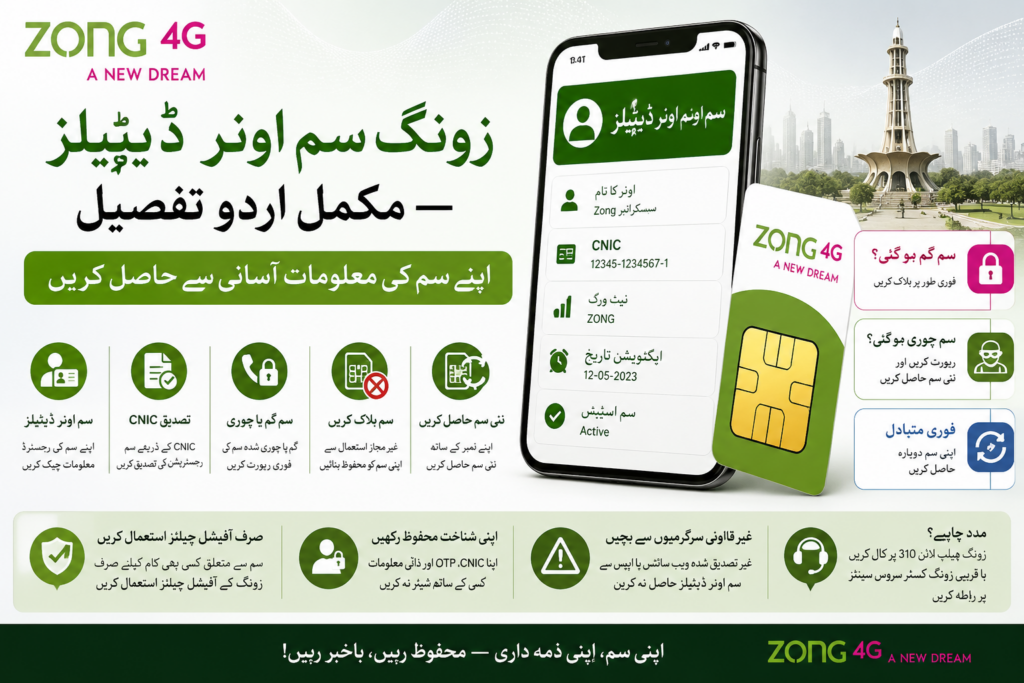
اگر آپ Zong SIM Owner Details کے بارے میں معلومات حاصل کرنا چاہتے ہیں تو سب سے پہلے یہ سمجھنا ضروری ہے کہ سم استعمال کرنا اور اس کا باقاعدہ رجسٹرڈ صارف ہونا ایک ہی بات نہیں ہے۔ زونگ سم کی رجسٹریشن کے وقت صارف کی شناخت کو موبائل کنکشن کے ساتھ منسلک کیا جاتا ہے۔ اسی رجسٹریشن کی بنیاد پر سم کی ملکیت، شناختی کارڈ سے منسلک سمز اور تصدیق جیسے معاملات کو سمجھا جاتا ہے۔
لوگ عموماً زونگ سم اونر ڈیٹیلز اس لیے تلاش کرتے ہیں کہ وہ اپنی سم کی رجسٹریشن چیک کرنا چاہتے ہیں، اپنے شناختی کارڈ پر موجود موبائل کنکشنز کے بارے میں جاننا چاہتے ہیں، کسی پرانے نمبر کا اسٹیٹس معلوم کرنا چاہتے ہیں یا کسی نامعلوم رجسٹریشن کی وضاحت چاہتے ہیں۔ تاہم کسی دوسرے شخص کے موبائل نمبر سے اس کا شناختی کارڈ، پتہ، کال ریکارڈ، بینکنگ معلومات یا دوسری نجی معلومات حاصل کرنا عام سم ویریفکیشن نہیں ہے۔
زونگ سم اونر ڈیٹیلز سے کیا مراد ہے؟
زونگ سم اونر ڈیٹیلز سے عام طور پر مراد کسی موبائل کنکشن کی رجسٹریشن سے متعلق معلومات ہوتی ہیں۔ اگر آپ اپنی سم چیک کر رہے ہیں تو بنیادی مقصد یہ معلوم کرنا ہوتا ہے کہ آیا وہ کنکشن آپ کی شناخت کے ساتھ درست طور پر رجسٹرڈ ہے یا نہیں۔
یہ بات بھی یاد رکھنی چاہیے کہ جو شخص سم استعمال کر رہا ہو ضروری نہیں کہ وہی اس کا سرکاری طور پر رجسٹرڈ صارف ہو۔
مثال کے طور پر اگر کسی شخص نے اپنے نام پر زونگ سم حاصل کی اور بعد میں وہ سم اپنے خاندان کے کسی فرد کو استعمال کرنے کے لیے دے دی، تو صرف سم استعمال کرنے سے رجسٹریشن خود بخود دوسرے شخص کے نام پر منتقل نہیں ہو جاتی۔
اسی لیے رجسٹرڈ صارف، موجودہ استعمال کنندہ، موبائل نمبر اور نیٹ ورک کو الگ الگ تصورات کے طور پر سمجھنا چاہیے۔
شناختی کارڈ کے ساتھ زونگ سم رجسٹریشن
CNIC کی بنیاد پر سم چیک کرنے کا بنیادی مقصد اپنی شناخت کے ساتھ منسلک موبائل رجسٹریشن کو سمجھنا ہے۔ لوگ وقت کے ساتھ کئی سمز استعمال کرتے ہیں، پرانے نمبرز تبدیل کرتے ہیں اور بعض کنکشنز کو استعمال کرنا چھوڑ دیتے ہیں۔ اس وجہ سے کبھی کبھار کسی شخص کو اپنی پرانی سم یا رجسٹریشن یاد نہیں رہتی۔
اگر اپنی رجسٹریشن چیک کرتے وقت کوئی زونگ کنکشن نامعلوم نظر آئے تو فوراً یہ فرض نہیں کرنا چاہیے کہ شناخت کا غلط استعمال ہوا ہے۔ پہلے اپنے پرانے نمبرز، سم تبدیلی اور سابقہ کنکشنز کو یاد کریں۔ اگر پھر بھی کوئی وضاحت نہ ملے تو متعلقہ سرکاری ٹیلی کام چینل سے معلومات حاصل کرنا بہتر ہے۔
زونگ سم اونر نیم بائی نمبر
Zong SIM Owner Name یا Zong SIM Owner Details by Number بہت عام سرچز ہیں۔ لیکن موبائل نمبر کو کسی دوسرے شخص کی مکمل نجی شناخت حاصل کرنے کا ذریعہ نہیں سمجھنا چاہیے۔
آن لائن بعض ویب سائٹس زونگ اونر نیم، CNIC، پتہ یا مکمل سم ڈیٹا فراہم کرنے کا دعویٰ کرتی ہیں۔ صرف اس وجہ سے کہ کوئی ویب سائٹ نتیجہ دکھا رہی ہے، یہ ثابت نہیں ہوتا کہ معلومات سرکاری، موجودہ یا درست ہے۔
غیر سرکاری ڈیٹا بیس میں پرانی، نامکمل یا غلط معلومات بھی موجود ہو سکتی ہیں۔ اس لیے اپنی سم کی رجسٹریشن کے لیے مناسب سرکاری ویریفکیشن طریقہ استعمال کرنا زیادہ محفوظ ہے۔
سم ویریفکیشن اور بائیومیٹرک تصدیق
زونگ سم مینجمنٹ میں بائیومیٹرک ویریفکیشن بھی اہم ہو سکتی ہے۔ بعض سم سے متعلق معاملات میں صارف کی شناخت کی تصدیق کے لیے بائیومیٹرک عمل درکار ہو سکتا ہے۔
نئی سم، متبادل سم، ملکیت سے متعلق کسی کارروائی یا دیگر شناختی معاملات میں درست طریقہ کار صورتحال اور موجودہ تقاضوں کے مطابق مختلف ہو سکتا ہے۔
اگر بائیومیٹرک تصدیق درکار ہو تو مجاز سروس چینل سے فراہم کردہ ہدایات پر عمل کریں۔ اپنی شناختی دستاویزات یا حساس معلومات کسی غیر متعلقہ شخص کو نہ دیں۔
ملکیت کی منتقلی اور سم ڈس اوننگ
اگر زونگ نمبر مستقل طور پر کسی دوسرے اہل شخص کو دینا ہو تو صرف سم کارڈ دوسرے شخص کے حوالے کر دینا ملکیت کی باقاعدہ منتقلی کے برابر نہیں ہے۔ اس کے لیے متعلقہ سرکاری طریقہ کار پر عمل کرنا چاہیے۔
اگر آپ کسی نمبر کو مزید استعمال نہیں کرنا چاہتے تو Disowning یا متعلقہ بندش کے طریقہ کار کے بارے میں معلومات حاصل کی جا سکتی ہیں۔
دونوں صورتیں مختلف ہیں:
ملکیت کی منتقلی: نمبر مستقل طور پر دوسرے صارف کو دینا۔
ڈس اوننگ: اپنے نام سے غیر ضروری کنکشن کو ختم کروانا۔
اسی طرح سم کی تبدیلی بھی الگ معاملہ ہے۔ اگر سم خراب یا گم ہو جائے تو متبادل سم کا طریقہ کار متعلقہ ہو سکتا ہے، جبکہ صارف تبدیل کرنے کے لیے ملکیت کی منتقلی کا عمل مختلف ہوگا۔
گم یا چوری شدہ زونگ سم
اگر زونگ سم گم یا چوری ہو جائے تو جلد کارروائی کرنا ضروری ہے۔ متعلقہ سرکاری چینل سے رابطہ کرکے سم بلاک کرنے اور متبادل حاصل کرنے کے طریقے کے بارے میں معلومات لیں۔
موبائل نمبر بینکنگ الرٹس، موبائل والٹ، اکاؤنٹ ریکوری اور تصدیقی کوڈز کے لیے استعمال ہو سکتا ہے۔ اس لیے گم شدہ سم کو نظر انداز کرنا سیکیورٹی کے مسائل پیدا کر سکتا ہے۔
سب سے اہم بات یہ ہے کہ OTP، بینکنگ PIN، پاس ورڈ، والٹ کی معلومات یا غیر ضروری شناختی معلومات کسی غیر متعلقہ شخص کو فراہم نہ کریں۔
MNP اور زونگ نمبر
Mobile Number Portability کی وجہ سے موبائل نمبر وہی رہ سکتا ہے جبکہ نیٹ ورک تبدیل ہو جائے۔ اس لیے صرف نمبر کے ابتدائی ہندسوں کو دیکھ کر موجودہ نیٹ ورک کے بارے میں حتمی نتیجہ نہیں نکالنا چاہیے۔
نمبر، نیٹ ورک اور رجسٹرڈ صارف تین الگ چیزیں ہیں۔
ایک شخص اپنا موجودہ نمبر زونگ پر منتقل کر سکتا ہے اور نمبر وہی رہتا ہے۔ نیٹ ورک تبدیل ہونے کا مطلب خود بخود ملکیت تبدیل ہونا نہیں ہے۔
سم کی حد اور پرانے کنکشنز
اگر کسی صارف نے وقت کے ساتھ کئی موبائل کنکشنز استعمال کیے ہیں تو اپنی رجسٹریشن کا وقتاً فوقتاً جائزہ لینا مفید ہے۔
پرانے، غیر استعمال شدہ یا تبدیل شدہ نمبرز کو پہچانیں۔ اگر کوئی کنکشن اب ضروری نہیں تو اس کے لیے متعلقہ سرکاری طریقہ کار معلوم کریں۔
سم رجسٹریشن کی حدود اور متعلقہ قوانین وقت کے ساتھ تبدیل ہو سکتے ہیں، اس لیے اہم فیصلہ کرتے وقت تازہ ترین سرکاری معلومات کی تصدیق کرنا بہتر ہے۔
جعلی زونگ سم ڈیٹا بیس سے بچیں
آن لائن Zong SIM Database، Zong SIM Data، Zong Owner Name اور مکمل سم ڈیٹیلز کے نام سے مختلف دعوے مل سکتے ہیں۔ صرف زونگ کا نام استعمال کرنے کی وجہ سے کسی ویب سائٹ کو سرکاری نہ سمجھیں۔
اگر کوئی ویب سائٹ CNIC، OTP، بینکنگ معلومات، پاس ورڈ یا ادائیگی طلب کرکے نجی صارف کی معلومات فراہم کرنے کا دعویٰ کرے تو احتیاط کریں۔
اسی طرح نامعلوم APK یا ایسی ایپلی کیشنز سے بھی محتاط رہیں جو زونگ اونر سرچ کے نام پر غیر ضروری اجازتیں مانگتی ہوں۔
بینکنگ اور اکاؤنٹ سیکیورٹی
آپ کا زونگ نمبر صرف کال اور SMS کے لیے نہیں ہوتا۔ یہ بینکنگ الرٹس، موبائل والٹس، ای میل ریکوری اور اکاؤنٹ ویریفکیشن کے ساتھ بھی منسلک ہو سکتا ہے۔
اس لیے اپنے موبائل نمبر کو ڈیجیٹل شناخت کا ایک اہم حصہ سمجھیں۔
اگر سم گم ہو جائے، کوئی غیر معمولی اکاؤنٹ سرگرمی نظر آئے یا سم سے متعلق غیر متوقع پیغام موصول ہو تو متعلقہ آپریٹر اور اکاؤنٹ فراہم کرنے والے ادارے سے سرکاری چینل کے ذریعے رابطہ کریں۔
زونگ سم کا عملی جائزہ
اپنی سم کی معلومات منظم رکھنے کے لیے ایک آسان طریقہ اختیار کیا جا سکتا ہے:
پہلا: اپنے فعال زونگ نمبرز کی فہرست بنائیں۔
دوسرا: اپنی رجسٹریشن کی معلومات چیک کریں۔
تیسرا: پرانے یا نامعلوم کنکشنز کو شناخت کریں۔
چوتھا: غیر ضروری کنکشنز کے لیے مناسب طریقہ کار معلوم کریں۔
پانچواں: اہم اکاؤنٹس میں موبائل نمبر کے استعمال کا جائزہ لیں۔
چھٹا: CNIC، OTP اور پاس ورڈ کو محفوظ رکھیں۔
اس طرح آپ اپنی موبائل رجسٹریشن کو زیادہ بہتر انداز میں منظم کر سکتے ہیں۔
آخری بات
Zong SIM Owner Details کو صرف کسی شخص کا نام تلاش کرنے کے طور پر سمجھنا مکمل تصور نہیں ہے۔ اس موضوع کا اصل تعلق سم رجسٹریشن، صارف کی شناخت، CNIC سے منسلک کنکشنز، تصدیق، ملکیت کے انتظام اور موبائل سیکیورٹی سے ہے۔
اگر آپ اپنی زونگ سم چیک کر رہے ہیں تو مناسب سرکاری ویریفکیشن چینل استعمال کریں۔ اگر ملکیت تبدیل کرنی ہے تو متعلقہ منتقلی کا طریقہ اختیار کریں۔ اگر کنکشن مزید درکار نہیں تو ڈس اوننگ یا متعلقہ انتظامی طریقہ کار کے بارے میں معلومات لیں۔ اگر سم گم ہو گئی ہے یا کوئی مشکوک سرگرمی نظر آ رہی ہے تو فوری طور پر متعلقہ سرکاری سپورٹ سے رابطہ کریں۔
سب سے اہم اصول یہی ہے:
اپنی سم کی رجسٹریشن کی تصدیق کریں، اپنی شناختی معلومات محفوظ رکھیں، اور دوسرے صارفین کی نجی معلومات حاصل کرنے کے لیے غیر مصدقہ سم ڈیٹا بیس پر انحصار نہ کریں۔
Leave a Reply