Category: SIM Owner Details

Guides and information related to SIM owner details in Pakistan.

  • Ufone SIM Owner Details in Pakistan (2026): Complete Guide

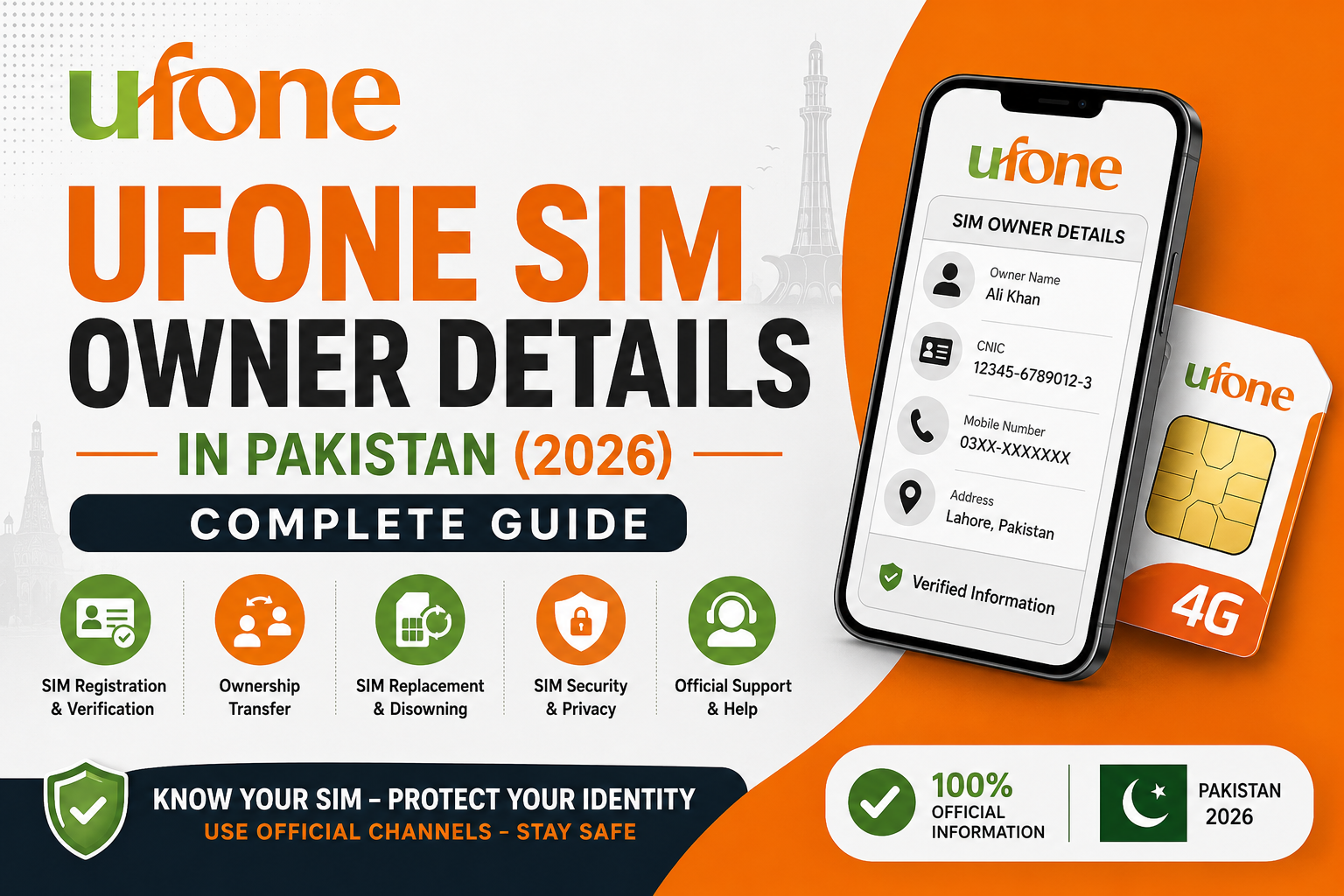
    Ufone SIM Owner Details in Pakistan (2026): Complete Guide

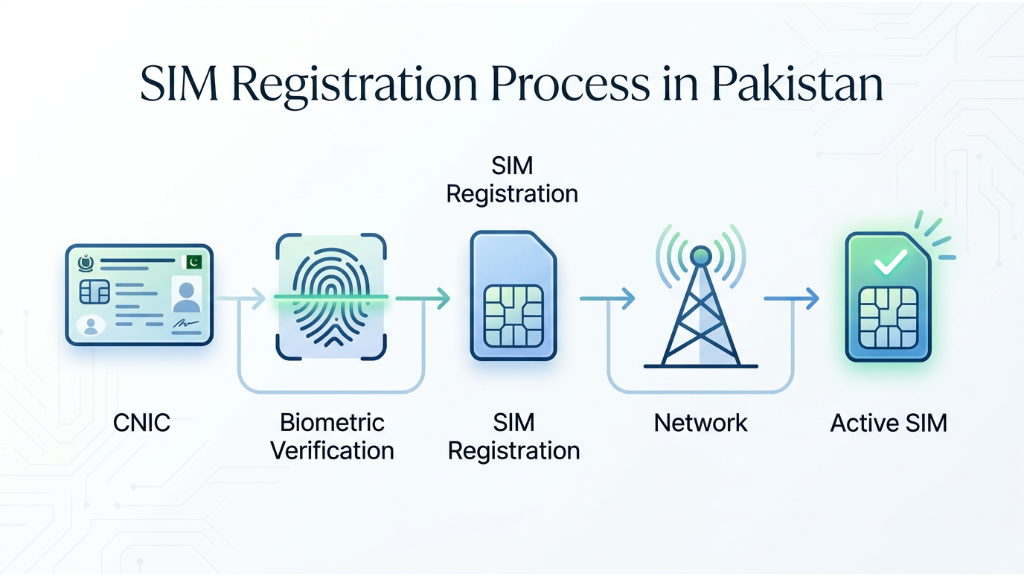
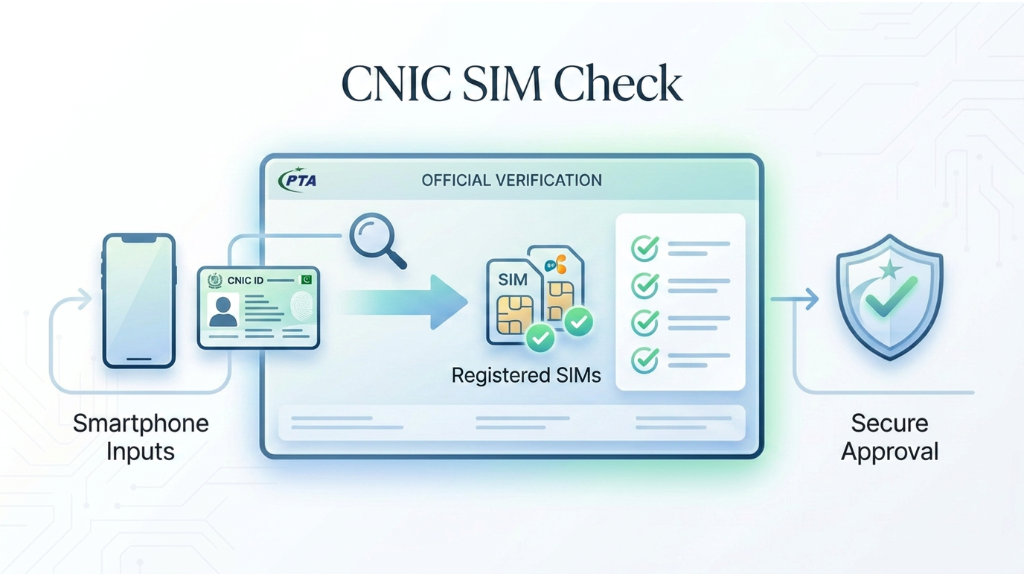
    Understanding Ufone SIM Owner Details starts with knowing how a mobile connection becomes associated with a subscriber. In Pakistan, SIM registration is linked with identity verification, and Ufone states that SIM activation involves a valid CNIC along with biometric verification through the prescribed process.

    A mobile number can be used by a person without that person necessarily being the officially registered subscriber. Therefore, simply knowing or possessing a Ufone number does not by itself establish ownership or provide legitimate access to another person’s confidential registration information.

    For someone checking their own Ufone SIM, the practical objective is usually to understand whether the connection is properly registered with their identity and whether the relevant subscriber information is accurate.
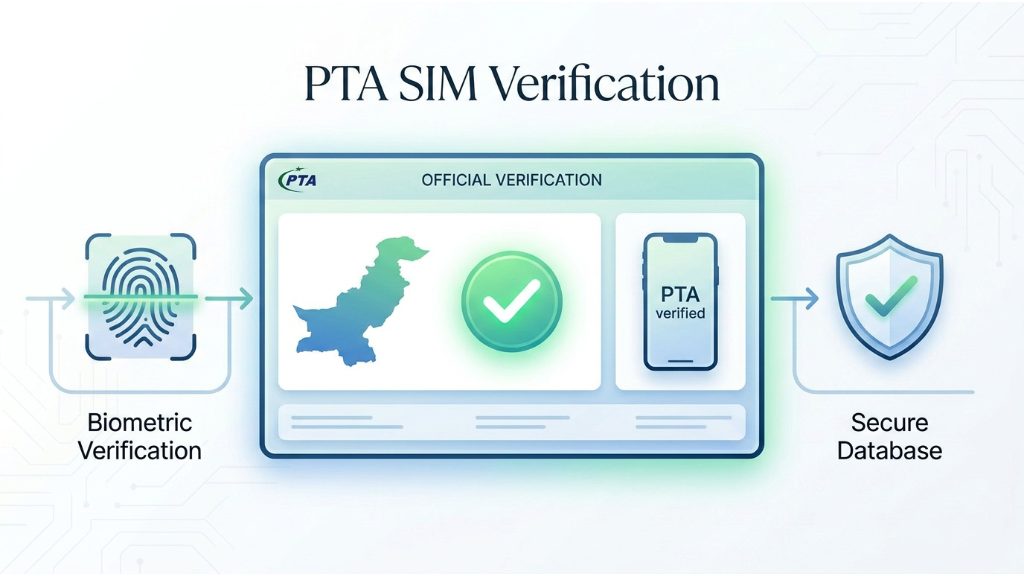
    For accurate information about SIM registration and identity verification in Pakistan, it is important to follow the guidelines provided by the Pakistan Telecommunication Authority (PTA). The official PTA resources explain the regulatory framework surrounding mobile SIM registration and responsible use of telecom services.

    What Are Ufone SIM Owner Details?

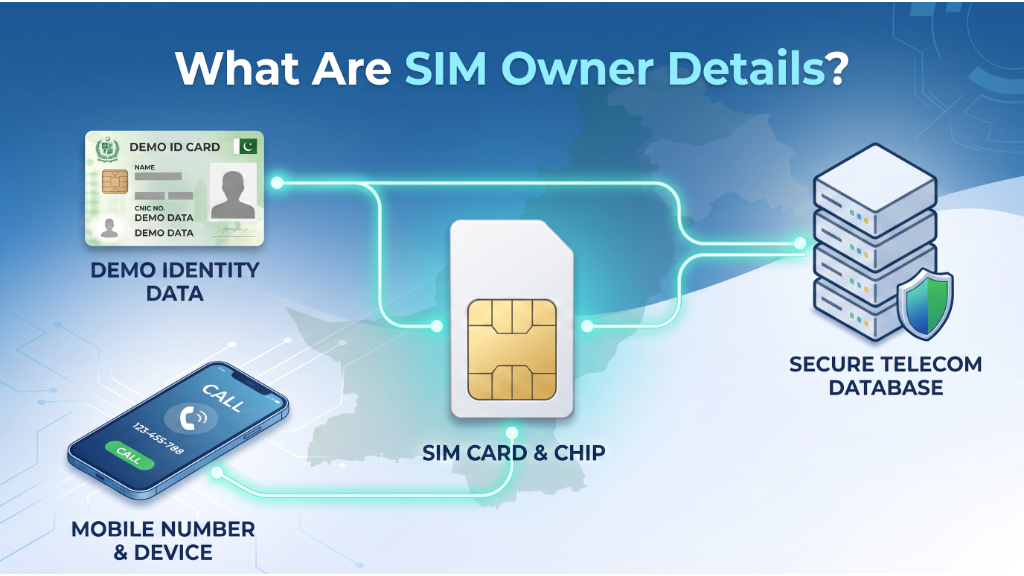
    The phrase Ufone SIM Owner Details generally refers to information associated with the registration of a Ufone mobile connection. This can involve the subscriber relationship established when the SIM is activated and verified.

    Ufone’s current terms explain that customers purchasing a SIM must provide a valid CNIC or another applicable identity document, while activation involves biometric verification and subsequent verification from NADRA.

    This registration framework is important because a mobile connection is not simply an anonymous number. It is associated with a subscriber through an established verification process.

    However, this does not mean that every detail connected with a subscriber should be publicly searchable. Registration information should be handled responsibly, particularly where another person’s identity or private information is involved.

    Why Ufone SIM Registration Matters

    Proper registration helps establish accountability around a mobile connection. It also provides the foundation for legitimate services involving replacement, ownership changes, and other SIM-related requests.

    Ufone’s terms state that the same general biometric procedure is used for matters including duplicate SIM issuance, change of ownership, and disowning of SIMs that were activated through biometric verification.

    This makes it useful to distinguish between several situations that users often confuse:

    • Using a SIM
    • Being its registered subscriber
    • Replacing a SIM
    • Changing its ownership
    • Disowning a connection

    Each situation can involve a different process.

    Checking Your Own Ufone Registration

    If your purpose is to understand your own Ufone SIM Owner Details, use an authorized verification or customer-service route rather than relying on an unofficial database.

    Ufone provides customer-care channels for queries and support, including its Ufone call center and service centers.

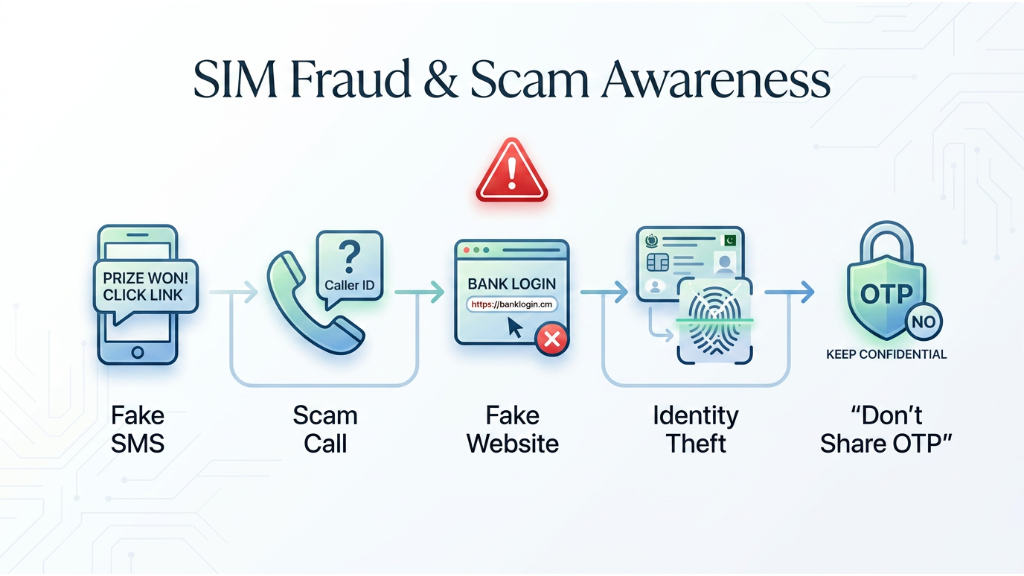
    Keep your identity information secure during any verification process. An OTP, password, banking PIN, or other authentication credential should not be shared with an unknown person simply because they claim to be helping with a SIM-related request.

    The safest approach is straightforward: verify your own registration through an appropriate official channel, keep your identity information private, and treat third-party claims about subscriber databases with caution.

    Ufone SIM Registration and Subscriber Verification

    Ufone SIM registration is based on an identity-verification process rather than simply recording a mobile number. According to Ufone’s current terms, a customer purchasing a SIM provides a valid CNIC or another applicable identity document, and the activation process includes biometric verification followed by verification from NADRA.

    This process creates the connection between the mobile subscription and the person who is officially registered with it. As a result, Ufone SIM Owner Details should be understood within the context of subscriber registration rather than as information that can automatically be obtained from any mobile number.

    CNIC and Ufone SIM Registration

    For a standard SIM activation, Ufone states that the customer provides a valid CNIC to an authorized customer sales or service center, franchise, or registered retailer. The customer’s thumb or finger impression is then captured through the designated biometric scanner for verification.

    This identity check is important because the subscriber record needs to correspond with the person completing the registration.

    Ufone also states that eligibility can depend on the number of SIMs already registered against the customer’s CNIC where applicable.

    Why Biometric Verification Matters

    Biometric verification adds an identity-confirmation step to SIM activation. It also plays a role in certain later SIM-related transactions.

    Ufone’s terms state that the same general procedure applies to duplicate SIM issuance, change of ownership, and disowning of SIMs that were activated through biometric verification.

    This means that replacing a physical SIM and changing its registered subscriber are not necessarily the same thing.

    A replacement generally concerns access to an existing connection, whereas an ownership change concerns who is officially associated with that connection.

    What If Verification Does Not Succeed?

    A failed biometric verification does not mean that a person should immediately turn to an unofficial SIM database or intermediary.

    Ufone’s stated procedure indicates that when the customer’s biometric impression cannot be verified through NADRA, the customer is informed of the reason and may need to contact NADRA for further support.

    Therefore, verification problems should be handled through the appropriate authorized channels.

    Keep Your Identity Information Secure

    During any Ufone SIM process, protect your personal information carefully.

    Do not give an unknown person your:

    • CNIC details unnecessarily
    • OTP or authentication code
    • Banking PIN
    • Account password
    • Wallet credentials

    Ufone’s customer-care information also directs customers toward its official call-center and service-center channels for queries and support.

    For anyone researching Ufone SIM Owner Details, the key point is simple: registration is connected to an identity-verification process, and legitimate subscriber matters should be handled through authorized channels rather than unverified websites claiming access to private SIM records.

    Ufone SIM Owner Name: What the Registration Actually Means

    The phrase Ufone SIM Owner Name is commonly used by people searching for information about a mobile number, but the term can create confusion if registration and everyday usage are treated as the same thing.

    A Ufone number is associated with a subscriber through the applicable registration and verification process. However, the person currently using a phone or SIM is not automatically proven to be the officially registered subscriber simply because they possess the connection.

    Registered Subscriber vs. Current User

    Consider a simple example. A Ufone connection may have originally been obtained by one family member and later used by another person. The second person may make calls, receive messages, and use mobile internet every day, but that does not by itself establish that the official registration has been transferred.

    This distinction becomes particularly important when a SIM needs to be replaced, ownership needs to change, or a registration dispute needs to be investigated.

    Ufone’s published terms specifically describe change of ownership as a separate SIM-related process requiring the applicable procedure and verification.

    Can a Ufone Number Reveal the Owner’s Complete Information?

    A mobile number should not be treated as a public gateway to a subscriber’s complete personal profile.

    Knowing a Ufone number does not automatically provide legitimate access to information such as:

    • CNIC records
    • Residential address
    • Private call history
    • SMS content
    • Banking information
    • Account passwords
    • Real-time location

    Therefore, a website claiming that it can reveal all of these details simply from a mobile number should be approached carefully.

    Why Online Owner-Name Results Can Be Misleading

    Users searching for Ufone SIM Owner Details by Number may encounter third-party websites that display a person’s name beside a mobile number.

    Even if a result looks convincing, it should not automatically be considered an official subscriber record.

    Third-party information can be outdated, incomplete, incorrectly associated, or presented without sufficient context. A legitimate registration question should therefore be handled through an appropriate operator or authorized verification channel.

    What If an Unknown Ufone Number Contacts You?

    If an unfamiliar Ufone number calls or messages you, first consider what you actually need to establish.

    If the communication is suspicious, focus on protecting yourself rather than attempting to obtain the caller’s confidential identity information.

    Do not provide an OTP, banking password, wallet PIN, CNIC information, or other sensitive credentials simply because the caller claims to know your details.

    If the communication involves suspected fraud or another serious issue, use the appropriate reporting or support channel.

    The Important Distinction

    For Ufone SIM Owner Details, remember these separate concepts:

    Mobile number: the identifier used to communicate.

    Current user: the person currently using the connection.

    Registered subscriber: the person associated with the official registration.

    These can sometimes all refer to the same person, but they do not have to.

    Understanding this difference prevents ordinary SIM usage from being mistaken for official ownership and provides a clearer foundation for the registration, verification, transfer, replacement, and security topics covered later in this guide.

    Ufone SIM Registration Check and Subscriber Records

    A Ufone SIM registration check should begin with a clear understanding of what you are trying to verify. Checking a connection that you personally use is different from attempting to identify the subscriber behind an unrelated number.

    For your own registration, the objective is generally to confirm that the mobile connection is associated with the appropriate subscriber and to identify any registration issue that may require attention.

    Why Registration Records Matter

    A mobile number can remain in use for a long period, while the circumstances around it change. A subscriber might replace the physical SIM, obtain another connection, stop using an older number, or eventually decide to transfer responsibility for a connection.

    Because of these changes, simply remembering the numbers currently present in your phone may not provide a complete picture of your mobile-registration history.

    Ufone’s terms state that eligibility for a new SIM can take into account limitations relating to the number of SIMs already registered against a customer’s CNIC, where applicable.

    This makes maintaining an accurate personal record useful.

    Checking a Specific Ufone Connection

    If your concern is one particular Ufone SIM, first determine whether the issue involves:

    • Registration
    • Replacement
    • Ownership
    • Activation
    • Loss or theft
    • Another service problem

    Once the purpose is clear, use the relevant Ufone support or verification route instead of entering the number into an unrelated owner-lookup website.

    Ufone provides customer-care support through its call center and Sales & Service Centers for customer queries and assistance.

    What If You Discover an Unfamiliar Registration?

    An unfamiliar entry should not immediately be interpreted as proof of fraud.

    Think about previous numbers you may have used, replaced, or stopped using. A forgotten connection can sometimes explain information that initially appears unfamiliar.

    If you still cannot identify the connection, seek clarification through an appropriate official channel.

    Do not attempt to solve the issue by purchasing access to an unofficial Ufone SIM database. Such services may provide unreliable information while exposing your own personal details.

    Protect Your CNIC During Verification

    A legitimate SIM-related process may require identity information, but that does not mean you should provide your CNIC to every website claiming to offer Ufone SIM Owner Details.

    Before submitting personal information, establish that you are using an appropriate official service.

    Never provide an OTP, banking password, wallet PIN, or other authentication credential to an unknown person who claims that it is necessary for SIM verification.

    The Main Principle

    A useful way to approach a Ufone SIM registration check is:

    Identify the purpose → use the appropriate official channel → complete required verification → keep your information private → retain relevant confirmation.

    This approach helps you understand your own Ufone SIM Owner Details without confusing personal registration management with an unauthorized search for another subscriber’s private information.

    Ufone SIM Owner Details by Number: What a Mobile Number Can Reveal

    Ufone SIM Owner Details by Number in Pakistan
    Ufone SIM Owner Details by Number in Pakistan — Complete Guide 2026

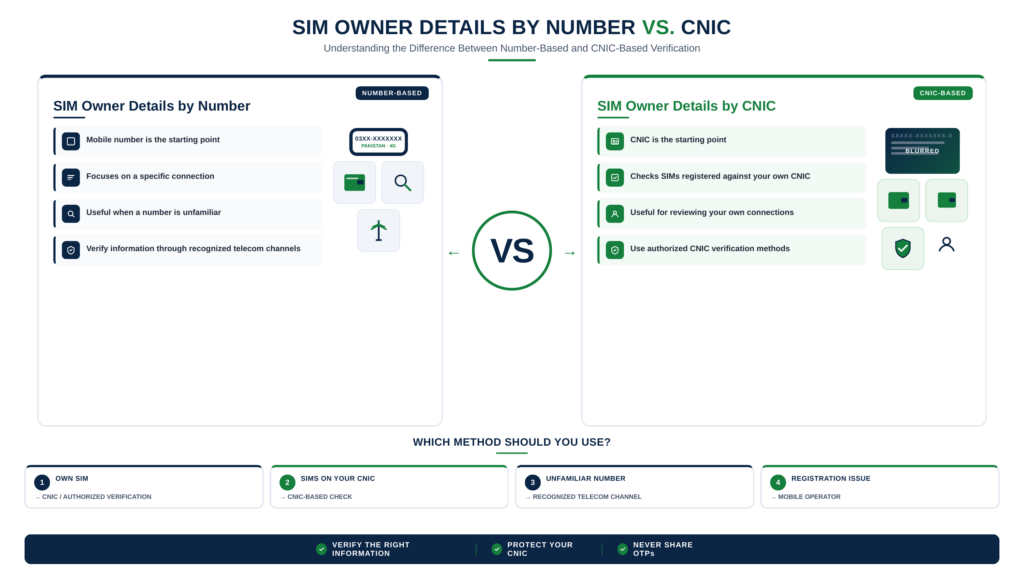
    The search phrase Ufone SIM Owner Details by Number can refer to several different intentions. Some people want to understand a Ufone number they personally use, while others are trying to identify an unfamiliar caller. These situations should not be treated as identical because mobile-number information and private subscriber records are separate concepts.

    A Mobile Number Is Not a Complete Identity Record

    A Ufone number primarily identifies a telecommunications connection. It can be used for calls, messages, mobile internet, account recovery, and other services, but knowing the number does not automatically provide legitimate access to the subscriber’s complete personal information.

    Information such as a person’s CNIC record, residential address, private communications, banking credentials, or detailed call history should not be assumed to be publicly available simply because someone knows their mobile number.

    Ufone also states that customer information is kept confidential, subject to circumstances where disclosure is legally required.

    Why Number-Based Owner Searches Can Be Misleading

    People searching for Ufone SIM Owner Name may encounter websites claiming to reveal a subscriber’s name or complete profile after entering a mobile number.

    A displayed result should not automatically be considered an official registration record.

    Third-party information may be outdated, incomplete, incorrectly associated, or presented without enough context to establish its reliability. Therefore, an online result should not be treated as equivalent to information obtained through an authorized subscriber-management process.

    What Can Legitimately Be Checked?

    The answer depends on the reason behind the search.

    If you are checking your own Ufone connection, your objective may be to understand its registration, activation status, ownership, or another account-related matter.

    If you are dealing with an unfamiliar number, your actual concern may instead be spam, fraud, harassment, or suspicious communication.

    These problems require different responses.

    If an Unknown Ufone Number Contacts You

    You do not need to obtain someone’s complete private profile simply because an unfamiliar number called or messaged you.

    Instead, evaluate the communication itself.

    If the person requests an OTP, password, banking information, wallet credentials, or unnecessary CNIC information, do not provide it.

    If the communication appears fraudulent or abusive, use an appropriate reporting or customer-support channel rather than relying on an unofficial owner database.

    Protect Yourself During a Lookup

    Ironically, users searching for Ufone SIM Owner Details by Number can sometimes expose their own information.

    Be cautious with websites or individuals requesting your CNIC, OTP, identity documents, passwords, or financial details in exchange for a supposedly instant owner search.

    The promise of a quick result is not worth compromising your own identity or account security.

    The Correct Way to Understand Number-Based Searches

    A useful distinction is:

    Mobile number: identifies the connection.

    Registered subscriber: identifies the person associated with the official registration.

    Private personal information: includes sensitive data that should not be assumed to be publicly accessible.

    Keeping these categories separate helps users understand what a Ufone number can reasonably tell them and prevents an ordinary number search from being confused with legitimate access to confidential Ufone SIM Owner Details.

    Ufone SIM Verification: Official Records vs. Online Claims

    When people search for Ufone SIM Owner Details, they may come across websites, applications, or social-media pages promising instant subscriber information. The important point is that an online result should not automatically be treated as proof of an official Ufone registration.

    Ufone’s own policies describe subscriber information as confidential and state that personal information is protected, with disclosure subject to legally permitted circumstances.

    Why Third-Party Results Can Be Unreliable

    A website may display a name beside a mobile number and present it as a “Ufone owner record.” However, users generally cannot establish from the displayed result alone whether the information is current, complete, or officially sourced.

    Information circulating through unofficial channels may be:

    • Outdated
    • Incomplete
    • Incorrectly associated with a number
    • Missing important context
    • Presented without a verifiable source

    For this reason, an online lookup should not replace the proper process for managing your own Ufone connection.

    Use the Correct Channel for Your Purpose

    If you want to verify your own Ufone SIM, focus on the appropriate subscriber-support or verification process.

    If you need to replace a SIM, investigate the replacement procedure.

    If ownership needs to change, use the applicable ownership process.

    If a registration is disputed, Ufone states that ownership-dispute cases are handled through its Service Centers, where relevant original documents can be reviewed and the case investigated.

    This purpose-based approach is much more reliable than searching for a generic “Ufone SIM database.”

    Be Careful With Personal Information

    An unofficial website may ask you to enter your CNIC, mobile number, OTP, or other information before displaying a supposed result.

    Think carefully before submitting anything sensitive.

    Your own identity information should not be exchanged simply to obtain information about another subscriber. In particular, never give an unknown person your authentication codes, banking credentials, wallet PIN, or account password.

    Official Support Is the Better Option

    Ufone provides customer-care assistance through its call center and Sales & Service Centers. Its current customer-care page lists 333 for calls from Ufone and 033-11-333-100 for landline access.

    If your issue concerns your own registration, ownership, replacement, or another subscriber-service matter, explaining the exact problem to an authorized support channel gives you a clearer route toward resolution.

    The Main Principle

    The safest way to understand Ufone SIM Owner Details is to distinguish between official subscriber information and unverified online claims.

    For your own connection, use appropriate official channels. For another person’s number, do not assume that private subscriber information is publicly available. And whenever a website asks for sensitive credentials in exchange for a quick owner lookup, treat the request with caution.

    Ufone SIM Owner Details and CNIC Registration

    When users search for Ufone SIM Owner Details, one of the most important questions is how a mobile connection relates to the subscriber’s CNIC. Understanding this relationship helps distinguish a legitimate personal registration check from an attempt to obtain someone else’s private information.

    Ufone’s published terms explain that, during SIM activation, the customer provides a valid CNIC and the operator checks eligibility, including applicable limits on the number of SIMs registered against that CNIC. The customer’s biometric information is then submitted for verification from NADRA.

    Why CNIC Registration Matters

    The CNIC provides an identity reference for the subscriber-registration process. This means that when you obtain a Ufone SIM through the prescribed procedure, the connection is not simply recorded as an anonymous mobile number.

    For someone reviewing their own registrations, this can help answer practical questions such as:

    • Which connections do I recognize?
    • Which older numbers have I used?
    • Is a particular Ufone connection associated with my identity?
    • Does an unfamiliar registration require clarification?
    • Do I still need an old connection?

    Keeping track of these matters can make future SIM management easier.

    Do Not Confuse CNIC Information With Owner Lookup

    A CNIC-based registration review and a mobile-number owner search are two different things.

    A person checking their own registrations is dealing with their personal subscriber record.

    By contrast, searching for another person’s identity from a mobile number may involve confidential information that should not be treated as publicly available.

    This distinction is especially important when websites advertise Ufone SIM Owner Details by Number and ask visitors to submit CNIC information in exchange for supposedly complete subscriber records.

    What If an Unfamiliar Connection Appears?

    If you encounter a Ufone registration that you do not immediately recognize, first review your own mobile history.

    Consider whether the number could be:

    • An older connection
    • A previously replaced SIM
    • A secondary number
    • A connection you stopped using
    • A number whose details you simply no longer remember

    If there is still no reasonable explanation, use an appropriate Ufone support channel to ask how the matter can be investigated.

    Ufone states that ownership-disputed cases are handled through its Service Centers, where relevant original documents can be reviewed and the case investigated according to the applicable regulations.

    Protect Your CNIC

    Your CNIC is sensitive identity information, so it should not be entered into every website claiming to provide Ufone SIM Owner Details.

    Before submitting identity information, make sure the service is appropriate and authorized for the task.

    Also keep OTPs, passwords, banking credentials, and wallet PINs private. These credentials should never be handed to an unknown person claiming to perform a SIM verification.

    Keep Your Own SIM Record

    A simple personal record of your mobile connections can be useful. Note the numbers you actively use and identify older connections that may require attention.

    If you no longer need a connection, investigate the appropriate official procedure instead of leaving the registration unexplained.

    The main principle is straightforward: CNIC-based SIM management is primarily about understanding and protecting your own subscriber registrations, not obtaining unrestricted access to another person’s identity information.

    Ufone SIM Owner Details and SIM Ownership Transfer

    A Ufone number can remain in use for years, but the person using it may eventually change. When responsibility for a connection permanently moves from one person to another, the situation should be treated as an ownership-transfer matter rather than simply handing over the physical SIM.

    Ufone lists change of ownership among the SIM-related services handled through its authorized channels. Its published terms also describe biometric verification in connection with ownership changes.

    When Ownership Transfer May Be Needed

    An ownership change can become relevant when:

    • A family member permanently takes responsibility for a number.
    • A business connection is assigned to another authorized user.
    • The original subscriber no longer intends to retain the connection.
    • Another eligible person will become the long-term subscriber.

    The exact requirements can vary according to the circumstances, so the applicable procedure should be confirmed with Ufone before making the change.

    Using the SIM Is Not Enough

    Simply giving the physical SIM to another person does not necessarily make that person the registered subscriber.

    For example, if a Ufone number remains registered under one person’s identity while another person uses it every day, the registration and actual usage are still two separate matters.

    This distinction becomes important when the number later requires replacement, blocking, ownership change, or another subscriber-related service.

    Ownership Transfer and SIM Replacement Are Different

    A replacement addresses the physical SIM or access to an existing connection.

    An ownership transfer addresses the person associated with the subscription.

    Therefore, replacing a SIM should not automatically be interpreted as changing its registered owner.

    Keeping these two situations separate helps avoid confusion when managing Ufone SIM Owner Details.

    Review Connected Accounts Before Transfer

    A mobile number can be connected to important digital services long after the subscriber stops thinking about them.

    Before permanently transferring a number, review services that may use it for:

    • Banking notifications
    • Mobile wallets
    • Email recovery
    • Login verification
    • Messaging applications
    • Business communication

    Where necessary, update the number before completing the ownership change.

    Special Cases Can Have Additional Requirements

    Ufone also provides a specific procedure for transferring a SIM belonging to a deceased family member. Its current guidance lists documentation such as the deceased person’s NADRA-issued death certificate, the transferee’s CNIC, relevant family documentation, and information about the last recharge or call history.

    This illustrates why ownership cases should be handled according to their actual circumstances rather than through a generic online SIM-owner service.

    Use Authorized Channels

    If you need to change the registered subscriber of a Ufone connection, contact Ufone through its official support or Sales & Service Center network and ask for the appropriate ownership-transfer procedure. Ufone’s customer-care page lists 333 for Ufone users and 033-11-333-100 for other access.

    Keep any receipt, confirmation, or reference information provided during the transaction.

    For Ufone SIM Owner Details, the main principle is simple: permanent changes in who is responsible for a mobile connection should be handled through the appropriate ownership process, not through an informal SIM handover.

    Ufone SIM Disowning and Unwanted Connections

    If a Ufone SIM is no longer being used, simply removing it from your phone may not be enough to manage its registration. It is better to review your unused connections and, where necessary, ask about the appropriate official procedure for removing an unwanted connection from your registration.

    Ufone’s terms mention disowning for SIMs activated through biometric verification.

    When May SIM Disowning Be Relevant?

    This situation may arise when:

    • You have permanently stopped using an old number.
    • You have changed your primary mobile number.
    • An additional connection is no longer required.
    • An old SIM has no further purpose.
    • You discover an unfamiliar connection associated with your registration.

    If you intend to permanently give the number to another eligible person, determine whether an ownership transfer is more appropriate than disowning.

    Simply Not Using a SIM Is Different

    Taking a SIM out of your phone, keeping it switched off, or stopping its use does not necessarily mean that you have formally ended the associated registration.

    If you want to stop being responsible for a particular connection, confirm the applicable procedure through an authorized Ufone channel.

    Check Important Accounts First

    Before giving up a number, review services that may still depend on it, including:

    • Banking services
    • Mobile wallets
    • Email recovery
    • Messaging applications
    • Login verification
    • Business contacts

    Update the relevant accounts before permanently leaving the number.

    What If You Find an Unknown Ufone SIM?

    If a Ufone connection appears in your registration records and you do not recognize it, do not immediately search for its supposed subscriber through an unofficial Ufone SIM Database.

    First consider your previous numbers, replacement SIMs, and older connections. If the registration still cannot be explained, contact Ufone through an appropriate official channel and ask about the available resolution process.

    Protect Your Personal Information

    Never give your CNIC, OTP, banking PIN, password, or wallet credentials to someone claiming they can remove a Ufone SIM from your registration.

    If you complete a disowning request, keep any receipt, reference number, or confirmation message for your records.

    Managing unwanted connections properly helps keep your Ufone SIM Owner Details organized and reduces confusion around old or unnecessary registrations.

    Ufone SIM Replacement and Subscriber Access

    A Ufone SIM may need to be replaced when the physical card is lost, damaged, or no longer functioning properly. In such cases, the main objective is usually to restore access to the existing mobile connection rather than create an entirely different subscriber relationship.

    Ufone’s terms include duplicate SIM issuance among the transactions that can involve its prescribed biometric verification process.

    When Is SIM Replacement Useful?

    A replacement may become relevant when:

    • Your SIM has been lost.
    • The physical card has been damaged.
    • The SIM stops functioning correctly.
    • You need another physical SIM for an existing connection.
    • You need to recover access to your mobile number.

    The exact requirements depend on the circumstances and Ufone’s current procedures.

    Replacement Does Not Automatically Mean Ownership Change

    One of the most important distinctions in Ufone SIM Owner Details is the difference between replacing a SIM and changing its registered subscriber.

    If you remain the legitimate subscriber and your physical SIM is lost, replacement concerns restoring access to your existing connection.

    If another person is permanently becoming responsible for the number, an ownership-transfer process may instead be relevant.

    Simply receiving a replacement SIM should therefore not be interpreted as proof that the registered owner has changed.

    Lost SIMs Should Be Handled Quickly

    If your Ufone SIM is lost or stolen, contact Ufone through an authorized channel and ask about the appropriate blocking and replacement options.

    This is particularly important if your number is connected to sensitive services such as:

    • Banking alerts
    • Mobile wallets
    • Email recovery
    • Account verification
    • Business communication

    A mobile number can serve as an important recovery or authentication channel, so losing control of it should not be ignored.

    Identity Verification May Be Required

    Because a replacement can restore access to an existing number, Ufone may require the subscriber to complete identity verification.

    Use an authorized Ufone service location or official support route and follow the requirements provided for your specific situation.

    Do not ask an unknown intermediary to process a replacement using your CNIC or other sensitive information.

    Review Connected Accounts

    After recovering your number, review important accounts that use it for verification or recovery.

    If you notice an unexpected password reset, login notification, financial transaction, or other unusual activity, contact the relevant service provider immediately through its official channel.

    Keep Your Transaction Record

    After completing a replacement request, retain any receipt, confirmation, or reference information provided by Ufone.

    This documentation can be useful if you need assistance later.

    For Ufone SIM Owner Details, the key point is that SIM replacement is primarily about restoring access to a connection, while ownership transfer concerns the registered subscriber. Keeping these processes separate helps maintain accurate registration and better mobile security.

    Ufone SIM Owner Details and Lost or Stolen SIMs

    Losing a Ufone SIM can create both practical and security concerns, especially when the number is connected with banking services, mobile wallets, account recovery, or other verification systems. In such a situation, the priority should be protecting the connection and restoring legitimate access through the appropriate Ufone procedure.

    What Should You Do After Losing a SIM?

    If your Ufone SIM has been lost or stolen, contact Ufone through an authorized channel and ask about the available blocking and replacement options.

    Acting promptly can reduce the possibility of unauthorized use of the missing connection.

    Ufone provides customer-care assistance through its official support channels, including its call center and Sales & Service Centers.

    Why a Lost SIM Can Be Important

    A mobile number can be connected to more than ordinary calls and messages. It may also receive:

    • Banking notifications
    • Account verification codes
    • Mobile-wallet alerts
    • Password recovery messages
    • Business communication
    • Security notifications

    For this reason, losing physical access to the SIM can potentially affect other accounts connected to the number.

    Protect Your Important Accounts

    After reporting the missing SIM, review important services that use your Ufone number.

    If you notice an unfamiliar login, password-reset request, financial notification, or other unexpected activity, contact the relevant service provider through its official support channel.

    Do not wait for an actual financial loss before responding to suspicious activity.

    Never Share an OTP

    A person claiming to help recover your Ufone SIM may ask for an OTP, CNIC information, banking PIN, password, or wallet credentials.

    Do not provide these details simply because the person claims to represent Ufone.

    If you receive an unexpected request, independently contact Ufone through a trusted official channel instead of continuing the conversation with the caller.

    Replacement and Ownership Are Separate

    If you are still the legitimate subscriber and your SIM has been lost, the relevant solution may involve blocking and replacing the connection.

    If another person is permanently becoming the subscriber, an ownership-transfer process is a different matter.

    Ufone’s published terms specifically include duplicate SIM issuance and change of ownership among transactions involving the prescribed verification process.

    Keep Confirmation Details

    After reporting or replacing a lost SIM, retain any receipt, reference number, confirmation message, or other documentation provided during the process.

    This can make future follow-up easier if the issue continues.

    For Ufone SIM Owner Details, protecting a lost connection is more important than attempting to locate private subscriber information through unofficial websites. The safest approach is to report the loss, secure the number, protect connected accounts, and use authorized Ufone procedures.

    Ufone SIM Owner Details and Biometric Verification

    Biometric verification is an important part of Ufone SIM registration and several subscriber-related transactions. It helps connect a mobile service with the identity of the person completing the relevant procedure.

    Ufone states that SIM activation involves providing a valid CNIC or applicable identity document, followed by biometric verification and verification from NADRA.

    Why Biometric Verification Matters

    A mobile connection should not simply be treated as an anonymous number. The registration process establishes a relationship between the subscriber and the service.

    Biometric verification adds an identity-confirmation step to this process and can also be relevant when handling certain later requests.

    Ufone’s terms mention biometric verification in connection with transactions including:

    • New SIM activation
    • Duplicate SIM issuance
    • Change of ownership
    • Disowning of applicable SIMs

    The exact requirements can depend on the transaction and the circumstances.

    What Happens During Verification?

    For a standard SIM activation, Ufone’s stated process involves presenting the required identity document at an authorized location and completing the prescribed biometric procedure.

    The information is then subject to verification through NADRA.

    Users should follow the instructions provided by the authorized Ufone representative instead of attempting to bypass the verification process through an unofficial service.

    What If Verification Fails?

    A failed biometric attempt does not automatically mean that your Ufone SIM Owner Details are incorrect.

    Ufone’s terms explain that when the biometric impression cannot be verified through NADRA, the customer is informed of the reason and may need to approach NADRA for further assistance.

    Therefore, a failed attempt should be handled through the relevant official channel rather than through a third-party SIM database.

    Keep Your Identity Documents Safe

    During biometric-related activities, protect your CNIC and other identity documents.

    Do not hand them to an unknown intermediary who promises a faster SIM activation, ownership change, or verification.

    Also remember that biometric verification does not mean you should disclose other confidential credentials.

    Never share an OTP, banking PIN, account password, or mobile-wallet credentials with an unsolicited caller.

    Use Authorized Service Channels

    If you need help with biometric verification, contact Ufone through its official customer-care channels or visit an authorized Sales & Service Center.

    Ufone’s customer-care page provides official support options for customers requiring assistance with its services.

    The Main Takeaway

    Biometric verification is designed to strengthen the connection between a subscriber’s identity and their mobile registration.

    For anyone researching Ufone SIM Owner Details, the important point is that identity-sensitive SIM transactions should be completed through authorized procedures, while personal documents and authentication credentials should remain protected.

    Ufone SIM Owner Details and Number Portability

    A Ufone mobile number can reach the network through different registration and portability situations. This is important when researching Ufone SIM Owner Details, because a mobile number and the network providing its service are two separate concepts.

    Ufone officially provides a port-in process for customers who want to move an eligible existing number to Ufone. Its published procedure includes sending MNP to 667 and then forwarding the received information to 76333 to continue the request.

    Number and Network Are Not the Same

    A mobile number is used as the communication identifier, while the network is the operator currently providing the service.

    A subscriber may therefore retain a familiar number while changing the network associated with it.

    This distinction is useful because people sometimes assume that the first digits of a number permanently identify its current network. Number portability means that such assumptions may not always provide a complete picture.

    Does Porting Change the Subscriber?

    Network portability should not automatically be confused with ownership transfer.

    If a person moves their own number to Ufone, the network relationship changes while the subscriber can remain the same person.

    Ownership transfer is a separate matter involving the registered subscriber.

    Therefore, when checking Ufone SIM Owner Details, ask two separate questions:

    Which network is currently providing the service?

    Who is the registered subscriber?

    These questions can have different answers.

    Porting and Ownership Restrictions

    The conditions attached to a particular Ufone connection can affect whether portability or ownership changes are immediately available.

    For example, Ufone’s online SIM-sale terms state that certain discounted numbers and associated services may not be portable or transferable for one year from activation.

    This demonstrates why users should not rely on a general assumption about every mobile connection. The specific terms applicable to the number should be checked before making a request.

    Keep Important Accounts in Mind

    Before changing networks, review services that depend on your mobile number.

    These may include:

    • Banking notifications
    • Mobile-wallet services
    • Email recovery
    • Login verification
    • Messaging accounts
    • Business communication

    Keeping your number active and maintaining access during the transition can help avoid unnecessary account problems.

    Porting Is Different From Replacement

    A replacement concerns the physical SIM or restoration of access to an existing connection.

    Porting concerns changing the network associated with an eligible number.

    Ownership transfer concerns changing the registered subscriber.

    These three processes should not be treated as interchangeable.

    The Main Point

    For Ufone SIM Owner Details, a number should be understood through its registration, current network, and subscriber relationship rather than through its digits alone.

    If you intend to move a number to Ufone, use the official MNP procedure and review any applicable conditions. If your objective is to change the registered subscriber, use the appropriate ownership process instead.

    Keeping these concepts separate makes SIM management clearer and prevents network information from being mistaken for ownership information.

    Ufone SIM Owner Details and Inactive Connections

    A Ufone number that has not been used for a long period can create confusion when a subscriber later reviews their mobile connections. An old SIM may no longer be part of everyday use, but its status should not be assumed without checking the applicable Ufone terms.

    Ufone’s current terms state that if a customer remains dormant or inactive for 180 days, the operator reserves the right to disconnect the service and re-issue the MSISDN to another customer. The terms also state that a customer may retain the subscription by informing the operator in writing or through the specified communication methods, subject to applicable charges.

    Why Old Ufone Numbers Need Attention

    People often change their primary number, replace SIMs, or stop using secondary connections. After several years, it can become difficult to remember which numbers were previously associated with them.

    An old connection may therefore appear unfamiliar when reviewing Ufone SIM Owner Details.

    Before assuming that an unknown number represents unauthorized activity, consider your previous mobile history and any connections you may have stopped using.

    Inactivity Does Not Mean You Should Ignore the Number

    Ufone’s stated terms provide a specific inactivity period, but subscribers should not rely on assumptions about the status of an individual number.

    If an old connection is important, contact Ufone through an authorized channel to determine its current status.

    Ufone provides customer support through 333 from a Ufone connection and 033-11-333-100 through its listed alternative contact route.

    Review Accounts Before Giving Up a Number

    An old mobile number may still be connected to important services.

    Before permanently abandoning a Ufone connection, review:

    • Banking notifications
    • Mobile-wallet accounts
    • Email recovery
    • Login verification
    • Messaging applications
    • Business contacts

    Update these services before losing control of the number.

    Number Re-Issuance Can Change the Situation

    Ufone’s terms specifically state that after the applicable inactivity period, the operator may disconnect and re-issue the MSISDN to another customer.

    This means an old number should not be treated as permanently belonging to its previous user simply because that person used it in the past.

    If a number has left your control, do not attempt to access the accounts or private information of whoever may receive it later.

    Keep Your Own Registration Organized

    A simple personal record of active and previously used numbers can make mobile management easier.

    Mark each connection as:

    Active → Secondary → No longer used → Requires clarification

    If you no longer need a number, ask Ufone about the appropriate closure or disowning procedure rather than relying solely on inactivity.

    The main lesson for Ufone SIM Owner Details is that an unused number can have its own lifecycle. Keeping track of old connections, updating linked accounts, and checking official status when necessary can help prevent future registration and security problems.

    Ufone SIM Owner Details and SIM Security

    Managing Ufone SIM Owner Details is also a matter of protecting the mobile connection itself. A SIM registered under your identity can be used for calls, messages, mobile data, and potentially account-verification purposes, so losing control of the connection can create problems beyond ordinary mobile service.

    Ufone’s current terms state that if a SIM is lost or stolen, the customer should immediately, and no later than 24 hours, inform the operator and request that the SIM be blocked.

    Why SIM Security Matters

    Your mobile number may be connected with several important services, including:

    • Banking notifications
    • Mobile-wallet accounts
    • Email recovery
    • Login verification
    • Business communication
    • Security alerts

    For this reason, a SIM should be treated as an important part of your digital identity rather than simply as a card inside your phone.

    Keep Your SIM Under Your Control

    Ufone’s terms also state that the customer is responsible for the use of the SIM and its associated services.

    This makes it important to avoid casually handing your registered SIM to another person for permanent use.

    If another person is going to become the long-term subscriber, use the appropriate ownership-transfer procedure rather than leaving the registration under your name.

    Never Share Authentication Codes

    If someone contacts you claiming to be from Ufone and asks for an OTP, password, banking PIN, or wallet credentials, do not provide the information simply because they know your mobile number.

    If you are uncertain about a request, contact Ufone through an official support channel. Ufone currently lists 333 from a Ufone connection and 033-11-333-100 as an alternative contact number.

    Lost or Stolen SIM

    If your SIM disappears, act quickly instead of waiting to see whether it returns.

    Contact Ufone, request blocking, and ask about the appropriate replacement procedure. Afterward, review important accounts connected to the number and watch for unexpected security notifications.

    If suspicious activity occurs, contact the relevant bank, wallet provider, email service, or other account provider through its official support channel.

    Protect Your Registration Information

    Avoid entering your CNIC or other sensitive details into websites claiming to provide instant Ufone SIM Owner Details.

    A website displaying an owner’s name does not automatically prove that its information is official or current.

    Your identity information should be used only when necessary and through an appropriate service.

    Keep Confirmation Records

    Whenever you report a lost SIM, request blocking, replace a connection, or complete another subscriber-related transaction, retain the confirmation message, receipt, or reference number supplied by the operator.

    This documentation can help if the matter requires follow-up.

    The main principle is simple: protect the physical SIM, protect the registered identity, keep authentication information private, and use official channels whenever a security problem occurs.

    Ufone SIM Owner Details and SIM Ownership Disputes

    A disagreement about who is registered as the subscriber of a Ufone connection should be handled as a registration or ownership issue, not as an ordinary online owner-name search.

    This can happen when a person is using a number but believes it should be registered under their identity, when an old connection creates confusion, or when the subscriber record does not match the situation the user expects.

    When Can an Ownership Dispute Occur?

    A dispute may arise when:

    • The current user and registered subscriber are different.
    • A number was handed to another person without formal transfer.
    • An old registration is no longer recognized.
    • A subscriber believes a connection is incorrectly associated with their identity.
    • Documentation related to ownership needs to be reviewed.

    The exact resolution depends on the circumstances surrounding the connection.

    Do Not Rely on Third-Party Owner Databases

    If you believe a Ufone registration is incorrect, searching for the supposed owner’s CNIC, address, or other private information through an unofficial database is not the appropriate solution.

    The issue should instead be presented to Ufone through an authorized service channel.

    Ufone’s customer-support information provides access through its call center and Sales & Service Centers, while its published customer-care channels include 333 from Ufone and 033-11-333-100 for other access.

    Documents May Be Important

    An ownership-related dispute can require the subscriber to provide appropriate identification or supporting documentation.

    Therefore, keep original identity documents and relevant records available when visiting an authorized service center.

    Do not hand your documents to an unknown person who promises to resolve the dispute privately.

    Special Ownership Situations

    Some ownership cases have specific procedures. For example, Ufone provides a process for transferring a deceased family member’s SIM to an eligible relative. Its current guidance lists documents including the death certificate, succession certificate, applicable No Objection Certificate where required, the deceased person’s SIM, and last recharge or call history.

    This shows why different ownership situations should not all be treated as one generic “owner-name check.”

    Keep the Registration Issue Separate From SIM Usage

    If you are currently using a Ufone number but another person is the registered subscriber, simply continuing to use the number does not automatically resolve the registration difference.

    Where a permanent change is intended, the appropriate ownership process should be investigated.

    Protect Your Credentials

    During an ownership dispute, never provide an OTP, banking PIN, account password, or wallet credentials to someone claiming to represent Ufone.

    Use an official support channel to verify any request for sensitive information.

    The safest approach to Ufone SIM Owner Details is to resolve genuine ownership disputes through authorized procedures, preserve relevant documentation, and avoid exposing your own identity information while attempting to investigate someone else’s.

    Ufone SIM Owner Details and SIM Change Requests

    A SIM change request can become necessary when a subscriber needs to replace an existing Ufone SIM while keeping the associated mobile connection. This is different from changing the registered owner of the number.

    Ufone provides an official SIM Change Request service that asks for information such as the mobile number, customer name, CNIC, mother’s name, place of birth, and delivery address.

    When Is a SIM Change Needed?

    A replacement may be relevant when:

    • The existing SIM is damaged.
    • The SIM has been lost or stolen.
    • The physical card is no longer functioning.
    • A subscriber needs a replacement for an existing connection.
    • Access to the current number needs to be restored.

    The exact procedure depends on the circumstances and Ufone’s current requirements.

    SIM Change Does Not Mean Ownership Change

    This distinction is important when researching Ufone SIM Owner Details.

    A SIM replacement concerns the physical SIM or access to an existing connection. An ownership change concerns the person officially associated with that connection.

    Therefore, replacing a SIM should not automatically be interpreted as transferring the number to another subscriber.

    If another person is going to become the permanent subscriber, the appropriate ownership-transfer process should be considered separately.

    Information Required for a Request

    Ufone’s online SIM Change Request page currently asks for details including the mobile number, customer name, CNIC, mother’s name, place of birth, address for delivery, and a significant landmark.

    Because these are sensitive identity details, users should submit them only through an appropriate official Ufone channel.

    Do not send the same information to an unknown person who claims they can arrange a faster SIM replacement.

    Delivery Availability

    Ufone’s current SIM Change Request page lists delivery availability in several Pakistani cities and provides a stated delivery charge. Because service availability and charges can change, users should verify the current information directly on Ufone’s official page before submitting a request.

    Protect Your Existing Number

    If the SIM is lost or stolen, do not unnecessarily delay contacting Ufone.

    A mobile number may be linked to banking notifications, account recovery, verification messages, and other important services. Protecting the connection quickly can reduce the risk of unauthorized access.

    Use Official Support

    If you are unsure whether your situation requires a SIM replacement, ownership transfer, or another service, contact Ufone customer support before proceeding.

    Ufone currently lists 333 for calls from Ufone and 033-11-333-100 as its other customer-care contact.

    The main point is simple: SIM replacement restores access to a connection, while ownership transfer changes the registered subscriber. Understanding this difference helps users manage their Ufone SIM correctly and avoid confusion around Ufone SIM Owner Details.

    Ufone SIM Owner Details and Customer Support

    When a Ufone SIM issue cannot be resolved through normal self-service options, contacting official customer support is usually the most appropriate next step. This can apply to registration questions, replacement requests, ownership concerns, lost SIMs, or other subscriber-related matters.

    Ufone currently lists its customer-care helpline as 333 when calling from a Ufone number, while its official support information also lists 033-11-333-100 and an email support option.

    Explain the Actual Problem

    When contacting support, describe the specific issue instead of simply asking for “Ufone SIM Owner Details.”

    For example, explain whether you need help with:

    • SIM registration
    • SIM replacement
    • Lost or stolen SIM
    • Ownership transfer
    • Disowning
    • An unfamiliar registration
    • A service or verification problem

    Providing the correct context can make it easier to identify the appropriate procedure.

    Use Authorized Service Centers

    Some SIM-related matters may require identity verification or an in-person visit.

    Ufone provides Sales & Service Centers for customer assistance and advises customers to call 333 to confirm office status and schedule before visiting.

    Take the required identification documents with you when the procedure calls for them, and avoid handing your original documents to an unofficial intermediary.

    Keep Your Information Private

    Customer support does not mean that you should disclose every security credential.

    Never provide an unsolicited caller with:

    • OTP codes
    • Banking PINs
    • Account passwords
    • Wallet credentials
    • Unnecessary identity information

    If someone claims to represent Ufone and requests sensitive information, independently verify the request through an official channel.

    Keep Complaint References

    If you submit a request or complaint, retain the reference number, receipt, confirmation message, or other record provided by Ufone.

    This can be useful if the issue requires additional follow-up.

    Official Support Is Better Than Unverified Lookups

    A website claiming to provide Ufone SIM Owner Details may not be able to establish whether its information is accurate or current.

    If your concern involves your own registration, ownership, replacement, or security, contacting Ufone directly provides a more appropriate route than relying on an unknown database.

    Ufone also provides online support resources and a customer-service section for its subscribers.

    The key principle is simple: identify the exact SIM issue, use an authorized Ufone support channel, protect your credentials, and keep records of important service requests.

    Ufone SIM Owner Details and Number Security

    A Ufone mobile number can become an important part of a person’s digital identity because it may be connected with communication, account recovery, verification messages, and financial alerts. For this reason, protecting the number is an important part of managing Ufone SIM Owner Details.

    Ufone’s official customer-care information also emphasizes that SIMs should be issued through biometric verification.

    Keep Your Registered SIM Under Your Control

    If a Ufone SIM is registered in your name, avoid allowing another person to permanently use it without understanding the registration implications.

    Temporary use by a family member or another person is different from formally changing the registered subscriber.

    If responsibility for the number is permanently changing, ask Ufone about the appropriate ownership procedure.

    Be Careful With Suspicious Calls

    A scammer may contact you while pretending to represent a telecom operator, bank, wallet provider, or another organization.

    The caller may claim that your SIM has a problem and request an OTP, CNIC information, password, or other sensitive information.

    Do not provide authentication credentials simply because the caller knows your mobile number or personal details.

    If there is a genuine concern about your Ufone connection, contact Ufone through an official channel. Its current support page lists 333 from Ufone and 033-11-333-100 as customer-support options.

    Protect Accounts Connected to Your Number

    Review services that use your Ufone number for:

    • Login verification
    • Password recovery
    • Banking alerts
    • Mobile-wallet notifications
    • Email recovery
    • Business communication

    If you permanently stop using a number, update these accounts before giving up control of the connection.

    Respond Quickly to Unexpected Changes

    Unexpected loss of service, an unfamiliar SIM-related message, or unusual account notifications should not automatically be treated as proof of fraud, but they deserve attention.

    Contact Ufone through an authorized channel and explain exactly what changed.

    If the issue involves a financial account, contact the relevant bank or wallet provider separately through its verified support channel.

    Avoid Unofficial SIM Services

    Websites claiming to provide instant Ufone SIM Owner Details may request personal information before showing a result.

    Do not submit your CNIC, OTP, password, banking credentials, or wallet PIN to an unknown service merely because it promises subscriber information.

    A quick lookup is not worth compromising your own identity.

    Maintain Good SIM-Security Habits

    A simple security routine can make your mobile connection safer:

    Keep the SIM under your control → protect authentication codes → monitor important account alerts → use official support when something looks unusual.

    Your Ufone number is more than a communication tool. When it is connected with important accounts, protecting the connection also helps protect the digital services that depend on it.

    Ufone SIM Owner Details and SIM Disowning After a Number Change

    Changing your primary mobile number does not automatically mean that an older Ufone connection should remain unmanaged. When a subscriber moves to a new number, the previous connection should be reviewed so that important accounts, personal records, and SIM registrations remain organized.

    Ufone’s terms state that customers can request disowning for SIMs activated through biometric verification, subject to the applicable procedure.

    Review the Old Number First

    Before giving up an older Ufone number, identify where it is still being used.

    The number may be connected to:

    • Banking alerts
    • Mobile wallets
    • Email recovery
    • Social accounts
    • Login verification
    • Business contacts

    Update these services before completing any disowning process.

    Do Not Confuse Disowning With Inactivity

    Simply stopping use of a number is different from formally managing its registration.

    Ufone’s terms state that a connection may be disconnected and its MSISDN re-issued after 180 days of dormancy or inactivity, subject to the stated terms.

    Therefore, if you have deliberately stopped using a number, do not rely only on inactivity to manage your personal records.

    What If Another Person Will Use the Number?

    If someone else is going to become the permanent subscriber, disowning may not be the appropriate objective.

    Instead, ask Ufone about the applicable ownership-transfer process.

    This distinction matters because the goal should be to keep the registration aligned with the person who is legitimately responsible for the connection.

    New Ufone Numbers Can Have Restrictions

    Ufone’s current online SIM terms state that certain discounted numbers and associated services cannot be ported or transferred for one year after activation, and change of ownership is also restricted for that period under those specific terms.

    Therefore, users should check the terms applicable to their particular connection instead of assuming that every number can immediately be transferred or disowned.

    Keep Confirmation of the Request

    If you submit a disowning or related request, retain any confirmation, receipt, or reference information provided by Ufone.

    If the connection remains visible or you experience another issue later, these records can help when contacting customer support.

    Ufone currently provides customer assistance through 333 from Ufone and 033-11-333-100 through its listed alternative contact route.

    The Main Point

    A number change is a good opportunity to review your old mobile connections.

    Update important accounts → determine whether the old number should be transferred or disowned → use the appropriate Ufone procedure → keep confirmation records.

    This helps keep your Ufone SIM Owner Details organized while reducing the risk of leaving an unnecessary mobile connection attached to your identity.

    Ufone SIM Owner Details and Online SIM Database Claims

    When searching for Ufone SIM Owner Details, users may encounter websites or social-media pages claiming to provide complete subscriber information from a mobile number. These services should be evaluated carefully because an online result is not automatically an official Ufone registration record.

    Ufone states that customer information is kept safe and confidential, with disclosure subject to legally permitted circumstances.

    Why Unofficial Databases Can Be Misleading

    A third-party website may display a name, number, or other information and describe it as a Ufone owner record. However, users may have no reliable way to establish whether that information is:

    • Current
    • Complete
    • Correctly associated
    • Officially obtained
    • Presented with proper context

    For this reason, an online database should not be treated as equivalent to an authorized subscriber record.

    Be Careful With “Complete Details” Claims

    Some services may advertise phrases such as:

    Ufone SIM Database

    Ufone SIM Owner Name

    Ufone SIM Data

    Ufone Complete SIM Details

    The wording itself does not prove that the service has legitimate access to current subscriber information.

    A particularly important warning sign is a website that promises a complete identity profile from nothing more than a mobile number.

    Do Not Submit Sensitive Information

    A questionable lookup service may ask for your CNIC, OTP, identity document, password, or financial information before displaying a supposed result.

    Avoid providing such information merely to investigate a mobile number.

    Your own identity information should not be placed at risk while trying to obtain information about someone else.

    Payment Does Not Establish Authenticity

    Some websites may offer a free search and then request payment for “complete details.” Paying for access does not prove that the underlying information is official or accurate.

    Before entering payment information, consider whether the service is actually necessary and whether the source can be independently verified.

    Use Official Channels for Your Own Registration

    If your objective is to check or manage your own Ufone connection, use an appropriate Ufone service or support channel.

    Ufone provides customer-care assistance through its official helpline and service centers, including 333 from Ufone and 033-11-333-100 through its listed alternative contact route.

    If you have an ownership dispute, Ufone states that disputed ownership cases are handled through its Service Centers, where relevant original documents can be reviewed and the case investigated.

    The Safer Approach

    For Ufone SIM Owner Details, focus on the actual purpose of your search.

    If you need to manage your own registration, use the appropriate official route.

    If you discover an unfamiliar connection, seek clarification through Ufone.

    If an unknown number is involved in fraud or harassment, address the underlying problem through the appropriate reporting channel rather than trying to purchase private subscriber information.

    Official verification protects your information; unofficial databases can create another privacy and security risk.

    Ufone SIM Owner Details and Official Ownership Transfer

    When a Ufone number needs to move permanently from one subscriber to another, the change should be handled through the appropriate ownership process rather than by simply handing over the SIM card.

    Ufone’s terms state that the prescribed biometric procedure applies to change of ownership, along with duplicate SIM issuance and disowning of applicable SIMs.

    When Is Ownership Transfer Relevant?

    Ownership transfer may be appropriate when:

    • A family member will permanently use the number.
    • A business connection is being assigned to another person.
    • The original subscriber no longer wants responsibility for the number.
    • Another eligible person is becoming the long-term subscriber.

    The exact requirements depend on the circumstances, so the current Ufone procedure should be confirmed before starting the transaction.

    Do Not Simply Hand Over the SIM

    Giving the physical SIM to another person does not automatically establish that person’s registration as the subscriber.

    This distinction is important because the registered subscriber may remain responsible for activity associated with the connection.

    Ufone’s terms state that the customer is responsible for the use of the SIM and its services, which makes keeping registration information accurate particularly important.

    Ownership Transfer and Disowning Are Different

    If another person is going to become the legitimate subscriber, ownership transfer may be the appropriate route.

    If nobody will take over the number and you simply want to stop retaining the connection, disowning or another applicable closure process may be more suitable.

    Do not treat these two situations as interchangeable.

    Special Case: Deceased Subscriber

    Ufone has a specific process for transferring ownership of a deceased family member’s SIM. Its current guidance requires documentation including the deceased person’s NADRA-issued death certificate, the transferee’s CNIC, information about the last recharge or call history, and the active SIM where available. It also states that eligible family members must be verified through the required family documentation.

    This demonstrates why ownership cases can have different requirements depending on the circumstances.

    Keep Important Accounts in Mind

    Before transferring a number, review services connected to it, such as:

    • Banking notifications
    • Mobile wallets
    • Email recovery
    • Login verification
    • Messaging accounts
    • Business contacts

    Update important accounts before permanently changing control of the number.

    Use Official Ufone Channels

    For ownership-related questions, use Ufone’s official support or Sales & Service Center network. Ufone currently lists 333 for calls from Ufone and 033-11-333-100 as its other customer-support contact.

    Keep any receipt, confirmation, or reference number provided during the process.

    The key point for Ufone SIM Owner Details is simple: a permanent change in subscriber should be handled through the proper ownership-transfer procedure rather than an informal SIM handover.

    Ufone SIM Owner Details and Privacy Protection

    When researching Ufone SIM Owner Details, privacy should remain an important consideration. A mobile connection can be associated with identity information and usage records, so subscriber information should not be treated as ordinary public data.

    Ufone’s privacy notice explains that personal information can include details such as a customer’s name, address, CNIC number, phone number, email address, and certain usage-related information. It also states that PTCL Group companies apply security measures to protect personal information from unauthorized access, breach, and disclosure.

    Why Privacy Matters

    A mobile number can be connected with many parts of a person’s digital life. It may be used for communication, account verification, customer support, or other services.

    Because of this connection, users should be careful about where they enter their number or identity information.

    A website claiming to provide Ufone SIM Owner Details by Number should not automatically be trusted with your CNIC or other personal information.

    What Information Should Stay Private?

    Users should avoid unnecessarily sharing:

    • CNIC numbers
    • Passwords
    • OTP codes
    • Banking credentials
    • Wallet PINs
    • Identity documents
    • Private account information

    These details should only be provided when genuinely required through an appropriate and trusted service.

    Ufone’s Privacy Approach

    Ufone’s privacy notice states that personal information may be collected for purposes such as identity verification, SIM purchase and activation, service provision, and customer interaction. It also states that information is not sold or rented to unauthorized third parties in a way that would invade customer privacy.

    The notice also explains that information may be shared with competent authorities or law-enforcement agencies where required under applicable law.

    This distinction is important because legitimate disclosure through a lawful process is different from an unrestricted public SIM-owner lookup.

    Be Careful With Online Searches

    Searching for an unfamiliar number can sometimes lead users to websites that promise a person’s name, CNIC, address, or other information.

    Even if such a website displays a result, the user should not assume that the information is current, accurate, or legitimately obtained.

    More importantly, entering your own identity information into such a service can create a separate privacy risk.

    Protect Your Own Registration

    If your concern involves your own Ufone SIM Owner Details, use the appropriate Ufone support or service channel.

    Ufone currently provides customer support through 333 from Ufone and 033-11-333-100 through its listed support channels.

    This is preferable to giving sensitive information to an unknown person offering an unofficial lookup.

    The Main Principle

    Good SIM management includes protecting both the connection and the identity behind it.

    Verify your own registration through appropriate channels, keep authentication information private, and avoid attempting to obtain another subscriber’s confidential information through questionable databases.

    Understanding privacy is an essential part of responsible Ufone SIM Owner Details management.

    Ufone SIM Owner Details and My UPTCL Account

    Managing a Ufone connection is not limited to checking the physical SIM. Ufone’s current support platform also provides customers with access to My UPTCL, which is designed to connect and manage mobile connections through a single account.

    For users trying to keep track of their own Ufone SIM Owner Details, a centralized account can be useful because it provides another way to manage services associated with their own connections.

    Why a Centralized Account Can Help

    People who use more than one mobile connection can sometimes lose track of which number is being used for which purpose.

    A centralized management system can make it easier to distinguish between:

    • Primary mobile number
    • Secondary connection
    • Personal and business numbers
    • Active services
    • Account-related information

    Ufone’s support page specifically describes My UPTCL as a way to connect multiple mobile connections through a single account.

    Information Should Still Be Protected

    Using an online account does not remove the need for good security practices.

    Keep your login credentials private and avoid allowing another person to access your account without understanding the consequences.

    Ufone’s app privacy information explains that personal information may be collected and processed to provide and improve its services, while users are advised to review the relevant privacy information and protect their account credentials.

    Do Not Confuse Account Access With Public Owner Lookup

    A personal account-management system is fundamentally different from an online website claiming to reveal the owner of any Ufone number.

    If you are managing your own connection, use the tools provided for subscribers.

    If you are trying to identify another person’s private subscriber information, an account-management service should not be treated as a public lookup facility.

    Review Your Connected Numbers

    If you have multiple Ufone connections, periodically review which numbers you recognize and which services are associated with them.

    This can help identify an old number that is no longer required or a connection that needs further attention.

    If you decide to stop using a number, remember that account-related services may still depend on it. Update important recovery and verification information before permanently giving up the connection.

    Keep Login Details Secure

    Do not share your account username, password, OTP, banking information, or wallet credentials with someone claiming to help you check Ufone SIM Owner Details.

    If you experience an account-related problem, Ufone’s official customer support currently lists 333 from Ufone and 033-11-333-100 as support contacts.

    A Better SIM-Management Habit

    Instead of relying on random online databases, maintain your own mobile-account information through appropriate official services.

    Know your numbers → manage your connections → protect your login → update old recovery numbers → contact official support when necessary.

    This approach makes Ufone SIM Owner Details easier to manage while keeping your personal and account information under your control.

    Ufone SIM Owner Details and Fraudulent SIM Information

    When searching for Ufone SIM Owner Details, users may encounter websites, social-media pages, or individuals claiming to provide complete subscriber information. These services should be approached carefully, particularly when they promise private information from only a mobile number.

    Ufone’s privacy notice identifies information such as names, CNIC numbers, phone numbers, addresses, and usage-related records as personal information. It also describes CNIC and biometric information as sensitive personal data. 

    Why Fake SIM Services Are Risky

    A suspicious website may claim that it can provide:

    • Ufone owner name
    • CNIC information
    • Residential address
    • Complete SIM records
    • Call history
    • Multiple registered numbers

    A claim alone does not establish that the information is genuine, current, or legally obtained.

    Some services may also use attractive “instant result” offers to encourage visitors to submit their own personal information.

    Never Trade Your Information for a Lookup

    If a website asks you to enter your CNIC, OTP, password, banking information, or wallet PIN before showing Ufone SIM Owner Details, stop and consider whether the request is appropriate.

    Your own sensitive information should not be exposed simply to investigate an unfamiliar number.

    Ufone’s privacy notice specifically treats CNIC, passwords, financial information, and biometric data as sensitive personal information.

    Official Verification Is Different

    There is an important difference between an official subscriber-management process and an unknown online database.

    Ufone provides customer-support channels, including 333 from a Ufone number and 033-11-333-100, along with official service centers.

    If your concern involves your own SIM registration, ownership, replacement, or another legitimate service matter, use the appropriate official route.

    Be Careful With Downloadable Databases

    Avoid downloading files advertised as leaked or complete Ufone subscriber databases.

    Apart from questionable accuracy, such files may contain personal information that should not be redistributed. They may also expose your device to malicious software or suspicious links.

    Do not upload or share another person’s private information simply because it appears in an online database.

    What If You Suspect Fraud?

    If an unfamiliar Ufone number is involved in suspicious communication, focus on the actual problem rather than attempting to obtain the person’s private subscriber record.

    For example, preserve relevant messages or transaction information and use the appropriate telecom, financial, or cybercrime reporting channel when necessary.

    If your own Ufone account or SIM is affected, contact Ufone promptly through its official support channels.

    The Safer Approach

    For Ufone SIM Owner Details, remember:

    Do not trust unsupported database claims → protect your CNIC and credentials → use official Ufone channels → report genuine fraud through the appropriate authority.

    This approach helps you manage your own SIM information while respecting subscriber privacy and avoiding potentially fraudulent lookup services.

    Ufone SIM Owner Details and My UPTCL Account Management

    Managing your own Ufone connections becomes easier when your mobile services are kept organized through an official account-management platform. Ufone currently provides My UPTCL, which allows customers to connect multiple mobile connections through a single account and manage them from one interface.

    Why Account Management Matters

    People who have used multiple Ufone numbers over time can sometimes lose track of which connection is active, which number is used for a particular purpose, and which older service is no longer needed.

    Keeping your connections organized can help you:

    • Recognize your active numbers
    • Manage multiple mobile connections
    • Review services associated with your account
    • Reduce confusion around old numbers
    • Keep important account information accessible

    This is particularly useful when managing your own Ufone SIM Owner Details.

    Use Your Own Account

    An account-management platform should be used for connections that legitimately belong to you or that you are authorized to manage.

    It should not be confused with a public facility for searching another person’s private subscriber information.

    If you are trying to identify an unfamiliar number, focus on the actual issue rather than attempting to obtain confidential information through unofficial databases.

    Protect Your Login Information

    Your account credentials should be treated as private information.

    Do not share your password, OTP, or other authentication details with someone who claims they can check or update your Ufone SIM information for you.

    If you suspect that someone else has accessed your account, use the appropriate official support route to secure it.

    Keep Your Mobile Connections Organized

    If you have several Ufone numbers, create a simple personal record showing their purpose.

    For example:

    Primary Number → Personal communication

    Secondary Number → Backup use

    Business Number → Work communication

    Old Number → Review required

    This makes it easier to determine which connections are still useful and which may eventually require transfer, replacement, or disowning.

    Update Important Services

    Before permanently giving up a number, check whether it is still connected to important services such as banking, email recovery, account verification, or business communication.

    Update those services before changing control of the number.

    This small step can prevent access problems later.

    When Support Is Needed

    If you cannot resolve an account or SIM issue yourself, Ufone provides official customer-support options. Its current support information lists 333 from Ufone and 033-11-333-100 as customer-care contacts.

    For matters requiring an in-person visit, Ufone also provides Sales & Service Centers and advises customers to confirm office status before visiting.

    The Main Point

    Managing Ufone SIM Owner Details should include more than knowing a mobile number. It also means keeping your own connections organized, protecting account credentials, updating important services when a number changes, and using official tools for subscriber management.

    Know your numbers → manage your account → protect your credentials → update old connections → use official support when needed.

    Ufone SIM Owner Details and My UPTCL Account Security

    For users managing multiple Ufone connections, an official account-management platform can make it easier to keep mobile services organized. Ufone’s support page states that customers can connect multiple mobile connections through a single My UPTCL Account and manage them through one interface.

    Why Account Security Matters

    When several mobile connections are managed from one account, protecting the account becomes especially important. Access to the account may provide visibility into services and information connected with your own mobile numbers.

    Ufone’s official self-care information explains that users can register for full access by providing their information and verifying an OTP sent to their number.

    This means the login credentials and verification codes associated with the account should be treated as private.

    Keep Your Login Credentials Private

    Never give your My UPTCL username, password, or OTP to another person simply because they claim they need it to check your Ufone SIM Owner Details.

    A genuine support issue should be handled through an official Ufone channel.

    If you suspect that someone else has gained access to your account, change the relevant credentials where possible and contact Ufone support for assistance.

    Review Your Connected Numbers

    If you manage more than one Ufone connection, periodically review the numbers associated with your account.

    A simple record can help you distinguish between:

    • Your primary number
    • Secondary numbers
    • Business connections
    • Older numbers
    • Numbers requiring further review

    This can make it easier to identify a connection that you no longer need.

    Update Old Recovery Information

    When you stop using a mobile number, remember that it may still be connected to important online accounts.

    Before permanently giving up the number, update:

    • Email recovery information
    • Banking contact details
    • Mobile-wallet information
    • Login verification numbers
    • Business accounts

    Doing this before changing or disowning the connection can help prevent future access problems.

    Use Official Information

    Ufone states that information displayed through its UPTCL App is fetched from its internal systems.

    This is fundamentally different from relying on an unknown website that claims to provide a complete Ufone subscriber database.

    If your purpose is to manage your own connections, official account-management tools provide a more appropriate route.

    Contact Support When Necessary

    Ufone currently provides customer support through 333 from a Ufone number and 033-11-333-100 through its listed alternative contact route.

    If your issue involves account access, registration, SIM replacement, ownership, or another subscriber matter, explain the exact problem to the support representative.

    The Main Point

    Managing Ufone SIM Owner Details responsibly includes keeping your own connections organized and protecting the account through which those services may be managed.

    Keep your numbers organized → protect your login → never share OTPs → update old recovery numbers → use official Ufone support when required.

    This approach helps reduce confusion while keeping your mobile and account information under your control.

    Ufone SIM Owner Details and SIM Registration Status

    Keeping track of the current status of your Ufone connections is an important part of responsible SIM management. A subscriber may have several numbers over time, including active connections, older numbers, replacement SIMs, or connections that are no longer required.

    PTA has advised consumers to verify the SIMs registered against their own CNIC and to ensure that only required and actively used SIMs remain associated with their name.

    Why Registration Status Matters

    Knowing the status of your own mobile connections can help you identify numbers that you recognize and those that may require further clarification.

    For example, an old Ufone number may have been forgotten after a number change, while another connection may have been replaced or transferred.

    Keeping an accurate personal record reduces this confusion.

    Ufone Registration Is Identity-Based

    Ufone’s current terms explain that SIM activation involves a valid CNIC, eligibility checking, and biometric verification through the designated process, followed by verification from NADRA.

    This means that Ufone SIM Owner Details should be understood in the context of an official subscriber-registration process rather than an unrestricted public database.

    What If You Find an Unrecognized SIM?

    If a connection associated with your identity does not look familiar, first review your previous mobile history.

    Think about:

    • Old Ufone numbers
    • Secondary connections
    • Replacement SIMs
    • Numbers you stopped using
    • Previous ownership arrangements

    If you still cannot identify the connection, contact Ufone through an authorized channel and explain the issue.

    Ufone states that ownership-disputed cases are handled through its Service Centers.

    Keep Your Own Record Updated

    A simple list can help you manage your mobile connections:

    Number → Purpose → Current status → Action required

    For example, a number can be marked as active, secondary, unused, or requiring clarification.

    This makes it easier to decide whether a connection should remain active, be replaced, transferred, or disowned.

    Do Not Ignore Old Connections

    Ufone’s commercial-practice information states that a prepaid number that remains inactive for 180 days is given notice and reasonable time to reactivate before disconnection and re-issuance.

    Therefore, an old number should not simply be forgotten. If you still need it, confirm its status through Ufone. If you no longer need it, consider the appropriate management process.

    Use Official Support

    Ufone currently provides customer support through 333 from a Ufone number, 033-11-333-100, and its official customer-care channels.

    Do not give your CNIC, OTP, password, or banking credentials to an unknown person offering to check or correct your SIM registration.

    The Main Point

    Checking Ufone SIM Owner Details should ultimately help you understand and manage your own registered connections.

    Keep only the connections you recognize and need, investigate unfamiliar registrations through authorized channels, and maintain your personal SIM records so that old numbers do not create unnecessary confusion later.

    Ufone SIM Owner Details and Responsible SIM Management

    Managing Ufone SIM Owner Details is not only about identifying a subscriber. It also involves keeping your own mobile connections properly registered, protecting your identity, and taking action when a SIM is no longer required.

    Ufone’s terms state that customers are responsible for the use of their SIM and associated services, while customer information is treated as confidential except where disclosure is required by authorities or otherwise permitted.

    Keep Only the Connections You Need

    If you have used several Ufone numbers over the years, review them periodically.

    A simple record can include:

    Mobile Number → Purpose → Status → Required Action

    For example, identify whether each number is:

    • Currently active
    • Used as a secondary number
    • Used for business
    • No longer required
    • Awaiting ownership clarification

    This makes future SIM management much easier.

    Review Old Numbers Before Abandoning Them

    Before permanently leaving an old number, check whether it is still connected to important services.

    Update banking contacts, email recovery numbers, mobile-wallet information, and other verification details before giving up control.

    Ufone’s terms state that a customer who remains dormant or inactive for 180 days may have the service disconnected and the MSISDN re-issued to another customer.

    Therefore, an old number should not simply be forgotten.

    Use Official Ufone Services

    For legitimate SIM-related matters, use Ufone’s official customer-support and service channels.

    Ufone currently lists 333 from a Ufone number, 033-11-333-100, and customercare@ufone.com as customer-care contacts.

    Ufone also provides a My UPTCL Account through which customers can connect and manage multiple mobile connections from one interface.

    Protect Your Identity

    Your CNIC, OTP, password, banking credentials, and wallet PIN should remain private.

    Do not provide these details to an unknown person offering to check Ufone SIM Owner Details or promising to change your registration without using an official process.

    Ufone’s privacy notice identifies information such as CNIC, phone number, address, account information, and usage records as personal information and describes safeguards intended to protect it from unauthorized access and disclosure.

    Understand the Main SIM Processes

    Throughout this guide, several different situations have been discussed:

    Registration: connecting a SIM with the subscriber through the prescribed verification process.

    Replacement: obtaining another SIM for an existing connection.

    Ownership transfer: changing the registered subscriber.

    Disowning: ending your association with an applicable connection.

    Porting: moving an eligible number to another network.

    Keeping these processes separate prevents unnecessary confusion.

    The Responsible Approach

    A good SIM-management routine is straightforward:

    Verify your own connections → keep records updated → protect your identity → manage unwanted numbers properly → use official support when required.

    This approach helps keep your Ufone SIM Owner Details accurate while reducing privacy, security, and registration-related problems.

    Ufone SIM Owner Details: Final Guide and Best Practices

    Understanding Ufone SIM Owner Details is ultimately about knowing how your mobile connection is registered, keeping your subscriber information accurate, and protecting the identity associated with your SIM.

    Ufone’s official customer-care information emphasizes that SIMs should be issued through biometric verification, reinforcing the importance of using properly registered connections.

    What You Should Remember

    Throughout this guide, several important areas have been covered:

    • Ufone SIM registration
    • CNIC and biometric verification
    • Registered subscriber vs. current user
    • SIM replacement
    • Ownership transfer
    • SIM disowning
    • Lost and stolen SIMs
    • Number portability
    • Inactive connections
    • SIM security
    • Privacy protection
    • Official customer support
    • Unverified SIM database claims

    Understanding these differences can prevent many common mistakes.

    Check Your Own Information

    If your goal is to manage your own Ufone connection, use appropriate official Ufone services rather than relying on third-party websites claiming to provide complete subscriber information.

    Ufone provides customer support through 333 from a Ufone number and 033-11-333-100, along with official service centers.

    For matters that require an in-person visit, Ufone advises customers to confirm the office status and schedule before visiting.

    Keep Old Numbers Organized

    If you have used multiple Ufone numbers, maintain a simple record of your active and older connections.

    Before permanently leaving a number, update important services such as banking, email recovery, mobile wallets, and account verification.

    If another person is going to become the permanent subscriber, investigate the proper ownership-transfer process rather than simply handing over the SIM.

    Protect Your Identity

    Never share your OTP, password, banking PIN, wallet credentials, or unnecessary CNIC information with an unknown person claiming to provide Ufone SIM Owner Details.

    Also avoid websites that promise unrestricted access to private subscriber databases.

    A mobile number should not be treated as a public gateway to another person’s confidential identity information.

    Use Official Procedures

    For legitimate SIM matters, use the relevant Ufone process:

    Registration → follow the prescribed verification process.

    Replacement → use the appropriate SIM-change procedure.

    Ownership transfer → follow the applicable transfer process.

    Disowning → use the relevant procedure when you no longer want responsibility for a connection.

    Lost or stolen SIM → contact Ufone promptly and ask about blocking and replacement.

    Network portability → use Ufone’s official port-in process when eligible.

    Final Takeaway

    The safest way to manage Ufone SIM Owner Details is to focus on your own registration and use authorized channels for subscriber-related services.

    Do not depend on questionable databases simply because they promise an instant owner name or complete SIM information. Protect your identity documents, keep authentication codes private, review old connections regularly, and contact Ufone when a registration or security issue cannot be resolved independently.

    Ufone also provides official account-management options through My UPTCL, allowing customers to connect multiple mobile connections through one interface.

    A well-managed mobile connection should be properly registered, securely controlled, regularly reviewed, and handled through legitimate channels.

    This completes the main educational guide to Ufone SIM Owner Details in Pakistan (2026).

    Ufone SIM Owner Details — مکمل اردو تفصیل
    Ufone SIM Owner Details by Number in Pakistan 2026
    Ufone SIM Owner Details by Number in Pakistan — Complete Guide 2026

    پاکستان میں Ufone SIM Owner Details کے بارے میں معلومات حاصل کرتے وقت سب سے پہلے یہ سمجھنا ضروری ہے کہ موبائل سم استعمال کرنا اور اس کا باقاعدہ رجسٹرڈ صارف ہونا ایک ہی بات نہیں ہے۔ یوفون سم رجسٹریشن ایک شناختی عمل کے ذریعے کی جاتی ہے جس میں صارف کی شناخت، شناختی کارڈ اور بائیومیٹرک تصدیق جیسے مراحل شامل ہوتے ہیں۔ اس لیے کسی موبائل نمبر کو صرف دیکھ کر اس کے رجسٹرڈ مالک کی مکمل نجی معلومات معلوم کرنا ممکن یا مناسب نہیں سمجھا جانا چاہیے۔ اگر آپ اپنی یوفون سم کے بارے میں معلومات حاصل کرنا چاہتے ہیں تو اصل مقصد یہ ہونا چاہیے کہ آپ اپنی رجسٹریشن، موجودہ کنکشن، سم کی حیثیت اور اپنے نام سے منسلک موبائل سروسز کو بہتر طور پر سمجھ سکیں۔ Ufone SIM Owner Details کے موضوع میں سب سے اہم فرق رجسٹرڈ صارف، موجودہ سم استعمال کرنے والے شخص، موبائل نمبر اور نیٹ ورک کے درمیان ہے۔ مثال کے طور پر اگر ایک شخص نے اپنے نام پر یوفون سم حاصل کی اور بعد میں وہ سم کسی دوسرے خاندان کے فرد کو استعمال کرنے کے لیے دے دی، تو صرف استعمال کرنے سے رجسٹریشن دوسرے شخص کے نام منتقل نہیں ہو جاتی۔ اسی طرح کسی نمبر کا یوفون نیٹ ورک پر ہونا اس نمبر کے رجسٹرڈ صارف کی تمام ذاتی معلومات ظاہر نہیں کرتا۔ یوفون کی سم رجسٹریشن میں شناختی کارڈ اور بائیومیٹرک تصدیق اہم کردار ادا کرتے ہیں۔ نئی سم حاصل کرتے وقت صارف کو متعلقہ شناختی دستاویز فراہم کرنا پڑ سکتی ہے اور مقررہ طریقہ کار کے مطابق بائیومیٹرک تصدیق کی جاتی ہے۔ اس تصدیق کا مقصد یہ یقینی بنانا ہوتا ہے کہ موبائل کنکشن مناسب شناختی عمل کے تحت رجسٹر ہو۔ بائیومیٹرک تصدیق صرف نئی سم کے لیے ہی اہم نہیں بلکہ بعض دوسرے معاملات، جیسے ڈپلیکیٹ سم، ملکیت کی تبدیلی اور متعلقہ سم ڈس اوننگ کے عمل میں بھی استعمال ہو سکتی ہے۔ اگر بائیومیٹرک تصدیق کسی وجہ سے کامیاب نہ ہو تو کسی غیر سرکاری ویب سائٹ یا نامعلوم شخص سے مدد لینے کے بجائے متعلقہ مجاز ادارے سے مسئلہ حل کروانا زیادہ محفوظ طریقہ ہے۔ Ufone SIM Owner Details by Number ایک عام سرچ ہے، لیکن یہاں یہ سمجھنا ضروری ہے کہ موبائل نمبر کسی شخص کی مکمل نجی شناخت کا عوامی ذریعہ نہیں ہے۔ انٹرنیٹ پر ایسی بہت سی ویب سائٹس، ایپس یا سوشل میڈیا پیجز موجود ہو سکتے ہیں جو دعویٰ کرتے ہیں کہ وہ صرف موبائل نمبر کے ذریعے یوفون صارف کا نام، CNIC، پتہ یا مکمل سم ڈیٹا فراہم کر سکتے ہیں۔ ایسی معلومات کو فوری طور پر سرکاری یا درست نہیں سمجھنا چاہیے کیونکہ غیر سرکاری ڈیٹا پرانا، نامکمل، غلط یا کسی دوسرے شخص سے منسلک ہو سکتا ہے۔ خاص طور پر اگر کوئی ویب سائٹ آپ سے CNIC، OTP، پاس ورڈ، بینکنگ PIN، موبائل والٹ کی معلومات یا شناختی دستاویز مانگے تو بہت احتیاط کریں۔ اپنی ذاتی معلومات کسی نامعلوم سروس کو صرف اس لیے فراہم نہ کریں کہ وہ فوری طور پر Ufone SIM Owner Details دکھانے کا دعویٰ کرتی ہے۔ اگر آپ کو اپنی رجسٹریشن میں کوئی ایسا یوفون کنکشن نظر آئے جسے آپ نہیں پہچانتے تو فوراً یہ فرض نہیں کرنا چاہیے کہ شناخت کا غلط استعمال ہوا ہے۔ پہلے اپنے پرانے موبائل نمبرز، اضافی کنکشنز، سم تبدیلی اور سابقہ نمبرز کو یاد کریں۔ کئی سالوں کے دوران استعمال کیے گئے نمبرز بھول جانا عام بات ہے۔ اگر تمام امکانات دیکھنے کے بعد بھی کوئی کنکشن نامعلوم ہو تو یوفون کے مجاز سروس چینل سے رابطہ کرکے مناسب طریقہ کار معلوم کریں۔ اگر مسئلہ ملکیت کے تنازع سے متعلق ہو تو اسے غیر سرکاری مالک تلاش کرنے والی ویب سائٹ کے ذریعے حل کرنے کی کوشش نہیں کرنی چاہیے بلکہ متعلقہ سروس سینٹر سے رابطہ کرنا بہتر ہے۔ Ufone SIM Ownership Transfer بھی اس پورے موضوع کا ایک اہم حصہ ہے۔ اگر ایک موبائل نمبر مستقل طور پر ایک شخص سے دوسرے شخص کو دینا ہو تو صرف سم کارڈ دوسرے شخص کے حوالے کرنا کافی نہیں سمجھا جانا چاہیے۔ ملکیت کی منتقلی کے لیے متعلقہ سرکاری طریقہ کار اور شناختی تصدیق ضروری ہو سکتی ہے۔ یہاں سم کی تبدیلی اور ملکیت کی تبدیلی کے درمیان فرق بھی سمجھنا ضروری ہے۔ اگر سم خراب یا گم ہو جائے اور اصل صارف اسی نمبر کو برقرار رکھنا چاہتا ہو تو معاملہ عموماً سم ریپلیسمنٹ سے متعلق ہوتا ہے، جبکہ اگر رجسٹرڈ صارف ہی تبدیل کرنا ہو تو ملکیت کی منتقلی ایک الگ معاملہ ہے۔ اسی طرح SIM Disowning بھی الگ عمل ہے۔ اگر کوئی پرانا یوفون کنکشن اب آپ کے استعمال میں نہیں ہے اور آپ اسے اپنے نام سے مزید منسلک نہیں رکھنا چاہتے تو متعلقہ ڈس اوننگ یا دوسرے قابل اطلاق طریقہ کار کے بارے میں یوفون سے معلومات حاصل کرنا بہتر ہے۔ صرف سم کو فون سے نکال دینا یا استعمال بند کر دینا لازماً باقاعدہ رجسٹریشن ختم ہونے کے برابر نہیں ہوتا۔ پرانے نمبرز کے معاملے میں یہ بھی ضروری ہے کہ آپ دیکھیں آیا وہ نمبر اب بھی کسی بینک، موبائل والٹ، ای میل، سوشل اکاؤنٹ، اکاؤنٹ ریکوری یا لاگ اِن ویریفکیشن کے ساتھ منسلک تو نہیں۔ کسی نمبر کو مستقل طور پر چھوڑنے سے پہلے ان تمام سروسز میں اپنی معلومات اپ ڈیٹ کرنا ضروری ہے۔ یوفون نمبر کی Number Portability بھی سمجھنا اہم ہے۔ موبائل نمبر اور نیٹ ورک ایک ہی چیز نہیں ہیں۔ موبائل نمبر پورٹ ہونے کی صورت میں نمبر برقرار رہ سکتا ہے جبکہ نیٹ ورک تبدیل ہو سکتا ہے۔ اس لیے صرف نمبر کے ابتدائی ہندسوں کو دیکھ کر موجودہ نیٹ ورک کے بارے میں حتمی نتیجہ نکالنا ہمیشہ درست نہیں ہوتا۔ نیٹ ورک تبدیل کرنا اور موبائل نمبر کی ملکیت تبدیل کرنا بھی دو الگ معاملات ہیں۔ اگر کوئی صارف اپنا نمبر یوفون پر منتقل کرتا ہے تو اس کا مطلب لازماً یہ نہیں کہ رجسٹرڈ صارف بھی تبدیل ہو گیا ہے۔ Ufone SIM Owner Details کو سمجھنے کے لیے یہ فرق بہت اہم ہے کیونکہ اکثر لوگ نیٹ ورک، نمبر اور ملکیت کو ایک ہی چیز سمجھ لیتے ہیں۔ سم کی سیکیورٹی بھی اسی موضوع کا اہم حصہ ہے۔ اگر یوفون سم گم یا چوری ہو جائے تو اسے نظر انداز نہیں کرنا چاہیے، خاص طور پر اگر وہ نمبر بینکنگ الرٹس، موبائل والٹ، ای میل ریکوری یا دیگر اہم اکاؤنٹس کے ساتھ منسلک ہو۔ ایسی صورت میں متعلقہ یوفون سپورٹ سے رابطہ کرکے سم بلاک اور ریپلیسمنٹ کے مناسب طریقہ کار کے بارے میں معلومات لینی چاہیے۔ کسی بھی شخص کو OTP، بینکنگ PIN، پاس ورڈ یا موبائل والٹ کی خفیہ معلومات فراہم نہیں کرنی چاہئیں، چاہے وہ خود کو یوفون، بینک یا کسی دوسرے ادارے کا نمائندہ ظاہر کرے۔ اگر کسی نمبر سے فراڈ، ہراسانی یا مشکوک سرگرمی کا سامنا ہو تو اصل مسئلے پر توجہ دیں اور مناسب ٹیلی کام یا سائبر کرائم رپورٹنگ چینل استعمال کریں، بجائے اس کے کہ کسی غیر قانونی یا غیر مصدقہ ڈیٹا بیس سے دوسرے شخص کی نجی معلومات حاصل کرنے کی کوشش کی جائے۔ یوفون صارفین کے لیے آفیشل کسٹمر سپورٹ بھی اہم ذریعہ ہے۔ موجودہ سرکاری معلومات کے مطابق یوفون اپنے صارفین کے لیے کسٹمر کیئر اور سروس سینٹرز فراہم کرتا ہے، جہاں سم رجسٹریشن، ریپلیسمنٹ، ملکیت، اکاؤنٹ اور دیگر سروس سے متعلق مسائل کے بارے میں رہنمائی حاصل کی جا سکتی ہے۔ اگر آپ اپنی Ufone SIM Owner Details کے بارے میں کسی مسئلے کا سامنا کر رہے ہیں تو پہلے مسئلے کی نوعیت واضح کریں، پھر متعلقہ سرکاری چینل سے رابطہ کریں۔ مثال کے طور پر اگر مسئلہ گم شدہ سم کا ہے تو بلاک اور ریپلیسمنٹ کے بارے میں پوچھیں، اگر ملکیت تبدیل کرنی ہے تو ٹرانسفر کے طریقہ کار کے بارے میں معلومات لیں، اگر کنکشن مزید نہیں چاہیے تو ڈس اوننگ کے متعلق رہنمائی حاصل کریں، اور اگر رجسٹریشن میں کوئی نامعلوم نمبر نظر آ رہا ہے تو اس کی باقاعدہ وضاحت طلب کریں۔ My UPTCL جیسے آفیشل اکاؤنٹ مینجمنٹ ذرائع بھی ان صارفین کے لیے مفید ہو سکتے ہیں جو ایک سے زیادہ موبائل کنکشنز کو منظم کرنا چاہتے ہیں۔ کئی نمبرز استعمال کرنے والے افراد کے لیے ایک سادہ ذاتی ریکارڈ رکھنا بھی مفید ہے جس میں موبائل نمبر، استعمال کا مقصد، موجودہ حیثیت اور مطلوبہ کارروائی درج ہو۔ اس سے یہ معلوم کرنا آسان ہو جاتا ہے کہ کون سا نمبر فعال ہے، کون سا اضافی ہے، کون سا پرانا ہے اور کون سا مزید توجہ چاہتا ہے۔ یوفون سم کے غیر فعال ہونے کے معاملے میں بھی صارف کو پرانے کنکشنز کو مکمل طور پر نظر انداز نہیں کرنا چاہیے۔ یوفون کی شرائط میں غیر فعال یا dormant کنکشنز کے بارے میں مخصوص مدت اور دوبارہ استعمال یا ری ایکٹیویشن سے متعلق قواعد موجود ہیں، اس لیے کسی پرانے نمبر کی موجودہ حیثیت جاننے کے لیے تازہ ترین سرکاری معلومات دیکھنا بہتر ہے۔ اگر کوئی نمبر طویل عرصے تک استعمال نہیں کیا گیا تو یہ فرض نہیں کرنا چاہیے کہ وہ ہمیشہ اسی صارف کے کنٹرول میں رہے گا۔ نمبر کے دوبارہ جاری ہونے کی صورت میں سابقہ صارف کو نئے صارف کے اکاؤنٹس یا نجی معلومات تک رسائی حاصل کرنے کی کوشش نہیں کرنی چاہیے۔ Ufone SIM Database کے دعووں کے بارے میں بھی محتاط رہنا ضروری ہے۔ اگر کوئی ویب سائٹ “Complete Ufone Database”، “Ufone SIM Data”، “Ufone Owner Name” یا “CNIC Details by Number” جیسے دعوے کرتی ہے تو صرف دعوے کی بنیاد پر اسے معتبر نہ سمجھیں۔ خاص طور پر ایسی فائلیں یا ڈیٹا بیس جنہیں “leaked data” کہا جاتا ہے، انہیں ڈاؤن لوڈ، خریدنے یا دوسروں کے ساتھ شیئر کرنے سے گریز کرنا چاہیے۔ ایسے ڈیٹا کی درستگی مشکوک ہو سکتی ہے اور اس میں دوسروں کی نجی معلومات شامل ہو سکتی ہیں۔ اس کے علاوہ نامعلوم ویب سائٹس یا ایپس آپ کے اپنے موبائل اور ذاتی معلومات کے لیے بھی سیکیورٹی خطرہ بن سکتی ہیں۔ ایک محفوظ اور ذمہ دار طریقہ یہ ہے کہ اپنی سم رجسٹریشن کو سرکاری ذرائع سے سمجھیں، اپنی شناختی معلومات محفوظ رکھیں، پرانے نمبرز کا ریکارڈ برقرار رکھیں، غیر ضروری کنکشنز کو مناسب طریقے سے منظم کریں اور کسی بھی مشکوک سرگرمی کی صورت میں متعلقہ ادارے سے رابطہ کریں۔ Ufone SIM Owner Details کے حوالے سے سب سے اہم بات یہ ہے کہ موبائل نمبر کسی شخص کی مکمل نجی شناخت حاصل کرنے کی اجازت نہیں دیتا۔ اپنی رجسٹریشن چیک کرنا، اپنی سم کی ملکیت منظم کرنا، گم شدہ سم کو محفوظ کرنا، ملکیت منتقل کرنا اور غیر ضروری کنکشن ختم کرنا جائز اور مفید SIM-management activities ہیں، جبکہ کسی دوسرے شخص کی CNIC، رہائش، کال ریکارڈ، بینکنگ معلومات یا دیگر نجی ڈیٹا تک غیر مجاز رسائی ایک بالکل مختلف معاملہ ہے۔ آخر میں، اگر آپ یوفون صارف ہیں تو اپنی موجودہ سمز کی فہرست بنائیں، اہم نمبرز کو اکاؤنٹس کے ساتھ درست طریقے سے منسلک رکھیں، پرانے نمبرز کا جائزہ لیتے رہیں، گم یا چوری شدہ سم کی صورت میں فوری کارروائی کریں، OTP اور پاس ورڈ ہمیشہ خفیہ رکھیں، اور کسی بھی حساس SIM-related transaction کے لیے صرف مناسب سرکاری چینلز استعمال کریں۔ اس طرح آپ نہ صرف اپنی Ufone SIM Owner Details کو بہتر انداز میں سمجھ سکتے ہیں بلکہ اپنی شناخت، موبائل کنکشن اور اس سے منسلک ڈیجیٹل اکاؤنٹس کو بھی زیادہ محفوظ رکھ سکتے ہیں۔
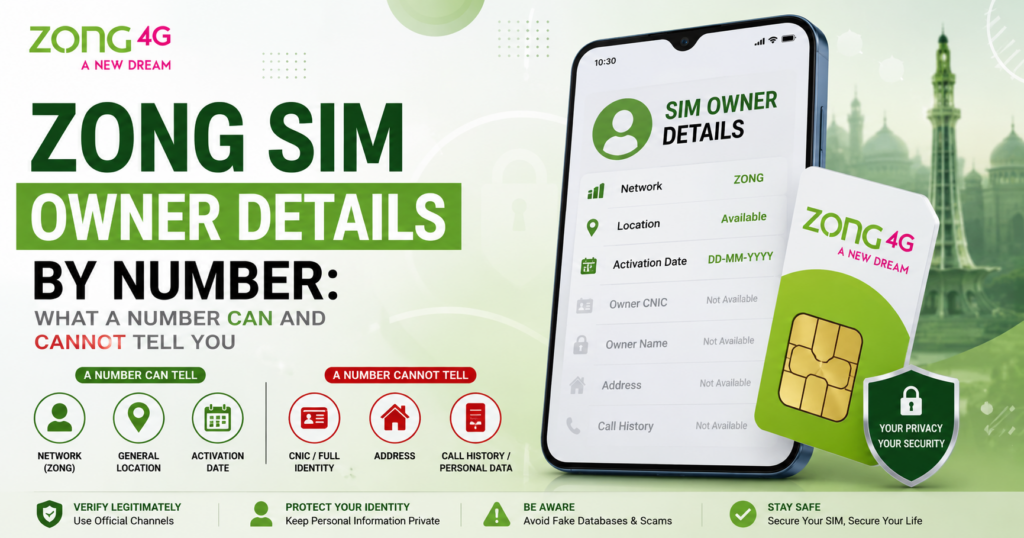
  • Zong SIM Owner Details in Pakistan: A Complete Guide

    Zong SIM Owner Details in Pakistan: A Complete Guide

    Searching for Zong SIM Owner Details can mean much more than simply trying to find the name associated with a mobile number. In Pakistan, people use this search when they want to understand SIM registration, verify a connection they personally use, review CNIC-linked registrations, manage an old number, or learn what to do when a SIM-related problem occurs.

    The first thing to understand is that SIM registration, mobile-number usage, and private subscriber information are separate concepts. A person may use a Zong SIM without that fact alone establishing them as the officially registered subscriber. Likewise, knowing someone’s mobile number does not automatically provide legitimate access to their confidential identity information.
    For official information about mobile services, SIM registration, subscriber-related regulations, and telecommunications in Pakistan, users should refer to the Pakistan Telecommunication Authority (PTA) and its official resources. Using an authorized source helps users understand applicable requirements without relying on unverified third-party SIM information websites.

    What Are Zong SIM Owner Details?

    The term Zong SIM Owner Details generally refers to information connected with the registration of a Zong mobile connection. For an individual checking their own connection, the practical objective is usually to understand whether the SIM is properly associated with their identity and whether their registration records are accurate.

    This can become particularly important when a person has owned several numbers over the years.

    Someone may have:

    • A currently active Zong SIM
    • An older number that is no longer used
    • A replacement SIM
    • A number that was transferred or changed
    • A connection they do not immediately recognize

    Instead of treating all of these situations as an “owner-name lookup,” it is better to identify the exact problem first.

    Why People Search for Zong SIM Owner Information

    The search intent behind this keyword varies considerably.

    A user might be asking:

    “How can I verify my own Zong SIM?”

    Another person may want to know:

    “Which SIMs are registered against my CNIC?”

    Someone else may be dealing with an unfamiliar connection and asking:

    “What should I do if a Zong SIM appears in my registration records?”

    These are legitimate mobile-management questions and require different procedures.

    A separate category involves searches such as Zong SIM Owner Name by Number. Such searches can lead to websites claiming that they can reveal complete subscriber profiles from a mobile number. Users should evaluate these claims carefully because a search result or database website is not automatically an official source.

    Your Own Registration Should Be the Starting Point

    If your purpose is to check a Zong connection that you personally use, focus on verification and registration management.

    You may need to determine whether:

    • Your Zong number is registered correctly
    • An old connection remains associated with your identity
    • A recently obtained SIM has been properly registered
    • An unfamiliar registration needs investigation
    • A number should be transferred or disowned

    Using the appropriate official telecom process is safer than submitting sensitive information to an unknown lookup website.

    Your CNIC, OTPs, passwords, banking credentials, and other authentication information should also remain private.

    What This Guide Will Cover

    This complete Zong SIM Owner Details Pakistan guide will examine SIM registration, CNIC-based checks, verification methods, ownership changes, disowning, lost and inactive connections, biometric verification, network-related questions, privacy, security threats, fake SIM databases, third-party lookup claims, customer support, and practical self-checks.

    The purpose is not simply to explain how a SIM is registered. It is to help users understand what can legitimately be checked, which method fits each situation, and how to protect their own mobile identity while managing a Zong connection responsibly.

    How Zong SIM Registration Is Linked to Subscriber Identity

    A Zong SIM is connected to a subscriber through a registration process in which the required identity information is associated with the mobile connection. This registration framework is the foundation for understanding Zong SIM Owner Details, because the person using a number and the person recorded as its registered subscriber are not necessarily identical.

    Registration Creates the Subscriber Record

    When a SIM is obtained through the proper procedure, the subscriber’s identity is verified according to the applicable requirements. The resulting registration connects the mobile connection with the identity information supplied during the process.

    This provides a basis for managing the connection later, including situations involving replacement, ownership changes, blocking, or other subscriber-related requests.

    For this reason, registration should not be viewed as a one-time technical step. It is part of the relationship between the subscriber and the mobile connection.

    Using a Zong SIM Is Not the Same as Registering It

    Consider a situation where one person obtains a Zong number and later allows another family member to use it.

    The second person may become the everyday user of the connection, but that does not automatically establish that the official subscriber record has changed.

    This distinction matters whenever the number needs to be replaced, transferred, blocked, or otherwise managed.

    Why Accurate Registration Is Useful

    Keeping your own mobile registrations organized can make several situations easier to handle.

    For example, you may need to know which connections:

    • You currently use
    • You previously used
    • You have replaced
    • You no longer require
    • You cannot immediately recognize

    A periodic review can help identify unnecessary or unfamiliar registrations before they create confusion.

    Registration and Privacy

    The identity information used during SIM registration should be treated as sensitive. A person should not assume that entering a mobile number into an online search gives them legitimate access to another subscriber’s confidential records.

    This is particularly important when websites advertise Zong SIM Owner Details by Number or similar services.

    The legitimate purpose of checking your own registration is very different from attempting to obtain another person’s private identity information.

    Keep Your Own Records Clear

    If you regularly use multiple mobile connections, maintain a simple personal record of the numbers you recognize and the purpose of each one.

    When you stop using a connection permanently, investigate the appropriate procedure for managing its registration rather than simply forgetting about it.

    Understanding how registration works provides the foundation for everything else in this guide, including CNIC-based checks, verification, ownership transfer, disowning, security, and handling unfamiliar Zong connections.

    Zong SIM Owner Name: What the Search Really Means

    The phrase Zong SIM Owner Name often appears alongside searches for Zong SIM information, but the meaning behind the query is not always the same. Some users want to confirm the registration of their own number, while others are attempting to identify an unfamiliar caller.

    These situations need to be treated differently.

    Registered Subscriber vs. Current User

    The registered subscriber is the person associated with the connection through the applicable registration process. The current user, meanwhile, is simply the person who is using the phone or SIM.

    In some cases, both are the same person. In others, a number may be used by a family member, employee, or another individual while remaining registered under the original subscriber.

    Therefore, seeing someone use a Zong number does not by itself establish that they are its registered subscriber.

    Can a Zong Number Reveal the Owner’s Full Identity?

    A mobile number should not be considered a public key to someone’s complete personal record.

    Knowing a number does not automatically provide legitimate access to information such as:

    • CNIC details
    • Home address
    • Call history
    • Private messages
    • Banking information
    • Account passwords
    • Real-time whereabouts

    Websites promising all of these through a simple number search should be approached with caution.

    Why Online Results Can Be Misleading

    Third-party websites sometimes use attractive terms such as Zong SIM Owner Details, “owner name check,” or “SIM database” to encourage visitors to submit a number.

    Even when a website displays a result, that does not establish that the information is current, official, or accurately connected to the person being searched.

    An outdated or incorrectly attributed record can create unnecessary confusion.

    What If You Need to Identify an Unknown Number?

    If an unfamiliar Zong number contacts you, consider the reason you want to identify it.

    If you simply want to know whether the call is legitimate, focus on the communication itself and avoid sharing sensitive information.

    If the caller requests an OTP, banking credentials, CNIC information, or payment, do not provide it merely because they claim to know your name or mobile details.

    For suspected fraud or harassment, use appropriate telecom or cybercrime reporting channels rather than attempting to obtain private subscriber records yourself.

    The Better Approach

    For your own Zong number, concentrate on registration verification and subscriber management.

    For someone else’s number, respect privacy and use legitimate reporting or verification channels when there is a genuine concern.

    This distinction makes the term Zong SIM Owner Details more meaningful: it is primarily about understanding legitimate SIM registration and managing your own connection, not about unrestricted access to another person’s private identity.

    Zong SIM Registration Check: Finding the Right Information

    A Zong SIM registration check is useful when you want to understand the registration status of a connection associated with you. Before checking anything, identify whether you need information about one particular SIM or a broader view of connections associated with your identity.

    These two objectives should not be confused because they involve different types of information.

    Checking a Specific Connection

    If you are using a Zong SIM and want to confirm its registration, focus on the verification process applicable to that connection.

    This can be especially useful after:

    • Activating a new SIM
    • Replacing an existing card
    • Changing your mobile setup
    • Recovering a previously used number
    • Encountering an unexpected registration issue

    Use the appropriate official channel and follow the instructions provided for the particular request.

    Reviewing SIMs Associated With Your Identity

    If your concern is broader, you may want to review the mobile connections associated with your own identity.

    This can help you recognize:

    • Current numbers
    • Older connections
    • Replaced SIMs
    • Unused registrations
    • Entries requiring clarification

    Keeping this information organized can reduce problems when you later need to activate another connection, remove an unwanted registration, or investigate an unfamiliar entry.

    Do Not Enter Your CNIC Everywhere

    Your identity information is sensitive. A website offering Zong SIM Owner Details is not automatically trustworthy simply because it asks for a CNIC or mobile number.

    Before entering personal information, determine whether the service is an appropriate official source for the task.

    Be particularly cautious if a service asks for an OTP, banking credentials, passwords, or payment while claiming that these are necessary to reveal private subscriber information.

    What If the Result Looks Unexpected?

    An unfamiliar entry should be investigated carefully rather than immediately interpreted as identity misuse.

    Think about old numbers, previous SIM replacements, family arrangements, or other legitimate explanations.

    If you still cannot identify the connection, contact the relevant operator or authorized service channel and ask about the available procedure for clarification or removal.

    Choose the Check According to Your Goal

    A useful way to approach Zong SIM Owner Details is to ask one question first:

    “What exactly am I trying to verify?”

    If the answer concerns your own registration, use an appropriate personal verification method.

    If the issue involves an unwanted or unfamiliar registration, follow the proper resolution process.

    If you simply need network information, use a network-check method rather than an owner lookup.

    This purpose-based approach keeps SIM management straightforward while reducing unnecessary exposure of personal information.

    Zong SIM Owner Details by Number: What a Number Can and Cannot Tell You

    Zong SIM Owner Details by Number in Pakistan
    Zong SIM Owner Details by Number – Understanding What Mobile Numbers Can and Cannot Reveal

    A search for Zong SIM Owner Details by Number often starts with a simple assumption: if someone knows a mobile number, they should be able to discover everything connected with it. In reality, a mobile number is only one part of the wider subscriber and telecommunications system.

    A Number Identifies a Connection

    A Zong mobile number is primarily used to identify a telecommunications connection. It can be relevant for calling, messaging, mobile internet, account recovery, and other services.

    However, knowing the number does not automatically provide unrestricted access to the private information associated with its subscriber.

    Information such as a person’s:

    • CNIC record
    • Residential address
    • Private communications
    • Call history
    • Banking credentials
    • Account passwords
    • Real-time location

    should not be treated as ordinary public information.

    Why Owner-Name Searches Cause Confusion

    People searching for Zong SIM Owner Name may encounter websites claiming that entering a mobile number will instantly reveal the subscriber’s identity.

    The presence of a result does not necessarily prove that the information is official, current, or accurate.

    A third-party database can contain outdated information, incorrect associations, incomplete records, or information presented without proper context. Users should therefore avoid treating an online lookup as equivalent to an official registration record.

    When Number-Based Information Is Useful

    There are legitimate reasons to investigate a Zong number without attempting to expose someone’s confidential identity.

    For example, you may want to:

    • Confirm a number you personally use
    • Determine network-related information
    • Recognize an old connection
    • Investigate an unfamiliar contact for security purposes
    • Report suspicious communication

    The appropriate action depends on the purpose of the check.

    If an Unknown Number Contacts You

    You do not need to obtain someone’s private subscriber profile simply because you received a call or message.

    Instead, evaluate the communication itself.

    If the person requests an OTP, banking information, CNIC details, passwords, or money, do not provide it. If the communication appears fraudulent or threatening, use the appropriate telecom or cybercrime reporting channel.

    Protect Your Own Information

    Ironically, people searching for Zong SIM Owner Details can sometimes expose their own information while trying to identify someone else.

    Avoid entering your CNIC, OTP, banking credentials, or account passwords into unfamiliar lookup websites.

    A service promising an instant owner name is not worth compromising your own identity or account security.

    The Key Principle

    A mobile number can help identify a connection, but it should not be treated as unrestricted access to another subscriber’s private identity.

    For your own Zong registration, use the appropriate official verification route. For an unfamiliar number, prioritize safety and legitimate reporting rather than relying on questionable owner databases.

    Zong SIM Verification and Subscriber Confirmation

    Verifying a Zong connection is most useful when the purpose is clearly defined. A subscriber may want to confirm the status of a number they use personally, understand its registration, or resolve an issue involving an existing connection. Each situation can require a different procedure.

    Confirm the Purpose Before Checking

    Instead of beginning with a search for a supposed Zong SIM Owner Details database, identify the exact question.

    You might be asking:

    • Is this my registered Zong connection?
    • Are my mobile registrations accurate?
    • Does an old number still need attention?
    • Is a SIM replacement required?
    • Does an ownership issue need to be resolved?

    Once the objective is clear, it becomes easier to choose the appropriate official route.

    Verification Protects Against Assumptions

    People sometimes rely on the name displayed by a contact application or information received from another person. Such information should not automatically be considered proof of official SIM registration.

    Subscriber registration is a separate matter.

    If you need certainty about your own connection, use the relevant verification process rather than relying on labels shown by unrelated applications.

    Keep Verification Personal

    When performing a registration check, use your own information and follow the applicable identity-verification requirements.

    Avoid asking an unknown individual to perform the check using your CNIC or other sensitive credentials. Giving another person access to your identity information can create a separate privacy problem.

    If Your Details Need Correction

    A discrepancy should be handled through the operator’s authorized process.

    For example, if a number is being used by you but its registration does not reflect the situation you expect, ask Zong about the applicable ownership or registration procedure.

    Do not attempt to “fix” the record through an unofficial database or an online intermediary.

    Verification Does Not Mean Full Data Access

    A legitimate verification process should not be interpreted as permission to obtain every piece of information connected with a subscriber.

    There is a significant difference between confirming a registration and accessing confidential records such as private communications, financial information, or detailed identity data.

    A Better Verification Habit

    Treat SIM verification as a personal account-management task.

    Use trusted channels, provide only necessary information, preserve any confirmation received, and seek clarification when the result does not match your records.

    This approach gives users a more accurate understanding of Zong SIM Owner Details while reducing dependence on questionable third-party lookup services.

    Zong SIM Registration Through CNIC

    For many people, the real purpose behind searching Zong SIM Owner Details is to understand which mobile connections are associated with their own CNIC. This is different from trying to identify the subscriber behind an unrelated number.

    A CNIC-based review is primarily about managing your own registration record and recognizing the connections you are responsible for.

    Why Review Your CNIC-Linked Connections?

    Mobile users can accumulate registrations over time. You may have activated several numbers, replaced older SIMs, stopped using certain connections, or moved between networks.

    As a result, your current phone may not represent every connection associated with your identity.

    A periodic review can help you recognize:

    • Your active Zong number
    • Older connections
    • Replaced SIMs
    • Unused registrations
    • Entries that require clarification

    What If You See an Unfamiliar Zong Registration?

    Do not immediately assume that an unknown entry proves identity theft.

    First, think about your previous mobile history. An old number that you forgot about can easily appear unfamiliar.

    If you still cannot establish a legitimate reason for the registration, contact the appropriate official telecom channel and ask how the matter can be investigated or resolved.

    If the connection does not belong to you, ask about the applicable procedure for removing or disowning it.

    Protect Your CNIC Information

    Your CNIC is sensitive identity information. Avoid entering it into random websites advertising Zong SIM Owner Details or “complete SIM data.”

    A website asking for personal information does not automatically have legitimate access to official registration records.

    Never provide an OTP, banking PIN, account password, or wallet credentials as part of an unofficial SIM lookup.

    CNIC Check vs. Number Lookup

    These two searches have very different purposes.

    CNIC-based review:
    Helps you understand registrations associated with your own identity.

    Number-based owner search:
    Attempts to determine information about the subscriber associated with a particular number.

    The first is a personal registration-management task. The second can involve another person’s privacy and should not be treated as an unrestricted public lookup.

    Keep Your Registration Record Organized

    After reviewing your own connections, maintain a simple list of the numbers you recognize and actively use.

    If a connection is no longer required, investigate the appropriate official procedure rather than leaving it forgotten indefinitely.

    A clear registration record gives you better control over your mobile identity and makes future SIM-related decisions easier.

    Zong SIM Owner Details and the Difference Between Registration and Usage

    A mobile connection can have several layers of information attached to it, and confusing those layers is one of the main reasons people misunderstand Zong SIM Owner Details. The number displayed on a phone, the network providing service, the person using the device, and the registered subscriber are not necessarily interchangeable.

    The Mobile Number

    The number is the communication identifier people use to call or message the connection. It can remain familiar even when other circumstances surrounding the connection change.

    For example, a subscriber may retain the same number while replacing the physical SIM or moving the connection through an applicable network-porting process.

    The Physical SIM

    The SIM is the physical or electronic subscriber module used to connect a compatible device to the mobile network.

    Replacing that module does not automatically mean that the registered subscriber has changed. A replacement can simply restore access to an existing connection, depending on the circumstances.

    The Person Using the Phone

    The everyday user may be different from the person recorded as the subscriber.

    This can happen when a parent gives a number to a child, an employee uses a business connection, or a family member temporarily uses someone else’s SIM.

    Therefore, observing who currently uses a number is not a reliable method for establishing its registration status.

    The Registered Subscriber

    The registered subscriber is the person associated with the connection through the applicable registration process.

    This is the concept that matters most when discussing ownership, transfer, disowning, replacement, and other subscriber-management actions.

    Why Keeping These Concepts Separate Helps

    Imagine a Zong number that has been used by the same family for several years. The original subscriber may no longer be the person who carries the phone every day.

    If that number later needs an ownership change or replacement, simply knowing who currently uses it may not be enough to determine which procedure applies.

    Understanding the distinction beforehand can prevent unnecessary confusion.

    A Useful Way to Think About It

    You can view a mobile connection through four separate questions:

    Which number is it?

    Which network currently provides the service?

    Who is using it?

    Who is it officially registered to?

    These answers may sometimes point to the same person and network, but they do not have to.

    This distinction is particularly useful when evaluating online claims about Zong SIM Owner Details by Number. A number can identify a communication connection without becoming a public gateway to confidential subscriber information.

    Zong SIM Verification: Avoiding Unreliable Information

    When looking into Zong SIM Owner Details, users may encounter different websites, apps, and online services offering SIM-related searches. Some present themselves as quick verification tools, while others advertise access to extensive subscriber databases.

    The important question is not simply whether a website produces a result. The more useful question is whether the information comes from a trustworthy and appropriate source.

    Search Results Are Not Proof of Ownership

    A name displayed beside a mobile number on an unrelated website should not automatically be treated as confirmation of the registered subscriber.

    Information published by third parties can be:

    • Outdated
    • Incomplete
    • Incorrectly associated
    • Missing important context
    • Presented without a verifiable source

    For matters involving your own registration, an appropriate official verification route provides a stronger basis for making decisions.

    Be Careful With “Complete Details” Claims

    Some services use phrases such as:

    Zong SIM Owner Details

    Zong Number Owner Name

    Zong SIM Database

    Zong SIM Data

    These phrases may sound authoritative, but terminology alone does not establish that a service has legitimate access to current subscriber records.

    A particularly strong warning sign is a service promising a full identity profile from nothing more than a mobile number.

    Protect the Information You Enter

    Before using any SIM-related website, examine what it asks you to submit.

    Avoid providing unnecessary:

    • CNIC information
    • OTP codes
    • Banking credentials
    • Wallet PINs
    • Account passwords
    • Identity documents

    An attempt to obtain someone else’s information should never result in exposing your own sensitive credentials.

    Apps Require the Same Caution

    The same principle applies to mobile applications. An app advertising Zong owner searches should not receive broad device permissions merely because it promises a quick lookup.

    Check the application’s source, permissions, reputation, and stated purpose before installation.

    Unknown APK files deserve additional caution because installing software outside trusted distribution channels can introduce security risks.

    Use Verification for a Specific Purpose

    A better approach is to decide what you need before searching.

    If you want to review your own registration, use an appropriate personal verification method.

    If you have discovered an unfamiliar connection, investigate it through the relevant telecom process.

    If an unknown number is contacting you suspiciously, focus on protecting yourself and reporting the issue rather than attempting to obtain confidential subscriber records.

    This keeps Zong SIM Owner Details focused on accurate registration awareness instead of unreliable online identity claims.

    Zong SIM Owner Details and Ownership Transfer

    Zong SIM Owner Details and Ownership Transfer in Pakistan
    Zong SIM Owner Details and Ownership Transfer

    When a Zong number is going to be permanently used by another person, the change should be handled as an ownership-transfer matter rather than an informal handover of the physical SIM.

    This distinction is important because the person carrying the SIM and the subscriber recorded in the registration system can be different.

    When a Transfer May Be Relevant

    An ownership change may become necessary when:

    • A family member permanently takes responsibility for a number.
    • A business connection is assigned to another authorized user.
    • The original subscriber no longer intends to retain the connection.
    • A number is being formally handed over to another eligible subscriber.

    The appropriate procedure should be confirmed with Zong because requirements can depend on the specific circumstances and current rules.

    Do Not Confuse Transfer With SIM Replacement

    A replacement deals primarily with restoring access to an existing connection when the physical SIM is lost, damaged, or otherwise unusable.

    An ownership transfer has a different purpose: changing the subscriber associated with the connection.

    Replacing a SIM therefore should not be assumed to have changed the registered owner.

    Prepare Before the Change

    Before transferring a number, review services that depend on it.

    The number may be connected to:

    • Banking alerts
    • Digital wallets
    • Email recovery
    • Messaging accounts
    • Business platforms
    • Login verification

    Important accounts should be updated where necessary so that the incoming user does not inherit access to services that belong to the previous subscriber.

    Identity Verification

    An ownership change may involve identity verification for the parties involved. Follow the requirements provided by an authorized Zong service channel and avoid using intermediaries who promise to complete the process without proper verification.

    Keep any receipt, confirmation, or reference information supplied after the transaction.

    What If You Do Not Want to Transfer It?

    If you no longer need the number and nobody else is taking responsibility for it, a disowning or closure-related procedure may be more appropriate.

    The correct choice depends on what you intend to happen with the connection.

    Why Proper Transfer Matters

    Keeping the registration aligned with the legitimate subscriber reduces confusion during future replacement, blocking, recovery, or account-related situations.

    For anyone researching Zong SIM Owner Details, the key lesson is simple: a permanent change of user should be handled through the applicable official ownership process rather than by merely passing the SIM from one person to another.

    Zong SIM Disowning: Removing a Connection You No Longer Need

    When a Zong connection is no longer required, leaving it unused is not always the best approach. A subscriber may have accumulated old numbers over time, replaced a previous SIM, or stopped using a connection after changing their mobile arrangements.

    For this reason, SIM disowning is an important part of responsible mobile-registration management.

    When Disowning Makes Sense

    You may consider asking about the applicable disowning procedure when:

    • You have permanently stopped using a Zong number.
    • An old connection is no longer required.
    • You have moved to another number and no longer need the previous one.
    • You discover a registration that genuinely does not belong to you.
    • You want to keep your identity-linked mobile registrations organized.

    If another eligible person is taking over the number permanently, however, ownership transfer may be more suitable than simply removing the connection.

    Disowning Is Different From Removing the SIM

    Taking a physical SIM out of your phone does not necessarily mean that its registration has been formally removed.

    Similarly, deleting a number from your contacts does not affect its subscriber registration.

    If you want a connection removed from your identity, use the applicable official process and follow the instructions provided by the operator.

    Before Disowning a Number

    Check whether the number is connected to important services.

    It may be used for:

    • Banking alerts
    • Mobile wallets
    • Email recovery
    • Messaging accounts
    • Business communication
    • Login verification

    Update those services before permanently giving up the connection.

    What If You Find an Unknown Registration?

    If an unfamiliar Zong connection appears during a personal registration review, first consider whether it could be an old number or a connection you previously used.

    If you cannot explain it, contact the appropriate official channel and ask how the registration can be investigated.

    Do not attempt to identify another person through an unofficial Zong SIM database.

    Keep Evidence

    After completing any registration-management request, retain the confirmation message, receipt, complaint reference, or other documentation provided by the authorized service channel.

    This gives you a useful record if the matter needs follow-up later.

    Choose the Correct Action

    The basic distinction is simple:

    No longer need the number? Ask about disowning.

    Another person is taking it permanently? Ask about ownership transfer.

    SIM is lost or damaged? Ask about blocking or replacement.

    Choosing the appropriate procedure helps keep your Zong SIM Owner Details accurate and reduces future registration confusion.

    Zong SIM Owner Details and Biometric Verification

    Biometric verification is an important part of SIM-related identity confirmation in Pakistan. For Zong subscribers, it may become relevant during certain registration and subscriber-management activities where the identity of the person making the request needs to be established.

    Why Biometric Verification Is Used

    A biometric process adds an identity-confirmation layer to selected telecom transactions. Instead of relying only on information entered into a form, the process can help establish that the person making the request is the legitimate individual associated with the required identity record.

    This can be relevant when dealing with activities such as:

    • New SIM registration
    • Certain SIM replacement requests
    • Ownership-related transactions
    • Other subscriber-management services requiring identity confirmation

    The exact requirement depends on the transaction and the applicable current procedure.

    What Subscribers Should Expect

    If a Zong service requires biometric verification, follow the instructions provided through an authorized service channel.

    Bring the identification documents requested for the transaction and make sure you are dealing with a legitimate Zong outlet or authorized representative.

    Avoid giving your identity documents to an unknown intermediary who claims they can complete the process faster.

    Failed Verification Does Not Automatically Mean Wrong Ownership

    A verification attempt that does not complete successfully should not immediately be interpreted as proof that your Zong SIM Owner Details are incorrect.

    There can be practical reasons for an unsuccessful attempt. Rather than searching for an unofficial workaround, ask the authorized service representative what procedure is available next.

    Protect Biometric and Identity Information

    Biometric-related information and identity documents are sensitive. Do not upload them to random websites advertising Zong owner-name searches or SIM databases.

    Likewise, never provide an OTP, banking PIN, password, or wallet credentials to someone claiming that these are required to complete biometric verification.

    Why This Matters for SIM Ownership

    Proper identity verification helps maintain a clearer connection between a subscriber and the mobile service being managed.

    For users, the important principle is straightforward: complete identity-sensitive SIM transactions through appropriate authorized channels and keep your personal information under your control.

    This approach supports safer management of Zong connections while reducing the risks associated with unofficial SIM lookup and registration services.

    Zong SIM Owner Details and SIM Replacement

    A damaged, lost, or malfunctioning SIM does not necessarily mean that a subscriber needs to obtain a completely different mobile number. In many situations, the existing connection may be recoverable through the operator’s applicable replacement process.

    Understanding this distinction is useful when managing Zong SIM Owner Details, particularly when the number is connected to important personal or financial services.

    When a Replacement May Be Needed

    A subscriber may need to request a replacement when:

    • The physical SIM has been damaged.
    • The SIM has been lost.
    • The card no longer works properly.
    • A compatible replacement is required for a particular device.
    • The subscriber needs to restore access to an existing connection.

    The exact requirements depend on the reason for replacement and the operator’s current procedures.

    Identity Verification During Replacement

    Because a replacement can restore access to an existing mobile connection, identity verification may be required.

    If you are the legitimate subscriber, use the authorized Zong service channel and follow the instructions provided for your situation.

    Avoid asking an unknown individual to arrange a replacement using your CNIC or other personal credentials.

    Lost SIMs Require Prompt Action

    If your Zong SIM has been lost or stolen, do not wait unnecessarily before contacting the operator.

    A missing SIM can potentially receive calls, SMS messages, and verification codes. If your number is connected to important accounts, unauthorized access to the connection may create additional risks.

    Ask Zong about the appropriate blocking and replacement options.

    Replacement Is Not Ownership Transfer

    A SIM replacement should not automatically be interpreted as an ownership change.

    If the same subscriber is restoring their connection, the purpose is generally to regain access to the existing service.

    If another person is permanently taking responsibility for the number, an ownership-transfer process is a separate matter.

    Keeping these two situations separate helps prevent mistakes in subscriber management.

    Review Accounts After Recovery

    Once access to your number has been restored, check important services that depend on it.

    Pay particular attention to:

    • Banking notifications
    • Mobile-wallet accounts
    • Email recovery
    • Messaging applications
    • Login verification

    If anything unusual occurred while the SIM was missing, contact the relevant service provider through its official channel.

    Keep the Process Documented

    Retain any confirmation, receipt, or reference information provided during the replacement request.

    A clear record can help if you later need to discuss the transaction with customer support.

    For Zong SIM Owner Details, the key principle is simple: protect a lost connection quickly, complete replacement through an authorized process, and distinguish restoring a SIM from changing its registered subscriber.
    If you need to verify identity-related information for an official document, registration matter, or other government service, it is important to use the authorized channels provided by the relevant authority. For identity and registration services in Pakistan, you can refer to the National Database and Registration Authority (NADRA) for official information and guidance.

    Zong SIM Owner Details and Network Changes

    Zong SIM Owner Details and Network Changes in Pakistan
    Zong SIM Owner Details and Network Changes – Complete Guide 2026

    A mobile number can remain familiar even when the network service associated with it changes. This is possible through Mobile Number Portability (MNP), which allows eligible subscribers to retain their existing number when moving between participating networks.

    This matters when interpreting Zong SIM Owner Details, because a number’s prefix alone should not always be treated as definitive evidence of its current network.

    Number and Network Are Different

    A mobile number identifies the connection used for communication, while the network represents the operator currently providing service.

    These two elements should therefore be considered separately.

    For example, a subscriber may move an existing number to Zong while continuing to use the same digits. Someone looking only at the number may assume the original network is still providing the service, even though the connection has changed through portability.

    Does Changing Networks Change the Subscriber?

    Moving a number between networks does not automatically mean that its registered subscriber has changed.

    Network migration and ownership transfer are separate concepts.

    If the same person ports their number to Zong, the network service changes while the subscriber relationship can remain associated with that person.

    If the number is later handed permanently to another eligible subscriber, a separate ownership procedure may apply.

    Why This Matters When Checking a Number

    Suppose you receive a number that appears to belong to another network based on its prefix. That information alone may not accurately represent its current service provider.

    If you need current network information, use an appropriate network-check method.

    If your concern is subscriber registration, use a registration-focused process instead.

    Trying to answer both questions with the same lookup can lead to inaccurate assumptions.

    MNP and Account Security

    Before changing networks, review services that depend heavily on your mobile number.

    These can include:

    • Banking notifications
    • Mobile wallets
    • Account recovery
    • Verification services
    • Business communication

    Make sure you understand how the transition may affect these services and retain relevant confirmation from the operator.

    A Simple Way to Remember It

    Think of the connection in three layers:

    Number: the communication identifier.

    Network: the operator currently providing service.

    Subscriber: the person associated with the registration.

    One layer can change without automatically changing the others.

    Understanding this distinction prevents network information from being mistaken for Zong SIM Owner Details and helps users choose the correct method when checking or managing their own mobile connection.

    Zong SIM Owner Details and Unwanted SIM Registrations

    An unexpected Zong connection associated with your identity deserves attention, particularly when you have no recollection of activating or using the number. The correct response is to investigate the registration through an appropriate channel rather than attempting to discover the supposed subscriber through an unofficial database.

    First, Check Your Own Records

    Before assuming something is wrong, review your previous mobile connections.

    Think about numbers you may have:

    • Used several years ago
    • Replaced after damage or loss
    • Stopped using without formally managing
    • Given up after changing your primary number
    • Used temporarily for another purpose

    An unfamiliar entry may have a straightforward explanation.

    When the Registration Still Cannot Be Explained

    If you genuinely cannot connect the Zong number with your mobile history, seek clarification through the relevant official telecom process.

    Explain that the connection is unfamiliar and ask what procedure is available for reviewing or resolving the registration.

    If the connection is confirmed as unnecessary or unauthorized in relation to your identity, follow the applicable process for removing it.

    Do Not Investigate Through Private Databases

    An unfamiliar registration can tempt users to search for the person’s name, CNIC, or address online.

    That is not a safe solution.

    Third-party websites claiming to provide Zong SIM Owner Details by Number may display inaccurate information or request sensitive data from you in return.

    The better approach is to address the registration itself through the appropriate authority.

    Protect Your Identity During the Process

    Keep your personal documents and authentication information under your control.

    Never share:

    • OTPs
    • Banking passwords
    • Wallet PINs
    • Login credentials
    • Unnecessary CNIC copies

    with someone claiming they can remove or investigate the SIM for you.

    Keep a Record of the Resolution

    If you submit a request or complaint, retain the reference number, receipt, confirmation message, or other evidence provided.

    A documented record can be useful if you need to follow up later.

    Review Your Mobile Connections Periodically

    A personal SIM audit does not need to be complicated. Keep track of the numbers you currently recognize and periodically review whether older connections still need to remain associated with you.

    The objective is simple: know which mobile connections belong to your registration, address unexplained entries through legitimate channels, and protect the identity information used during the process.

    Zong SIM Owner Details and Number Ownership Changes

    A mobile number can have a long history, particularly when it has been used for personal communication, business activity, or account recovery. When responsibility for that number moves from one subscriber to another, the change should be handled through the applicable ownership procedure rather than through an informal exchange of the SIM card.

    When Ownership May Need to Change

    A formal change may be relevant when a Zong number is permanently moving to another eligible subscriber.

    Examples include:

    • A number being handed over within a family
    • A business connection being assigned to another responsible user
    • A subscriber permanently giving up control of a number
    • A long-term change in who will manage the connection

    The exact requirements should be confirmed through an authorized Zong channel because procedures can depend on the circumstances and current rules.

    Review Connected Services Beforehand

    A mobile number can remain attached to online accounts long after the owner stops thinking about them.

    Before transferring a number, review services that use it for:

    • Password recovery
    • Login verification
    • Banking alerts
    • Mobile-wallet notifications
    • Messaging accounts
    • Business communication

    Remove or replace the old number wherever necessary before completing the ownership change.

    Registration Should Match the Intended Subscriber

    The purpose of an ownership procedure is to keep the registration record aligned with the person who will be responsible for the connection.

    Simply handing someone the SIM does not provide the same clarity as completing the applicable official process.

    This becomes especially important if the number later needs replacement, blocking, recovery, or another subscriber-related service.

    Keep Transaction Evidence

    After completing an ownership-related request, retain any receipt, confirmation message, reference number, or other documentation supplied by the authorized service channel.

    Do not rely solely on verbal assurances from an intermediary.

    What If the Number Is No Longer Needed?

    If nobody is taking over the connection, an ownership transfer may not be the appropriate solution. Instead, ask about the applicable procedure for ending or disowning the registration.

    Choosing the correct action depends on what you want to happen to the number.

    A Practical Rule

    Permanent new subscriber = consider ownership transfer.

    No longer required = investigate disowning or closure.

    Same subscriber with a damaged or lost SIM = investigate replacement.

    Keeping these situations separate makes Zong SIM Owner Details easier to manage and reduces confusion when a mobile number changes hands.

    Zong SIM Owner Details and Lost or Stolen SIMs

    Zong SIM Owner Details and Lost or Stolen SIMs in Pakistan
    Zong SIM Owner Details and Lost or Stolen SIMs – Complete Guide 2026

    Losing a Zong SIM can create both practical and security concerns, particularly when the number is connected to important online or financial services. The priority should be to protect the connection quickly rather than attempting to find the missing SIM through an unofficial tracking service.

    Report the Missing Connection

    If your Zong SIM has been lost or stolen, contact Zong through an appropriate official channel and ask about the available blocking and replacement options.

    Depending on the circumstances, you may need to complete identity verification before the request can be processed.

    Acting promptly can help prevent unauthorized use of the missing SIM.

    Why a Lost Number Matters

    A mobile connection may receive more than ordinary calls and messages. It can also be used for:

    • Banking notifications
    • Mobile-wallet alerts
    • Account recovery
    • Verification codes
    • Business communication
    • Personal messages

    If another person gains control of the physical SIM, they may potentially receive communications intended for you.

    Secure Important Accounts

    After losing the SIM, think about the services that depend on your number.

    If you notice unusual account activity, contact the relevant bank, wallet provider, email service, or other platform through its official support channel.

    Do not wait for a suspicious transaction before reviewing the accounts associated with the missing number.

    Never Give Away an OTP

    A lost SIM situation can sometimes attract impersonation attempts.

    Someone may claim that they need an OTP, CNIC information, password, or banking details to “restore” your Zong connection.

    Do not provide such information simply because the person claims to represent the operator.

    Use a trusted official channel to verify any request.

    Replacement and Ownership Are Different

    If you remain the legitimate subscriber and only the physical SIM has disappeared, the relevant solution may involve blocking and replacing the connection.

    If another person is permanently taking over the number, that is a separate ownership matter and should be handled through the applicable procedure.

    Keep the Confirmation

    After submitting a blocking or replacement request, save the reference number, receipt, confirmation message, or other evidence provided by the operator.

    This can make follow-up easier if the issue continues.

    The Main Safety Rule

    For Zong SIM Owner Details, remember that protecting the number is more important than trying to track the physical SIM.

    Report the loss, secure the connection, protect linked accounts, complete authorized verification, and keep your credentials private.

    Zong SIM Owner Details and SIM Replacement After Loss

    When a Zong subscriber loses a SIM, replacing the physical card may restore access to the same mobile connection. This situation is different from obtaining a completely new number, and it should also be distinguished from transferring the registration to another person.

    What a Replacement Is Intended to Do

    A replacement generally addresses the physical SIM rather than creating a new subscriber relationship.

    This can be relevant when:

    • The card has been lost.
    • The SIM has been stolen.
    • The physical card is damaged.
    • The connection needs to be restored through an authorized replacement process.

    The applicable requirements should always be confirmed through Zong’s current official procedure.

    Identity Confirmation May Be Required

    Because SIM replacement can restore access to an existing number, the operator may require identity verification before processing the request.

    If you are the legitimate subscriber, follow the instructions provided by the authorized service channel.

    Avoid using unofficial intermediaries who promise replacement without proper verification.

    What Happens to the Number?

    A replacement process may allow the subscriber to retain the existing number where applicable, but the outcome depends on the connection’s status and the operator’s current rules.

    Do not assume that every inactive or long-unused number can automatically be recovered.

    Review Services Connected to the Number

    Before or after recovering a lost connection, review important services associated with the number.

    These may include:

    • Banking alerts
    • Mobile wallets
    • Email recovery
    • Messaging applications
    • Two-factor authentication

    If the SIM was missing for an extended period, pay attention to unexpected security notifications or account activity.

    Replacement Is Not a Transfer

    If you are keeping the number yourself, a replacement addresses access to the connection.

    If another person is permanently becoming the subscriber, an ownership-transfer process is a separate matter.

    Confusing these two procedures can leave the registration record inconsistent with the intended user.

    Keep Your Documentation

    After completing the replacement, retain any receipt, reference number, confirmation message, or other record provided by Zong.

    Having evidence of the transaction can be useful if you later need customer support.

    For anyone researching Zong SIM Owner Details, the practical lesson is that a lost physical SIM should be handled through an authorized replacement process, while ownership changes should be treated separately.

    Zong SIM Owner Details and Inactive Numbers

    A Zong number that has not been used for some time can create uncertainty for the subscriber, particularly when an old connection is no longer part of everyday mobile use. Instead of assuming that an unused SIM has automatically disappeared from every record, it is better to determine its current status through the appropriate channel.

    Why Old Numbers Can Cause Confusion

    Mobile users frequently change numbers, replace SIM cards, or move to another connection. Over time, they may forget which registrations were associated with their identity.

    An old Zong number may therefore become difficult to recognize when reviewing personal records.

    Before treating an unfamiliar entry as suspicious, consider your previous mobile history and any numbers you may have stopped using.

    Do Not Assume Inactivity Means Immediate Removal

    The status of an unused connection depends on the circumstances and applicable operator policies. A subscriber should not rely on assumptions about how long a number remains available or what happens after prolonged inactivity.

    If the number is important, contact Zong through an authorized channel and ask about its current status and available options.

    If You No Longer Need the Number

    When a connection has no remaining purpose, consider managing it properly instead of simply leaving it unused.

    Before doing so, review services that may still depend on the number, including:

    • Banking notifications
    • Mobile wallets
    • Account recovery
    • Messaging platforms
    • Business contacts

    Update those services before permanently giving up the connection.

    What About Number Recycling?

    Mobile numbers can have lifecycle changes, and a number that is no longer retained by one subscriber may eventually become available under applicable rules.

    This is another reason not to assume that an old number will remain under your control indefinitely.

    If you have abandoned a number, remove it from important accounts and follow the appropriate operator process where necessary.

    An Old Number Is Not the Same as a New Owner

    If you later encounter the same number associated with another user, that does not mean the previous subscriber should attempt to access the new user’s private information.

    Number history and current subscriber information are separate matters.

    Keep Your Own Records Updated

    A useful habit is to maintain a list of numbers you currently recognize and periodically review connections that are no longer needed.

    This makes Zong SIM Owner Details easier to manage and reduces confusion around old, inactive, replaced, or discontinued connections.

    Zong SIM Owner Details and Number Portability

    Mobile Number Portability (MNP) is an important concept when researching Zong SIM Owner Details because a subscriber can potentially retain a familiar mobile number while changing the network providing the service.

    This means the number itself should not always be treated as proof of its current network.

    Number and Network Are Separate

    A mobile number is used to identify the communication connection, while the network represents the operator currently providing service.

    For example, someone may move an existing number to Zong while keeping the same digits. Their contacts continue using the familiar number, but the underlying network service has changed.

    This is why relying only on a number prefix can sometimes create confusion.

    Does Porting Change the Registered Subscriber?

    Changing the network through MNP should not automatically be confused with changing the registered subscriber.

    If a person ports their own number to Zong, the network relationship changes while the subscriber registration can remain associated with that same person.

    Ownership transfer is a separate matter.

    This distinction is particularly useful when users search for Zong SIM Owner Details by Number and expect the number itself to reveal the complete registration history.

    Why Prefix-Based Assumptions Can Be Misleading

    A prefix may be useful as an initial clue about a number’s history, but it should not necessarily be treated as definitive evidence of the current operator.

    If you need current network information, use an appropriate network-check facility.

    If your objective is to understand your own registration, use a registration-focused verification method instead.

    MNP and Important Accounts

    A number that moves between networks can remain connected to services that rely on it for communication or verification.

    Before making a network change, review important accounts and services associated with the number. Make sure you understand any requirements that could affect continued access.

    After the change, retain relevant confirmation information and monitor important account notifications.

    Keep the Three Concepts Separate

    A useful way to understand a portable mobile number is:

    Mobile number: the identifier people use to contact you.

    Network: the operator currently providing the connection.

    Registered subscriber: the person associated with the registration.

    These elements can interact without being identical.

    Understanding this relationship helps prevent network information from being mistaken for Zong SIM Owner Details and makes it easier to choose the correct verification method for a particular situation.

    Zong SIM Owner Details and SIM Limit Management

    Managing the number of mobile connections registered under your identity becomes increasingly important when you have used several SIMs over time. Old numbers, replacement cards, secondary connections, and unused registrations can make it difficult to remember exactly what remains associated with your identity.

    For this reason, SIM limit management should be viewed as part of responsible subscriber record-keeping.

    Why the Limit Matters

    Applicable registration limits can affect a subscriber who wants to activate another connection while already having several registered SIMs.

    Instead of waiting until a new activation creates an issue, review the connections you actually recognize and determine whether older registrations still have a legitimate purpose.

    Separate Active Use From Registration

    A SIM that is no longer in your phone should not automatically be assumed to have disappeared from your registration history.

    Likewise, replacing a physical SIM does not necessarily mean that the underlying mobile connection has become a completely different registration.

    Keeping a personal record of your numbers can make these situations easier to understand.

    Review Before Getting Another SIM

    Before requesting another Zong connection, consider whether you already have:

    • A primary personal number
    • A secondary connection
    • An older unused number
    • A replaced SIM
    • A connection that needs to be transferred or removed

    If you are unsure about the applicable limit or your current registration status, confirm the information through an appropriate official channel.

    What If You Have Reached the Applicable Limit?

    Do not use unofficial services that claim they can bypass registration restrictions.

    Instead, review your existing connections and determine whether an old or unnecessary registration should be properly managed.

    Depending on the circumstances, you may need to ask about disowning, closure, ownership transfer, or another authorized solution.

    Rules Can Change

    SIM registration requirements and applicable limits can be updated by the relevant authorities. Therefore, avoid relying on an old article, social-media post, or outdated screenshot when making an important registration decision.

    For current requirements, check the appropriate official source or ask an authorized service representative.

    Maintain a Simple SIM Inventory

    A practical record can contain four columns:

    Number → Network → Purpose → Status

    For example, mark whether a number is actively used, kept for a specific purpose, or no longer required.

    This small habit can make future Zong SIM Owner Details checks much easier and can help you recognize unfamiliar registrations.

    Zong SIM Owner Details and Banking or Wallet Security

    A Zong mobile number can serve as a communication channel for financial services, which makes control over the connection particularly important. If your number receives banking alerts, wallet notifications, or verification codes, protecting the SIM should be treated as part of your wider account-security routine.

    Know Which Accounts Depend on Your Number

    Take a moment to identify important services that use your Zong number.

    These may include:

    • Bank account notifications
    • Mobile-wallet services
    • Payment applications
    • Email recovery
    • Login verification
    • Business accounts

    Knowing where your number is used makes it easier to respond if the SIM is lost, replaced, transferred, or compromised.

    Never Share Verification Codes

    An OTP is intended for a specific authentication event. If an unknown caller asks you to read a code aloud, do not provide it.

    The same rule applies if someone claims to be from a telecom operator, bank, wallet provider, or another trusted organization.

    If you are unsure about a request, end the conversation and contact the organization through a verified official channel.

    Watch for Unexpected Account Activity

    Pay attention to notifications involving actions you did not initiate.

    For example, an unexpected password reset, login alert, wallet transaction, or SIM-related message may deserve immediate investigation.

    Do not assume that every unusual notification is harmless.

    What to Do After Losing Your SIM

    If your Zong SIM is lost or stolen, contact the operator promptly about blocking and replacement options.

    Then review important accounts that depend on the number. If you notice suspicious activity, contact the relevant financial institution or service provider immediately through its official support route.

    Avoid Unofficial “Security” Services

    Someone may offer to check your Zong SIM Owner Details or secure your number in exchange for your CNIC, OTP, password, or payment.

    Do not provide sensitive credentials simply because the person claims to be helping.

    A legitimate security process should be verified independently.

    Review Your Recovery Information

    If you permanently stop using a Zong number, update important accounts before giving up control of the connection.

    Leaving an old number attached to a recovery system can create problems later, especially if the number eventually returns to the mobile-number pool and is assigned elsewhere.

    Protect the Number as an Account Key

    Your mobile number can function as an important recovery and verification channel.

    Therefore, responsible Zong SIM Owner Details management includes more than checking registration. It also means knowing which accounts depend on the number, protecting authentication codes, responding quickly to suspicious activity, and keeping control of the connection throughout its lifecycle.

    If a mobile number, SIM, or online account is connected to fraud, harassment, identity misuse, or another cybercrime, it should not be treated as a routine SIM-verification issue. In such situations, users can refer to the National Cyber Crime Investigation Agency (NCCIA) and its official channels for information about reporting and addressing cybercrime-related matters.

    Zong SIM Owner Details and Customer Support

    When a subscriber cannot resolve a registration or SIM-related issue independently, contacting Zong customer support is the appropriate next step. The key is to explain the actual problem rather than relying on an unofficial service claiming to provide instant owner information.

    Situations That May Require Assistance

    Support may become useful when you are dealing with:

    • A lost or damaged SIM
    • An unexpected registration
    • A replacement request
    • An ownership-related issue
    • An inactive connection
    • A verification problem
    • A number that requires further clarification

    The appropriate procedure depends on the circumstances.

    Explain the Problem Clearly

    When contacting an authorized support channel, describe the issue in straightforward terms.

    For example, instead of asking for “complete Zong SIM owner details,” explain whether you need to verify your own registration, replace a missing SIM, resolve an unfamiliar connection, or understand an ownership procedure.

    Clear information helps direct the request toward the correct service.

    Keep Sensitive Information Private

    Customer support should not be confused with permission to disclose every security credential.

    Never voluntarily provide an OTP, banking PIN, account password, or wallet credentials to an unsolicited caller.

    If someone contacts you claiming to represent Zong and requests sensitive information unexpectedly, independently verify the request through a trusted official channel.

    Authorized Service Locations

    Some SIM-related transactions may require an in-person visit and identity verification.

    If you are directed to an authorized service location, follow the documentation requirements provided by Zong.

    Do not hand your identity documents to an unknown intermediary who promises to complete the process without proper verification.

    Keep Complaint Details

    If you submit a complaint or service request, retain any reference number, receipt, confirmation message, or other evidence supplied during the process.

    This information can be useful if the matter remains unresolved and requires additional follow-up.

    Avoid Unofficial Assistance

    Third-party individuals sometimes advertise services such as “Zong owner name check” or “SIM data verification.”

    Using such intermediaries can expose your personal information without guaranteeing an accurate result.

    For registration-related concerns, dealing directly with the appropriate operator channel provides a clearer path to resolution.

    The Practical Approach

    When a Zong SIM issue becomes complicated, use this sequence:

    Identify the problem → contact an authorized channel → complete required verification → retain the reference details → follow up if necessary.

    This keeps your Zong SIM Owner Details management focused on legitimate subscriber services and reduces unnecessary privacy and security risks.

    Zong SIM Owner Details and SIM-Swap Protection

    A mobile number can become a valuable access point when it is connected to banking services, digital wallets, email accounts, and other platforms. This makes SIM-swap protection an important part of managing a Zong connection.

    SIM-swap fraud involves an unauthorized attempt to move a subscriber’s number onto another SIM. If successful, the person controlling the replacement SIM may receive calls or SMS messages intended for the legitimate subscriber.

    Recognize Unusual Signs

    One unusual event does not automatically prove that a SIM swap has occurred. However, several unexpected changes happening together deserve immediate attention.

    Possible warning signs include:

    • Sudden unexplained loss of mobile service
    • An unexpected SIM replacement notification
    • Password-reset messages you did not request
    • Banking alerts for unfamiliar activity
    • Login notifications from unknown devices
    • Someone asking you to provide an OTP

    Respond Quickly

    If you suspect unauthorized control of your Zong number, contact Zong through an appropriate official channel and explain what happened.

    If the number is connected to financial services, contact the relevant bank or wallet provider through its verified support channel as well.

    Do not wait until you see a financial loss before taking action.

    Never Share an OTP

    An OTP should remain confidential.

    A caller may claim to be from Zong, a bank, a wallet service, or another organization and say that a code is needed to “verify” or “restore” your account.

    Do not read the code to them.

    If a genuine service needs you to complete verification, follow the instructions within the trusted service itself rather than giving a code to an unsolicited caller.

    Protect Your Recovery Accounts

    Review accounts that depend on your Zong number for password recovery or authentication.

    Where stronger authentication options are available, consider using them so that control of the mobile number is not the only barrier protecting an important account.

    Be Careful With Personal Information

    Do not give your CNIC information, banking credentials, wallet PIN, password, or other sensitive details to someone offering to investigate your Zong SIM Owner Details.

    A person claiming to help with a SIM problem can create an additional security risk if they gain access to your credentials.

    Maintain Good SIM Security

    The best defense is a combination of awareness and quick action:

    Protect your identity → keep authentication codes private → monitor unusual activity → contact official support when something changes.

    A secure mobile connection protects more than calls and messages; it can also help protect the digital accounts connected to your number.

    Zong SIM Owner Details and Online SIM Database Claims

    Searches for Zong SIM Owner Details can lead users toward websites that advertise extensive mobile-number databases. Some pages claim to provide owner names, CNIC information, addresses, or other subscriber records after entering a Zong number.

    These claims should be evaluated carefully rather than accepted simply because a website produces a result.

    Why Database Claims Need Caution

    A third-party database may contain information that is:

    • Outdated
    • Incomplete
    • Incorrectly attributed
    • Taken out of context
    • Presented without a verifiable source

    Even when a displayed name appears plausible, that does not establish that it represents the current registered subscriber.

    Official registration information and an unverified online database should therefore not be treated as equivalent sources.

    Be Careful With “Leaked Data”

    Some websites or social-media posts describe their information as “leaked SIM data” or a “complete Zong database.”

    Users should avoid downloading or sharing such material. Apart from accuracy concerns, handling supposedly leaked personal information can create serious privacy and security issues.

    More importantly, searching through such material can expose your own device, account, or identity information to unknown operators.

    Payment Does Not Make a Service Official

    Another common tactic is to offer a free search that reveals only limited information and then request payment for “complete details.”

    A payment page does not prove that the underlying database is genuine or authorized.

    Before entering card information or other financial details, determine whether the service is actually appropriate for your purpose.

    Avoid Uploading Identity Documents

    A website should not automatically receive a copy of your CNIC simply because it claims to provide Zong SIM Owner Details.

    If you need to manage your own SIM registration, use the appropriate official route instead.

    Never upload identity documents to an unknown website merely to discover information about another subscriber.

    What to Do Instead

    If you need information about your own Zong registration, use an appropriate official verification process.

    If an unfamiliar number is causing concern, focus on the actual issue—such as suspected fraud, harassment, or an unwanted registration—and use the relevant telecom or cybercrime reporting channel.

    This is more useful than relying on a questionable database whose origin and accuracy cannot be established.

    A Simple Reliability Test

    Before trusting an online SIM-information service, ask:

    Is the source official?

    Is the information verifiable?

    Why is sensitive information being requested?

    Does the service explain how the information is obtained?

    Would I be comfortable giving this website my own identity details?

    If the answers raise concerns, do not proceed.

    For Zong SIM Owner Details, reliable information should come from appropriate official verification and subscriber-management channels, not from unsupported claims of unrestricted access to private databases.

    زونگ سم اونر ڈیٹیلز — مکمل اردو تفصیل

    Zong SIM Owner Details مکمل اردو تفصیل
    زونگ سم اونر ڈیٹیلز — مکمل اردو تفصیل

    اگر آپ Zong SIM Owner Details کے بارے میں معلومات حاصل کرنا چاہتے ہیں تو سب سے پہلے یہ سمجھنا ضروری ہے کہ سم استعمال کرنا اور اس کا باقاعدہ رجسٹرڈ صارف ہونا ایک ہی بات نہیں ہے۔ زونگ سم کی رجسٹریشن کے وقت صارف کی شناخت کو موبائل کنکشن کے ساتھ منسلک کیا جاتا ہے۔ اسی رجسٹریشن کی بنیاد پر سم کی ملکیت، شناختی کارڈ سے منسلک سمز اور تصدیق جیسے معاملات کو سمجھا جاتا ہے۔

    لوگ عموماً زونگ سم اونر ڈیٹیلز اس لیے تلاش کرتے ہیں کہ وہ اپنی سم کی رجسٹریشن چیک کرنا چاہتے ہیں، اپنے شناختی کارڈ پر موجود موبائل کنکشنز کے بارے میں جاننا چاہتے ہیں، کسی پرانے نمبر کا اسٹیٹس معلوم کرنا چاہتے ہیں یا کسی نامعلوم رجسٹریشن کی وضاحت چاہتے ہیں۔ تاہم کسی دوسرے شخص کے موبائل نمبر سے اس کا شناختی کارڈ، پتہ، کال ریکارڈ، بینکنگ معلومات یا دوسری نجی معلومات حاصل کرنا عام سم ویریفکیشن نہیں ہے۔

    زونگ سم اونر ڈیٹیلز سے کیا مراد ہے؟

    زونگ سم اونر ڈیٹیلز سے عام طور پر مراد کسی موبائل کنکشن کی رجسٹریشن سے متعلق معلومات ہوتی ہیں۔ اگر آپ اپنی سم چیک کر رہے ہیں تو بنیادی مقصد یہ معلوم کرنا ہوتا ہے کہ آیا وہ کنکشن آپ کی شناخت کے ساتھ درست طور پر رجسٹرڈ ہے یا نہیں۔

    یہ بات بھی یاد رکھنی چاہیے کہ جو شخص سم استعمال کر رہا ہو ضروری نہیں کہ وہی اس کا سرکاری طور پر رجسٹرڈ صارف ہو۔

    مثال کے طور پر اگر کسی شخص نے اپنے نام پر زونگ سم حاصل کی اور بعد میں وہ سم اپنے خاندان کے کسی فرد کو استعمال کرنے کے لیے دے دی، تو صرف سم استعمال کرنے سے رجسٹریشن خود بخود دوسرے شخص کے نام پر منتقل نہیں ہو جاتی۔

    اسی لیے رجسٹرڈ صارف، موجودہ استعمال کنندہ، موبائل نمبر اور نیٹ ورک کو الگ الگ تصورات کے طور پر سمجھنا چاہیے۔

    شناختی کارڈ کے ساتھ زونگ سم رجسٹریشن

    CNIC کی بنیاد پر سم چیک کرنے کا بنیادی مقصد اپنی شناخت کے ساتھ منسلک موبائل رجسٹریشن کو سمجھنا ہے۔ لوگ وقت کے ساتھ کئی سمز استعمال کرتے ہیں، پرانے نمبرز تبدیل کرتے ہیں اور بعض کنکشنز کو استعمال کرنا چھوڑ دیتے ہیں۔ اس وجہ سے کبھی کبھار کسی شخص کو اپنی پرانی سم یا رجسٹریشن یاد نہیں رہتی۔

    اگر اپنی رجسٹریشن چیک کرتے وقت کوئی زونگ کنکشن نامعلوم نظر آئے تو فوراً یہ فرض نہیں کرنا چاہیے کہ شناخت کا غلط استعمال ہوا ہے۔ پہلے اپنے پرانے نمبرز، سم تبدیلی اور سابقہ کنکشنز کو یاد کریں۔ اگر پھر بھی کوئی وضاحت نہ ملے تو متعلقہ سرکاری ٹیلی کام چینل سے معلومات حاصل کرنا بہتر ہے۔

    زونگ سم اونر نیم بائی نمبر

    Zong SIM Owner Name یا Zong SIM Owner Details by Number بہت عام سرچز ہیں۔ لیکن موبائل نمبر کو کسی دوسرے شخص کی مکمل نجی شناخت حاصل کرنے کا ذریعہ نہیں سمجھنا چاہیے۔

    آن لائن بعض ویب سائٹس زونگ اونر نیم، CNIC، پتہ یا مکمل سم ڈیٹا فراہم کرنے کا دعویٰ کرتی ہیں۔ صرف اس وجہ سے کہ کوئی ویب سائٹ نتیجہ دکھا رہی ہے، یہ ثابت نہیں ہوتا کہ معلومات سرکاری، موجودہ یا درست ہے۔

    غیر سرکاری ڈیٹا بیس میں پرانی، نامکمل یا غلط معلومات بھی موجود ہو سکتی ہیں۔ اس لیے اپنی سم کی رجسٹریشن کے لیے مناسب سرکاری ویریفکیشن طریقہ استعمال کرنا زیادہ محفوظ ہے۔

    سم ویریفکیشن اور بائیومیٹرک تصدیق

    زونگ سم مینجمنٹ میں بائیومیٹرک ویریفکیشن بھی اہم ہو سکتی ہے۔ بعض سم سے متعلق معاملات میں صارف کی شناخت کی تصدیق کے لیے بائیومیٹرک عمل درکار ہو سکتا ہے۔

    نئی سم، متبادل سم، ملکیت سے متعلق کسی کارروائی یا دیگر شناختی معاملات میں درست طریقہ کار صورتحال اور موجودہ تقاضوں کے مطابق مختلف ہو سکتا ہے۔

    اگر بائیومیٹرک تصدیق درکار ہو تو مجاز سروس چینل سے فراہم کردہ ہدایات پر عمل کریں۔ اپنی شناختی دستاویزات یا حساس معلومات کسی غیر متعلقہ شخص کو نہ دیں۔

    ملکیت کی منتقلی اور سم ڈس اوننگ

    اگر زونگ نمبر مستقل طور پر کسی دوسرے اہل شخص کو دینا ہو تو صرف سم کارڈ دوسرے شخص کے حوالے کر دینا ملکیت کی باقاعدہ منتقلی کے برابر نہیں ہے۔ اس کے لیے متعلقہ سرکاری طریقہ کار پر عمل کرنا چاہیے۔

    اگر آپ کسی نمبر کو مزید استعمال نہیں کرنا چاہتے تو Disowning یا متعلقہ بندش کے طریقہ کار کے بارے میں معلومات حاصل کی جا سکتی ہیں۔

    دونوں صورتیں مختلف ہیں:

    ملکیت کی منتقلی: نمبر مستقل طور پر دوسرے صارف کو دینا۔

    ڈس اوننگ: اپنے نام سے غیر ضروری کنکشن کو ختم کروانا۔

    اسی طرح سم کی تبدیلی بھی الگ معاملہ ہے۔ اگر سم خراب یا گم ہو جائے تو متبادل سم کا طریقہ کار متعلقہ ہو سکتا ہے، جبکہ صارف تبدیل کرنے کے لیے ملکیت کی منتقلی کا عمل مختلف ہوگا۔

    گم یا چوری شدہ زونگ سم

    اگر زونگ سم گم یا چوری ہو جائے تو جلد کارروائی کرنا ضروری ہے۔ متعلقہ سرکاری چینل سے رابطہ کرکے سم بلاک کرنے اور متبادل حاصل کرنے کے طریقے کے بارے میں معلومات لیں۔

    موبائل نمبر بینکنگ الرٹس، موبائل والٹ، اکاؤنٹ ریکوری اور تصدیقی کوڈز کے لیے استعمال ہو سکتا ہے۔ اس لیے گم شدہ سم کو نظر انداز کرنا سیکیورٹی کے مسائل پیدا کر سکتا ہے۔

    سب سے اہم بات یہ ہے کہ OTP، بینکنگ PIN، پاس ورڈ، والٹ کی معلومات یا غیر ضروری شناختی معلومات کسی غیر متعلقہ شخص کو فراہم نہ کریں۔

    MNP اور زونگ نمبر

    Mobile Number Portability کی وجہ سے موبائل نمبر وہی رہ سکتا ہے جبکہ نیٹ ورک تبدیل ہو جائے۔ اس لیے صرف نمبر کے ابتدائی ہندسوں کو دیکھ کر موجودہ نیٹ ورک کے بارے میں حتمی نتیجہ نہیں نکالنا چاہیے۔

    نمبر، نیٹ ورک اور رجسٹرڈ صارف تین الگ چیزیں ہیں۔

    ایک شخص اپنا موجودہ نمبر زونگ پر منتقل کر سکتا ہے اور نمبر وہی رہتا ہے۔ نیٹ ورک تبدیل ہونے کا مطلب خود بخود ملکیت تبدیل ہونا نہیں ہے۔

    سم کی حد اور پرانے کنکشنز

    اگر کسی صارف نے وقت کے ساتھ کئی موبائل کنکشنز استعمال کیے ہیں تو اپنی رجسٹریشن کا وقتاً فوقتاً جائزہ لینا مفید ہے۔

    پرانے، غیر استعمال شدہ یا تبدیل شدہ نمبرز کو پہچانیں۔ اگر کوئی کنکشن اب ضروری نہیں تو اس کے لیے متعلقہ سرکاری طریقہ کار معلوم کریں۔

    سم رجسٹریشن کی حدود اور متعلقہ قوانین وقت کے ساتھ تبدیل ہو سکتے ہیں، اس لیے اہم فیصلہ کرتے وقت تازہ ترین سرکاری معلومات کی تصدیق کرنا بہتر ہے۔

    جعلی زونگ سم ڈیٹا بیس سے بچیں

    آن لائن Zong SIM Database، Zong SIM Data، Zong Owner Name اور مکمل سم ڈیٹیلز کے نام سے مختلف دعوے مل سکتے ہیں۔ صرف زونگ کا نام استعمال کرنے کی وجہ سے کسی ویب سائٹ کو سرکاری نہ سمجھیں۔
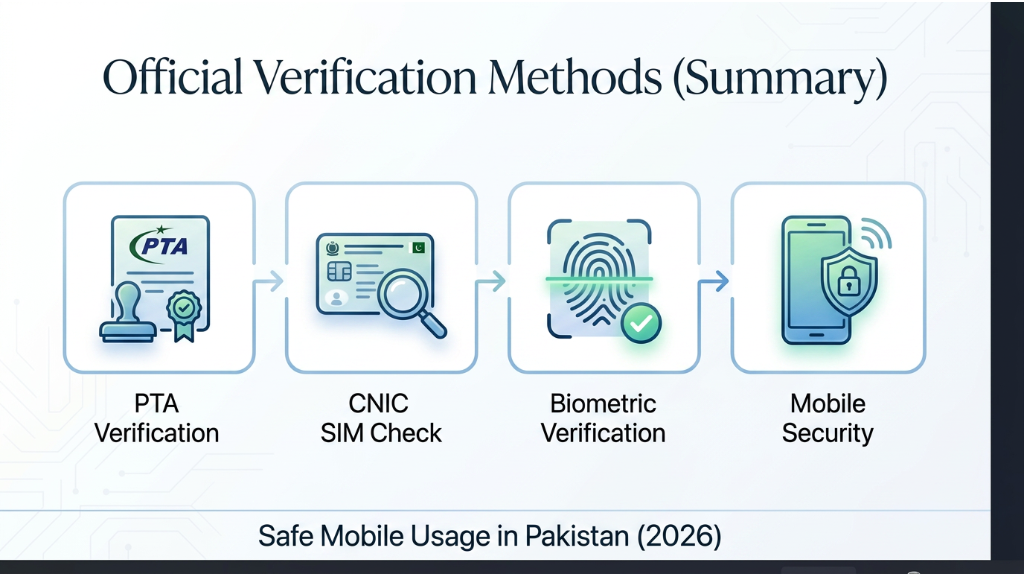
    اگر کوئی ویب سائٹ CNIC، OTP، بینکنگ معلومات، پاس ورڈ یا ادائیگی طلب کرکے نجی صارف کی معلومات فراہم کرنے کا دعویٰ کرے تو احتیاط کریں۔

    اسی طرح نامعلوم APK یا ایسی ایپلی کیشنز سے بھی محتاط رہیں جو زونگ اونر سرچ کے نام پر غیر ضروری اجازتیں مانگتی ہوں۔

    بینکنگ اور اکاؤنٹ سیکیورٹی

    آپ کا زونگ نمبر صرف کال اور SMS کے لیے نہیں ہوتا۔ یہ بینکنگ الرٹس، موبائل والٹس، ای میل ریکوری اور اکاؤنٹ ویریفکیشن کے ساتھ بھی منسلک ہو سکتا ہے۔

    اس لیے اپنے موبائل نمبر کو ڈیجیٹل شناخت کا ایک اہم حصہ سمجھیں۔

    اگر سم گم ہو جائے، کوئی غیر معمولی اکاؤنٹ سرگرمی نظر آئے یا سم سے متعلق غیر متوقع پیغام موصول ہو تو متعلقہ آپریٹر اور اکاؤنٹ فراہم کرنے والے ادارے سے سرکاری چینل کے ذریعے رابطہ کریں۔

    زونگ سم کا عملی جائزہ

    اپنی سم کی معلومات منظم رکھنے کے لیے ایک آسان طریقہ اختیار کیا جا سکتا ہے:

    پہلا: اپنے فعال زونگ نمبرز کی فہرست بنائیں۔
    دوسرا: اپنی رجسٹریشن کی معلومات چیک کریں۔
    تیسرا: پرانے یا نامعلوم کنکشنز کو شناخت کریں۔
    چوتھا: غیر ضروری کنکشنز کے لیے مناسب طریقہ کار معلوم کریں۔
    پانچواں: اہم اکاؤنٹس میں موبائل نمبر کے استعمال کا جائزہ لیں۔
    چھٹا: CNIC، OTP اور پاس ورڈ کو محفوظ رکھیں۔

    اس طرح آپ اپنی موبائل رجسٹریشن کو زیادہ بہتر انداز میں منظم کر سکتے ہیں۔

    آخری بات

    Zong SIM Owner Details کو صرف کسی شخص کا نام تلاش کرنے کے طور پر سمجھنا مکمل تصور نہیں ہے۔ اس موضوع کا اصل تعلق سم رجسٹریشن، صارف کی شناخت، CNIC سے منسلک کنکشنز، تصدیق، ملکیت کے انتظام اور موبائل سیکیورٹی سے ہے۔

    اگر آپ اپنی زونگ سم چیک کر رہے ہیں تو مناسب سرکاری ویریفکیشن چینل استعمال کریں۔ اگر ملکیت تبدیل کرنی ہے تو متعلقہ منتقلی کا طریقہ اختیار کریں۔ اگر کنکشن مزید درکار نہیں تو ڈس اوننگ یا متعلقہ انتظامی طریقہ کار کے بارے میں معلومات لیں۔ اگر سم گم ہو گئی ہے یا کوئی مشکوک سرگرمی نظر آ رہی ہے تو فوری طور پر متعلقہ سرکاری سپورٹ سے رابطہ کریں۔

    سب سے اہم اصول یہی ہے:

    اپنی سم کی رجسٹریشن کی تصدیق کریں، اپنی شناختی معلومات محفوظ رکھیں، اور دوسرے صارفین کی نجی معلومات حاصل کرنے کے لیے غیر مصدقہ سم ڈیٹا بیس پر انحصار نہ کریں۔

  • Jazz SIM Owner Details in Pakistan: What You Should Know

    Jazz SIM Owner Details in Pakistan: What You Should Know

    When people search for Jazz SIM Owner Details, they may be looking for several different things. Some users want to confirm the registration of their own Jazz number, while others want to understand SIM ownership, CNIC registration, verification methods, or the correct procedure for managing a Jazz connection.

    These questions are related, but they do not all have the same answer.

    A Jazz SIM is connected with subscriber registration, which means ownership should be understood in terms of the registered subscriber rather than simply the person who happens to have the SIM card in their phone. This distinction becomes important when a number is transferred, replaced, lost, or used by someone other than the person whose identity was originally used during registration.

    What Does “Jazz SIM Owner Details” Mean?

    The phrase Jazz SIM Owner Details generally refers to information associated with the registration of a Jazz mobile connection. For an individual checking their own SIM, the most useful purpose is to determine whether the connection is properly associated with their identity and whether the registration matches their records.

    It does not automatically mean that a person can publicly retrieve another subscriber’s complete personal profile by entering a mobile number.

    A responsible SIM information check should focus on legitimate purposes such as:

    • Verifying your own Jazz SIM registration
    • Reviewing SIMs associated with your identity
    • Managing an old or unused Jazz connection
    • Understanding ownership-transfer requirements
    • Taking action if an unfamiliar registration appears
    • Protecting a number connected to important accounts

    Why Registration Matters

    Your mobile number may be used for much more than calls and messages. It can be connected to banking notifications, mobile wallets, email recovery, messaging applications, business communication, and account verification.

    Because of this, keeping the registration information for your own Jazz connection properly managed can be an important part of digital security.

    Physical possession alone should not be treated as proof of official ownership. If a number was originally registered under one subscriber and later given to another person, the registration record and actual usage may no longer match.

    A Privacy Boundary Worth Understanding

    Searching for Jazz SIM Owner Details by Number can lead to websites that claim they can reveal a subscriber’s name, CNIC, address, or other private information.

    Users should not automatically assume that such claims represent an official or authorized service.

    There is an important difference between verifying your own SIM registration and attempting to obtain confidential information about another person. A mobile number by itself should not be treated as permission to access someone’s private identity records.

    For your own Jazz SIM, the safer approach is to use the appropriate official verification or customer-service route and provide sensitive information only when it is genuinely required.

    This guide will explain the different aspects of Jazz SIM ownership in detail, including verification, CNIC-related registration, owner-name searches, transfer and disowning procedures, unknown SIM situations, security risks, and common online claims surrounding Jazz SIM information.
    Pakistan Telecommunication Authority (PTA) is the regulatory body responsible for overseeing telecommunications services in Pakistan. For SIM registration, verification, complaints, and other telecom-related matters, users should rely on official PTA guidance and authorized operator channels rather than unverified third-party sources.

    How Jazz SIM Registration Works

    A Jazz SIM becomes associated with a subscriber through a registration process that links the mobile connection with the identity information provided during activation. This registration is what gives the term Jazz SIM Owner Details its practical meaning.

    The important distinction is between using a SIM and being the person under whom that SIM is officially registered. A person may physically possess a number without the registration record necessarily reflecting their current usage.

    What Happens During Registration?

    When a new Jazz connection is obtained through the proper process, the subscriber’s identity is verified according to the applicable requirements. The mobile connection is then recorded against that verified identity.

    This system serves several purposes:

    • Establishing a subscriber record
    • Supporting identity verification
    • Helping manage mobile connections
    • Reducing unauthorized registrations
    • Providing a basis for resolving ownership-related issues

    Because the registration is identity-linked, users should treat their own registration information as sensitive.

    Why Your CNIC Matters

    For Pakistani subscribers, the CNIC is an important part of the SIM registration process. It connects the subscriber’s identity with the mobile connection being registered.

    This is why a person checking their own Jazz SIM Owner Details may actually be trying to answer a broader question:

    “Is this Jazz number properly registered under my identity?”

    That question is different from asking for the private identity of an unrelated number holder.

    Registration and Usage Can Be Different

    Consider a simple example.

    A person purchases a Jazz SIM and completes registration under their identity. Later, they give the number to another family member to use.

    The family member may physically use the phone and receive calls, but that does not automatically mean the official registration has changed.

    If the number is permanently being handed over, the appropriate ownership-transfer procedure should be considered rather than relying only on physical possession.

    Why Accurate Registration Is Important

    An accurately maintained registration record can become particularly important when a number is connected to sensitive services.

    For example, the same mobile number may be used for:

    • Banking alerts
    • Digital wallets
    • Account recovery
    • Business communication
    • Messaging services
    • Verification codes

    If the registered subscriber and actual long-term user are different, confusion can arise when the number needs to be replaced, transferred, blocked, or recovered.

    What Should You Remember?

    The simplest way to understand Jazz SIM registration is:

    The SIM card is the connection, the mobile number is its communication identity, and the registered subscriber is the person associated with that connection in the official registration record.

    Keeping these concepts separate makes it much easier to understand Jazz SIM Owner Details, ownership transfers, CNIC checks, and SIM-related security throughout the rest of this guide.

    Jazz SIM Owner Name: What Can Actually Be Verified?

    One of the most common searches related to Jazz SIM Owner Details is the request to find the name associated with a Jazz mobile number. This search can mean different things depending on whether the number belongs to the person performing the check or to someone else.

    For your own Jazz connection, registration verification is a legitimate way to understand whether the number is associated with your identity. However, searching for another subscriber’s private identity information is a different matter and should not be treated as an ordinary public lookup.

    Owner Name and SIM Registration Are Connected

    The registered subscriber is the person whose identity was used during the official SIM registration process. This means the registration record is more significant than simply knowing who currently carries the phone.

    For example, if a Jazz number was originally registered under one person and later used by another person, physical possession alone does not establish that the registration has been officially transferred.

    This is why Jazz SIM Owner Name searches should always be understood in the context of registration.

    Can a Jazz Number Reveal Someone’s Private Identity?

    A mobile number should not automatically be treated as a public gateway to someone’s complete personal information.

    Be cautious with websites or applications that claim they can instantly reveal a subscriber’s full name, CNIC number, residential address, call history, or other confidential information simply from a Jazz number.

    The appearance of a search box does not prove that the underlying information is official, accurate, or legitimately obtained.

    If You Need to Verify Your Own Jazz Number

    If your goal is to confirm the registration of a Jazz SIM that you personally use, focus on the appropriate official verification route.

    You should be trying to answer questions such as:

    • Is this number registered under my identity?
    • Is the registration information consistent with my records?
    • Do I need to update or transfer the ownership?
    • What should I do if the registration appears unfamiliar?

    These questions can be handled through suitable telecom verification and customer-service channels without relying on an unofficial owner-lookup database.

    Why Unofficial Lookup Claims Can Be Risky

    Some third-party services use phrases such as Jazz SIM Owner Name, Jazz SIM Database, or Jazz Number Owner Details to attract searches.

    Before trusting such a service, consider where its information supposedly comes from and what personal information it asks you to provide.

    If a website requests your CNIC, OTP, password, banking information, or payment while promising access to another subscriber’s confidential records, verify the service carefully before proceeding.

    The safest approach is to use Jazz SIM Owner Details information for legitimate registration and account-management purposes rather than attempting to uncover private information about strangers.

    How to Check Your Own Jazz SIM Registration

    How to check your own Jazz SIM registration in Pakistan
    How to Check Your Own Jazz SIM Registration in Pakistan

    If you are trying to verify Jazz SIM Owner Details for a number that belongs to you, the first step is to identify what you actually need to confirm. Checking your own registration is different from searching for the identity of an unrelated mobile subscriber.

    A personal SIM check can help you determine whether your Jazz connection matches your own records and whether there is anything that needs further attention.

    Choose the Right Type of Check

    Before starting, consider your specific situation:

    Your questionAppropriate direction
    Is my Jazz SIM registered under my identity?SIM registration verification
    How many SIMs are linked with my CNIC?CNIC-based SIM check
    Is this number currently associated with Jazz?Network verification
    I no longer want this Jazz SIMDisowning process
    Someone else will permanently use my numberOwnership transfer

    This simple distinction prevents users from searching for unnecessary “owner lookup” services.

    Checking Your Own Registration

    For your personal Jazz connection, use the applicable official verification or customer-service route. Follow the identity-verification instructions provided by the relevant service and enter sensitive information only where it is genuinely required.

    Once you receive the available information, compare it with your own records rather than assuming that every result requires immediate action.

    Consider whether:

    • You recognize the number.
    • You recently activated or replaced the SIM.
    • You previously used the number.
    • The registration corresponds with your current usage.
    • There is any unfamiliar information that needs clarification.

    What If Something Does Not Match?

    An unexpected result does not automatically mean that your identity has been misused.

    An old connection, previous SIM replacement, or another legitimate circumstance may explain the difference.

    If you genuinely cannot identify the registration, contact the appropriate Jazz support or authorized service channel and ask for the available verification procedure.

    Avoid trying to solve the issue through an unofficial Jazz SIM database.

    Protect Your Personal Information

    During any verification process, keep your CNIC details, OTPs, passwords, and banking credentials private.

    A legitimate SIM-related check should not require you to hand over unrelated financial or account-security information to an unknown website or individual.

    The goal of checking Jazz SIM Owner Details should be to understand and manage your own registration—not to expose someone else’s private information.

    Jazz SIM Owner Details by Number: Understanding the Search

    Searching for Jazz SIM Owner Details by Number can mean different things, and understanding the search intent is important before choosing a verification method. A person may simply want to identify whether a Jazz number belongs to them, while another user may be looking for information about an unfamiliar number.

    These situations should not be handled in exactly the same way.

    What a Mobile Number Tells You

    A Jazz mobile number identifies a telecommunications connection. It does not, by itself, mean that every piece of information about the subscriber is publicly available.

    For example, knowing a number does not automatically provide legitimate access to:

    • CNIC information
    • Residential address
    • Call records
    • SMS history
    • Banking details
    • Account passwords
    • OTPs
    • Real-time location

    A genuine SIM verification process should therefore not be confused with an unrestricted personal-information lookup.

    When Number-Based Checking Is Useful

    There are legitimate reasons to investigate a number without trying to obtain confidential information.

    You may want to determine whether:

    • The number is your own Jazz connection.
    • The number is currently associated with a particular network.
    • You recognize the number from your own records.
    • A number involved in suspicious activity needs to be reported.
    • Your own registration requires further verification.

    The correct response depends on the actual question rather than the keyword being searched.

    Be Careful With Online Lookup Services

    Search engines may display websites offering Jazz SIM Owner Details, “owner name,” or “SIM database” searches.

    Before using such a service, consider whether it is an appropriate and trustworthy source. A professional-looking website does not automatically establish that its information is official or that it has legitimate access to subscriber records.

    You should be especially cautious if the service asks you to provide sensitive identity information merely to reveal another person’s details.

    What If an Unknown Jazz Number Contacts You?

    If an unfamiliar Jazz number calls or messages you, you do not necessarily need to identify the person’s private identity.

    Instead, consider the context of the communication. If it appears to involve spam, fraud, impersonation, or another suspicious activity, avoid sharing personal information and use the appropriate reporting or support channel.

    Never provide an OTP, banking PIN, password, or CNIC information to an unknown caller simply because they claim to know your identity.

    The Better Way to Approach Owner Details

    For your own Jazz number, use an appropriate registration or verification process.

    For an unknown number, focus on safety, verification, and reporting rather than attempting to obtain confidential subscriber information through an unofficial database.

    This distinction keeps a Jazz SIM owner search practical while protecting both the user’s privacy and the privacy of other subscribers.

    Jazz SIM Verification: Choosing the Correct Method

    A successful Jazz SIM verification starts with identifying the information you actually need. Many searches use the phrase “Jazz SIM owner details” even when the real requirement is simply to confirm a personal registration, review CNIC-linked connections, or identify a network.

    Using the correct method helps avoid unnecessary third-party services.

    Which Situation Matches Yours?

    SituationWhat you are trying to verify
    Your own Jazz SIMRegistration of your personal connection
    SIMs linked to your identityCNIC-based registration information
    A number’s current operatorNetwork identification
    An old Jazz connectionOwnership or disowning status
    A permanently transferred numberOwnership-change requirements

    These are separate tasks even though they may appear under similar search terms.

    Verification Is Not the Same as Owner Lookup

    When you verify your own Jazz SIM, the objective is to confirm information associated with your registration.

    An owner-name lookup involving another subscriber is a different matter. A mobile number should not be treated as a public key that automatically exposes confidential identity records.

    This distinction also helps users evaluate online services more carefully. A website claiming to provide “instant Jazz owner details” may not necessarily be an official verification service.

    What Should You Keep Ready?

    If you are completing a legitimate verification process for your own connection, use the identity information and documentation required by the relevant official channel.

    Do not send unnecessary documents to individuals offering to perform a SIM lookup for you.

    In particular, keep the following private:

    • OTP codes
    • Banking PINs
    • Account passwords
    • Full financial information
    • Unnecessary identity documents

    If Verification Reveals a Problem

    Suppose your Jazz SIM information does not match your expectations.

    First, review your own mobile history. Think about previous numbers, replacement SIMs, and connections you may have stopped using.

    If the discrepancy remains unexplained, approach the appropriate Jazz support or authorized service channel for clarification.

    If an unwanted connection needs to be removed, ask about the formal SIM disowning procedure. If the number is being permanently handed to another eligible subscriber, ask about the applicable ownership-transfer process.

    Keep Verification Purpose-Specific

    The safest approach is to match the tool to the question:

    Registration question? Verify your own registration.

    CNIC question? Review your own CNIC-linked SIM information.

    Network question? Use network identification.

    Ownership-change question? Follow the official transfer procedure.

    Unwanted connection? Ask about disowning.

    This purpose-specific approach makes Jazz SIM Owner Details easier to understand and reduces the chance of relying on questionable databases or applications.

    Jazz SIM Registration and CNIC: What the Connection Means

    A Jazz SIM registration is tied to subscriber identity, which is why the CNIC becomes an important part of understanding Jazz SIM ownership. When users search for Jazz SIM Owner Details, they are often actually trying to determine whether a particular connection is registered under their own identity.

    Your CNIC and Your Jazz Connections

    Your CNIC can be associated with mobile connections that you have registered through the proper process. Over time, however, people may activate additional numbers, replace older SIMs, change operators, or stop using particular connections.

    This can make it difficult to remember every registration.

    A personal CNIC-based SIM review can therefore be useful for maintaining an accurate picture of your mobile connections.

    What Should You Look For?

    When reviewing your own registrations, compare the result with your actual mobile history.

    Consider:

    • Which Jazz numbers do you currently use?
    • Have you previously owned another Jazz connection?
    • Did you replace an older SIM?
    • Is there a connection you no longer need?
    • Does anything appear that you genuinely cannot identify?

    This simple comparison can help separate a normal old registration from something that requires further attention.

    An Unfamiliar Registration Does Not Automatically Prove Fraud

    Seeing a number you do not immediately recognize is a reason to investigate, but it is not automatically proof that someone has misused your identity.

    An old connection may have been forgotten, or a previous SIM may still be relevant to your registration history.

    If you cannot establish why a particular Jazz connection is associated with your identity, contact the appropriate official telecom channel and ask for clarification.

    Keep Your CNIC Private

    Your CNIC is sensitive identity information, so avoid entering it into websites simply because they advertise Jazz SIM Owner Details or “Jazz number owner name.”

    Before providing personal information, determine whether the service is appropriate for the task you are performing.

    You should never provide an OTP, banking credentials, account password, or unrelated sensitive information to someone claiming that they need it to check your SIM ownership.

    Why CNIC-Based Checking Is Different From Number Lookup

    There is a major difference between asking:

    “Which SIMs are associated with my CNIC?”

    and:

    “Who owns this other person’s Jazz number?”

    The first is a personal registration-management question. The second involves another subscriber’s privacy.

    Understanding this difference is essential when researching Jazz SIM Owner Details Pakistan, because many search results combine legitimate SIM information with claims about unrestricted subscriber lookups.

    Your safest approach is to use CNIC-based checking for your own registrations and official telecom channels whenever a registration issue needs to be resolved.

    Jazz SIM Owner Details Through Official Verification Channels

    When checking Jazz SIM Owner Details, the safest approach is to begin with an official verification route rather than a third-party lookup website. The correct method depends on whether you are checking your own SIM, reviewing registrations connected with your CNIC, or trying to resolve an ownership issue.

    Start With Your Own Connection

    If the Jazz number belongs to you, begin by identifying the information you need.

    You may want to confirm:

    • Whether the number is registered under your identity
    • Whether an old Jazz connection is still associated with you
    • Whether a recently obtained SIM has been registered correctly
    • Whether an unfamiliar Jazz registration requires investigation

    Once you know the purpose, choose the verification route designed for that situation.

    CNIC-Based SIM Information

    If your concern is the number of SIM registrations associated with your identity, a CNIC-based SIM check is more appropriate than searching for an owner name through a random website.

    This type of check is useful for personal record management because it allows you to compare the registrations you know about with the information associated with your identity.

    If something appears unfamiliar, investigate it through an appropriate official telecom channel rather than attempting to identify another subscriber through an unofficial database.

    Verifying a Particular Jazz SIM

    If you are holding a Jazz SIM and want to understand its registration status, use the applicable SIM verification process.

    The important point is that verification should be performed for a legitimate purpose and with the subscriber’s authorization where required.

    Do not provide your identity documents to an unknown person who claims they can retrieve Jazz owner information for you.

    What About Online Jazz Owner Lookup Websites?

    Search results may include websites promising instant Jazz SIM Owner Details, owner names, CNIC records, or complete subscriber profiles.

    The presence of such a website in a search engine does not establish that its information is official or accurate.

    A safer approach is to ask:

    What information am I actually trying to verify?

    If the answer concerns your own registration, use the relevant official route.

    If the answer concerns a stranger’s private identity, an unofficial lookup should not be treated as an appropriate solution.

    Protect Your Verification Information

    During any legitimate verification process, keep sensitive information under your control.

    Never disclose:

    • OTP codes
    • Banking PINs
    • Account passwords
    • Wallet credentials
    • Unnecessary identity documents

    If someone asks for such information in exchange for “Jazz owner details,” stop and verify the service before continuing.

    The Practical Takeaway

    There is no need to search for a supposed “complete Jazz database” when your actual goal is to manage your own SIM.

    Use the appropriate official verification method, review your own registration carefully, and contact the relevant telecom support channel whenever an ownership issue requires further action.

    Jazz SIM Owner Details: What Happens When a Number Changes Hands?

    Jazz SIM Owner Details when a number changes hands
    Jazz SIM Owner Details – Understanding what happens when a Jazz number changes hands

    A Jazz number can remain active for years, but the person using it may change. This creates an important distinction between current usage and the subscriber information attached to the SIM registration.

    Understanding this difference is essential when dealing with Jazz SIM Owner Details, especially when a number is given to a family member, transferred to another person, or replaced after a change in circumstances.

    Using a SIM Does Not Automatically Change Its Registration

    Imagine that a Jazz number was originally registered under one person’s identity. Later, that person gives the SIM to a relative who starts using it regularly.

    The relative may receive calls, send messages, use mobile internet, and even connect the number to various applications. However, simply using the SIM does not necessarily mean that the official registration has automatically changed.

    This is why physical possession should not be confused with registered ownership.

    When an Ownership Change Is Appropriate

    If a Jazz number is going to remain permanently with another eligible subscriber, the appropriate ownership-transfer process should be considered.

    A formal transfer helps ensure that the registration record reflects the person who is actually responsible for the connection.

    This can become particularly important when the number is connected to:

    • Financial services
    • Mobile wallets
    • Business accounts
    • Recovery numbers
    • Messaging platforms
    • Other identity-sensitive services

    What About Family Members?

    Family members sometimes share or exchange mobile numbers, particularly when replacing old connections or helping another person obtain a number.

    Even in these situations, the registration record should not simply be assumed to have changed because the person using the phone has changed.

    If the number is intended to remain with the new user permanently, the relevant operator procedure should be followed.

    Why This Matters for Security

    An outdated registration can create complications if the SIM is later lost, blocked, replaced, transferred, or involved in a dispute.

    For example, if the registered subscriber and regular user are different people, resolving a replacement or ownership issue may require additional clarification.

    Keeping registration and actual long-term usage aligned is therefore a useful part of responsible mobile management.

    What Should You Do Before Giving Away a Jazz SIM?

    Before permanently handing a Jazz connection to another person:

    1. Decide whether the number is actually being transferred.
    2. Review accounts connected to the number.
    3. Follow the applicable official ownership procedure.
    4. Complete any required identity verification.
    5. Keep confirmation or transaction records.

    Do not assume that handing over the physical SIM completes the process.

    The Key Difference

    Current user: the person who is using the SIM.

    Registered subscriber: the person associated with the SIM through the official registration record.

    These two people may be the same, but they are not automatically the same simply because someone possesses the phone.

    Understanding this distinction makes Jazz SIM Owner Details much clearer and helps users avoid problems when a number changes hands.
    NADRA (National Database and Registration Authority) is Pakistan’s national authority for citizen registration and identity management. It issues identity documents such as CNICs and provides identity-verification services, making accurate identity records an important part of processes that depend on subscriber identification.

    Jazz SIM Ownership Transfer: When You Need It

    When a Jazz number is permanently moving from one person to another, simply handing over the SIM card is not the same as completing an official ownership change. A proper transfer keeps the registration record aligned with the person who will actually be responsible for the connection.

    Common Reasons for a Transfer

    A Jazz SIM ownership change may become relevant when:

    • A family member permanently takes over a number.
    • A business connection needs a different registered user.
    • The original subscriber no longer wants to use the number.
    • A number is being formally handed to another eligible person.
    • The current registration no longer reflects the intended user.

    Why Formal Transfer Matters

    A mobile number can be connected to banking alerts, wallets, recovery accounts, messaging applications, and business services. If the registration remains under the previous subscriber, future replacement, blocking, recovery, or account-related issues can become complicated.

    For this reason, users should follow the applicable Jazz ownership-transfer procedure instead of relying on an informal handover.

    What to Expect

    The exact requirements can depend on the circumstances and the operator’s current policies. Identity verification and other documentation may be required.

    Before starting the process, both parties should confirm that the number is correct and understand which services are connected to it.

    After completing the transfer, keep any receipt, confirmation message, or reference information provided by the authorized service point.

    Transfer vs. Disowning

    These two actions have different purposes.

    Transfer: the connection moves to another eligible subscriber.

    Disowning: the existing subscriber wants the connection removed from their identity without necessarily transferring it to another person.

    Choosing the correct procedure prevents unnecessary problems later.

    A Simple Safety Check

    Before transferring a Jazz number:

    1. Confirm the number.
    2. Review important accounts linked to it.
    3. Follow the official transfer procedure.
    4. Complete required identity verification.
    5. Keep proof of the completed request.

    For accurate Jazz SIM Owner Details, the registration record should reflect the legitimate subscriber rather than relying solely on who physically possesses the SIM.

    Jazz SIM Disowning: Removing an Unwanted Registration

    Not every Jazz number needs to remain associated with a subscriber forever. If you have stopped using a connection or no longer want it registered under your identity, SIM disowning may be the appropriate option.

    Disowning is different from simply removing the SIM card from your phone. Taking out a SIM does not by itself mean that its registration has been formally removed.

    When Should You Consider Disowning?

    A Jazz connection may need attention when:

    • You no longer use the number.
    • You have replaced an old SIM.
    • You have moved to another mobile connection.
    • You want to reduce unnecessary registrations.
    • An unfamiliar Jazz registration appears during your personal SIM check.

    If the number is being permanently given to another person, however, an ownership-transfer procedure may be more appropriate than simply disowning it.

    What Should You Do First?

    Before requesting disowning, make sure you have identified the correct number.

    Check your own records and consider whether the connection could be an old Jazz SIM that you previously used. If you genuinely no longer need it, contact the appropriate Jazz service channel or authorized service location and ask about the current disowning requirements.

    The exact procedure, identity verification, and any applicable charges should be confirmed directly because service requirements can change.

    Keep Confirmation of the Request

    Whenever you complete an important SIM-management request, retain any receipt, reference number, confirmation SMS, or other evidence provided by the operator.

    This can be useful if the registration later appears again or if you need to follow up regarding the status of the request.

    Disowning an Unknown SIM

    If an unfamiliar Jazz SIM appears under your identity, do not immediately search for its supposed owner through an unofficial database.

    Instead, use the appropriate official channel to determine what action is available. If the connection genuinely does not belong to you, follow the formal process for resolving and removing the registration.

    This keeps your Jazz SIM Owner Details management focused on your own identity record rather than another person’s private information.

    What to Do If an Unknown Jazz SIM Is Registered to You

    Finding an unfamiliar Jazz connection during a personal SIM registration check can be concerning, but the right response is to verify first and act through the proper channel.

    An unfamiliar number does not automatically prove that someone has misused your identity. It could be an old connection that you no longer remember, a previously used number, or another registration that requires clarification.

    Follow This Order

    1. Confirm the number

    Write down the unfamiliar Jazz number and compare it with your old SIM records, phone contacts, or previous mobile connections.

    2. Check your recent activity

    Think about whether you recently purchased, replaced, transferred, or activated a Jazz SIM. A recent change may explain an unexpected registration.

    3. Contact Jazz through an appropriate official channel

    If you still cannot identify the connection, ask Jazz or an authorized service point how the registration can be verified and what procedure applies.

    4. Request the appropriate action

    If the connection genuinely does not belong to you, ask about the applicable process for resolving or disowning the registration.

    5. Keep your evidence

    Save relevant confirmation messages, receipts, complaint numbers, or reference details. These can make future follow-up easier.

    What You Should Not Do

    Do not attempt to identify the supposed subscriber through an unofficial Jazz SIM database.

    Also avoid entering your CNIC into multiple websites that promise instant owner information. You may expose sensitive identity information while still receiving inaccurate or unverifiable results.

    When the Situation Is More Serious

    If the unfamiliar registration is accompanied by suspicious financial activity, unexpected account changes, SIM replacement messages, or other signs of possible fraud, treat the situation as a security matter.

    Secure accounts connected with your mobile number and contact the relevant service providers through their official channels.

    The goal of a Jazz SIM Owner Details check should be to protect and manage your own registration record—not to investigate another person’s private identity.

    Jazz SIM Replacement and Ownership Records

    Replacing a Jazz SIM can become confusing when users assume that a new physical SIM means the entire subscriber relationship has changed. In many situations, a replacement is connected to the existing mobile connection rather than representing a completely new ownership record.

    This distinction is useful when researching Jazz SIM Owner Details, particularly after a SIM is damaged, lost, or stops functioning.

    Replacement Is Not Automatically a New Ownership

    If you replace a SIM associated with your existing number, the important question is whether you are replacing the physical SIM while retaining the same connection.

    A replacement should therefore not automatically be interpreted as a new subscriber registration.

    The applicable process can involve identity verification to confirm that the request is being made by the authorized subscriber.

    Lost SIM Replacement

    A lost SIM deserves special attention because another person may potentially find and attempt to misuse the physical card.

    If your Jazz SIM is lost:

    1. Contact the appropriate Jazz support channel.
    2. Request the necessary blocking or replacement action.
    3. Complete the required identity verification.
    4. Ask about retaining or restoring your existing number where applicable.
    5. Review important accounts connected with that number.

    Do not delay action simply because you believe the SIM cannot be used without your phone.

    Damaged SIM

    A damaged SIM may stop connecting to the network even though the number remains important to you.

    In this situation, ask the operator about the current replacement procedure rather than purchasing another unofficial SIM or attempting to modify the damaged card.

    Keep your identity documents and account credentials private during the process.

    Replacement and Account Security

    After receiving a replacement SIM, pay attention to services connected to your number.

    Your mobile number may be used for:

    • Banking notifications
    • Wallet services
    • Login verification
    • Password recovery
    • Messaging applications

    If anything unusual happens during or after the replacement process, contact the relevant service provider through an official channel.

    Keep the Registration Details Consistent

    If the number remains yours, make sure you understand the status of the replacement and retain any confirmation provided by the operator.

    If the number is actually being handed to another person, do not treat a replacement as a substitute for an ownership transfer. The appropriate process should be followed so that the registration reflects the legitimate subscriber.

    Understanding this difference helps prevent confusion when managing Jazz SIM Owner Details and protects the number during replacement or recovery situations.

    Jazz SIM Security: Protecting the Number Behind Your Accounts

    A Jazz number can become an important part of your digital identity when it is connected to banking services, mobile wallets, email recovery, messaging applications, or other online accounts. Because of this, Jazz SIM Owner Details should not be viewed only as a registration topic; the security of the connection also deserves attention.

    Keep Your SIM Information Private

    Your CNIC, OTPs, account passwords, banking PINs, and other authentication information should remain private.

    Be cautious if someone contacts you claiming to be a Jazz representative and asks for sensitive information. Instead of trusting the caller immediately, verify the request through an official Jazz channel.

    Be Careful With SIM-Related Messages

    You may receive messages concerning SIM activation, replacement, verification, prizes, account updates, or other offers.

    Do not click suspicious links or provide personal information simply because a message uses the Jazz name or branding.

    If a message appears unusual, independently contact the relevant service rather than replying with sensitive information.

    Protect Your Number From Unnecessary Exposure

    Avoid publishing your primary mobile number widely when it is connected to important financial or personal accounts.

    Where practical, maintain sensible separation between numbers used for public communication and numbers connected to sensitive services.

    Watch for Unexpected Service Loss

    A sudden loss of network service can have several ordinary causes, but an unexplained interruption deserves attention if it occurs alongside other suspicious activity.

    For example, if you unexpectedly lose service and then receive notifications about account changes you did not request, contact your operator and relevant account providers promptly.

    Secure Accounts Linked to Jazz

    Your mobile number may act as a recovery or verification channel for other services. Review those connections periodically and enable stronger authentication options where available.

    Never share a verification code merely because another person claims that it is needed to “confirm your SIM ownership.”

    The Main Principle

    Good Jazz SIM security is based on controlling access to your number and protecting the identity information connected with it.

    Regularly reviewing your own registration, responding quickly to unusual SIM activity, keeping authentication codes private, and using official support channels can significantly reduce avoidable risks.

    Jazz SIM Owner Details and SIM-Swap Fraud

    SIM-swap fraud is an important security issue for anyone whose Jazz number is connected to financial accounts, mobile wallets, email recovery, or other services that use the number for verification.

    A SIM swap involves moving a mobile number to another SIM without the legitimate subscriber’s authorization. If control of the number is compromised, an attacker may attempt to receive calls or SMS messages intended for the real user.

    Warning Signs to Watch

    A single network problem does not necessarily indicate fraud, but unexpected changes deserve attention when several signs appear together.

    Be cautious if you experience:

    • Sudden unexplained loss of mobile service
    • An unexpected SIM replacement notification
    • Account-reset messages you did not request
    • Banking alerts you do not recognize
    • Password-change notifications you did not initiate
    • Someone asking you to provide an OTP

    What Should You Do?

    If you suspect that your Jazz number has been compromised, contact the appropriate Jazz support channel as soon as possible and ask them to verify the status of your connection.

    If the number is connected to banking or wallet services, contact the relevant financial institution through its official channel as well.

    You should also review important accounts connected with the number and change credentials where necessary.

    Never Share an OTP

    An OTP is intended to verify an action or login. Do not disclose it to a caller simply because they claim to be from Jazz, a bank, or another organization.

    Likewise, never provide your banking PIN, account password, or wallet credentials during an unsolicited call.

    Why This Matters for SIM Ownership

    A mobile number is more valuable than the physical SIM card itself because it may provide access to multiple services.

    Keeping your Jazz SIM Owner Details accurate, protecting your registration information, and responding quickly to unusual activity can reduce the risk of unauthorized control.

    If something appears suspicious, use official support and reporting channels rather than attempting to investigate the situation through an unofficial SIM database.

    Jazz SIM Owner Details and 668 SIM Checking

    When researching Jazz SIM Owner Details, users often come across 668 SIM checking because CNIC-based SIM information is closely related to subscriber registration. However, it is important to understand what this type of check is intended to establish.

    The main purpose of a CNIC-based SIM check is to help an individual review SIM registrations associated with their own identity. It should not be treated as a public service for obtaining another person’s confidential subscriber information.

    When 668 Becomes Relevant

    A CNIC-based check can be useful when you want to review your own mobile registrations.

    For example, you may have:

    • An active Jazz number
    • An older Jazz connection
    • SIMs from other networks
    • A recently activated connection
    • A registration you do not immediately recognize

    Reviewing your own registration information can help you maintain a clearer record of the connections associated with your identity.

    What the Check Does Not Mean

    Finding a Jazz number associated with a particular registration does not mean that every private detail about the subscriber is publicly available.

    A legitimate SIM check should not be confused with claims involving:

    • Complete CNIC records
    • Residential addresses
    • Private call history
    • SMS records
    • Banking information
    • Real-time location

    If a website promises all of these simply after entering a mobile number, approach the claim carefully.

    Compare the Result With Your Records

    If you perform a personal SIM check, compare the result with the numbers you actually recognize.

    Ask yourself:

    Do I currently use this Jazz number?

    Did I use it in the past?

    Was the number recently replaced or changed?

    Could an old registration explain the result?

    This simple review can help distinguish a forgotten connection from a registration that genuinely needs further investigation.

    What If You Find an Unknown Jazz Connection?

    Do not attempt to identify the supposed subscriber through a third-party database.

    Instead, contact the appropriate telecom support channel and ask what verification or disowning process is available.

    Keep any complaint number, confirmation message, or documentation provided during the process.

    The Practical Difference

    The purpose of 668 SIM checking is best understood as personal registration management.

    If your goal is to protect your own identity and understand your Jazz registrations, a proper CNIC-based check can be useful. If your goal is to discover private information about another subscriber, an unofficial owner lookup is not an appropriate substitute for legitimate verification.

    Jazz SIM Verification Through 667: Understanding Its Purpose

    Another term frequently associated with Jazz SIM Owner Details is 667 SIM verification. However, users should understand that SIM verification and a complete CNIC-based registration review are not necessarily the same thing.

    The purpose of a SIM-specific verification process is generally connected with confirming information about the connection being used. This makes it different from a broader check of all SIM registrations associated with an identity.

    When 667 Is Relevant

    A SIM verification method can be useful when your concern is the particular Jazz connection currently in your possession.

    For example, you may want to verify a recently activated SIM, confirm information about the connection you are using, or understand whether the number’s registration needs further attention.

    The important point is to identify the exact question before choosing a checking method.

    667 vs. 668

    These two numbers are often mentioned together, but they serve different purposes within the wider SIM-information landscape.

    667 is associated with SIM-specific verification, while 668 is associated with checking SIM registrations against your identity.

    Therefore, someone asking:

    “I want to review SIMs registered against my CNIC.”

    has a different requirement from someone asking:

    “I want to verify the SIM I am currently using.”

    Understanding this distinction can prevent unnecessary searches and confusion.

    Use Your Own SIM Information

    SIM verification should be performed for a legitimate purpose and with the appropriate authorization.

    If the connection belongs to another person, do not assume that a verification method gives you unrestricted access to their private subscriber information.

    Likewise, avoid giving your CNIC, OTP, password, or banking credentials to a third party who offers to perform a Jazz SIM lookup on your behalf.

    If the Result Raises a Question

    If verification produces information you do not understand, do not immediately assume that something fraudulent has happened.

    Review your recent SIM activity and consider whether the connection was recently activated, replaced, or otherwise changed.

    If the issue remains unclear, contact the relevant Jazz support channel or authorized service point for clarification.

    Why This Matters

    A strong understanding of Jazz SIM Owner Details requires separating different types of verification instead of treating every SIM-related service as an owner-name lookup.

    Use the method that matches your actual requirement, keep your identity information private, and rely on appropriate official channels whenever a registration issue needs to be resolved.

    Jazz SIM Number and Network Information

    When researching Jazz SIM Owner Details, it is useful to separate subscriber information from basic number and network information. A mobile number can tell you which connection you are dealing with, but it does not automatically expose the private identity of the person registered against it.

    Understanding a Jazz Number

    A Jazz mobile number is associated with a telecommunications connection provided through the Jazz network. Users may search for a number because they want to identify its network, verify their own connection, or determine whether an old number is still relevant to them.

    These are different from asking for confidential subscriber records.

    For example, if your goal is simply to determine the current network associated with a number, a network-check method is more relevant than an owner-details database.

    Why Network Information Is Different

    Network identification answers a relatively narrow question:

    “Which mobile network is associated with this number?”

    Owner registration asks a different question:

    “Under whose identity is this connection registered?”

    Neither question should automatically be expanded into a request for someone’s complete personal profile.

    This distinction becomes especially useful when dealing with Mobile Number Portability (MNP). A subscriber may retain a mobile number while changing the network providing the service, so the number’s prefix should not always be treated as definitive proof of its current network.

    If You Are Checking Your Own Number

    For your personal Jazz connection, keep a record of the number you actively use and the services attached to it.

    If you recently moved between networks, replaced a SIM, or changed your mobile setup, verify the current status through the appropriate telecom channel rather than relying only on assumptions based on the number’s prefix.

    What You Should Not Assume

    A Jazz number does not automatically give you legitimate access to:

    • The subscriber’s CNIC
    • Private address information
    • Call records
    • SMS history
    • Banking information
    • Account passwords
    • Real-time location

    Websites claiming to provide such information should be evaluated carefully before you provide any personal details or payment information.

    The Practical Difference

    For Jazz SIM Owner Details, keep three concepts separate:

    Number: identifies the mobile connection.

    Network: identifies the telecom service currently associated with the connection.

    Registered subscriber: identifies the person recorded through the applicable registration process.

    Understanding these differences helps you choose the correct verification method and prevents ordinary network information from being confused with private subscriber data.

    Jazz SIM Owner Details and Mobile Number Portability

    Mobile Number Portability, commonly known as MNP, is an important concept when understanding Jazz numbers and SIM ownership. It allows a subscriber to retain an existing mobile number while moving the connection from one network to another.

    This means a number’s prefix alone should not always be treated as proof of its current network.

    Why MNP Matters

    Suppose a subscriber originally used a number on one network and later moved that number to Jazz through the applicable portability process.

    The number may remain familiar to the subscriber and their contacts, while the network providing the service changes.

    This creates an important distinction between:

    • The mobile number
    • The current network
    • The registered subscriber

    These are related but separate pieces of information.

    Does MNP Change the Owner?

    Changing the network through MNP should not automatically be confused with changing the registered subscriber.

    A portability process concerns the network service associated with the number. An ownership change is a separate matter involving the subscriber registration.

    Therefore, if someone moves a number to Jazz, that does not by itself mean that the number has been transferred to another person’s identity.

    Why This Is Important for Jazz SIM Searches

    People searching for Jazz SIM Owner Details may sometimes assume that the first digits of a number tell them everything about the connection.

    That assumption can be misleading when number portability is involved.

    If you need to determine the current network of a number, use an appropriate network-check method rather than relying exclusively on the prefix.

    If you need to verify the registration of your own SIM, use the relevant registration or verification process.

    MNP and Security

    When changing networks, users should also pay attention to accounts and services connected to their mobile number.

    Before making major changes, identify important services that rely on the number for verification or recovery.

    After the transition, keep relevant confirmation messages and review your account notifications for anything unexpected.

    Number Portability Is Not an Owner Lookup

    MNP can explain why a number’s current network may differ from what its prefix suggests, but it does not provide unrestricted access to subscriber identity information.

    For Jazz SIM Owner Details, always distinguish between network information and registration information.

    The number may stay the same, the network may change, and the registered subscriber can remain unchanged. Understanding these three possibilities makes Jazz SIM information much easier to interpret.

    Jazz SIM Owner Details and Biometric Verification

    Biometric verification plays an important role in Pakistan’s mobile-registration environment because it helps connect a subscriber’s identity with a mobile connection through an identity-confirmation process.

    For Jazz users, this becomes relevant when activating, replacing, transferring, or otherwise managing a SIM through an authorized channel.

    Why Biometric Verification Matters

    A biometric process adds an identity-confirmation step instead of relying only on information typed into a form.

    This can help reduce mistakes and makes it more difficult for someone to complete certain registration-related actions using another person’s identity without the required verification.

    For subscribers, the practical benefit is greater confidence that important SIM-management requests are being processed for the appropriate person.

    When You May Encounter It

    Depending on the transaction and current requirements, biometric verification can be relevant when:

    • Obtaining a new SIM
    • Replacing a SIM
    • Changing registered ownership
    • Completing certain subscriber-management requests
    • Resolving specific registration issues

    The exact requirements can vary according to the transaction, subscriber category, and current operator procedures.

    What You Should Bring

    If an authorized service location asks you to complete biometric verification, follow the documentation requirements provided by the operator.

    Do not hand your original identity documents to an unrelated person offering to perform the process outside an authorized environment.

    If you are unsure whether a service point is legitimate, verify its status before proceeding.

    Biometric Verification and Privacy

    Biometric information is highly sensitive. Users should therefore avoid sharing biometric-related information with unofficial websites, social-media contacts, or individuals claiming to provide instant Jazz SIM Owner Details.

    A legitimate registration process should take place through the appropriate authorized channel.

    If Verification Fails

    A failed biometric attempt does not necessarily mean that your SIM ownership is incorrect.

    There can be practical reasons why a verification attempt needs to be repeated or handled through another approved procedure. If this happens, ask the authorized operator representative what the next step is instead of attempting an unofficial workaround.

    The Practical Benefit

    For Jazz subscribers, biometric verification is ultimately about establishing a stronger connection between the subscriber and the SIM-management transaction.

    When combined with proper registration records, secure account practices, and authorized service channels, it helps create a more reliable environment for managing mobile connections.

    Jazz SIM Owner Details and CNIC Registration Limits

    Managing several mobile connections can become difficult when users accumulate numbers over time. Some are active, some are rarely used, and others may have been replaced or forgotten. Understanding the applicable SIM registration limits can therefore help Jazz subscribers keep their mobile connections organized.

    Why Registration Limits Matter

    A registration limit means that a subscriber cannot keep adding connections indefinitely under the same identity. If you already have several active or previously registered SIMs, reaching the applicable limit may affect your ability to obtain another connection.

    This makes periodic personal account management useful.

    Instead of waiting until a new SIM request creates a problem, review the connections you actually use and identify registrations that are no longer necessary.

    Old Connections Can Be Easy to Forget

    People often change numbers for practical reasons. A connection may have been used for a temporary purpose, replaced after a phone change, or abandoned after moving to another operator.

    The physical SIM may no longer be in your possession, yet the registration history can still require proper management.

    If you discover an old Jazz connection that you genuinely no longer need, ask the operator about the appropriate procedure for removing it from your registration.

    What If You Reach the Limit?

    If a new SIM request cannot proceed because the applicable registration limit has been reached, do not immediately search for an unofficial solution.

    First review your existing connections and determine whether any are unnecessary.

    You can then ask the authorized operator about the available options for:

    • Removing an unwanted registration
    • Managing an inactive connection
    • Resolving an unfamiliar entry
    • Completing another legitimate SIM request

    Keep a Personal Record

    A simple record can make SIM management considerably easier.

    For each connection you actively use, keep track of:

    Mobile number → network → purpose → current status

    For example, you might know which number is your primary personal connection, which is used for internet access, and which older numbers have already been discontinued.

    This reduces confusion when reviewing your mobile registrations later.

    Do Not Assume Every Limit Is the Same

    Registration rules can depend on the type of connection, subscriber category, and current regulatory requirements. Therefore, users should confirm the applicable limit through an official source when making a new registration request.

    Avoid relying on old social-media posts or outdated websites for a rule that may have changed.

    Better SIM Management

    The purpose of understanding registration limits is not simply to count SIMs. It is to maintain an accurate and manageable set of connections under your identity.

    For Jazz subscribers, keeping unnecessary numbers under review can make future activation, replacement, transfer, and registration processes easier to handle.

    Jazz SIM Owner Details for Lost or Stolen Connections

    Losing a Jazz SIM creates a different type of problem from simply forgetting an old number. The immediate concern is preventing unauthorized use while preserving access to the mobile services and accounts connected with the number.

    Act Quickly After Losing the SIM

    If your Jazz SIM is lost or stolen, contact the appropriate Jazz support channel as soon as possible.

    Ask about the available options for:

    • Blocking the missing SIM
    • Replacing the SIM
    • Retaining the existing number
    • Completing the required identity verification
    • Restoring service on a replacement SIM

    The exact procedure can depend on the circumstances and the operator’s current requirements.

    Why a Lost SIM Can Matter

    A mobile number may be connected with services beyond ordinary communication. For example, it may receive:

    • Banking notifications
    • Wallet alerts
    • Login verification codes
    • Password-reset messages
    • Important personal communications

    If another person obtains access to the physical SIM, there may be a risk of unauthorized use.

    Secure Connected Accounts

    After losing a SIM, consider which important accounts depend on that number.

    If you notice suspicious activity, contact the relevant bank, wallet provider, email service, or other account provider through its official channel.

    Never share an OTP with someone claiming they need it to restore your Jazz service.

    Replacement Is Not the Same as Transfer

    A replacement normally concerns restoring your existing mobile connection after the physical SIM is unavailable or unusable.

    An ownership transfer, on the other hand, concerns changing the registered subscriber.

    If another person is going to permanently become responsible for the number, follow the appropriate transfer process rather than treating a replacement as an ownership change.

    Keep Proof

    Whenever you report a lost SIM or request a replacement, retain any reference number, receipt, confirmation SMS, or other documentation provided by the authorized service channel.

    This can help if you need to follow up later.

    For anyone researching Jazz SIM Owner Details, the key lesson is simple: a lost SIM should be handled promptly, the number should be secured, and the registration record should remain under the appropriate subscriber.

    Jazz SIM Owner Details and SIM Reactivation

    A Jazz SIM that has been blocked, suspended, or become inactive may sometimes require a specific reactivation or replacement process. The correct solution depends on why the connection stopped working and what its current registration status is.

    This is different from purchasing a completely new number because an existing connection may still have a history and services associated with it.

    Why a SIM May Stop Working

    A connection can become unavailable for different reasons, including:

    • The SIM was intentionally blocked.
    • The physical card was damaged.
    • The connection became inactive.
    • The SIM was lost and subsequently blocked.
    • A registration-related issue requires attention.
    • The number has reached a status requiring operator assistance.

    The cause should be established before choosing the next step.

    Start With the Operator

    If your Jazz connection is no longer working, use an authorized Jazz support channel or service location to determine its current status.

    Explain the issue clearly and ask whether the number can be reactivated or whether a replacement procedure is required.

    You may need to complete identity verification before the operator can process the request.

    Reactivation Is Not Ownership Transfer

    These terms should not be mixed together.

    Reactivation concerns restoring an existing connection where applicable.

    Ownership transfer concerns changing the registered subscriber.

    If the number still belongs to you but has stopped working, reactivation or replacement may be relevant. If another person is permanently taking responsibility for the number, an ownership-change procedure may be required instead.

    What About an Old Inactive Number?

    Do not assume that every old number can automatically be restored after a long period of inactivity.

    Number availability and reactivation possibilities can depend on the connection’s current status and the operator’s applicable policies.

    If the number is important, contact Jazz directly and ask what options remain available.

    Protect Your Connected Accounts

    If an inactive or blocked number was connected to important services, review those accounts.

    A number used for recovery or verification should be kept under appropriate control. If you can no longer access the connection, update account-recovery information where necessary through the relevant service provider.

    Keep the Registration Consistent

    When restoring a Jazz connection, make sure you understand whose identity the number remains associated with.

    If the number is yours, follow the authorized process using your own identity documentation.

    If the number is intended for another subscriber, discuss the appropriate ownership procedure instead.

    Properly distinguishing reactivation, replacement, and transfer makes Jazz SIM management much easier and helps maintain accurate ownership records.

    Jazz SIM Owner Details and Expired or Inactive Connections

    Jazz SIM Owner Details and expired or inactive connections
    Jazz SIM Owner Details – Understanding Expired and Inactive Connections

    An old Jazz connection can become difficult to manage when it has not been used for a long period. Users sometimes assume that an unused number simply disappears from their records, but mobile-registration status and everyday usage are not necessarily the same thing.

    If you have stopped using a Jazz number, it is better to understand its current status instead of assuming that no action is required.

    Why Old SIMs Need Attention

    A number may have been used for a temporary purpose, replaced with another connection, or left unused after changing phones or networks.

    When reviewing your own Jazz SIM Owner Details, an old connection may therefore appear unfamiliar even though it has a legitimate connection with your previous mobile history.

    Before assuming that an unexpected entry represents misuse, consider your previous numbers and SIM replacements.

    What If a SIM Becomes Inactive?

    The options available for an inactive connection depend on its current status and the operator’s applicable policies.

    If the number is important to you, contact Jazz through an authorized channel and ask whether it can still be restored, replaced, or otherwise managed.

    Do not rely on old social-media posts claiming that every inactive number can automatically be recovered.

    Avoid Unofficial Reactivation Services

    Be cautious if someone offers to “recover” an old Jazz number through an unofficial service while requesting your CNIC, OTP, password, or payment.

    Identity verification should take place through an appropriate authorized process.

    Your personal information is more valuable than the convenience of an unofficial shortcut.

    What If You No Longer Need the Number?

    If you have permanently stopped using a Jazz connection, consider whether it should remain associated with your identity.

    If appropriate, ask about the current disowning procedure and keep proof of any completed request.

    This can help keep your mobile-registration records organized.

    Review Accounts Before Abandoning a Number

    Before permanently leaving a mobile number, check whether it is connected to important services such as banking, email recovery, messaging applications, or other accounts.

    Update those services where necessary before giving up control of the number.

    A forgotten recovery number can create problems later, particularly if you need to regain access to an account.

    Jazz SIM Owner Details: Avoiding Fake Lookup Services

    The popularity of Jazz SIM Owner Details searches has created a large number of third-party pages, applications, and database claims. Some may use terms such as “Jazz owner name,” “Jazz SIM database,” “SIM data,” or “complete owner details” to attract users searching for subscriber information.

    A search result alone does not establish that such a service is official, accurate, or authorized.

    Think Before Entering Personal Information

    If a website asks you for your CNIC, mobile number, OTP, password, banking information, or payment before showing supposedly private subscriber information, stop and evaluate the service carefully.

    Ask yourself:

    • Who operates the website?
    • Is the service clearly identified?
    • Why does it need my information?
    • Is the information being requested necessary?
    • Can the same legitimate task be completed through an official channel?

    These questions can prevent unnecessary exposure of sensitive information.

    Be Careful With Mobile Apps and APKs

    Some applications may advertise SIM owner searches or number tracking.

    Avoid installing an unknown APK simply because it promises access to Jazz SIM Owner Details. An application requesting excessive permissions may create additional privacy and security concerns.

    Only install software from sources you trust, and review the permissions requested before granting access.

    “Live Tracker” Claims

    A website claiming that a normal mobile number can instantly reveal another person’s live location should be treated with particular caution.

    Real-world location information is sensitive and should not be confused with ordinary SIM registration or network verification.

    Do not provide personal information or payment merely because a service uses the term Live SIM Tracker.

    Use Official Channels for Your Own Information

    If your goal is to verify your own Jazz registration, manage an unwanted SIM, replace a lost connection, or resolve an ownership problem, use the appropriate operator or official telecom channel.

    This is more reliable than attempting to obtain supposedly leaked subscriber information from an unknown database.

    The Safe Rule

    A trustworthy approach to Jazz SIM Owner Details begins with a simple principle:

    Use legitimate services to manage your own mobile registration, and do not rely on unverified databases to obtain another person’s private information.

    Protecting your CNIC and account credentials is more important than obtaining an uncertain result from a third-party lookup.

    Jazz SIM Owner Details and Customer Support

    Jazz SIM Owner Details and Customer Support in Pakistan
    Jazz SIM Owner Details – Customer Support and Official Assistance

    When a Jazz subscriber faces a registration, replacement, ownership, or verification issue, the most reliable next step is to use an appropriate official Jazz support channel. Customer support can help clarify the status of a connection and explain which procedure applies to a particular situation.

    When Support Becomes Necessary

    You may need assistance when:

    • Your SIM suddenly stops working.
    • A replacement is required.
    • An ownership change is needed.
    • An old number needs clarification.
    • An unfamiliar registration appears.
    • You need information about a SIM-management request.
    • A verification process does not proceed as expected.

    Instead of trying several unrelated websites, explain the specific problem to the authorized support team.

    Keep Your Request Clear

    When contacting support, provide only the information necessary for the issue.

    For example, explain whether you are dealing with a lost SIM, replacement request, ownership transfer, registration concern, or another specific problem.

    Avoid sending sensitive information through unofficial social-media accounts, random phone numbers, or individuals claiming to work for Jazz.

    Authorized Service Locations

    Some SIM-related transactions may require identity verification or an in-person process.

    If you are instructed to visit an authorized Jazz service location, take the required identification documents and follow the provided procedure.

    Do not allow an unrelated person to perform identity-sensitive transactions on your behalf simply because they promise faster Jazz SIM Owner Details.

    Keep a Record of Your Complaint

    If support creates a complaint or service request, keep the reference number and any confirmation message.

    This becomes useful when a problem requires additional follow-up or when you need to demonstrate that you already contacted the operator.

    Protect Yourself During Support Calls

    Never disclose an OTP, banking PIN, password, or wallet credential to someone merely because they claim to represent Jazz.

    If you receive an unexpected call requesting sensitive information, end the conversation and contact Jazz through a trusted official channel instead.

    The Right Support Strategy

    The best approach is straightforward:

    Identify the problem → contact the appropriate official channel → complete required verification → keep the reference details → follow up if necessary.

    This method is safer and more dependable than relying on third-party websites claiming to reveal private Jazz subscriber information.
    The National Cyber Crime Investigation Agency (NCCIA) is Pakistan’s dedicated agency for investigating cybercrime and handling complaints involving online fraud, unauthorized access, digital harassment, and other cyber-related offences. When a SIM-related issue involves suspected cybercrime, users should use official reporting channels rather than relying on unofficial investigation or lookup services.

    Jazz SIM Owner Details: Privacy and Responsible Information Use

    Privacy is an important part of understanding Jazz SIM Owner Details. A mobile number may be connected with an identifiable subscriber, but that does not mean every detail associated with the connection should be openly exposed or obtained through unofficial sources.

    Your Own Information Comes First

    When checking a Jazz SIM registration, provide personal information only through an appropriate verification or service channel.

    Your CNIC, OTP, account credentials, and financial information should remain confidential. If someone offers to check your SIM details on your behalf, there is usually no reason to hand over unnecessary security information.

    Do Not Rely on Supposed Leaked Databases

    Searches for Jazz owner information may lead to claims involving leaked records, downloadable databases, messaging groups, or private lookup services.

    Such sources can present serious accuracy and privacy concerns. Information may be outdated, incomplete, incorrectly attributed, or obtained through questionable means.

    A result appearing online does not automatically make it an authentic registration record.

    Respect Other Subscribers

    If an unfamiliar Jazz number contacts you, the appropriate response is not necessarily to search for the person’s complete identity.

    If the communication appears suspicious, protect yourself by avoiding links, refusing requests for OTPs or financial information, and using suitable reporting or support channels.

    This approach addresses the actual security problem without unnecessarily exposing another subscriber’s private information.

    Privacy and Account Security

    Your mobile number can be connected to important services, so protecting the registration information around it matters.

    Review which accounts depend on your number for recovery or verification, and update those settings when you change or permanently discontinue a connection.

    Likewise, if a Jazz number is transferred to another person, make sure important accounts are no longer dependent on it before the change is completed.

    A Responsible Approach

    A useful principle for Jazz SIM Owner Details is:

    Verify what belongs to you, protect what is sensitive, and do not attempt to obtain private information that you are not authorized to access.

    This keeps SIM management focused on legitimate verification, personal security, and accurate registration rather than questionable owner-lookup practices.

    Jazz SIM Owner Details: Common Questions About Ownership

    Questions about Jazz SIM ownership often arise because users confuse registration, possession, verification, and network information. Keeping these concepts separate makes it easier to understand what can actually be checked.

    Is the person using a Jazz SIM always its registered owner?

    Not necessarily. Physical possession and official registration are different concepts. If a number has been given to another person without completing the applicable ownership process, the registration may still reflect the previous subscriber.

    Can I use a mobile number to obtain someone’s complete CNIC information?

    A mobile number should not be treated as a public gateway to another subscriber’s confidential identity records. For your own registration, use an appropriate verification method rather than relying on an unofficial database.

    What if an old Jazz SIM appears in my registration?

    First compare it with your previous numbers and SIM history. If you still cannot identify the connection, contact the appropriate Jazz support channel and ask how the registration can be investigated or managed.

    Is SIM replacement the same as ownership transfer?

    No. Replacement generally concerns restoring an existing connection after a SIM becomes unavailable or unusable. Ownership transfer concerns changing the registered subscriber.

    Can I trust websites offering instant Jazz owner names?

    Do not assume that such websites are official or accurate. Be especially cautious when they request sensitive information, payment, OTPs, or account credentials.

    What should I do if my Jazz SIM is stolen?

    Contact Jazz promptly through an appropriate official channel and ask about blocking and replacement options. Also review important accounts connected to the number.

    Does changing the network automatically change ownership?

    No. Network changes and subscriber ownership are separate matters. Mobile Number Portability can allow a number to move between networks while the registered subscriber remains unchanged.

    Why is CNIC information important?

    CNIC information is used as part of subscriber identity and SIM registration. Because it is sensitive, it should only be provided through appropriate and trusted channels.

    Can I transfer my Jazz number to another person?

    Where permitted, an ownership change should be completed through the applicable official procedure rather than simply handing over the physical SIM.

    What is the safest way to check Jazz SIM Owner Details?

    Start with your own registration. Identify the exact information you need, use an appropriate official verification route, protect your personal credentials, and contact Jazz support when a registration issue requires clarification.

    Understanding these answers helps prevent the most common misunderstandings surrounding Jazz SIM Owner Details Pakistan.

    Jazz SIM Owner Details: A Practical Self-Check

    Jazz SIM Owner Details practical self-check guide
    Jazz SIM Owner Details – A Practical Self-Check

    Managing a Jazz connection becomes much easier when you have a simple routine for reviewing your own mobile information. Instead of waiting for a problem to appear, you can periodically confirm that your active numbers, registration records, and account connections still make sense.

    1. List Your Active Jazz Numbers

    Start by recording the Jazz numbers you currently use. If you have more than one connection, note the purpose of each one, such as personal communication, business use, or mobile internet.

    This gives you a reference point when reviewing your registration information later.

    2. Review Your SIM Registrations

    Use the appropriate personal verification method to review the SIM registrations associated with your identity.

    Compare the result with the numbers you recognize rather than assuming that every unfamiliar entry is automatically fraudulent.

    3. Investigate Anything You Cannot Explain

    If an entry does not match your records, first consider old numbers, replacements, transfers, or connections you may have forgotten.

    If you still cannot identify it, contact the appropriate Jazz or telecom support channel and ask what action is available.

    4. Check Important Account Connections

    Review services that use your Jazz number for recovery, notifications, or verification.

    If you are permanently abandoning a number, update those services before giving up control of the connection.

    5. Remove Unnecessary Connections

    If you no longer need a Jazz SIM, ask about the correct disowning or closure procedure.

    If another person is permanently taking over the number, use the applicable ownership-transfer process instead.

    6. Protect Your Identity

    Keep your CNIC information, OTPs, passwords, banking credentials, and wallet PINs private.

    Never provide these details to an unknown person who claims they can reveal Jazz SIM Owner Details.

    A Simple Review Formula

    Use this sequence whenever you perform a personal SIM audit:

    List → Check → Compare → Investigate → Secure → Manage

    This routine can help you maintain better control over your mobile connections without relying on questionable databases or unnecessary third-party services.

    A well-managed Jazz number is not simply one that works correctly; it is a connection whose registration, usage, security, and associated accounts are understood by the legitimate subscriber.

    Jazz SIM Owner Details: Final Guide and Key Takeaways

    Understanding Jazz SIM Owner Details starts with one simple distinction: the person using a SIM and the subscriber recorded through the official registration process are not necessarily the same person.

    For your own Jazz connection, the safest approach is to use the appropriate verification method to understand its registration status. If you have multiple connections, review your own records periodically so that old, unused, or unfamiliar registrations do not remain unnoticed.

    Throughout this guide, we have covered the major issues that can arise around Jazz SIM ownership. These include CNIC-linked registration, SIM verification, ownership transfer, disowning, replacement, lost connections, biometric verification, Mobile Number Portability, registration limits, privacy, SIM-swap risks, and third-party database claims.

    The most important practical lessons are straightforward:

    • Check your own SIM registrations through appropriate official channels.
    • Do not confuse physical possession with registered ownership.
    • Do not treat a mobile number as permission to access another person’s private information.
    • Use the correct procedure when transferring or disowning a connection.
    • Secure a lost or stolen SIM as quickly as possible.
    • Keep OTPs, passwords, CNIC information, banking credentials, and wallet PINs private.
    • Be cautious with websites and applications promising instant owner names or complete SIM databases.
    • Contact Jazz or another appropriate official channel when a registration problem requires clarification.

    A number can also remain the same while its network changes through Mobile Number Portability, so number prefixes should not automatically be treated as definitive evidence of the current network. Similarly, replacing a physical SIM does not necessarily mean that ownership has changed.

    If you discover an unfamiliar registration, investigate it through the proper process instead of trying to identify another subscriber through an unofficial database. If you no longer need a connection, manage it appropriately rather than simply leaving the SIM unused.

    Most importantly, treat your mobile number as part of your digital identity. Banking alerts, recovery systems, messaging applications, business communication, and other services may depend on continued control of the number. Good SIM management therefore involves more than knowing who a number is registered to—it also means protecting the connection and the accounts attached to it.

    Final Self-Check

    Before considering your Jazz SIM records properly managed, ask yourself:

    Do I know which Jazz numbers I currently use?

    Do my own registration records make sense?

    Have I dealt with old or unnecessary connections?

    Do I know what to do if a SIM is lost or stolen?

    Are important accounts protected?

    Am I keeping my CNIC and OTP information private?

    Am I using official channels instead of questionable lookup services?

    If the answer to these questions is yes, you have taken the most important steps toward responsible SIM management.

    Jazz SIM Owner Details should ultimately be understood as a topic of registration awareness, identity protection, verification, and responsible mobile ownership—not as a shortcut for accessing another person’s confidential information.

  • SIM Owner Details Online Check in Pakistan (2026)

    SIM Owner Details Online Check in Pakistan (2026)

    Checking SIM Owner Details Online Check in Pakistan can be useful when you want to understand SIM registration, verify your own mobile connections, or find the appropriate way to handle a SIM-related issue. However, an online SIM check should not be confused with unrestricted access to private subscriber information.

    Many people search for an instant online service where they can enter a mobile number and receive complete owner details. In practice, the type of information that can legitimately be checked depends on what you are trying to verify, whose SIM is involved, and which verification channel you use.

    This guide explains the online SIM-check process from a practical and privacy-conscious perspective.

    What Does SIM Owner Details Online Check Mean?

    The term SIM Owner Details Online Check generally refers to searching for information related to a mobile SIM or its registration through an online service.

    Different users may have completely different reasons for performing a check.

    For example, you may want to:

    • Verify information about your own SIM
    • Review SIMs associated with your own CNIC
    • Understand the registration status of a connection
    • Find the appropriate network or operator
    • Investigate an unfamiliar SIM-related issue
    • Learn how to handle an ownership or registration mismatch
    • Find safer ways to verify telecom information online

    Because these situations are different, there is no reason to treat every SIM search as the same type of lookup.

    Online Checking Does Not Mean Complete Private Information

    One of the most important points to understand is that an online SIM check does not automatically mean that a person can publicly retrieve every piece of information associated with a mobile number.

    Private subscriber information should not be treated as ordinary search-engine data.

    For example, users should be cautious about websites claiming that they can instantly provide another person’s:

    • Complete CNIC information
    • Residential address
    • Biometric details
    • Family information
    • Confidential subscriber records
    • Private telecom history

    A responsible online verification process focuses on information that can actually be verified through an appropriate and recognized method.

    Why People Search for SIM Owner Details Online

    The reason behind a SIM search often determines the correct verification method.

    Someone who has just purchased a SIM may want to confirm its registration.

    Another person may be reviewing the SIMs connected to their own CNIC.

    Someone else may have received suspicious calls from an unknown number and want to understand what they can safely do about it.

    These are three different situations, even though all three may use the same search phrase.

    That is why this guide will focus not only on what can be checked online, but also on how to choose the right verification method without unnecessarily exposing personal information.

    A Better Way to Approach an Online SIM Check

    Instead of starting with:

    “Which website will show me the owner’s complete details?”

    start with:

    “What information do I actually need to verify?”

    Then determine whether the appropriate route is:

    Your own SIM → Mobile operator verification

    Your own CNIC → CNIC-based SIM registration check

    Unknown or suspicious number → Security, blocking and appropriate reporting

    Registration problem → Relevant telecom operator

    This approach makes an online SIM check more useful and significantly reduces the risk of relying on misleading third-party databases.

    What Information Can You Check Through an Online SIM Verification?

    What information can you check through online SIM verification
    Information that can be checked through online SIM verification in Pakistan

    When people search for SIM Owner Details Online Check in Pakistan, they often expect an online form to provide a complete profile of the person associated with a mobile number. The reality is more specific: different verification methods provide different types of information, and the information available depends on the purpose of the check.

    Understanding these limits helps you avoid unreliable services and focus on information that can actually be verified.
    For official information about CNIC and identity registration in Pakistan, users can refer to the National Database & Registration Authority (NADRA). NADRA provides official identity and verification services, making it a useful reference when understanding CNIC-related registration information.

    1. SIM Registration Information

    One of the most useful reasons for performing an online SIM check is to understand SIM registration.

    If you are checking your own connections, registration-related information can help you determine whether your known SIMs are properly associated with your identity.

    This can be particularly useful when:

    • You have several old SIMs.
    • You recently obtained a new connection.
    • You replaced a SIM.
    • You previously used multiple mobile networks.
    • You want to review your registered connections.

    However, registration verification should be performed through a recognized telecom or official verification channel rather than an unknown database.

    2. SIMs Associated With Your CNIC

    A CNIC-based verification serves a different purpose from a public mobile-number lookup.

    If you want to know how many SIM connections are associated with your own CNIC, a recognized SIM Information System can help you review your registrations.

    This can be useful for identifying connections you may have forgotten about.

    For example, a person who has used several networks over many years may not remember every SIM that was registered in their name.

    A periodic review can help them identify connections that require further investigation.

    3. Network or Operator Information

    Depending on the verification method, you may also be able to determine information about the mobile network associated with a number.

    This can be useful when dealing with a specific connection because it helps you identify the appropriate operator to contact.

    However, remember that a number’s original prefix should not automatically be considered proof of its current network because mobile-number portability can affect network association.

    For important matters, use a current recognized network or operator verification method.

    4. Your Own SIM Registration Status

    If the mobile number belongs to you, online research can help you understand the appropriate process for verifying its registration.

    The relevant operator is generally the appropriate source for questions involving:

    • Ownership
    • Registration
    • SIM replacement
    • Ownership transfer
    • Account-related issues
    • Registration corrections

    An online article or third-party database can provide general educational information, but it should not replace an authorized operator record when you need to resolve an actual ownership issue.

    5. What You Should Not Expect From a Public Search

    A major misunderstanding surrounding SIM Owner Details Online Check is the belief that every detail associated with a mobile number should be publicly accessible.

    You should not assume that an ordinary online search can legitimately provide another person’s:

    • Complete CNIC
    • Residential address
    • Biometric information
    • Family details
    • Private account records
    • Confidential telecom history

    If a website promises all of these details from a simple mobile-number search, evaluate the source carefully before providing any information.

    6. Why the Source Matters

    Two websites may display similar information while having completely different levels of reliability.

    One may be an educational resource explaining SIM verification.

    Another may claim to provide a private database without explaining where its information comes from.

    The second type of service should not automatically be considered trustworthy simply because it displays a name, number, or database-style interface.

    For important verification, recognized telecom and official channels should take priority.

    7. Online Information Is Not Always Current

    SIM information can change over time.

    A connection may be:

    • Transferred
    • Replaced
    • Deactivated
    • Reissued
    • Ported to another network
    • Updated through an operator

    An old third-party record may therefore no longer represent the current situation.

    This is another reason why SIM Owner Details Online Check in Pakistan should be treated as a verification process rather than a simple search for the first result available online.

    Official Online Methods for Checking SIM Information in Pakistan

    Official online methods for checking SIM information in Pakistan
    Official methods for checking SIM information and verifying SIM registration in Pakistan

    When looking for SIM Owner Details Online Check in Pakistan, the safest approach is to begin with recognized telecom and official verification methods. The correct method depends on whether you are checking your own CNIC, your own SIM, or trying to understand an unfamiliar number.

    1. CNIC-Based SIM Verification

    If your main question is:

    How many SIMs are registered against my CNIC?

    then a CNIC-based SIM verification method is more appropriate than searching random websites for a person’s name.

    Pakistan’s recognized SIM Information System provides a way to review SIM registrations associated with your own CNIC.

    This is particularly useful for:

    • Reviewing your registered connections
    • Identifying unfamiliar registrations
    • Checking multiple network registrations
    • Keeping track of old SIM connections
    • Investigating possible registration discrepancies

    The purpose is primarily to help you review your own telecom registrations, rather than provide unrestricted access to another person’s private subscriber information.

    2. Mobile Operator Verification

    When your question concerns a specific SIM that you personally use, the relevant mobile operator can be an appropriate source.

    An operator’s recognized customer-service or authorized service channel can guide you regarding:

    • SIM registration
    • Ownership verification
    • SIM replacement
    • Ownership transfer
    • Registration correction
    • Account-related questions

    This route is particularly important when an online search produces conflicting information.

    An unofficial website may display a name or registration claim, but the operator’s authorized process is more appropriate for resolving an actual subscriber or ownership issue.

    3. Authorized Service Centers

    Some SIM-related issues cannot be properly resolved through a simple online search.

    If identity verification or a physical service procedure is required, an authorized service center may be necessary.

    For example, ownership-related requests or certain SIM replacement procedures may require identity verification according to the operator’s current requirements.

    Do not rely on an unknown person offering to perform such services privately.

    4. Official Telecom Resources

    For information concerning SIM registration, telecom regulations, complaints, or verification procedures, prioritize recognized official resources.

    This is especially important when dealing with:

    • Registration disputes
    • Unexpected SIMs
    • Ownership issues
    • Suspicious telecom activity
    • Questions about current verification procedures

    Official resources are generally more appropriate than websites making unsupported claims about access to private SIM databases.

    5. What About Online “SIM Owner” Websites?

    Search engines may show websites that claim to provide instant SIM owner information.

    These websites should be evaluated carefully.

    A page may call itself a:

    • SIM database
    • SIM owner checker
    • SIM information system
    • Number tracker
    • Owner details service

    but the name alone does not prove that it is an official telecom database.

    Before entering personal information, determine who operates the service and whether the information being requested is actually necessary.

    6. Use the Method That Matches Your Situation

    A simple rule can make online SIM verification easier:

    Checking your own SIM registrations
    → Use the recognized CNIC-based verification method.

    Checking your own specific connection
    → Use the relevant operator’s authorized process.

    Finding an unfamiliar registration under your CNIC
    → Identify the network and contact the relevant operator.

    Dealing with a suspicious number
    → Prioritize blocking, evidence preservation, and appropriate reporting.

    This approach prevents you from using a public-number search when your actual requirement is a CNIC registration check.

    7. Why Official Verification Is Better

    The biggest advantage of using an appropriate official method is reliability.

    Third-party websites may contain outdated or incomplete information, while authorized telecom channels are designed to handle actual subscriber and registration matters.

    Therefore, when the information could affect your SIM ownership, CNIC registration, or account security, do not rely solely on an unverified online result.

    How to Check Your Own SIM Registration Online

    If your goal is SIM Owner Details Online Check in Pakistan for a SIM that you personally use, the most important step is to distinguish between online information and official registration verification.

    A mobile number working in your phone does not automatically mean that the registration record is correctly associated with your identity. The proper verification method depends on your operator and the type of information you need.

    Start With Your Own SIM

    First identify the exact mobile number you want to verify.

    Think about its history:

    • When did you obtain the SIM?
    • Did you purchase it yourself?
    • Was it previously used by another family member?
    • Was it transferred to you?
    • Have you replaced the physical SIM?
    • Is it an old or secondary connection?

    Knowing this background can help explain an unexpected registration result.

    Use the Relevant Mobile Operator

    For questions specifically related to a SIM you use, the relevant mobile operator is an important source of current registration information.

    Use its recognized customer-service channel or authorized service location when you need to clarify:

    • SIM registration
    • Subscriber ownership
    • Ownership transfer
    • SIM replacement
    • Registration correction
    • Account-related issues

    Do not assume that a third-party website displaying a name beside your number represents the current official registration.

    Check Your CNIC Registrations

    If you want to review the SIMs associated with your own CNIC, use the recognized CNIC-based SIM verification process.

    This answers a different question from a number search.

    A CNIC-based check can help you compare the registrations associated with your identity against the SIMs you actually know and use.

    For example, if you have used several networks over the years, an unexpected registration may turn out to be an old connection you forgot about.

    What If Your SIM Is Registered to Someone Else?

    This can happen when a person uses a SIM originally obtained by another person.

    Physical possession of a SIM does not necessarily mean that the telecom registration has automatically changed.

    If you discover that the registration does not match your identity, contact the relevant operator and ask about its current ownership-transfer procedure.

    Follow the operator’s required verification process rather than using an unofficial agent.

    Keep Your Purchase or Transfer Records

    If you recently obtained or transferred a SIM, keep any relevant documentation.

    This may include:

    • Purchase receipt
    • Confirmation message
    • Reference number
    • Service-center documentation
    • Ownership-transfer record

    These records can be useful if you later need to clarify the registration.

    What If Online Information Conflicts?

    Suppose a website says one thing but your operator provides different information.

    Do not immediately assume that your operator’s record is wrong.

    Third-party databases can be outdated, incomplete or inaccurate.

    For an actual registration or ownership issue, use the current authorized telecom process to determine the correct status.

    Protect Your Personal Information

    During the verification process, never give an unknown person your:

    • OTP
    • Password
    • Banking credentials
    • Full CNIC image
    • Biometric information

    just because they claim they can verify your SIM.

    If sensitive information is legitimately required, provide it through the appropriate official channel yourself.

    A Simple Verification Process

    For your own SIM, follow:

    Identify Number → Review SIM History → Use Operator Channel → Verify Registration → Correct Any Issue → Keep Proof

    For your own CNIC registrations:

    Check CNIC → Review Registered SIMs → Identify Anything Unfamiliar → Contact Relevant Operator → Recheck

    This makes SIM Owner Details Online Check much more useful than relying on an anonymous online database.

    How to Check SIM Owner Details Online Safely

    How to check SIM owner details online safely in Pakistan
    Safe methods for checking SIM owner details online using recognized verification sources in Pakistan

    When using SIM Owner Details Online Check in Pakistan, safety should be treated as part of the verification process. Finding information quickly is not useful if the website you use collects unnecessary personal data or gives you an unreliable result.

    Start With a Recognized Source

    Before entering a mobile number or CNIC online, determine who operates the service.

    Prefer:

    • Recognized telecom operator channels
    • Official SIM verification systems
    • Official telecom resources
    • Authorized service centers when physical verification is required

    Do not assume that a website is official simply because its page contains words such as “PTA,” “SIM Database,” or “Owner Details.”

    Check What Information the Website Requests

    A legitimate verification process should have a clear reason for requesting personal information.

    Be cautious if a simple SIM check suddenly asks for:

    • Complete CNIC image
    • CNIC back and front
    • OTP
    • Password
    • Banking details
    • Biometric information
    • Contact-list access
    • Unnecessary app permissions

    The less unnecessary information you provide, the lower your exposure to privacy risks.

    Never Share an OTP

    An OTP should remain private.

    If someone tells you:

    “Send me the OTP and I will check the SIM owner.”

    do not provide it.

    The same applies to people claiming they can activate, transfer, block, verify, or remove a SIM on your behalf.

    If an official service requires authentication, complete the verification yourself through the appropriate interface.

    Be Careful With “Complete Database” Claims

    Some websites may promise instant access to:

    • Complete owner names
    • CNIC details
    • Home addresses
    • Family information
    • Live locations
    • Private telecom records

    These promises should be treated cautiously.

    A website displaying a database-style interface does not prove that it has authorized access to current subscriber information.

    Verify Before Acting on a Result

    An online result should not automatically be considered proof.

    If the information concerns your own SIM, compare it with the appropriate operator or recognized verification process.

    If an unfamiliar number is involved, consider whether the actual problem is unwanted communication, fraud, harassment, or another security concern.

    In such cases, blocking, preserving evidence, and reporting may be more appropriate than attempting to uncover private subscriber information.

    Protect Your CNIC

    Your CNIC is sensitive identity information.

    Avoid uploading it to an unknown website simply because the page promises a more detailed SIM result.

    If identity verification is genuinely required, use the relevant authorized telecom channel.

    Also avoid sharing screenshots publicly if they contain your CNIC number, mobile number, OTP, address, or other identifying information.

    Keep Your Device Secure

    Online SIM checking should not require you to compromise your device.

    Avoid downloading unknown applications, browser extensions, or files simply to obtain SIM information.

    Before installing an application, check its developer, permissions, purpose, and reputation.

    A Safe Online Checking Formula

    Use this simple process:

    Recognized Source → Minimum Information → Verify Result → Protect CNIC → Never Share OTP

    This approach makes an online SIM check more secure while helping you avoid misleading databases and unnecessary exposure of personal information.

    SIM Owner Details Online Check by CNIC: Understanding the Difference

    When people search for SIM Owner Details Online Check in Pakistan, they may confuse a mobile-number search with a CNIC-based SIM verification. These are different approaches, and understanding the distinction is important for getting the right information.

    What Is a CNIC-Based SIM Check?

    A CNIC-based SIM check starts with your own CNIC rather than another person’s mobile number.

    Its main purpose is to help you review SIM registrations associated with your identity.

    This can be useful if you want to:

    • Review your registered SIM connections
    • Identify an unfamiliar registration
    • Check multiple network registrations
    • Investigate an unexpected SIM count
    • Maintain better control over your telecom identity

    The key point is that this process is primarily about your own registrations, not publicly searching another subscriber’s private information.

    CNIC Check vs. Mobile Number Check

    The difference can be summarized simply:

    VerificationStarting PointMain Purpose
    CNIC-basedYour CNICReview SIMs registered to your identity
    Number-basedMobile numberInvestigate a particular connection
    Operator verificationSIM/account informationResolve registration or ownership issues

    If your concern is how many SIMs are registered against your identity, a CNIC-based method is generally more appropriate than searching random websites for owner information.

    Why CNIC Verification Can Be Useful

    People sometimes forget about SIMs they previously used.

    You may have:

    • Changed networks
    • Replaced an old SIM
    • Stopped using a number
    • Used a secondary connection
    • Had a family or business connection associated with your identity

    A periodic review can help you recognize registrations that you may otherwise overlook.

    What If You Find an Unknown Registration?

    Do not immediately assume that an unfamiliar registration means fraud.

    First compare it with your own SIM history.

    Ask:

    Have I ever used this network?

    Did I previously have another number?

    Was this connection related to a family or business arrangement?

    Did I recently replace or transfer a SIM?

    If you still cannot explain the registration, identify the relevant operator and contact it through an authorized channel.

    CNIC Verification Does Not Mean Public Owner Lookup

    A common misunderstanding is that because you can check SIM registrations against your own CNIC, you should also be able to enter another person’s CNIC or mobile number and obtain their complete private details.

    That is not the same thing.

    A responsible SIM Owner Details Online Check process respects the difference between information you are authorized to verify about yourself and confidential information belonging to another subscriber.

    Protect Your CNIC During Online Verification

    Because CNIC information is sensitive, use caution when entering it online.

    Before submitting your information, make sure you understand:

    • Who operates the service
    • Why the CNIC is required
    • Whether the service is recognized
    • What information will be displayed
    • Whether an alternative official channel exists

    Never give your CNIC details to an unknown person simply because they promise to perform the check for you.

    What About OTP Requests?

    If a service requires authentication, complete the process yourself through the recognized interface.

    Never send an OTP to another person.

    An OTP is an authentication credential, not ordinary SIM information.

    Best Practice

    For SIM Owner Details Online Check in Pakistan, remember:

    Your CNIC → Review your own SIM registrations

    Your mobile number → Investigate your own specific connection

    Unknown number → Focus on security and appropriate reporting

    Registration mismatch → Contact the relevant operator

    This keeps your SIM verification process focused, accurate and privacy-conscious.

    Online SIM Information Check: Official vs. Unofficial Sources

    When performing a SIM Owner Details Online Check in Pakistan, one of the most important decisions is choosing the right source. Search engines can return many pages about SIM information, but not every website provides verified or current telecom information.

    A good online checking process begins by understanding the difference between official verification, educational resources, and unofficial database claims.

    Official Telecom Sources

    Official telecom and regulatory resources should be your first choice when the information concerns your own SIM registration, CNIC-linked connections, ownership, or a formal complaint.

    These sources are more appropriate for matters such as:

    • SIM registration
    • Ownership verification
    • SIM replacement
    • Registration correction
    • CNIC-linked SIM information
    • Telecom complaints
    • Operator-specific services

    If the information could affect your identity or SIM ownership, an authorized source should take priority over an anonymous website.

    Educational SIM Resources

    Educational websites can still be useful when you want to understand:

    • How SIM verification works
    • Which checking method is appropriate
    • What information may be available
    • How to identify suspicious SIM services
    • How to protect your personal information
    • What steps to take after discovering a registration issue

    For example, users looking for additional educational material about SIM registration, verification, and related telecom information can explore Fresh SIM Tracker for related resources.

    An educational website should be viewed as a source of guidance, while actual subscriber or registration issues should be confirmed through the appropriate telecom channel.

    Unofficial SIM Database Websites

    The third category includes websites that claim to provide instant SIM owner information without clearly explaining their source.

    Be cautious when a website promises:

    • Complete owner information
    • Full CNIC details
    • Residential addresses
    • Family information
    • Live location
    • Private subscriber records
    • “100% accurate” database results

    The presence of a search box does not prove that the service has authorized access to telecom records.

    Why Search Engine Results Can Be Misleading

    A website appearing in search results does not automatically mean that its information has been verified.

    A page can rank because of:

    • Strong SEO
    • Popular keywords
    • Backlinks
    • Frequently searched phrases
    • Content optimization

    Search visibility and data authority are two different things.

    Therefore, never assume that the first result for SIM Owner Details Online Check is necessarily the best source for sensitive subscriber information.

    Compare Information Before Taking Action

    If you find information online that appears important, verify it before making a decision.

    For your own SIM:

    Online information → Compare with operator → Confirm → Take action

    For your own CNIC:

    CNIC-based check → Review registrations → Identify discrepancies → Contact operator

    For an unknown number:

    Assess communication → Protect yourself → Block/report if necessary

    This prevents an unverified online claim from becoming the basis for a serious accusation or decision.

    A Simple Source-Quality Test

    Before trusting a SIM-related website, ask:

    Who operates the website?

    Does it clearly explain its purpose?

    Does it make realistic claims?

    Does it unnecessarily request sensitive information?

    Can important information be independently verified?

    If several answers are unclear, use a recognized telecom source instead.

    How to Identify a Reliable SIM Owner Details Online Check

    When searching for SIM Owner Details Online Check in Pakistan, choosing a reliable source is just as important as knowing the checking method itself. Many online pages may look professional, but design alone does not prove that the information is accurate, current, or authorized.

    A careful user should evaluate the source before entering any personal information or relying on a result.

    Check Who Operates the Website

    Start by identifying the organization or business behind the website.

    Look for:

    • Clear website ownership
    • About information
    • Contact details
    • Privacy information
    • A clearly explained purpose
    • Consistent information across the website

    A website that provides no meaningful information about who operates it deserves additional caution, particularly if it asks for sensitive identity information.

    Examine What the Website Promises

    Pay attention to the language used on the page.

    A responsible SIM-information resource should explain its limitations instead of promising unlimited access to private records.

    Be cautious when a website claims that you can instantly obtain:

    • Complete CNIC information
    • Full residential address
    • Private subscriber history
    • Family information
    • Biometric records
    • Live location
    • Confidential telecom data

    The more sensitive the information being promised, the more carefully the source should be evaluated.

    Check Whether the Information Has a Clear Purpose

    A useful website should explain what its service is actually designed to help users do.

    For example, an educational guide may explain SIM registration, CNIC-linked SIM checks, network information, privacy precautions, and official verification procedures.

    That is very different from a website that simply presents a search box and claims to reveal confidential owner information.

    Understanding this difference can prevent users from confusing an educational resource with an authorized subscriber database.

    Look at the Information the Website Requests

    Before entering anything, ask whether the requested information makes sense for the task.

    If you are simply trying to understand general SIM verification procedures, there should be no reason to provide:

    • Banking credentials
    • Passwords
    • OTPs
    • Unnecessary CNIC photographs
    • Biometric information
    • Contact-list access

    If a website requests excessive information, stop and evaluate the service before continuing.

    Don’t Treat HTTPS as Proof of Legitimacy

    A secure connection is useful, but it does not automatically prove that a website is trustworthy.

    A suspicious website can also use HTTPS.

    Therefore, security indicators should be considered alongside:

    Website ownership + purpose + transparency + information requirements + verification options

    This provides a much stronger basis for judging a source.

    Verify Important Results

    Even if an online result looks convincing, verify important information through an appropriate telecom or official channel.

    This is especially important if the result concerns:

    • Your own SIM ownership
    • Your CNIC
    • An unfamiliar SIM registration
    • A registration dispute
    • An account-related issue

    The more important the decision, the stronger the verification should be.

    Avoid Publicly Sharing Unverified Results

    If an online service displays a name or other information connected to a mobile number, do not immediately publish it on social media.

    The result could be:

    • Outdated
    • Incorrect
    • Incomplete
    • Associated with a previous subscriber
    • From an unofficial source

    Keep potentially sensitive information private until it has been properly verified.

    A Reliable Online SIM Check Should Protect Privacy

    The best SIM Owner Details Online Check experience is not the one that promises the largest amount of personal information.

    It is the one that helps users understand:

    What can be checked → How it can be verified → What should remain private → What action should be taken

    This approach gives users practical information while reducing unnecessary exposure of personal and subscriber data.

    What to Do When an Online SIM Check Shows Unexpected Information

    When using SIM Owner Details Online Check in Pakistan, you may sometimes encounter information that does not match your expectations. An online result can appear unfamiliar for several reasons, so it is important to verify the situation before reaching any conclusion.

    First, Identify the Exact Problem

    Determine what information appears incorrect.

    It could be:

    • An unfamiliar SIM registration
    • A different network
    • An unexpected SIM count
    • A name that does not match your records
    • An outdated result
    • Conflicting information between two sources

    Each situation requires a different response.

    Review Your Own SIM History

    If the issue concerns your own CNIC, think about connections you have used previously.

    An unexpected registration may belong to:

    • An old personal number
    • A previous network
    • A secondary SIM
    • A family or business connection
    • A SIM that you replaced
    • A connection you simply forgot about

    This is why an unfamiliar result should be investigated before being treated as unauthorized activity.

    Verify Through the Relevant Operator

    If you still cannot explain the information, identify the relevant mobile operator and use its recognized customer-service or authorized service channel.

    Explain the issue clearly and ask what verification or correction procedure currently applies.

    This is more reliable than repeatedly searching different third-party databases.

    What If Two Websites Show Different Results?

    Do not automatically choose the result that looks more convincing.

    Third-party websites may contain:

    • Old information
    • Copied information
    • Incorrect records
    • Incomplete information

    Instead, use an appropriate official or operator-based verification process for important questions.

    Keep Evidence

    If the issue concerns your own SIM or CNIC, keep relevant records privately.

    These may include:

    • Screenshots
    • Confirmation messages
    • Receipts
    • Complaint numbers
    • Reference numbers
    • Dates of verification

    Having a record can make follow-up easier if the issue needs to be escalated.

    Don’t Publicly Accuse the Person Listed Online

    If an online service displays a person’s name beside a mobile number, do not automatically assume that the information is current or accurate.

    Avoid posting the person’s alleged identity publicly or making accusations based solely on an unverified result.

    If there is a genuine telecom or security issue, use the appropriate reporting channel instead.

    What If You Find an Unfamiliar SIM Under Your CNIC?

    Use a simple process:

    Confirm the result → Identify the network → Review your SIM history → Contact the operator → Follow the correction process → Recheck

    The objective is to protect your own identity and telecom registration, not to obtain another subscriber’s private information.

    Don’t Give Sensitive Information to “Helpers”

    Be particularly careful if someone offers to solve the problem for you in exchange for:

    • OTP
    • CNIC photograph
    • Password
    • Banking information
    • Biometric information

    Complete legitimate verification yourself through the appropriate official channel whenever possible.

    How to Verify SIM Registration Information Online Without Taking Unnecessary Risks

    When performing a SIM Owner Details Online Check in Pakistan, the most important thing is to use the right verification method while keeping your personal information protected. An online search can help you understand the available options, but it should not encourage you to submit sensitive information to every website that appears in search results.

    A safe verification process should answer two questions:

    What information am I trying to verify?

    Which source is appropriate for verifying it?

    Start With Your Actual Requirement

    Before entering a mobile number or CNIC online, identify the purpose of your search.

    You may want to:

    • Check your own SIM registration
    • Review SIMs associated with your CNIC
    • Understand a particular mobile connection
    • Investigate an unfamiliar registration
    • Resolve an ownership mismatch
    • Learn about SIM verification procedures

    Once the purpose is clear, selecting the appropriate verification method becomes much easier.

    Use the Minimum Information Necessary

    A useful privacy principle is to provide only the information genuinely required for the verification process.

    For example, do not provide a complete CNIC image simply because an unfamiliar website asks for it.

    Similarly, do not provide your OTP, password, banking information, or biometric information to someone claiming that these details are necessary to “check the SIM owner.”

    If sensitive information is legitimately required for an official telecom procedure, submit it through the appropriate authorized channel yourself.

    Verify Your Own SIM Through the Operator

    If the mobile number belongs to you and your question concerns its registration or ownership, the relevant mobile operator is an appropriate starting point.

    An operator’s authorized channel may be able to guide you regarding:

    • Current registration
    • Ownership verification
    • SIM replacement
    • Ownership transfer
    • Registration correction
    • Account-related questions

    This is particularly important if information found online conflicts with your understanding of the SIM.

    Use CNIC-Based Verification for Your Own Registrations

    If your actual question is:

    How many SIMs are registered against my CNIC?

    then a CNIC-based SIM verification method is more appropriate.

    This allows you to review your own registered connections rather than searching for private information about another subscriber.

    After checking the result, compare it with your known SIM history.

    You may recognize an old connection that you had forgotten about.

    What If Something Still Looks Wrong?

    Do not immediately conclude that your identity has been misused.

    First:

    Confirm the result

    Then:

    Identify the relevant network

    Then:

    Review your previous SIM connections

    Then:

    Contact the relevant operator

    If the operator confirms that there is an issue involving your registration, follow the applicable correction or complaint procedure.

    Be Careful With Online “Verification Agents”

    You may encounter individuals on social media or messaging platforms claiming that they can check SIM owner information for you.

    Avoid giving such people your:

    • OTP
    • CNIC photograph
    • Password
    • Banking information
    • Biometric information

    You should not need to surrender control of your sensitive information simply to perform a basic SIM-related check.

    Don’t Assume a Search Result Is Current

    Online SIM-related information may become outdated.

    Numbers can change networks, registrations can change, and connections can become inactive or be replaced.

    Therefore, when the information is important, prioritize a current authorized verification method rather than relying on an old database entry.

    A Reliable Online Verification Routine

    Use this sequence:

    Define the purpose → Choose the appropriate method → Use a recognized source → Provide minimum necessary information → Verify the result → Protect your personal data

    This approach makes SIM Owner Details Online Check more useful while reducing the risks associated with unreliable websites and unnecessary disclosure of personal information.

    How to Check SIM Information Online for Different Mobile Networks

    How to check SIM information online for different mobile networks in Pakistan
    How to check SIM information through recognized channels for different mobile networks in Pakistan

    When searching for SIM Owner Details Online Check in Pakistan, users may also want to know whether the checking process changes depending on the mobile network. Pakistan has multiple major telecom operators, and while the general principles of SIM verification are similar, the exact customer-service process can differ between operators.

    The important point is to use the relevant operator’s recognized channels when the issue concerns your own SIM registration, ownership, replacement, or account.

    Jazz SIM Information

    If you use a Jazz SIM and need to verify information about your own connection, start with Jazz’s recognized customer-service or authorized service channels.

    This can be useful when you need help with:

    • SIM registration
    • Ownership questions
    • SIM replacement
    • Registration correction
    • Account-related issues

    Avoid assuming that a third-party website showing a Jazz number has access to current Jazz subscriber records.

    Zong SIM Information

    For Zong users, the same principle applies.

    If your concern involves a Zong connection that you personally use, use Zong’s recognized support or authorized service channels for registration and ownership-related questions.

    This is particularly important if an online result appears different from your actual SIM records.

    Ufone SIM Information

    Ufone customers should similarly use the operator’s appropriate customer-service or authorized service channels when dealing with their own SIM.

    If you recently purchased, replaced, or transferred a connection, keep any relevant confirmation messages or receipts that may help if you later need to clarify the registration.

    Telenor SIM Information

    For Telenor connections, registration and ownership questions should also be directed toward recognized operator channels.

    If a SIM appears to have an unexpected registration status, avoid relying solely on third-party “owner details” websites.

    Instead, explain the issue to the operator and follow its current verification procedure.

    Why Network-Specific Searches Can Be Confusing

    Searches such as:

    Jazz SIM Owner Details

    Zong SIM Owner Details

    Ufone SIM Owner Details

    or

    Telenor SIM Owner Details

    may produce many online pages.

    However, a network-specific keyword does not automatically make a page an official source.

    Some pages may simply provide general educational information, while others may make unsupported claims about subscriber databases.

    Always distinguish between guidance and authorized verification.

    Network Information Is Not the Same as Owner Information

    Knowing which network a number uses does not automatically identify its private subscriber.

    For example:

    Network information → Telecom operator

    Subscriber information → Registered user

    These are separate categories.

    A website may correctly identify a network while still having no legitimate access to confidential subscriber records.

    What If You Are Unsure Which Network Is Involved?

    If the issue concerns your own number, use an appropriate current network-checking method or contact the relevant operator.

    Do not rely entirely on the original number prefix because mobile-number portability can affect the current network association.

    Best Practice for All Networks

    Regardless of whether the SIM is associated with Jazz, Zong, Ufone, or Telenor, follow the same basic process:

    Identify the network → Define the problem → Use the recognized operator channel → Provide only necessary information → Keep relevant records.

    This keeps your SIM Owner Details Online Check process focused on legitimate verification instead of unverified database claims.

    How to Check SIM Registration Status Online in Pakistan

    Official ways to verify SIM information in Pakistan
    Official methods for verifying SIM information safely in Pakistan

    When performing a SIM Owner Details Online Check in Pakistan, one of the most useful things to understand is the difference between checking a mobile number and checking its registration status. Registration information is particularly important when you are managing your own SIMs or reviewing connections associated with your identity.

    What Does SIM Registration Mean?

    SIM registration connects a mobile connection with a subscriber record maintained through the relevant telecom process.

    For a user, registration matters because the SIM may later need to be:

    • Replaced
    • Transferred
    • Verified
    • Deactivated
    • Managed through customer service
    • Used for other subscriber-related requests

    Simply having a SIM card in your phone does not necessarily explain its complete registration history.

    Check Your Own Registration

    If you want to verify a SIM that you personally use, start by identifying the mobile operator and using its recognized customer-service or verification channel.

    You may need to complete an identity-verification process depending on the request.

    Do not rely on a third-party website that simply displays a name or registration claim.

    Review SIMs Associated With Your CNIC

    If your concern is broader and you want to know which SIM connections are registered against your own CNIC, use the recognized CNIC-based SIM Information System.

    This is useful for maintaining awareness of your telecom registrations.

    After obtaining the result, compare it against your own records.

    You may find:

    • Current SIMs
    • Old connections
    • Secondary numbers
    • Registrations you forgot about
    • A connection requiring further investigation

    What If You Find an Unexpected Registration?

    An unexpected result should be treated as something to investigate, not immediate proof of misuse.

    Start by asking whether the registration could be related to an old number or previous telecom connection.

    If you still cannot identify it, determine the relevant operator and contact its authorized support channel.

    Explain that the registration does not match your records and ask what procedure applies.

    Keep Your Verification Records

    Whenever you complete an important SIM-related request, keep relevant documentation.

    This can include:

    • Confirmation messages
    • Service receipts
    • Reference numbers
    • Complaint numbers
    • Ownership-transfer documentation

    These records can be useful if the registration requires follow-up later.

    Don’t Confuse Online Results With Official Records

    An online article or third-party website can explain how SIM verification works, but it should not automatically be treated as an official subscriber database.

    For an actual registration dispute, use the relevant operator or recognized telecom process.

    This is especially important when an online result conflicts with information you receive through an authorized channel.

    Protect Your Identity During the Check

    Never provide your OTP, password, banking credentials or unnecessary CNIC copies to an unknown person who offers to check your SIM registration.

    If identity verification is legitimately required, complete it through the appropriate official process.

    A Simple Registration Check

    Use this workflow:

    Identify SIM → Identify Network → Choose Recognized Method → Verify Registration → Investigate Any Mismatch → Correct if Necessary → Recheck

    This makes SIM Owner Details Online Check more practical because the focus remains on information you can actually verify and act upon.

    What to Do If Your Online SIM Check Shows an Unfamiliar Registration

    When using SIM Owner Details Online Check in Pakistan, you may sometimes discover a SIM registration that you do not immediately recognize. This does not automatically mean that your identity has been misused. The information should first be confirmed and then investigated through the appropriate telecom channel.

    Confirm the Result First

    Before taking any action, repeat the relevant check through a recognized source.

    Make sure you have correctly identified:

    • The number or registration
    • The relevant mobile network
    • The date of the check
    • Whether the information concerns your own CNIC
    • Whether the result is current

    This prevents an old or misunderstood result from becoming an unnecessary concern.

    Review Your SIM History

    Think about connections you have used in the past.

    An unfamiliar registration could be connected to:

    • An old personal number
    • A previous network
    • A secondary SIM
    • A family connection
    • A business connection
    • A replaced or transferred SIM

    People often forget about connections they stopped using years ago.

    Therefore, reviewing your own telecom history should be the first step.
    For official telecom information and consumer-related guidance, users should refer to the Pakistan Telecommunication Authority (PTA) and its recognized resources. This is especially useful when you need to verify a SIM registration issue or submit a telecom-related complaint through an official channel.

    Identify the Relevant Network

    If you still cannot explain the registration, identify the network associated with it.

    Once you know the relevant operator, contact its recognized customer-service channel or authorized service location.

    Explain that you have found a registration associated with your identity that you do not recognize and ask what verification procedure is available.

    Do Not Try to Identify Another Subscriber

    If an unfamiliar registration appears under your CNIC, the objective should be to resolve your own registration record.

    You do not need to obtain the private identity information of another subscriber.

    Avoid websites offering:

    • Complete CNIC details
    • Residential addresses
    • Family information
    • Private subscriber records
    • Live location

    Such information is not necessary for resolving your own registration issue.

    Keep Evidence

    If you believe the registration requires formal investigation, keep relevant evidence privately.

    This may include:

    • Screenshot of the result
    • Date and time
    • Network information
    • Complaint/reference number
    • Operator response
    • Relevant messages or receipts

    Good records make follow-up much easier.

    Follow the Operator’s Correction Process

    If the operator confirms that the registration requires correction, follow its current procedure.

    Depending on the circumstances, the operator may provide a process for:

    • Registration clarification
    • Ownership correction
    • SIM deactivation
    • Ownership transfer
    • Other subscriber-related action

    Do not rely on unofficial agents promising instant removal or correction.

    Recheck After the Issue Is Resolved

    After completing the appropriate correction process, perform another relevant check when enough time has passed for the information to update.

    The goal is:

    Check → Confirm → Investigate → Correct → Document → Recheck

    This provides a much stronger approach than repeatedly searching random websites.

    Protect Your Information During the Investigation

    Never give your OTP, password, banking credentials, or unnecessary identity documents to someone who claims they can resolve the issue for you.

    If sensitive verification is required, complete it through an authorized channel yourself.

    How to Verify an Online SIM Result Before Trusting It

    When using SIM Owner Details Online Check in Pakistan, finding a result is only the beginning. Before relying on that information, you should determine whether the source is trustworthy, whether the information is current, and whether the result actually answers the question you were trying to investigate.

    Check the Source

    First, determine where the information came from.

    Ask:

    • Is it an official telecom source?
    • Is it an authorized operator channel?
    • Is it an educational resource?
    • Is it an unknown third-party database?
    • Does the website explain how its information is obtained?

    A professional-looking website is not automatically an official source.

    Check the Date and Context

    SIM-related information can change.

    A number may be:

    • Transferred
    • Replaced
    • Ported to another network
    • Deactivated
    • Reissued
    • Updated through the operator

    An old online record may therefore no longer represent the current situation.

    If a website provides no indication of when its information was updated, treat the result cautiously.

    Compare Important Information

    If the result concerns your own SIM or CNIC, compare it with information available through the relevant operator or recognized verification process.

    For example, if a third-party website displays a particular registration claim but an authorized operator process gives different information, do not automatically trust the third-party result.

    The objective is to establish the current and appropriate information, not simply to find matching results across multiple websites.

    Don’t Trust a Result Because Multiple Websites Show It

    Several websites can display the same information because they copied it from one another.

    Therefore:

    Five websites showing the same result ≠ five independent confirmations.

    The source of the information matters more than the number of websites repeating it.

    Be Careful With Personal Information

    If a website asks for additional information after showing a partial result, stop and evaluate the request.

    Be particularly cautious about requests for:

    • CNIC photographs
    • OTPs
    • Passwords
    • Banking details
    • Biometric information
    • Contact-list access

    A basic online SIM-information search should not automatically require extensive personal information.

    What If the Result Shows Someone’s Name?

    Do not automatically treat the displayed name as proof of current SIM ownership.

    Third-party information can be:

    • Outdated
    • Incorrect
    • Incomplete
    • Associated with an earlier subscriber
    • Collected from an unrelated source

    If the issue is important, use the appropriate operator or official verification method.

    Unknown Number? Focus on the Actual Problem

    If you are researching an unfamiliar number because of suspicious calls or messages, ask what you actually need to accomplish.

    If your objective is to stay safe, you may be better served by:

    Blocking the number → Saving evidence → Avoiding sensitive information → Reporting where appropriate

    Trying to uncover private subscriber information is not necessary for every unknown-number situation.

    A Three-Step Reliability Test

    Before relying on an online SIM result, use:

    Source

    Who provided the information?

    Currency

    Could the information have changed?

    Confirmation

    Can the important information be verified through an appropriate authorized channel?

    If these three questions are satisfied, you have a much stronger basis for making a decision.

    How to Protect Your CNIC During an Online SIM Check

    When performing a SIM Owner Details Online Check in Pakistan, protecting your personal information should be treated as seriously as verifying the SIM itself. A useful online checking process should help you obtain relevant information without unnecessarily exposing your CNIC, OTP, account credentials, or other sensitive details.

    Never Share Your OTP

    An OTP is intended for authentication and should remain private.

    Do not give an OTP to someone claiming they can:

    • Check SIM owner information
    • Verify your SIM
    • Transfer ownership
    • Block a SIM
    • Remove an unwanted SIM
    • Activate a connection

    If authentication is legitimately required, complete the process yourself through the appropriate authorized service.

    Be Careful With CNIC Uploads

    Your CNIC contains sensitive identity information.

    Before uploading a CNIC image to any website, determine:

    • Who operates the website?
    • Why is the CNIC required?
    • Is the service recognized?
    • Can the same task be completed through an official telecom channel?
    • What information will be stored?

    If the answers are unclear, do not upload the document.

    Avoid Unofficial “Verification Agents”

    People offering SIM checks through social media or messaging platforms may ask you to send your CNIC, mobile number, OTP, or other information.

    Even if they claim to provide fast results, you should not give them control over sensitive authentication information.

    Use recognized channels yourself whenever possible.

    Protect Screenshots

    SIM-related screenshots can contain more information than you realize.

    Before sharing a screenshot publicly, check for:

    • Full CNIC number
    • Mobile number
    • Name
    • OTP
    • Address
    • Reference numbers
    • Account information

    Hide sensitive information before sharing anything.

    Don’t Install Unknown Applications

    Some websites may ask you to install an application to “complete” a SIM owner check.

    Be cautious.

    Before installing anything, verify:

    • Developer identity
    • App permissions
    • Purpose of the application
    • Source of the download
    • Whether the application is actually required

    A simple information search should not become a reason to compromise your device.

    Use Minimum Necessary Information

    A good privacy principle is:

    Provide only what is genuinely necessary for the verification task.

    If you are reading an educational guide, you generally do not need to provide personal information at all.

    If you are completing an authorized telecom procedure, provide the information required by that service and no more.

    Protect Your Own SIM and Accounts

    Your mobile number may be connected to important online accounts.

    For that reason:

    • Keep passwords secure.
    • Never share authentication codes.
    • Be cautious about unexpected SIM-related messages.
    • Contact your operator if you experience unusual SIM activity.
    • Keep important account recovery information secure.

    What If You Already Shared Sensitive Information?

    If you have accidentally provided an OTP, password, CNIC image, or other sensitive information to a suspicious person or website, stop communicating with the source and secure any affected accounts or services.

    Keep relevant messages and screenshots privately in case they are needed for follow-up or reporting.

    The Privacy-First Rule

    A safe SIM Owner Details Online Check should follow:

    Recognized source → Minimum information → Private authentication → Verify result → Protect your records

    The purpose of online SIM verification should be to obtain useful and appropriate information without unnecessarily exposing your identity.

    How to Compare Online SIM Information With Your Own Records

    When using SIM Owner Details Online Check in Pakistan, an online result becomes more useful when you compare it with information you already know about your own SIMs. This can help you identify outdated records, forgotten connections, or registration issues without immediately assuming that an unfamiliar result is fraudulent.

    Start With Your Known SIMs

    Make a private list of the SIM connections you currently use.

    For each connection, note:

    • Mobile number
    • Network
    • Approximate date you obtained it
    • Whether it is currently active
    • Whether you recently replaced or transferred it

    This gives you a reference point when reviewing your SIM registrations.

    Review Older Connections

    People often forget about SIMs they stopped using.

    Think about numbers associated with:

    • Previous mobile phones
    • Old networks
    • Secondary connections
    • Business use
    • Family arrangements
    • Replaced SIM cards

    An unfamiliar registration may therefore have a legitimate explanation.

    Compare the Network

    If an online result identifies a network, compare it with the network you remember using.

    However, do not rely solely on an old number prefix. Mobile-number portability can mean that the current network may differ from the original allocation.

    For important verification, use an appropriate current source or contact the operator.

    Compare Registration Information

    If you are reviewing SIMs registered against your own CNIC, compare the result with your private records.

    Ask:

    Do I recognize this number?

    Have I ever used this network?

    Could this be an old connection?

    Did I recently replace or transfer a SIM?

    If you still cannot explain the registration, contact the relevant operator for clarification.

    Don’t Compare Third-Party Databases as If They Were Official Records

    Finding the same information on multiple websites does not necessarily establish its accuracy.

    Several websites may have copied the same outdated information.

    Instead, compare important claims against an appropriate recognized telecom source.

    This is especially important when the information concerns your identity or SIM ownership.

    Keep a Private Verification Record

    For ongoing SIM management, it can be useful to maintain a private record containing:

    • Your active SIM numbers
    • Relevant networks
    • Purchase or transfer documentation
    • Important service confirmations
    • Complaint/reference numbers

    Avoid publishing this information publicly.

    A private record makes future verification easier and can help you identify unexpected changes.

    What If Something Still Does Not Match?

    Use a structured process:

    Compare → Confirm → Identify Network → Contact Operator → Follow the Required Process → Recheck

    Do not immediately accuse another person or rely on an unofficial owner database.

    The purpose of comparing information is to determine whether your own telecom records are accurate and whether any action is actually required.

    Why This Comparison Helps

    A careful comparison can help you distinguish between:

    Forgotten registration

    and

    Potential registration issue

    That distinction matters.

    An old SIM you forgot about requires a different response from a connection that genuinely appears without explanation.

    For SIM Owner Details Online Check, the most reliable approach is therefore not simply finding more online results. It is combining your own records with an appropriate verification process and taking action only when the information has been properly confirmed.

    How to Check Whether Your SIM Information Is Correct

    When performing a SIM Owner Details Online Check in Pakistan, finding a result is not enough. You also need to determine whether the information is relevant, current, and connected to the correct SIM or registration record.

    Start With the Information You Already Know

    Before comparing an online result, review your own SIM details.

    Check whether you recognize:

    • The mobile number
    • The network
    • The approximate date you obtained the SIM
    • Whether the SIM is currently active
    • Whether you previously replaced or transferred it

    This basic information can help identify ordinary differences that may otherwise look suspicious.

    Check Your Own CNIC Registrations

    If your concern is the number of SIMs associated with your identity, use the recognized CNIC-based verification method.

    Compare the result with the SIMs you actually know.

    If everything matches, you have greater confidence that your known registrations are accounted for.

    If something does not match, investigate the specific registration instead of assuming the result automatically proves unauthorized activity.

    Verify Your Own Mobile Number

    For a particular SIM that you personally use, the relevant mobile operator is the appropriate source for registration or ownership questions.

    This is especially important if:

    • You recently purchased the SIM
    • You transferred ownership
    • You replaced the SIM
    • Your registration information appears incorrect
    • A third-party website displays a different name

    Use the operator’s recognized customer-service or authorized service process to clarify the situation.

    Check Whether the Information Is Current

    SIM information can change over time.

    A number may be:

    • Reassigned
    • Replaced
    • Transferred
    • Ported
    • Deactivated
    • Updated through the operator

    Therefore, an old online result may not represent the current status.

    Whenever the information matters, confirm it through a current recognized channel.

    Don’t Assume a Name Equals Ownership

    A name displayed next to a number on an unofficial website should not automatically be treated as proof of current subscriber ownership.

    The information could be outdated or incorrect.

    For an actual ownership question, use the appropriate operator verification process.

    Watch for Conflicting Results

    If two online sources show different information, don’t simply choose the result you prefer.

    Instead:

    Identify the sources → Check the dates/context → Use an authorized source → Confirm the current status

    This approach is much safer than comparing multiple unofficial databases.

    Protect Your Personal Information While Checking

    Never provide sensitive information to an unknown person simply to confirm your SIM.

    Keep your:

    • OTP
    • Passwords
    • Banking credentials
    • Biometric information
    • Unnecessary CNIC copies

    private.

    If identity verification is legitimately required, complete it through the appropriate authorized service.

    A Simple Accuracy Checklist

    Before relying on a SIM-related result, ask:

    ☑ Is this my own SIM or someone else’s?
    ☑ Is the source recognized?
    ☑ Could the information be outdated?
    ☑ Does it match my known SIM history?
    ☑ Can the result be independently verified?
    ☑ Am I protecting my sensitive information?

    These checks make SIM Owner Details Online Check more reliable and help prevent false conclusions.

    What to Do When SIM Registration Information Does Not Match

    When performing a SIM Owner Details Online Check in Pakistan, you may sometimes discover that the information you expected does not match the result. A mismatch should be handled carefully because it can have several possible explanations, including an old connection, a previous registration, a transfer, or outdated third-party information.

    Identify the Exact Mismatch

    First determine what is different.

    It may be:

    • The number you expected is missing
    • An unfamiliar number appears
    • The network appears different
    • Registration information does not match your records
    • A third-party website shows a different name
    • Your SIM history does not match an online result

    Do not treat every mismatch as the same issue.

    Review Your Previous SIM Connections

    Think about all the SIMs you have used in the past.

    An unfamiliar registration may be connected to:

    • An old mobile number
    • A previous network
    • A replacement SIM
    • A secondary connection
    • A transferred connection
    • A number you stopped using

    This simple review can explain many unexpected results.

    Confirm Through the Relevant Operator

    If you still cannot explain the mismatch, contact the relevant mobile operator through its recognized customer-service or authorized service channel.

    Explain the exact issue rather than simply saying that an online website showed different information.

    For example, you can explain that you are reviewing your own registration and have found information that does not correspond with your records.

    The operator can then explain the applicable verification or correction procedure.

    Do Not Rely on Multiple Unofficial Websites

    Searching several websites may seem like a good way to confirm the information, but it can actually create more confusion.

    Multiple websites may copy information from the same source.

    Therefore:

    More websites ≠ more reliable verification

    An appropriate authorized source is more valuable than several unverified database pages.

    What If the Issue Is Your Own SIM?

    If you personally use the SIM but its registration does not appear correct, focus on resolving the registration.

    Keep any relevant:

    • Purchase records
    • Transfer documents
    • Confirmation messages
    • Service receipts
    • Complaint/reference numbers

    These may help establish the history of the connection.

    What If the Issue Is an Unknown Registration on Your CNIC?

    If the registration is associated with your own CNIC and you cannot identify it, first confirm the result and then contact the relevant operator.

    Follow the operator’s current process for investigating or correcting the registration.

    Do not attempt to identify another person through unofficial databases.

    Don’t Publish the Information

    If an online result shows a person’s name or other personal information, avoid posting it publicly to ask strangers whether the information is correct.

    The result may be outdated or inaccurate.

    Keep sensitive information private and use the appropriate telecom or reporting channel if action is necessary.

    Protect Your Authentication Information

    During the investigation, never give your OTP, password, banking details, or unnecessary biometric/CNIC information to an unknown person claiming to help.

    Complete legitimate verification through an authorized channel yourself.

    The Correct Resolution Process

    For an unexpected mismatch, use:

    Identify → Confirm → Review History → Contact Operator → Follow Procedure → Recheck

    This keeps the focus on resolving the actual registration issue instead of relying on uncertain online claims.

    How to Handle an Unknown Mobile Number Safely

    When using SIM Owner Details Online Check in Pakistan, you may sometimes be searching because an unfamiliar number has contacted you. In this situation, the safest approach is not necessarily to identify the private subscriber behind the number. Instead, focus on understanding the nature of the communication and protecting yourself.

    First, Identify Why the Number Contacted You

    Consider whether the caller or sender is:

    • Asking for an OTP
    • Requesting CNIC information
    • Asking for money
    • Sending suspicious links
    • Claiming to represent a bank or company
    • Offering an unexpected prize or service
    • Repeatedly calling without a clear reason

    The behavior of the caller is often more important than trying to discover a private owner profile.

    Do Not Share Sensitive Information

    If an unknown number contacts you, never provide your:

    • OTP
    • Password
    • Banking credentials
    • CNIC details
    • Card information
    • Account recovery codes

    A legitimate organization should not require you to hand over confidential authentication information simply because someone contacted you from an unfamiliar number.

    Avoid Clicking Suspicious Links

    Unknown numbers may send links through SMS or messaging applications.

    Before opening a link, consider whether you were actually expecting the message.

    Be particularly cautious when the message creates urgency, such as claiming that:

    • Your account will be blocked
    • Your SIM will expire
    • You have won a prize
    • You must verify your CNIC immediately
    • You need to pay a fee
    • Your account requires an urgent OTP

    Unexpected urgency is a reason to verify the claim through the organization’s recognized channel.

    Save Evidence When Necessary

    If the number is involved in suspicious activity, keep relevant evidence privately.

    You may save:

    • Screenshots
    • Messages
    • Call records
    • Dates and times
    • Transaction information
    • Relevant links

    Do not edit evidence unnecessarily if you may need it for a complaint or report.

    Block Unwanted Communication

    If the number is repeatedly contacting you without a legitimate reason, blocking it may be the simplest solution.

    You do not need to know the subscriber’s complete identity before protecting yourself from unwanted communication.

    Report Genuine Problems

    If the communication involves suspected fraud, harassment, threats, or another serious issue, use the appropriate telecom or official reporting mechanism.

    Provide factual information and relevant evidence rather than making unverified claims about the person allegedly behind the number.

    Don’t Publish Alleged Owner Details

    If an online service displays a name connected to the number, do not automatically publish that person’s information on social media.

    The information could be outdated, incorrect, or associated with a previous user.

    The safest approach is:

    Identify the problem → Protect yourself → Preserve evidence → Block if appropriate → Report when necessary

    This makes SIM Owner Details Online Check a safer and more responsible process, especially when the original reason for the search is an unfamiliar mobile number.

    How to Protect Your Personal Information During Online SIM Searches

    When using SIM Owner Details Online Check in Pakistan, protecting personal information should remain a priority throughout the entire process. A user may begin with a simple search for SIM information but accidentally expose much more data than necessary by using unfamiliar websites, sharing screenshots, or responding to people offering unofficial verification services.

    Share Only What Is Necessary

    Before entering any information, ask whether it is actually required for your specific purpose.

    There is a major difference between:

    Reading general SIM verification information

    and

    Completing an authorized telecom verification process.

    An educational article should not require you to submit your personal information. An official service may require certain details for identity verification, but those details should be provided through the appropriate channel.

    Keep Your CNIC Private

    Your CNIC should not be treated like an ordinary piece of information.

    Avoid sending its photograph to:

    • Unknown websites
    • Social-media accounts
    • Unverified agents
    • Random messaging contacts
    • Unofficial SIM-check services

    If an authorized process genuinely requires identity verification, complete it through the recognized service yourself.

    Never Share Authentication Codes

    An OTP, verification code, PIN, or similar authentication credential should remain private.

    Someone may claim:

    “I only need the code to complete your SIM check.”

    Do not provide it.

    The same rule applies even if the person claims to work for a telecom company or another organization. If you receive an unexpected request, independently contact the organization through its recognized channel.

    Be Careful With Screenshots

    Screenshots can reveal more information than intended.

    Before uploading or sharing a screenshot, check whether it contains:

    • Your full name
    • CNIC number
    • Mobile number
    • OTP
    • Address
    • Account details
    • Complaint/reference numbers

    If the screenshot is needed for educational discussion or technical assistance, hide unnecessary personal information first.

    Don’t Give Unknown Apps Excessive Permissions

    Some SIM-related websites may encourage users to download applications.

    Before installing an application, review the permissions it requests.

    Be cautious if an app asking about SIM information also wants unnecessary access to:

    • Contacts
    • Messages
    • Photos
    • Files
    • Microphone
    • Location

    The requested permissions should make sense for the application’s actual purpose.

    Protect Your Other Accounts

    Your mobile number may be connected to email, social-media, financial, or other online accounts.

    For this reason, protect your broader digital identity as well.

    Use strong passwords, keep authentication methods secure, and be careful about unexpected password-reset or verification messages.

    What If You Already Shared Information?

    If you accidentally shared sensitive information with an unknown source, stop providing additional information.

    Depending on what was exposed, you may need to secure the relevant account or contact the appropriate service provider.

    Keep evidence of suspicious messages, requests, or websites privately if you may need it later.

    A Privacy-First SIM Search

    A responsible SIM Owner Details Online Check should follow:

    Search → Evaluate Source → Share Minimum Information → Verify → Protect Records

    The objective is not to collect as much information as possible. It is to obtain the information you legitimately need while keeping your own identity and account information secure.

    Free SIM Owner Details Online Check: What You Can Actually Verify

    When users search for a SIM Owner Details Online Check in Pakistan, they often look for a free method that can provide useful information without requiring payment or unnecessary personal details. Free verification can certainly be useful, but it is important to understand exactly what a free online check can and cannot establish.

    A service being free does not automatically make it official, and a paid service is not automatically more accurate. The important factors are source, purpose, authorization, accuracy, and privacy.

    What Does a Free SIM Check Usually Mean?

    A free online SIM check may refer to information or guidance that does not require a payment before you can access it.

    Depending on the service, users may be looking for:

    • General SIM information
    • Network information
    • SIM registration guidance
    • CNIC-based registration information
    • Verification procedures
    • Telecom-related educational resources

    However, these categories should not be confused with access to confidential subscriber records.

    Free Does Not Mean Complete

    One of the most common misunderstandings is expecting a free search to provide a complete private profile of a mobile subscriber.

    A legitimate public-facing service should not be assumed to provide another person’s:

    • Complete CNIC
    • Residential address
    • Biometric information
    • Family information
    • Private telecom records
    • Confidential account history

    If a website claims that all of this is available instantly and for free, examine the claim very carefully.

    The word “free” should never be the only reason you trust a service.

    Check Your Own SIM Information

    If your purpose is to understand your own SIM registration, a free verification route can be useful when it comes from a recognized telecom or official source.

    For example, you may want to determine whether:

    • Your SIM is properly registered
    • Your known connections are accounted for
    • An old connection remains associated with your identity
    • A registration issue requires further attention

    In such situations, the goal is not to discover someone else’s private information. The goal is to maintain awareness of your own telecom registrations.

    Free CNIC-Based Verification

    A CNIC-based SIM check is particularly useful when your question is:

    Which SIM connections are registered against my own CNIC?

    This is different from entering another person’s mobile number and expecting their complete subscriber profile.

    After receiving your own registration information, compare it with the connections you know.

    If an unfamiliar registration appears, investigate it through the relevant operator rather than searching random databases for the supposed owner.

    Be Careful With Free Database Websites

    Some websites may advertise themselves as completely free SIM databases.

    Before using them, consider:

    Who operates the website?

    Where does the information come from?

    Is the information current?

    Why are they offering sensitive information for free?

    Are they asking you for personal information in return?

    A free service that asks for your CNIC photograph, OTP, banking details, or unnecessary permissions should immediately raise concerns.

    Free Information Can Still Be Useful

    Free does not mean useless.

    Educational resources can provide significant value by explaining:

    • How SIM registration works
    • Which verification method fits your situation
    • How to check your own registrations
    • How to handle unexpected SIM information
    • How to recognize misleading claims
    • How to protect your CNIC
    • How to deal with suspicious numbers

    The key is understanding the difference between educational guidance and authorized subscriber verification.

    Don’t Pay Someone for an Unofficial Lookup

    You may also encounter individuals who claim that they can provide “premium” SIM owner information for a fee.

    Payment does not make private or unverified information legitimate.

    Avoid paying someone simply because they promise:

    • Complete owner details
    • Full CNIC records
    • Address information
    • Private telecom history
    • Guaranteed live information

    If you have a legitimate registration problem, using the relevant operator or recognized telecom process is a much more appropriate approach.

    What Makes a Free Check Worth Using?

    A useful free resource should:

    • Clearly explain its purpose
    • Avoid unrealistic claims
    • Respect privacy
    • Explain limitations
    • Avoid unnecessary personal-data requests
    • Direct users toward appropriate official verification when necessary

    This gives users practical information without creating false expectations.

    Free vs. Reliable

    These are two separate questions.

    Is the service free?

    and

    Is the information reliable and appropriate to use?

    The second question is much more important.

    For SIM Owner Details Online Check in Pakistan, always prioritize a recognized and appropriate verification method over a service simply because it promises more information at no cost.

    How to Avoid Fake SIM Owner Details Websites

    When searching for SIM Owner Details Online Check in Pakistan, one of the biggest challenges is identifying whether an online service is genuinely useful or simply making attractive claims to get visitors or collect personal information.

    Check the Website’s Purpose

    Before using a SIM-related website, understand what it actually provides.

    A useful website should clearly explain whether it offers:

    • Educational information
    • SIM registration guidance
    • General telecom information
    • A recognized verification service
    • Links or instructions for official verification

    Be cautious when the purpose is unclear but the website promises highly sensitive information.

    Be Suspicious of Unrealistic Claims

    Certain phrases should immediately encourage additional checking:

    • “100% accurate”
    • “Live SIM database”
    • “Complete owner details”
    • “Full CNIC”
    • “Exact home address”
    • “Private subscriber data”
    • “Instant live location”

    A simple mobile number should not automatically be treated as a public key to someone’s entire identity.

    Don’t Trust a Database Screenshot

    A website may display screenshots showing names, CNIC numbers, addresses, or other records.

    That does not prove that the information is:

    • Official
    • Current
    • Accurate
    • Legally obtained
    • Connected to the number being searched

    A professional-looking database interface is not evidence of authorization.

    Check What the Website Asks You to Provide

    A major warning sign is unnecessary information collection.

    Be cautious if an online SIM service asks for:

    • OTP
    • Password
    • Banking details
    • Full CNIC photograph
    • Biometric information
    • Contact-list access
    • Unnecessary device permissions

    Do not provide sensitive information simply because the website promises a more detailed result.

    Don’t Assume Search Ranking Means Trust

    A website appearing near the top of search results does not automatically make it an official telecom source.

    Search rankings can be influenced by SEO, backlinks, content quality, popularity and many other factors.

    Search visibility ≠ official authority.

    For important SIM registration or ownership questions, verify information through an appropriate recognized telecom channel.

    Check for Transparency

    Before trusting a website, look for basic information about:

    • Who operates it
    • What its service does
    • How information is used
    • Privacy practices
    • Contact information
    • Service limitations

    A transparent website is generally easier to evaluate than an anonymous page making extreme claims.

    What If a Website Gives You a Name?

    Do not immediately assume that the displayed name represents the current subscriber.

    Third-party information may be:

    • Outdated
    • Incorrect
    • Copied
    • Incomplete
    • Associated with a previous user

    If the result concerns your own SIM, verify it through the relevant operator.

    If the number belongs to someone else, avoid publishing the alleged identity or using the information to make accusations.

    Use a Simple Five-Point Test

    Before trusting an online SIM service, ask:

    1. Who operates it?

    2. What exactly does it verify?

    3. Does it make realistic claims?

    4. Does it request unnecessary personal information?

    5. Can important information be independently verified?

    If the answers are unclear, do not treat the result as confirmed.

    The Safest Approach

    A reliable SIM Owner Details Online Check should help you understand what information can actually be verified rather than promising unrestricted access to private subscriber records.

    Use recognized sources for important verification, protect your CNIC and authentication information, and treat unsupported database results as unverified until independently confirmed.

    SIM Owner Details Online Check: Common Questions and Answers

    When people search for SIM Owner Details Online Check in Pakistan, they often have similar questions about mobile numbers, CNIC registration, ownership, and online verification. Understanding these questions can make the checking process easier and help users avoid unreliable information.

    Can I Check SIM Owner Details Online?

    You can research and verify legitimate SIM-related information online, particularly information concerning your own SIMs and registrations. However, you should not assume that a public mobile-number search can legally provide another person’s complete private subscriber profile.

    For important registration or ownership matters, use the relevant operator or recognized verification method.

    Can I Check SIMs Registered Against My CNIC?

    Yes, if you are checking your own CNIC registrations, you can use the recognized SIM Information System or appropriate telecom verification process.

    This is useful for identifying SIM connections that you recognize as well as registrations that may require further investigation.

    Can a Mobile Number Reveal Someone’s Complete CNIC?

    You should not expect a legitimate public service to provide another person’s complete CNIC simply because you know their mobile number.

    Be particularly cautious of websites claiming to provide complete CNIC records from a basic number search.

    Can I Find Someone’s Home Address From a SIM Number?

    A person’s private residential address should not be treated as ordinary public SIM information.

    If a website claims that it can instantly provide an exact address from a mobile number, evaluate the source very carefully and avoid submitting unnecessary personal information.

    What If an Online Result Shows a Name?

    Treat the result as unverified unless it can be confirmed through an appropriate authorized source.

    Third-party information can be outdated, incorrect, copied from another source, or associated with a previous user.

    Do not publicly accuse or identify someone based solely on an unofficial result.

    What If My SIM Is Registered Under Another Person?

    If you personally use a SIM but discover that its registration does not match your identity, contact the relevant mobile operator.

    Ask about the current ownership-transfer or registration-correction process.

    Physical possession of a SIM does not automatically establish its registered ownership.

    What If I Find an Unknown SIM Under My CNIC?

    First confirm the result.

    Then identify the relevant network and contact the operator through an authorized channel.

    Follow the applicable procedure for investigating or correcting the registration.

    Keep any reference numbers, receipts, or confirmation messages for your records.

    Should I Give My OTP to a SIM Verification Agent?

    No.

    Do not share OTPs with people claiming they can check, activate, transfer, block, or remove a SIM for you.

    If authentication is required for a legitimate service, complete it yourself through the appropriate official interface.

    Are Free SIM Owner Websites Always Reliable?

    No.

    A service being free does not prove that its information is accurate or authorized.

    Likewise, a paid service is not automatically trustworthy.

    Evaluate the source, its claims, privacy practices, and whether important information can be independently verified.

    What Is the Safest SIM Checking Method?

    The safest method depends on what you are trying to accomplish:

    Your own SIM → Relevant operator

    Your own CNIC registrations → Recognized CNIC-based verification

    Unknown number → Protect yourself, block/report when appropriate

    Registration dispute → Relevant operator and appropriate complaint process

    This approach keeps SIM Owner Details Online Check focused on legitimate verification rather than unsupported private-data claims.

    SIM Owner Verification in Pakistan: A Practical Step-by-Step Guide

    For users searching for SIM Owner Details Online Check in Pakistan, the most useful approach is to follow a clear verification process instead of trying multiple random websites. The correct method depends on whether you are checking your own SIM, your own CNIC registrations, or dealing with an unfamiliar number.

    Step 1 — Define What You Need

    First decide exactly what you want to verify.

    You may want to check:

    • Your own SIM registration
    • SIMs associated with your CNIC
    • A particular mobile connection
    • An unexpected registration
    • A registration or ownership problem

    Defining the purpose prevents you from using an inappropriate lookup method.

    Step 2 — Choose the Appropriate Source

    Once you know what you need, select the relevant verification channel.

    For your own SIM, the relevant mobile operator is an appropriate source.

    For SIMs registered against your own CNIC, use the recognized CNIC-based SIM verification process.

    For general educational information, use a transparent resource that clearly explains what can and cannot be verified.

    Step 3 — Provide Only Necessary Information

    Do not provide more personal information than the process requires.

    In particular, never share your:

    • OTP
    • Password
    • Banking credentials
    • Biometric information
    • Unnecessary CNIC copies

    with an unknown person or website.

    Step 4 — Evaluate the Result

    Once you receive information, ask whether it actually answers your original question.

    If the result comes from a third-party source, consider whether it could be outdated or incomplete.

    An online name or registration claim should not automatically be treated as proof of current ownership.

    Step 5 — Confirm Important Information

    If the result could affect your identity, SIM registration, or account security, confirm it through an appropriate authorized telecom channel.

    This is particularly important when two sources provide different information.

    Step 6 — Take the Appropriate Action

    After verification, decide what action is actually necessary.

    For example:

    Own SIM issue → Contact operator

    Unknown CNIC registration → Investigate with relevant operator

    Suspicious number → Block, preserve evidence, and report where appropriate

    No issue found → Keep your records updated

    Step 7 — Keep Verification Records

    For important matters, keep confirmation messages, receipts, reference numbers, or complaint details privately.

    These records can help if you need to follow up later.

    Final Verification Formula

    DEFINE → CHOOSE → VERIFY → CONFIRM → PROTECT → ACT

    Following this process makes SIM Owner Details Online Check more reliable while reducing unnecessary exposure of personal information.
    If you experience online fraud, harassment, data theft, or another cyber-related issue, you can report it through the National Cyber Crime Investigation Agency (NCCIA) and its official complaint channels. NCCIA Official Website NCCIA Complaint Portal

    Final Guide to SIM Owner Details Online Check in Pakistan

    A SIM Owner Details Online Check in Pakistan should always begin with a clear purpose. Whether you are checking your own SIM, reviewing SIMs registered against your CNIC, investigating a registration mismatch, or dealing with an unfamiliar number, the correct verification method depends on the situation.

    The safest approach is to avoid treating every online database as an official subscriber record.

    Remember the Main Difference

    Your own SIM:
    Use the relevant mobile operator’s recognized verification or customer-service process.

    Your own CNIC registrations:
    Use the recognized CNIC-based SIM verification method.

    Unknown number:
    Focus on your safety, block unwanted communication, preserve evidence, and report genuine problems through appropriate channels.

    Registration mismatch:
    Confirm the result and contact the relevant operator for clarification or correction.

    Protect Your Personal Information

    Never share your OTP, password, banking credentials, biometric information, or unnecessary CNIC copies with unknown websites or individuals.

    A website promising “complete SIM owner details” does not automatically have legitimate access to confidential subscriber information.

    Always consider:

    • Who operates the website?
    • What exactly does it verify?
    • Is the information current?
    • Why is personal information being requested?
    • Can the result be verified through an appropriate authorized channel?

    Don’t Trust Unverified Owner Claims

    A name displayed beside a mobile number on an unofficial website should not automatically be treated as proof of current ownership.

    Information can be outdated, incomplete, copied, or associated with a previous user.

    For important decisions, authorized verification should take priority over an anonymous database.

    The Complete Verification Process

    The entire approach can be simplified into six steps:

    1. Identify your purpose
    Know exactly what you need to check.

    2. Choose the correct method
    Use number-based, CNIC-based, or operator verification according to your situation.

    3. Use a recognized source
    Avoid relying solely on unsupported database claims.

    4. Provide minimum information
    Never expose unnecessary personal or authentication data.

    5. Confirm important results
    Especially when the information concerns your identity or SIM registration.

    6. Take appropriate action
    Contact the operator, correct a registration issue, or report suspicious activity when necessary.

    The goal of SIM Owner Details Online Check in Pakistan should not be simply to obtain the maximum amount of information. The better goal is to obtain relevant, verifiable information while protecting privacy and using the appropriate telecom channels.

  • SIM Owner Details by Number in Pakistan (2026): Complete Guide

    SIM Owner Details by Number in Pakistan (2026): Complete Guide

    Finding information about a mobile number can be useful when you want to understand its registration status, verify a SIM connection, or identify whether a number is associated with a legitimate registration. However, there is an important difference between checking SIM registration information and obtaining private subscriber information that is not publicly available.

    This complete guide explains SIM Owner Details by Number in Pakistan from a practical and privacy-conscious perspective. Instead of relying on random websites or unverified SIM databases, the goal is to understand which information can actually be verified, which methods are appropriate, and how to protect your CNIC and personal information during the process.

    What Are SIM Owner Details by Number?

    The phrase SIM Owner Details by Number is commonly used when someone wants to learn more about a mobile connection using its phone number as the starting point.

    People may search for this information for several reasons, including:

    • Verifying an unfamiliar mobile number
    • Checking whether a SIM belongs to a known connection
    • Understanding SIM registration status
    • Checking information related to a personal SIM
    • Investigating an unexpected or unwanted mobile connection
    • Confirming information before taking further action
    • Learning which official verification method applies to a particular situation

    However, a mobile number should not automatically be treated as a public identity lookup key.

    A number may be associated with subscriber records maintained by a telecom operator, but that does not mean a person’s complete name, CNIC number, address, or other private information should be publicly exposed through an ordinary online search.

    This distinction is extremely important when researching SIM Owner Details by Number in Pakistan.

    Why People Search for SIM Owner Details by Number

    The search intent behind this keyword is broader than simply wanting someone’s name.

    For example, a person may receive repeated calls from an unknown number and want to understand whether the number is legitimate. Another user may have an old SIM and want to confirm its registration status. Someone else may discover an unfamiliar SIM connection and want to determine what action should be taken.

    In each situation, the correct solution can be different.

    A reliable SIM verification process should therefore answer three basic questions:

    1. What information are you trying to verify?
    2. Which official or recognized method is appropriate?
    3. What information should you avoid giving to an unknown website or service?

    Understanding these questions can prevent users from relying on misleading “SIM database” websites that promise more information than they can legitimately provide.

    SIM Number Verification vs. Private Owner Information

    One of the biggest misconceptions surrounding SIM searches is that entering any mobile number into a website should reveal complete subscriber details.

    That assumption is not safe.

    There is a major difference between:

    SIM registration verification
    and
    private subscriber identification.

    Registration-related information may be available through appropriate telecom or regulatory verification channels, depending on the purpose and method being used.

    Private information such as a person’s complete CNIC, residential address, personal records, or other sensitive identity information should not be treated as publicly searchable data.

    Therefore, throughout this guide, SIM Owner Details by Number refers primarily to understanding legitimate SIM-related verification options rather than obtaining unauthorized private information.

    What Information Can You Actually Check From a Mobile Number?

    What information can you check from a mobile number in Pakistan
    What information can actually be checked from a mobile number in Pakistan

    When people search for SIM Owner Details by Number in Pakistan, they often expect a complete profile to appear after entering a mobile number. In reality, the information that can be verified depends on the service, the telecom operator, the purpose of the check, and whether the verification is being performed through an authorized channel.

    Understanding this limitation is important because it helps users distinguish between legitimate SIM verification and websites that make unrealistic promises.

    1. Mobile Number and Network Information

    A mobile number can provide basic clues about the connection, such as the number’s format and potentially the associated mobile network or operator.

    However, users should not assume that a network prefix alone proves the current operator. Mobile numbers can be affected by number portability and other changes, so the original prefix should not always be treated as definitive evidence of the current network.

    For someone researching SIM Owner Details by Number, this is the first distinction to understand: identifying basic number information is not the same as identifying the private subscriber.

    2. SIM Registration Status

    One of the more useful purposes of SIM verification is determining whether a connection is properly registered.

    If you are checking a SIM that belongs to you, the appropriate verification process can help you understand whether the connection is associated with your subscriber record.

    This is particularly useful when:

    • You have recently obtained a new SIM.
    • You have an old connection that you no longer use.
    • You suspect an unfamiliar connection may be associated with your identity.
    • You want to review your mobile registrations periodically.
    • You are dealing with a registration or ownership issue.

    The important point is that registration verification should be performed through recognized channels, rather than assuming that an unknown website has access to an official subscriber database.

    3. Does a Mobile Number Reveal the Complete CNIC?

    No legitimate assumption should be made that entering a mobile number into a random website will reveal someone’s complete CNIC information.

    A CNIC is sensitive identity information. Users should be extremely careful with websites, apps, social-media accounts, or individuals claiming that they can provide complete CNIC details simply from a mobile number.

    Requests for unnecessary identity information should be treated as a warning sign.

    If a service asks you to upload your CNIC, provide an OTP, enter banking information, or submit other sensitive credentials merely to perform an ordinary SIM-related search, stop and evaluate the source before proceeding.

    4. Can You Get a Person’s Full Address?

    Another common expectation behind SIM Owner Details by Number searches is finding the subscriber’s home address.

    A person’s residential address is private information and should not be treated as something that can legitimately be obtained from a public SIM lookup.

    Websites advertising “complete address,” “live location,” or similar private information through a simple mobile-number search should therefore be approached with extreme caution.

    A professional SIM-information guide should make this distinction clear rather than encouraging users to search for private data through questionable databases.

    5. Why Online SIM Databases Can Be Misleading

    Search engines may display pages claiming to provide:

    • Complete SIM owner name
    • CNIC information
    • Home address
    • Live location
    • Family details
    • Complete subscriber records
    • Private telecom database access

    The presence of such a claim does not establish that the service is official or accurate.

    Some pages may simply collect information from public sources, provide outdated records, generate misleading results, or use attractive terminology such as “PTA database” or “SIM database” to appear authoritative.

    Therefore, when checking SIM Owner Details by Number in Pakistan, always separate search results from verified information.

    6. The Safer Principle

    The safest approach is simple:

    Use a mobile number as the starting point for legitimate verification, not as permission to obtain someone’s private identity information.

    This approach protects both the person performing the check and the subscriber whose information is involved.

    It also makes your SIM verification process more reliable because you are focusing on information that can actually be confirmed rather than chasing unverified database claims.

    In the next sections, we will look more closely at official SIM verification methods in Pakistan, how number-based checking differs from CNIC-based checking, and which method is appropriate for different situations.

    Official Ways to Verify SIM Information in Pakistan

    Official ways to verify SIM information in Pakistan
    Official ways to verify SIM information and SIM registration in Pakistan

    If your goal is to understand SIM Owner Details by Number in Pakistan, the first step should always be identifying the correct verification method. Different SIM-related questions require different checks, and using the wrong method can produce confusion.

    For example, checking the total number of SIMs registered against a CNIC is different from investigating one particular mobile number. Similarly, checking a network is different from obtaining private subscriber information.

    Start With the Official SIM Information System

    Pakistan’s official SIM Information System provides a recognized route for checking SIM registrations associated with a CNIC.

    The system allows users to submit their CNIC information and view the number of SIMs registered against that identity, with the result organized by mobile network. This makes it particularly useful when the concern is how many SIMs are associated with your own CNIC.

    The important distinction is that this is a CNIC-based verification, not a public tool for searching another person’s private details by entering their mobile number.

    When Should You Use a CNIC-Based Check?

    A CNIC-level check is useful when you want to:

    • Review your own registered SIMs
    • Identify an unexpected registration
    • Check whether your SIM records match your personal records
    • Review old or unused connections
    • Investigate an unexplained increase in your registered SIM count
    • Maintain better control over your telecom identity

    For example, if you have used several networks over the years, you may not remember every connection that was previously registered under your CNIC.

    A periodic review can help you identify registrations that need clarification.

    What About Checking One Specific Number?

    This is where many users misunderstand SIM Owner Details by Number.

    A specific mobile number and a CNIC-level SIM count are two different starting points.

    If your concern is one particular SIM that you personally use, the appropriate verification process may involve the relevant mobile operator and its current subscriber-verification procedures.

    If your concern is the total number of connections registered under your identity, use the CNIC-level SIM Information System.

    The correct approach therefore depends on the question you are trying to answer.

    Use the Relevant Mobile Operator

    When a problem involves a specific connection, contacting the relevant mobile operator through an authorized channel is often the safest next step.

    This can be important when:

    • A SIM appears to be registered incorrectly.
    • You recently purchased a connection.
    • A SIM is being used by someone else.
    • You need to clarify ownership.
    • A number has been lost or stolen.
    • You believe an unauthorized change occurred.

    Instead of relying on a third-party “SIM owner database,” explain the issue directly to the operator and ask what verification or corrective procedure currently applies.

    Do Not Confuse Verification With Public Lookup

    A legitimate verification process is designed to help you manage or confirm information you are authorized to access.

    It should not be interpreted as permission to obtain another person’s private subscriber profile.

    Therefore, a website claiming:

    “Enter any Pakistani mobile number and get complete owner information instantly”

    should not automatically be treated as an official service.

    The more sensitive the information being promised, the more carefully you should evaluate the source.

    Official Sources Should Come First

    When dealing with SIM registration, CNIC information, ownership, or telecom complaints, prioritize:

    Official telecom operator channels

    Official PTA resources

    Recognized SIM verification systems

    rather than random databases or social-media sellers.

    This approach is not only safer; it also reduces the chance of relying on outdated or fabricated information.

    A Simple Verification Decision Tree

    You can remember the process like this:

    Want to check your total SIM registrations?
    → Use the CNIC-based SIM Information System.

    Want to investigate one particular SIM?
    → Use the relevant operator’s current verification process.

    Found something you cannot explain?
    → Contact the operator and request clarification.

    Issue remains unresolved?
    → Use the appropriate official complaint route.

    This distinction will become especially important when we compare SIM Owner Details by Number vs. SIM Owner Details by CNIC in the following parts.

    SIM Owner Details by Number vs. CNIC: What Is the Difference?

    SIM Owner Details by Number vs CNIC in Pakistan
    SIM Owner Details by Number vs CNIC — Understanding the Difference in Pakistan

    The terms SIM Owner Details by Number and SIM Owner Details by CNIC are often used interchangeably in online searches, but they describe two different starting points for SIM-related verification.

    Understanding this difference can save you time and also prevent you from using an inappropriate or unofficial service.

    SIM Owner Details by Number

    With a number-based search, the mobile number is the starting point.

    A user may want to investigate a particular connection because:

    • The number is unfamiliar.
    • They received repeated calls.
    • They want to verify a SIM they personally use.
    • They are dealing with an ownership issue.
    • They want to understand which verification method applies.

    However, starting with a phone number does not automatically provide access to the subscriber’s complete private identity record.

    The information that can legitimately be verified depends on the specific service and the user’s authorization.

    SIM Owner Details by CNIC

    With a CNIC-based check, the CNIC is the starting point.

    This approach is particularly useful when the question is:

    How many SIMs are registered under my identity?

    The official SIM Information System is designed to provide a network-wise count of SIMs associated with a CNIC.

    For example, a result may show separate counts for different mobile networks.

    This makes CNIC-based checking useful for identifying unexpected registrations or reviewing your own telecom connections.

    Quick Comparison

    FeatureBy Mobile NumberBy CNIC
    Starting informationMobile numberCNIC
    Main purposeInvestigate a particular connectionReview registrations under your identity
    Suitable for your own SIMYesYes
    Complete private subscriber profileNot automatically availableNot a public lookup
    Network-level informationMay be relevantUsually shown as registration count
    Unauthorized SIM investigationPossible starting pointParticularly useful
    Privacy sensitivityHighVery high
    Best approachRelevant operator/official processOfficial SIM Information System

    Why the Difference Matters

    Suppose you receive a call from an unfamiliar number.

    Your first instinct might be to search that number online for a complete owner profile.

    That is where many users encounter misleading websites.

    A safer approach is to avoid assuming that a public number lookup should reveal private information. If the number is causing a legitimate problem, use appropriate telecom or complaint channels.

    Now consider a different situation.

    You discover that several SIMs may be registered against your own CNIC.

    Here, a CNIC-level SIM check is much more relevant because your question concerns your own registrations, not another subscriber’s private information.

    Number-Based Checking Is Not a Public Identity Search

    This point deserves special attention.

    A mobile number can be associated with a subscriber record, but that does not mean every detail in that record should be publicly searchable.

    Therefore, when users search for SIM Owner Details by Number in Pakistan, they should understand that the phrase does not guarantee access to:

    • Complete CNIC information
    • Residential address
    • Family information
    • Private account records
    • Biometric information
    • Live location
    • Confidential telecom data

    Any website promising all of these through a simple number search should be treated cautiously.

    CNIC Checking Has a Different Purpose

    CNIC-based verification is primarily useful for managing your own SIM registrations.

    It can help you identify whether the number of connections associated with your identity appears consistent with your records.

    If an unexpected registration appears, the appropriate response is not to search for the supposed user’s private details.

    Instead:

    Check → Compare → Identify the network → Contact the operator → Follow the official corrective process → Recheck

    Which Method Should You Use?

    Use this simple rule:

    Have a specific number and a legitimate reason to investigate it?
    → Start with the relevant operator or recognized verification process.

    Want to know how many SIMs are registered under your CNIC?
    → Use the official CNIC-based SIM Information System.

    Found an unfamiliar registration under your CNIC?
    → Contact the relevant operator and follow the official resolution process.

    This distinction makes the entire topic of SIM Owner Details by Number much easier to understand while keeping the focus on legitimate verification and personal-data protection.

    How to Check SIM Owner Details by Mobile Number in Pakistan

    When someone searches for SIM Owner Details by Number in Pakistan, the first thing to understand is that there is no single public lookup method that should be treated as a universal database for private subscriber information.

    The correct process depends on what you are trying to verify and whether the SIM belongs to you.

    Start by Identifying Your Purpose

    Before entering a mobile number into any website or service, ask what information you actually need.

    For example:

    • Do you want to verify your own SIM?
    • Are you checking the registration status of a connection you use?
    • Are you trying to identify an unfamiliar caller?
    • Are you checking whether a SIM is registered under your CNIC?
    • Are you dealing with an ownership problem?

    These questions have different answers.

    A common mistake is searching for a “SIM owner database” when the real requirement is simply to verify a SIM registration.

    For Your Own SIM

    If the mobile number belongs to you, start with the mobile operator’s recognized verification and customer-service channels.

    This is the safest approach because the operator maintains the relevant subscriber relationship and can guide you through the appropriate process.

    You may need to provide identity information when the service legitimately requires subscriber verification, but you should only provide it through an authorized channel.

    For an Unknown Number

    If an unfamiliar number is calling or messaging you, do not assume that an online search should reveal the person’s private identity.

    Instead, consider the nature of the contact.

    If the number is:

    • Repeatedly calling
    • Sending suspicious messages
    • Asking for OTPs
    • Requesting money
    • Claiming to represent an organization
    • Sending suspicious links

    then the priority should be security, not trying to obtain the person’s private information.

    Block the number where appropriate, avoid interacting with suspicious messages, and use the relevant official complaint or reporting channel if the situation requires escalation.

    Be Careful With “Owner Details” Websites

    Search results may contain websites advertising instant information from a mobile number.

    Some may use phrases such as:

    “100% accurate SIM owner details”

    “Complete CNIC by number”

    “Live SIM database”

    “Full address and owner information”

    These claims should not automatically be trusted.

    A professional approach to SIM Owner Details by Number should focus on information that can actually be verified rather than promising access to confidential subscriber records.

    Do Not Upload Your CNIC Unnecessarily

    A website may ask you to upload:

    • CNIC front image
    • CNIC back image
    • Selfie
    • Phone number
    • OTP
    • Email address
    • Other personal information

    Before providing anything, determine whether the service is actually an official or authorized provider.

    If an ordinary number lookup demands excessive personal information, that is a reason to stop and investigate the service first.

    What About 667 and 668?

    667 and 668 are often mentioned alongside SIM verification searches, but they should not be treated as a universal solution for obtaining private owner details.

    The 668/SIM Information System context is primarily relevant when checking SIM registrations associated with a CNIC.

    For a specific mobile number, the relevant operator or applicable official verification procedure may be more appropriate.

    This is why searching for SIM Owner Details by Number in Pakistan should begin with understanding the verification objective rather than simply finding the first website appearing in Google.

    A Safer Number-Check Workflow

    Use this sequence:

    Mobile Number

    Identify the Purpose

    Choose the Relevant Official Method

    Verify Only Authorized Information

    Protect Personal Data

    Take Action if a Problem Is Found

    This workflow is more reliable than entering a mobile number into multiple random databases.

    The Most Important Rule

    A mobile number can be the starting point for legitimate verification, but it should not be treated as a permission slip to obtain another person’s private identity information.

    If your purpose is to manage your own SIM, use your operator and recognized verification channels.

    If your purpose is to investigate suspicious communication, prioritize blocking, reporting and security rather than attempting to uncover private subscriber information.

    That distinction will remain important throughout this guide because the goal is not simply to provide information about a mobile number—it is to help users understand what can legitimately be checked and what should remain private.

    Can You Find the SIM Owner Name by Mobile Number?

    One of the most common searches related to SIM Owner Details by Number in Pakistan is whether a mobile number can be entered online to reveal the registered owner’s complete name.

    This is where users need to separate legitimate SIM verification from claims made by unofficial websites.

    Can a Mobile Number Reveal the Owner’s Name?

    A mobile operator may maintain subscriber information associated with a mobile connection, but that does not mean the complete subscriber profile should be publicly searchable by anyone who enters the number.

    A telecom subscriber record can contain sensitive information. Therefore, users should not assume that a public website claiming to display a person’s name from a mobile number is an official or reliable source.

    The important question is not:

    “Which website can show me the owner’s name?”

    The better question is:

    “What information am I legitimately authorized to verify about this SIM?”

    That change in approach makes SIM verification much safer.

    Why Do So Many Websites Claim to Show Owner Names?

    Search engines may contain pages using phrases such as:

    • SIM owner name
    • SIM owner details
    • SIM owner by number
    • CNIC by mobile number
    • complete SIM database
    • live SIM information

    Some pages may appear convincing because they use telecom-related terminology, logos, screenshots or claims about accessing a “database.”

    However, appearance alone does not establish that a website has legitimate access to current telecom subscriber records.

    Information may also be outdated, incomplete, incorrectly attributed or simply presented as if it were official.

    Therefore, never treat a search result as proof that the displayed information is genuine.

    What About Your Own Number?

    If you want to confirm information about a SIM that belongs to you, the situation is different.

    Your mobile operator is the appropriate starting point for subscriber-related questions concerning your own connection.

    An authorized customer-service channel or service center can explain:

    • Registration status
    • Ownership-related issues
    • SIM replacement requirements
    • Ownership transfer procedures
    • Account-related verification
    • Other services available for the connection

    The exact process can vary depending on the operator and the type of request.

    What If You Want to Identify an Unknown Caller?

    This is another situation where people commonly search for SIM Owner Details by Number.

    Suppose an unfamiliar number repeatedly calls you.

    Instead of trying to obtain the caller’s private identity information through an unofficial database, first consider whether the communication appears suspicious.

    Warning signs can include:

    • Requests for OTPs
    • Requests for money
    • Fake prize announcements
    • Suspicious links
    • Threatening messages
    • False banking or government claims
    • Requests for CNIC information

    If the communication appears suspicious, protecting yourself is more important than finding the caller’s personal details.

    You can block the number, avoid responding to suspicious requests, and use appropriate official reporting channels where necessary.

    Do Not Confuse Caller Identification With Subscriber Verification

    A phone number appearing under a person’s name in a third-party application does not necessarily prove that the person is the official telecom subscriber.

    Similarly, information found through social media does not automatically establish SIM ownership.

    There can be:

    • Shared phones
    • Business numbers
    • Family connections
    • Old registrations
    • Reassigned numbers
    • Number portability
    • Incorrect third-party information

    Therefore, third-party information should never be treated as definitive telecom ownership proof.

    Why Privacy Matters

    A person’s mobile number is connected to their communications and potentially to other online accounts.

    Attempting to obtain private subscriber information without authorization can create privacy and security risks.

    This is why a strong SIM Owner Details by Number guide should explain both sides of the topic:

    What users can legitimately verify

    and

    What information should not be obtained through unofficial methods.

    The Safe Rule

    If you are checking your own SIM, use the operator’s authorized verification process.

    If you are checking your CNIC’s SIM registrations, use the appropriate official CNIC-based SIM verification method.

    If you are dealing with an unknown or suspicious number, prioritize blocking, reporting and personal security.

    Do not give an unofficial website your CNIC, OTP, biometric information or account credentials simply because it promises to reveal an owner’s name.

    The most reliable SIM verification is not necessarily the service that promises the most information. It is the service that provides accurate, authorized and appropriate information while protecting subscriber privacy.

    How to Verify the Registration of a SIM You Own

    If you are searching for SIM Owner Details by Number in Pakistan because you want to verify a SIM that you personally use, the safest approach is to focus on the connection’s registration and ownership status rather than trying to obtain private information through an unofficial database.

    A mobile number that works in your phone is not, by itself, proof that the registration record is correctly associated with you.

    Start With Your Own Mobile Number

    Take the SIM you currently use and identify the exact number you want to verify.

    Then ask:

    • Is this SIM registered in my name?
    • Did I purchase it myself?
    • Have I ever transferred or received this number?
    • Is it an old family or business connection?
    • Have I recently replaced the physical SIM?
    • Has the ownership ever changed?

    These questions can help you determine whether there is a genuine registration issue or simply an old connection you forgot about.

    Use the Relevant Official Channel

    For subscriber-related questions concerning your own connection, the mobile operator is the appropriate place to begin.

    Use the operator’s official customer-service channel or an authorized franchise when you need to clarify registration or ownership.

    Depending on the situation, the operator may guide you through:

    • Subscriber verification
    • Ownership confirmation
    • SIM replacement
    • Ownership transfer
    • Registration correction
    • Other account-related procedures

    The exact requirements can vary, so avoid relying on old screenshots or instructions copied from random websites.

    CNIC-Based Verification Has a Different Purpose

    If your question is:

    How many SIMs are registered against my CNIC?

    then a CNIC-based SIM check is more appropriate.

    The official SIM Information System is designed to show SIM registration counts associated with a CNIC, organized by network.

    This can help you compare the result with the SIMs you actually know about.

    For example, if you currently use one connection but your CNIC-level result shows additional registrations, you can investigate those registrations through the relevant operators.

    What If Your SIM Is Registered Under Someone Else?

    This can happen when a person continues using an old family member’s SIM, receives a connection from another person, or uses a number whose ownership was never formally transferred.

    Do not assume that physically possessing the SIM changes its registered owner.

    If you discover a mismatch, contact the relevant operator and ask about its current ownership-transfer or registration-correction procedure.

    Avoid unofficial agents who promise to change ownership remotely.

    Keep Your Transaction Evidence

    If you recently purchased, replaced or transferred a SIM, keep any relevant:

    • Receipt
    • Confirmation message
    • Reference number
    • Service-center documentation

    This can be useful if the registration does not appear as expected later.

    It also gives you something concrete to provide when contacting the operator.

    What If the Registration Looks Wrong?

    Use a simple process:

    Verify → Compare → Contact Operator → Correct → Keep Proof → Recheck

    Do not immediately assume that an unexpected result means your identity has been misused.

    First determine whether the registration could be connected to an old, family, business or previously used connection.

    If you still cannot explain it, then request clarification through the appropriate operator channel.

    Protect Your CNIC During Verification

    Never send your CNIC image, OTP or biometric information to an unknown person who claims they can “check the SIM owner” for you.

    A legitimate verification process should not require you to hand over sensitive information to an unrelated third party simply because you found their website through Google.

    This is particularly important because searches for SIM Owner Details by Number can lead users toward unofficial services promising information they may not legitimately provide.

    Final Check

    After the operator completes any required correction or ownership procedure, verify the status again when appropriate.

    Your goal should be:

    Correct registration + documented action + secure personal information.

    That is much more useful than simply finding a name on an unverified website.

    How to Check SIM Registration Information Safely Online

    If you are researching SIM Owner Details by Number in Pakistan, using an online service may seem like the fastest option. However, the most important part of an online SIM check is not speed—it is knowing which information is legitimate to verify and which websites should not be trusted.

    Start With the Correct Verification Method

    Before searching online, determine whether you are checking:

    • Your own SIM
    • Your own CNIC registrations
    • A specific mobile connection
    • An ownership problem
    • An unfamiliar or suspicious number

    This prevents you from using a CNIC-based service when your actual requirement concerns one specific SIM.

    For your own CNIC registrations, the official SIM Information System provides a recognized way to review the number of SIMs associated with your identity.

    For a specific connection, the relevant mobile operator remains an important source for registration and ownership-related questions.

    Use Recognized Sources

    When searching online, prioritize:

    Official telecom operator websites

    Official PTA resources

    Recognized SIM verification systems

    Avoid treating a random search result as an official database simply because its page contains words such as “PTA,” “SIM Database,” or “Owner Details.”

    A professional website should clearly distinguish between information it can verify and information it cannot legitimately provide.

    Check the Website Before Entering Information

    Before entering your mobile number or CNIC into an unfamiliar website, examine the page carefully.

    Look for:

    • Clear ownership information
    • A legitimate privacy policy
    • Secure connection
    • Transparent contact information
    • A clear explanation of the service
    • Reasonable information requirements

    Be especially cautious if a simple SIM lookup asks for significantly more information than appears necessary.

    Never Give Away Your OTP

    An OTP should remain private.

    If a website or person asks you to provide an OTP so they can “verify the SIM owner,” stop before proceeding.

    An OTP can be connected to account authentication or other security processes. Giving it to an unknown person can create risks far beyond the original SIM search.

    The same principle applies to passwords and account recovery codes.

    Be Careful With CNIC Upload Requests

    Some websites may request a photograph of your CNIC.

    Before uploading it, ask:

    Why is this information required?

    Who operates the website?

    Is this an official or authorized service?

    Can the same task be completed through an official telecom channel?

    If the answer is unclear, do not upload your identity document simply to obtain information about a mobile number.

    Avoid “Live SIM Database” Claims

    One of the biggest warning signs is a website promising instant access to a “live” or “complete” telecom database.

    Be cautious of claims such as:

    • Complete owner name
    • Full CNIC
    • Home address
    • Family details
    • Live location
    • All numbers belonging to a person
    • Private subscriber history

    Such claims should not be accepted merely because the website presents a professional-looking interface.

    What If the Result Looks Suspicious?

    Suppose you enter information and receive a result that appears inaccurate.

    Do not immediately share the result publicly.

    Instead:

    Save the relevant information privately → Verify through an official source → Contact the operator if necessary → Take corrective action if required.

    This prevents an unverified result from being treated as fact.

    Protect Your Browser and Device

    When using online verification services, basic digital-security practices also matter.

    Keep your browser and operating system updated, avoid downloading unknown files from SIM-related websites, and do not install an application merely because a page claims it is required for verification.

    A SIM check should not require you to compromise the security of your device.

    The Safe Online SIM Check Formula

    Remember:

    Recognized source → Minimum required information → No OTP sharing → No unnecessary CNIC upload → Verify important results → Contact the operator when needed

    This approach allows you to research SIM Owner Details by Number without turning a simple verification task into a privacy or cybersecurity problem.

    How to Check Whether a SIM Is Registered in Your Name

    If you are searching for SIM Owner Details by Number in Pakistan because you want to confirm whether a particular SIM actually belongs to you, the safest approach is to verify the registration rather than relying on a third-party name lookup.

    A SIM can be physically in your possession while its official registration is associated with another subscriber. This can happen with old family connections, transferred numbers, business SIMs, or connections that were never formally updated.

    Start With the SIM You Actually Use

    First identify the mobile number you want to verify.

    Then review its history:

    • When did you obtain the SIM?
    • Did you purchase it yourself?
    • Was it given to you by someone else?
    • Has the number been used by a family member?
    • Was ownership ever transferred?
    • Have you replaced the physical SIM recently?

    This simple review can explain many apparent ownership mismatches.

    Use the Operator’s Official Channel

    For a specific SIM, the relevant mobile operator is the appropriate starting point for ownership or registration questions.

    Use an official customer-service channel or authorized franchise and explain that you want to confirm the registration status of the connection you use.

    Depending on the situation, the operator may guide you through the applicable process for:

    • Registration verification
    • Ownership confirmation
    • Ownership transfer
    • SIM replacement
    • Registration correction

    Requirements can vary, so always follow the operator’s current procedure.

    Check Your CNIC Separately

    A CNIC-level SIM check answers a different question.

    It helps you understand how many SIMs are registered against your identity, rather than providing a public owner lookup for any mobile number.

    This is useful if you want to compare your known connections with the registrations associated with your CNIC.

    For example, you might know that you currently use two SIMs but discover a higher number during your CNIC-level check.

    That does not immediately prove unauthorized activity.

    First investigate whether the additional registrations belong to:

    • An old number
    • A previous network
    • A family connection
    • A business SIM
    • A connection you forgot about

    What If the SIM Is Registered to Someone Else?

    If you discover that the SIM you regularly use is registered under another person, contact the operator.

    Do not assume that continuing to use the number changes its official subscriber record.

    Ask about the current ownership-transfer process and follow the authorized procedure.

    If the previous subscriber is available, the operator may provide a process involving both parties and identity verification.

    If the previous subscriber is unavailable, explain the situation directly to the operator and ask what options are currently available.

    Keep Proof After Any Change

    If you complete an ownership transfer, replacement or registration correction, keep any relevant documentation.

    This may include:

    • Receipt
    • Transaction/reference number
    • Confirmation message
    • Service-center documentation

    After the change has had time to update, perform an appropriate verification again.

    The ideal sequence is:

    Original verification → Identify mismatch → Official correction → Keep proof → Recheck

    Do Not Trust a Third-Party Name Result

    Suppose a website claims that your number belongs to a particular person.

    That information alone should not be treated as definitive proof of telecom ownership.

    Third-party databases can be outdated, incomplete or inaccurate.

    The relevant telecom operator is a much more appropriate source when you need to resolve an actual registration or ownership issue.

    Why This Matters

    Correct SIM registration is important for practical reasons.

    If a connection is registered under another person, you may face complications when you later need to:

    • Replace a lost SIM
    • Resolve an account issue
    • Transfer ownership
    • Make a subscriber-related request
    • Deal with a disputed registration

    Correcting the registration while you still have access to the number is generally better than waiting until an urgent problem occurs.

    A Simple Ownership Verification Checklist

    Before considering your SIM registration properly verified, ask:

    ☑ Do I know who the registered subscriber is?
    ☑ Is the SIM associated with my own identity where appropriate?
    ☑ Can I explain the registration history?
    ☑ Did I use an authorized verification channel?
    ☑ Do I have proof of any recent ownership change?
    ☑ Have I avoided sharing sensitive information with unofficial services?

    If you can answer these questions confidently, you have a much stronger understanding of your SIM’s registration status than you would get from an unverified online “owner details” search.

    What to Do If You Find Incorrect or Unfamiliar SIM Registration

    If you are checking SIM Owner Details by Number in Pakistan and discover that a SIM does not appear to match your records, do not immediately assume that the registration is fraudulent. The first step is to verify the information and understand why the mismatch may exist.

    An unfamiliar registration can sometimes be connected to an old number, a family connection, a business SIM, or an ownership change that was never formally completed.

    Confirm the Information First

    Before taking corrective action, repeat the relevant verification through an appropriate official channel.

    Check:

    • The exact mobile number
    • The network involved
    • Your current SIM records
    • Any old SIMs you previously used
    • Recent ownership or replacement activity
    • Any relevant receipts or confirmation messages

    This helps distinguish a genuine registration problem from a simple misunderstanding.

    Review Your Previous Connections

    Think about SIMs you have used over the years.

    An unexpected registration may relate to:

    • An old personal number
    • A previous network
    • A family member’s connection
    • A business or work SIM
    • A replacement connection
    • A number transferred between users

    The fact that you no longer use a SIM does not necessarily mean you should assume its registration has automatically disappeared.

    If you no longer need a connection, ask the relevant operator about the current procedure for handling it.

    Identify the Relevant Network

    If your verification shows that an unfamiliar registration belongs to a particular operator, contact that operator through an official customer-service channel or authorized service point.

    Explain the situation clearly:

    “I have found a SIM registration that I cannot identify and would like to verify its status.”

    The operator can tell you what verification or corrective procedure applies.

    Keep Evidence

    If you report a registration problem, keep any information provided during the process.

    Useful records may include:

    • Complaint number
    • Reference number
    • Receipt
    • Confirmation SMS
    • Date of your request
    • Service-center documentation

    This becomes particularly useful if the issue requires follow-up.

    What If the SIM Is Actually Yours?

    Sometimes users discover a registration they initially do not recognize and later realize that it belongs to an old or secondary connection.

    In that case, maintain a private record of the connection and decide whether it is still required.

    If it is no longer needed, contact the operator instead of simply discarding the physical SIM.

    What If the Registration Is Not Yours?

    If you genuinely cannot explain the registration, follow the operator’s official process for investigating or correcting it.

    Do not attempt to identify the unknown subscriber yourself.

    In particular, avoid websites promising:

    • Complete owner information
    • Private CNIC details
    • Home address
    • Family information
    • Live location

    The objective is to correct your own telecom registration, not to obtain another person’s private information.

    When Should You Escalate?

    If you have contacted the relevant operator and the issue remains unresolved, use the appropriate official telecom complaint mechanism.

    Keep your previous reference or complaint information so that you can explain what action has already been taken.

    This creates a much stronger record than repeatedly submitting the same issue through unrelated websites.

    Recheck After the Correction

    Do not consider the matter finished simply because an operator representative tells you that a correction has been requested.

    Where appropriate, perform another verification after the relevant update.

    The ideal process is:

    Check → Confirm → Investigate → Contact Operator → Correct → Keep Proof → Recheck

    This process is useful whether you are dealing with an old registration, an ownership mismatch or a genuinely unfamiliar connection.

    Protect Your Identity During the Process

    Never give an unknown person your:

    • OTP
    • Password
    • Full CNIC image
    • Banking details
    • Biometric information

    just because they claim they can remove an unwanted SIM or reveal its owner.

    Use recognized telecom channels yourself.

    That is especially important when searching for SIM Owner Details by Number, because unofficial services may use the user’s interest in SIM information to collect additional personal data.

    SIM Owner Details by Number: Understanding Network and Operator Information

    When checking SIM Owner Details by Number in Pakistan, identifying the relevant mobile network can be an important part of the verification process. However, the network associated with a number should not be confused with the private identity of the subscriber.

    A mobile number can tell you something about its telecom connection, but it does not automatically provide permission to access confidential subscriber information.

    Why Network Information Matters

    Suppose you receive a number from an unfamiliar contact and want to understand which operator is associated with it.

    Knowing the relevant network can help you determine where to direct a legitimate telecom-related inquiry.

    It can also be useful when:

    • You are troubleshooting your own SIM.
    • You are investigating a registration issue.
    • You are preparing to contact a mobile operator.
    • You are reviewing your own SIM connections.
    • You are comparing information after a network change.

    However, never assume that a number’s original prefix alone proves its current network.

    Mobile Number Prefixes Are Not Always Enough

    Pakistan has multiple major mobile operators, and mobile numbers traditionally use different prefixes.

    But number portability means a subscriber can move a number from one operator to another while retaining the same mobile number.

    Therefore, using a prefix as permanent proof of the current operator can lead to an incorrect conclusion.

    For important verification, use an appropriate current network-check or operator-based method instead.

    Network Information Is Different From Owner Information

    This distinction is essential.

    Network information answers a question such as:

    Which telecom operator is associated with this number?

    Owner information concerns:

    Who is the registered subscriber?

    These are not the same thing.

    Finding the network does not automatically reveal the subscriber’s complete identity.

    A website that correctly identifies a network should not therefore be assumed to have legitimate access to the operator’s private subscriber records.

    When You Should Contact the Operator

    If you are dealing with your own number, the relevant operator is the most appropriate place for registration-related questions.

    For example, contact the operator if:

    • Your SIM registration appears incorrect.
    • You need ownership clarification.
    • You recently transferred a number.
    • Your SIM replacement created confusion.
    • You believe an unauthorized change occurred.
    • You need information about an account-related issue.

    Use the operator’s official customer-service channels or authorized service locations.

    What If You Only Have an Unknown Number?

    If the number belongs to someone else and your concern is suspicious communication, do not attempt to obtain their private subscriber record through an unofficial database.

    Instead, assess the behavior of the number.

    Be cautious if the caller:

    • Requests an OTP.
    • Asks for your CNIC.
    • Requests money.
    • Sends suspicious links.
    • Claims to represent a bank or government organization.
    • Threatens you.
    • Attempts to obtain account credentials.

    In such cases, security and reporting are more important than identifying the private subscriber.

    Number Portability and Owner Searches

    Number portability also explains why some online databases can produce outdated information.

    A database might have been created or updated at a different point in time. The number may have changed networks, while an old record remains available somewhere online.

    This is another reason not to treat an unofficial “SIM owner details” result as definitive evidence.

    For reliable information, use current and appropriate telecom verification channels.

    A Better Verification Process

    If you are researching SIM Owner Details by Number, use this sequence:

    Mobile Number

    Check Relevant Network Information

    Determine Your Actual Purpose

    Use the Appropriate Official Channel

    Verify Authorized Information

    Take Corrective or Security Action if Required

    This process keeps network information and subscriber information separate.

    Important Privacy Reminder

    A mobile number should not be treated as a shortcut for obtaining someone’s private identity.

    Avoid websites or individuals offering:

    • Private CNIC records
    • Residential addresses
    • Family information
    • Biometric data
    • Live location
    • Confidential subscriber history

    If the service promises information that would normally be private, that is a strong reason to question its legitimacy.

    The best SIM verification process is one that provides useful, current and authorized information without unnecessarily exposing anyone’s personal data.

    SIM Owner Details by Number: How to Handle an Unknown Caller Safely

    Receiving a call from an unfamiliar mobile number is one of the main reasons people search for SIM Owner Details by Number in Pakistan. However, trying to identify an unknown caller through unofficial databases can create more problems than it solves.

    A safer approach is to first determine whether the number represents a genuine communication, a marketing call, a wrong number, or potentially suspicious activity.

    Start With the Nature of the Call

    Before searching for any supposed owner information, consider what happened.

    Was the caller:

    • Calling repeatedly?
    • Asking for your CNIC?
    • Requesting an OTP?
    • Asking for money?
    • Claiming to represent a bank?
    • Offering a prize or investment?
    • Sending suspicious links?
    • Threatening or harassing you?

    The behavior of the caller is often more useful than an unverified name displayed by a random website.

    Do Not Trust Every Online Owner Result

    A search result claiming that a mobile number belongs to a particular person does not automatically prove that information is accurate.

    Third-party databases may contain:

    • Old information
    • Incorrect information
    • User-submitted information
    • Incomplete records
    • Information copied from other sources

    A person’s name appearing beside a number on an unofficial website should therefore not be treated as definitive proof of telecom ownership.

    For legitimate registration questions, use the relevant operator or recognized verification channel.

    What to Do With a Suspicious Caller

    If the number appears suspicious, avoid providing personal information.

    Never give an unknown caller:

    • CNIC number
    • OTP
    • Banking password
    • PIN
    • Account recovery code
    • Card details
    • Biometric information

    A legitimate organization should not require you to disclose sensitive authentication information to an unknown caller simply because they contacted you.

    If the Caller Claims to Be From a Bank

    Do not rely on the caller ID alone.

    If someone claims to represent your bank, end the call and contact the bank using the official number listed on its website, card or official account documentation.

    Do not use a callback number supplied by the suspicious caller.

    This simple habit can prevent many social-engineering attempts.

    If the Caller Claims to Be From a Government Organization

    The same principle applies.

    Do not provide your CNIC, OTP or other sensitive information simply because someone says they are calling from a government department.

    Verify the organization independently through its official communication channels.

    When Should You Block the Number?

    If a number repeatedly sends unwanted calls or messages and there is no legitimate reason to continue communication, blocking it can be an appropriate first step.

    Most modern smartphones provide built-in options for:

    Block → Report → Delete

    Use these options when appropriate.

    Blocking a number does not establish who the subscriber is. It simply prevents further unwanted communication from reaching you.

    What If the Number Is Harassing You?

    Keep evidence.

    Useful records can include:

    • Call history
    • Message screenshots
    • Dates and times
    • Relevant messages
    • Any threats or suspicious requests

    Do not edit evidence unnecessarily if you may need it for a formal complaint.

    If the behavior is serious, use the appropriate official reporting or complaint channel.

    Should You Publish the Number Online?

    Avoid publicly posting an individual’s mobile number along with accusations about their identity.

    Even if you believe the caller is suspicious, an unverified accusation can create privacy and reputational problems.

    Instead, keep the evidence private and report the issue through an appropriate channel.

    SIM Owner Details Are Not the Same as Caller Identification

    This distinction is worth remembering:

    Caller identification may tell you how a number is labeled by a particular service.

    SIM registration information concerns the subscriber relationship maintained through telecom systems.

    These should not automatically be treated as identical.

    That is why a strong SIM Owner Details by Number guide should encourage verification rather than encouraging users to trust every name displayed online.

    A Safe Unknown-Caller Workflow

    Use this simple process:

    Unknown Number

    Assess the Call

    Do Not Share Sensitive Information

    Block or Ignore if Unwanted

    Save Evidence if Suspicious

    Report Through an Appropriate Official Channel

    This keeps the focus on your safety instead of attempting to obtain private subscriber information.

    Final Reminder

    If you are searching for SIM Owner Details by Number in Pakistan, remember that the safest solution is not always the one that claims to reveal the most information.

    For your own SIM, use the operator’s recognized verification process.

    For your own CNIC registrations, use the appropriate official SIM-checking method.

    For an unknown caller, prioritize privacy, security, blocking and reporting rather than relying on an unofficial owner database.

    SIM Owner Details by Number: How to Verify Information Before Trusting It

    When searching for SIM Owner Details by Number in Pakistan, finding information is only the first step. The next and more important step is deciding whether that information is actually reliable.

    A name, network, registration claim, or other detail displayed by an online service should not automatically be treated as confirmed subscriber information. Before taking action based on any result, verify its source, purpose, and relevance.

    Why Verification Matters

    Online SIM-related information can come from many different sources.

    A page may contain:

    • Official information
    • User-submitted information
    • Old records
    • Automatically generated content
    • Unverified database entries
    • Information copied from another website

    These sources do not have the same level of reliability.

    For this reason, a result should be treated as information to verify, not automatically as proof.

    Check Where the Information Came From

    Before trusting a result, ask:

    Who operates the website?

    Is the source connected to the relevant telecom operator or an official authority?

    Does the page explain how the information was obtained?

    Is the information current?

    Does the service clearly explain its limitations?

    A trustworthy service should not need to hide what it does.

    Compare With Official Information

    If the result concerns your own SIM, compare it with information available through your mobile operator’s recognized channels.

    For example, if an online page claims that a number has a particular registration status, but the operator provides different information when you make an authorized inquiry, the operator’s current records should receive greater weight.

    The same principle applies when checking your own CNIC registrations.

    Be Careful With Old SIM Data

    One reason online results can be misleading is that mobile connections can change over time.

    A number may have:

    • Changed users
    • Been transferred
    • Changed networks
    • Been replaced
    • Become inactive
    • Been reissued under applicable telecom procedures

    Therefore, an old database entry may not represent the current registration status.

    This is particularly important when a website presents information without showing when it was last updated.

    Do Not Treat Screenshots as Proof

    A screenshot showing someone’s alleged SIM owner information is not necessarily evidence of current ownership.

    Screenshots can be:

    • Edited
    • Outdated
    • Taken from an unofficial service
    • Missing important context

    If a matter is important, verify it through an appropriate official channel instead of relying on a screenshot circulating on social media.

    Check the Difference Between a Claim and a Verification

    Consider these two statements:

    “This website says the number belongs to X.”

    and:

    “The relevant authorized telecom process confirms the registration.”

    They are not equivalent.

    The first is simply a claim made by a website.

    The second represents information obtained through an appropriate verification process.

    This distinction is one of the most important concepts when researching SIM Owner Details by Number.

    What If Different Websites Show Different Names?

    Do not choose the result that looks most convincing.

    Instead, stop relying on third-party databases and determine whether your question can be answered through an official source.

    If the number is yours, contact the relevant operator.

    If the number belongs to someone else and is involved in suspicious activity, focus on reporting or blocking the number rather than trying to establish the person’s private identity through unofficial sources.

    Avoid “100% Accurate” Claims

    Be cautious with websites that promise:

    • 100% accurate owner details
    • Live subscriber information
    • Complete CNIC records
    • Guaranteed address information
    • Real-time private databases

    The stronger the promise, the more important it is to verify the source.

    A professional SIM information resource should explain what it can verify and what it cannot legitimately provide.

    A Practical Verification Checklist

    Before trusting any SIM-related result, ask:

    ☑ Is the source recognized?
    ☑ Is the information current?
    ☑ Is the result relevant to my actual question?
    ☑ Can I verify it through the operator?
    ☑ Am I being asked for unnecessary personal information?
    ☑ Is the service promising private information that should not be publicly available?

    If several answers raise concerns, do not rely on the result.

    The Three-Level Verification Rule

    A simple framework can help:

    Level 1 — Online claim
    Treat it as unverified information.

    Level 2 — Recognized source
    Check whether the information comes from an established telecom or official source.

    Level 3 — Authorized verification
    Use the appropriate operator or official process when the information actually matters.

    This approach makes SIM Owner Details by Number in Pakistan much safer and more useful.

    The objective is not simply to find a name attached to a number. The objective is to determine what information is genuinely verifiable, current, and appropriate to use.

    SIM Owner Details by Number: What to Do When Information Does Not Match

    Sometimes a user searches for SIM Owner Details by Number in Pakistan and finds information that does not match what they expected. A mismatch does not automatically mean that the information is fraudulent. Mobile connections can have different histories, and online third-party information may also be outdated or inaccurate.

    The correct response is to verify the discrepancy before taking action.

    First, Identify What Does Not Match

    Start by identifying the exact difference.

    For example:

    • The displayed network is different.
    • The registration appears unfamiliar.
    • A third-party name does not match your records.
    • An old number appears to have different information.
    • Your own SIM appears to have an unexpected registration status.
    • An online result conflicts with information provided by the operator.

    Do not treat all mismatches as the same problem.

    Check Whether the Number Has a History

    A mobile number can have a history that explains why different sources show different information.

    Consider whether the number has:

    • Been used for a long period
    • Changed networks through portability
    • Been transferred between users
    • Been replaced
    • Been inactive for a period
    • Been associated with a family or business connection

    This is one reason an old online database should not automatically be considered more accurate than a current authorized telecom record.

    If It Is Your Own SIM

    If the number belongs to you, contact the relevant mobile operator through its official customer-service channel when the registration information appears incorrect.

    Explain exactly what you are trying to verify.

    For example:

    “I am using this mobile number and need to confirm its current registration status.”

    The operator can then explain what verification or correction process is available.

    If the Number Belongs to Someone Else

    The situation is different when you are checking a number that belongs to another person.

    An information mismatch does not give you permission to obtain that person’s private subscriber information through unofficial methods.

    Instead, if there is a legitimate reason for concern, focus on the actual problem.

    For example, if the number is being used for suspicious calls, scams or harassment, preserve relevant evidence and use the appropriate reporting route.

    Don’t Try to “Fix” a Third-Party Database

    If an unofficial website displays incorrect information about a number, do not assume that you need to contact the person listed there.

    The website may simply have outdated or inaccurate data.

    For an actual telecom registration issue, the relevant operator is the more appropriate source.

    This is especially important when researching SIM Owner Details by Number, because search results can sometimes create the impression that every online database has access to current subscriber records.

    What If Your CNIC Is Involved?

    If the mismatch concerns a SIM registered against your own CNIC, switch from a number-only investigation to a CNIC-level verification.

    Review your registered SIM count and compare it with your own records.

    If you discover an unexplained registration:

    Confirm the result → Identify the network → Contact the operator → Follow the correction process → Keep proof → Recheck

    This focuses the investigation on protecting your own identity rather than trying to identify another subscriber.

    Keep a Record of the Discrepancy

    If the issue is important, maintain a private record of:

    • Mobile number
    • Date of verification
    • Source of the information
    • Relevant screenshot
    • Operator response
    • Complaint/reference number
    • Any corrective action

    Do not publish the complete number or personal information publicly unless there is a legitimate reason and you understand the privacy implications.

    Avoid Quick Conclusions

    An online result saying one thing while another source says something different does not automatically prove:

    • Identity theft
    • Fraud
    • Illegal SIM issuance
    • Fake registration
    • Subscriber impersonation

    Those conclusions require proper verification.

    The safer approach is to treat the discrepancy as a verification problem first.

    A Simple Mismatch Resolution Process

    Use this five-step method:

    1. Identify

    Determine exactly which piece of information is different.

    2. Verify

    Check whether the information comes from a current and recognized source.

    3. Compare

    Compare the result with your own SIM history or authorized operator information.

    4. Correct

    If the issue concerns your own registration, contact the relevant operator.

    5. Recheck

    After corrective action, verify the status again where appropriate.

    This approach prevents a questionable online result from turning into unnecessary confusion.

    The Key Lesson

    When researching SIM Owner Details by Number in Pakistan, the most reliable answer is not always the first answer you find online.

    A current, authorized verification should take priority over an old database, social-media post, screenshot or anonymous website.

    If the information does not match, verify first, document the issue, and use the appropriate official channel for resolution.

    SIM Owner Details by Number: How to Protect Your CNIC and Personal Information

    Searching for SIM Owner Details by Number in Pakistan can expose users to another important issue: privacy. The biggest mistake is focusing only on finding information while ignoring how much personal information you may reveal during the search itself.

    A safe verification process should protect your CNIC, mobile number, OTP, account credentials, and biometric information just as carefully as the SIM information you are trying to verify.

    Never Share Your CNIC With Unknown Services

    Your CNIC is sensitive identity information.

    If an unfamiliar website claims that it can provide SIM owner information but first asks you to upload your complete CNIC, stop and evaluate the service.

    Ask yourself:

    • Why does this service need my CNIC?
    • Is the website an official telecom service?
    • Is there a recognized privacy policy?
    • Can the same verification be completed through an operator?
    • Who will have access to the information I submit?

    A simple mobile-number search should not automatically justify handing your identity document to an unrelated website.

    Protect Your OTP

    An OTP should remain private.

    Never give an OTP to:

    • Unknown callers
    • Social-media contacts
    • Unofficial SIM agents
    • Random websites
    • People claiming to be “SIM verification experts”

    If someone asks for an OTP so they can check, transfer, block, activate or “verify” a SIM on your behalf, treat the request with caution.

    Complete the process yourself through the appropriate official channel whenever possible.

    Be Careful With Biometric Information

    Biometric verification is highly sensitive.

    If a SIM-related transaction legitimately requires biometric verification, complete it through an authorized operator process.

    Do not provide biometric information to an unknown person who promises to:

    • Remove a SIM
    • Change ownership
    • Check an owner
    • Activate a number
    • Provide database information

    Convenience should never outweigh identity security.

    Avoid Posting Your SIM Information Publicly

    If you need help with a SIM-related problem online, do not publicly post:

    • Complete CNIC number
    • Full mobile number
    • CNIC photographs
    • OTP messages
    • Account credentials
    • Personal addresses
    • Screenshots containing sensitive information

    If a screenshot is genuinely necessary, hide sensitive information before sharing it.

    Don’t Trust “Complete SIM Database” Claims

    One of the biggest risks associated with searches for SIM Owner Details by Number is the large number of websites claiming to have complete telecom databases.

    Be cautious when a service promises:

    Full CNIC

    Complete home address

    Family information

    Live location

    All registered numbers

    Private subscriber history

    A professional verification service should clearly explain what it can legitimately provide instead of promising unrestricted access to confidential records.

    Use Official Channels for Your Own SIM

    If you need information about a SIM that belongs to you, start with the relevant mobile operator or recognized telecom verification system.

    This gives you a much safer route for questions involving:

    • Registration
    • Ownership
    • Replacement
    • Transfer
    • Account-related issues
    • Unexpected SIM activity

    Do not rely on a random third party simply because it promises an instant result.

    Protect Your Mobile Account

    Your mobile number can be connected to important online services.

    For additional security:

    • Use strong account passwords.
    • Avoid reusing passwords.
    • Enable additional security features where available.
    • Keep recovery information updated.
    • Be cautious about unexpected password-reset messages.
    • Contact your operator quickly if your SIM suddenly loses service without explanation.

    A SIM-related security problem can sometimes affect access to other accounts, so unusual activity should not be ignored.

    What If You Already Shared Your Information?

    If you have already given your CNIC, OTP or other sensitive information to a suspicious person or website, do not continue communicating with them.

    Instead:

    Stop sharing information → Secure relevant accounts → Contact the appropriate service provider → Monitor for unusual activity → Report where appropriate

    Keep screenshots, messages and other evidence privately if you believe the information may be needed later.

    Privacy Should Be Part of SIM Verification

    A good SIM Owner Details by Number in Pakistan process is not simply:

    Search → Find Information

    It should be:

    Identify Your Purpose → Use an Appropriate Source → Share Minimum Information → Verify → Protect Your Identity

    This approach makes the process safer while still allowing legitimate SIM-related questions to be answered.

    The most valuable result is not simply finding information about a number. It is being able to verify what you are authorized to know without unnecessarily exposing your own personal information.

    SIM Owner Details by Number vs. CNIC: Which Verification Method Should You Use?

    When people search for SIM Owner Details by Number in Pakistan, they may come across several different verification methods and assume that all of them provide the same information. They do not.

    The correct method depends on whether you are checking a specific mobile number, reviewing SIMs registered against your own CNIC, or trying to resolve an ownership or registration problem.

    Mobile Number Check

    A number-based search begins with the mobile number itself.

    This can be relevant when you are:

    • Investigating a particular connection
    • Checking a SIM that you personally use
    • Dealing with an unfamiliar number
    • Trying to understand which verification route applies
    • Looking into a telecom-related issue

    However, a mobile number should not be treated as a public key for obtaining someone’s complete private identity information.

    CNIC-Based SIM Check

    A CNIC-based check begins with your own identity document.

    Its main purpose is different:

    How many SIM connections are registered against my CNIC?

    This is particularly useful for reviewing your own telecom registrations.

    If the result shows more registrations than you recognize, you can investigate the relevant network and contact the appropriate operator.

    Operator-Based Verification

    A third route is going directly to the mobile operator.

    This is especially useful when you have a problem involving:

    • Ownership
    • Registration
    • SIM replacement
    • Transfer
    • Incorrect subscriber information
    • An unexpected connection

    For a specific SIM that you use, the operator can explain which current verification procedure applies.

    Quick Comparison

    Verification MethodStarting PointBest Use
    Mobile-number basedMobile numberSpecific connection/inquiry
    CNIC-basedYour CNICReview your own SIM registrations
    Operator verificationSIM/account + required identity verificationOwnership and registration issues
    Complaint routeExisting complaint/problemUnresolved telecom issue

    The important lesson is that SIM Owner Details by Number is not a single universal process.

    Example: You Receive an Unknown Call

    Suppose an unknown number repeatedly contacts you.

    Your first instinct might be to search for the person’s name.

    Instead, consider the behavior.

    If the caller is asking for:

    • OTP
    • CNIC information
    • Money
    • Banking credentials
    • Passwords
    • Suspicious links

    your priority should be security.

    You can block the number, preserve evidence and use an appropriate reporting route when necessary.

    You do not need to obtain the person’s private subscriber profile to protect yourself.

    Example: You Find an Extra SIM Under Your CNIC

    This situation is completely different.

    Here, your concern is about your own identity record.

    Start with the official CNIC-based SIM verification process.

    Then:

    Review the result → Identify the network → Check your old SIM history → Contact the relevant operator → Follow the correction procedure → Recheck

    This is a much more appropriate use of CNIC-based verification.

    Example: Your SIM Is Registered Under Someone Else

    If you personally use a number but discover that its registration does not match your identity, contact the relevant operator.

    The appropriate solution may involve an ownership transfer or another registration procedure, depending on the circumstances.

    Do not assume that physically possessing a SIM automatically makes you its registered owner.

    Why Choosing the Right Method Matters

    Using the wrong verification method can create unnecessary confusion.

    For example, someone trying to investigate their own CNIC registrations might spend time searching third-party websites for a particular number when a CNIC-level check would be more appropriate.

    Likewise, someone dealing with an unknown caller might search multiple “owner details” websites when the actual problem is unwanted or suspicious communication.

    The best method is therefore determined by the problem you are trying to solve, not simply by the keyword you searched.

    A Simple Decision Guide

    If you want to check your own registrations:

    Use the CNIC-based SIM verification route.

    If you want to verify your own specific SIM:

    Use the relevant operator’s authorized process.

    If you are dealing with an unknown caller:

    Prioritize security, blocking and reporting.

    If you find an unexplained registration:

    Contact the relevant operator and follow the official correction process.

    If an operator does not resolve the issue:

    Use the appropriate official complaint mechanism.

    Final Takeaway

    There is no reason to force every SIM-related question into a single “owner details by number” lookup.

    A reliable approach separates:

    Number verification

    from

    CNIC registration checking

    from

    operator ownership verification

    and from

    telecom complaint handling.

    Understanding these differences makes your search more accurate, protects personal information, and reduces the risk of relying on misleading third-party SIM databases.

    How to Check SIM Owner Details by Number for Different Mobile Networks

    When searching for SIM Owner Details by Number in Pakistan, users may also want to know whether the process differs between Jazz, Zong, Ufone, and Telenor connections. While the basic principles of SIM verification remain similar, the exact customer-service process can vary from one operator to another.

    Jazz SIM Verification

    If the number you are checking belongs to Jazz, use Jazz’s official customer-service or authorized service channels for questions concerning your own SIM registration, ownership, replacement, or account-related issues.

    Avoid assuming that a third-party website showing a Jazz number has access to current Jazz subscriber records.

    If you are dealing with an unfamiliar Jazz number because of suspicious calls or messages, focus on your own security rather than attempting to obtain private subscriber information.

    Zong SIM Verification

    For a Zong connection, the appropriate approach is to use Zong’s recognized customer-service and authorized service channels when you need help with your own SIM.

    This may be relevant when:

    • You need registration clarification.
    • Your SIM information appears incorrect.
    • You need an ownership-related service.
    • You have lost or replaced your SIM.
    • You suspect an issue with your connection.

    Third-party “SIM owner database” results should not be treated as a replacement for operator verification.

    Ufone SIM Verification

    Ufone users should similarly rely on Ufone’s official channels for subscriber-related questions.

    If a number is personally yours, an authorized operator process is more useful than searching multiple unofficial databases for a name attached to the number.

    Keep any relevant receipts, confirmation messages, or service documentation if you recently obtained or transferred the SIM.

    Telenor SIM Verification

    For Telenor connections, use the operator’s recognized support or authorized service channels when dealing with registration or ownership questions.

    This is particularly important if your physical SIM and the registration information do not appear to match.

    Why Network-Specific Searching Can Be Misleading

    A search such as:

    “Jazz SIM Owner Details”

    or:

    “Zong SIM Owner Details”

    does not mean that a public website should be able to reveal confidential subscriber information.

    Network-specific pages may provide general guidance, but current subscriber verification should be handled through the relevant operator or recognized telecom process.

    Network vs. Subscriber

    Always separate these two concepts:

    Network information identifies the telecom operator or connection context.

    Subscriber information relates to the registered user and may be protected information.

    Knowing that a number is associated with a particular network does not automatically reveal the person’s private identity.

    The Best Approach

    Regardless of whether the number is Jazz, Zong, Ufone, or Telenor, follow the same basic principle:

    Identify the network → Determine your purpose → Use the relevant official channel → Share only necessary information → Keep verification records.

    This makes SIM Owner Details by Number searches more practical while reducing the risk of relying on outdated or unauthorized information.

    SIM Owner Details by Number: Common Mistakes to Avoid

    When searching for SIM Owner Details by Number in Pakistan, many users make mistakes because they expect a simple number search to reveal complete subscriber information. Understanding these mistakes can help you choose safer verification methods and avoid unreliable results.

    1. Using the First Website You Find

    A high Google ranking does not automatically mean a website is an official telecom source.

    Some pages may use attractive titles such as “complete SIM database” or “100% accurate owner details,” but their claims should still be evaluated carefully.

    Always determine who operates the service and whether it is actually relevant to your verification requirement.

    2. Assuming a Name Is Proof of Ownership

    Finding a person’s name beside a mobile number on an unofficial website does not necessarily prove current SIM ownership.

    The information may be:

    • Outdated
    • Incorrect
    • User-submitted
    • Copied from another source
    • Associated with an old registration

    For important ownership questions, use the relevant operator’s authorized process.

    3. Sharing Your CNIC With Unknown Websites

    This is one of the most serious mistakes.

    A website should not automatically receive your CNIC simply because you want to check a mobile number.

    Before submitting identity information, confirm the source and understand why the information is required.

    4. Giving Someone Your OTP

    Never provide an OTP to someone claiming they can check or update SIM information for you.

    An OTP can be used as an authentication mechanism, so treating it like an ordinary piece of information can put your accounts at risk.

    5. Believing “Live Database” Claims

    Terms such as:

    • Live SIM database
    • Complete owner database
    • Real-time CNIC records
    • Full subscriber information

    can make a service sound authoritative.

    However, terminology is not proof.

    A reliable verification process should explain its purpose and limitations instead of promising unrestricted access to private telecom records.

    6. Confusing Prefix With Current Network

    A mobile-number prefix may provide information about the number’s original allocation, but number portability means it should not always be treated as proof of the current network.

    For important verification, use an appropriate current network or operator-based method.

    7. Treating Third-Party Apps as Official Sources

    Some apps claim to identify SIM owners or provide detailed mobile-number information.

    Before installing such an application, consider:

    • Who developed it?
    • What permissions does it request?
    • Does it require unnecessary personal information?
    • Is it connected to an official telecom organization?
    • Why does it need access to your contacts, messages or files?

    Never install an unknown app simply because it promises instant owner details.

    8. Publishing Someone’s Number and Alleged Identity

    If you find information about an unfamiliar number, avoid publicly posting the number alongside accusations or personal details.

    An unverified result can be wrong, and publishing personal information can create privacy and reputational problems.

    Keep relevant evidence private and use an appropriate reporting channel if there is a genuine issue.

    9. Ignoring Your Own SIM Registration

    Sometimes users focus so much on identifying unknown callers that they forget to check their own registrations.

    A periodic review of SIMs associated with your own CNIC can help you identify connections you no longer recognize.

    If something appears unfamiliar, investigate it through the appropriate operator instead of trying to identify the supposed subscriber yourself.

    10. Repeating the Same Search Across Random Databases

    Using ten different websites does not make an unverified result more accurate.

    If several sites copy information from the same source, they can all display the same outdated or incorrect data.

    Quality matters more than quantity.

    A Better Approach

    Instead of:

    Search → Trust Result → Share Information

    use:

    Identify Purpose → Select Appropriate Source → Verify → Protect Personal Data → Take Action

    This simple change can significantly improve the quality of your SIM-related research.

    Final Checklist

    Before trusting any result related to SIM Owner Details by Number, ask:

    ☑ Is the source recognized?
    ☑ Is the information current?
    ☑ Am I checking my own SIM or someone else’s?
    ☑ Am I being asked for unnecessary personal information?
    ☑ Have I avoided sharing my OTP?
    ☑ Can the result be verified through an appropriate telecom channel?
    ☑ Am I avoiding public disclosure of someone else’s information?

    The safest SIM verification process is one that gives you useful information without compromising your own privacy or someone else’s.

    SIM Owner Details by Number: Benefits of Using a Proper Verification Process

    When searching for SIM Owner Details by Number in Pakistan, the real benefit is not simply finding information about a mobile number. A proper verification process helps you make better decisions, protect your identity, and avoid unreliable sources.

    1. Better Understanding of Your SIM

    A structured verification process helps you understand the difference between a mobile number, its network, and its registration status.

    This is especially useful when you have used several SIMs over the years or recently changed a connection.

    2. Helps Identify Registration Issues

    If you are checking your own SIM or reviewing registrations associated with your CNIC, proper verification can help you notice information that does not match your records.

    An unexpected result can then be investigated through the appropriate operator.

    3. Reduces Dependence on Unofficial Databases

    One of the biggest advantages is avoiding websites that promise unrealistic access to private subscriber information.

    Instead of trusting an unknown database, you can identify the correct official route for your particular problem.

    4. Protects Your CNIC

    A proper verification process encourages you to provide sensitive identity information only when it is genuinely required.

    This reduces the risk of unnecessarily exposing your CNIC to unknown websites, agents or applications.

    5. Helps Protect OTPs and Account Access

    SIM-related scams can involve requests for OTPs or other authentication information.

    Following a recognized verification process makes it easier to understand when information should remain private.

    An OTP should never be handed to someone simply because they claim they can check SIM owner information.

    6. Makes Unknown-Number Situations Easier to Handle

    If an unfamiliar number contacts you, you do not necessarily need to discover the subscriber’s private identity.

    Instead, you can evaluate the behavior of the caller, block unwanted communication, preserve evidence when necessary, and use appropriate reporting channels.

    This keeps the focus on solving the actual problem.

    7. Helps With Ownership Problems

    If a SIM you personally use appears to be registered incorrectly, proper verification can help you identify that issue early.

    You can then contact the relevant operator and ask about the current ownership-transfer or registration-correction process.

    8. Creates a Clear Verification Record

    When you use recognized channels, you may have useful records such as:

    • Confirmation messages
    • Service receipts
    • Reference numbers
    • Complaint numbers
    • Transaction records

    These can be valuable if you need to follow up later.

    9. Supports Better Digital Security

    Your mobile number can be connected to important online accounts.

    Maintaining accurate SIM registration information and protecting your telecom credentials can therefore become part of your broader digital-security routine.

    10. Helps You Avoid False Conclusions

    An unofficial result may make you believe that a particular person owns a number when the information is outdated or incorrect.

    A proper verification process reduces this risk by giving greater importance to current, authorized information.

    The Real Benefit

    The biggest benefit of SIM Owner Details by Number in Pakistan is not unrestricted access to private information.

    It is having a clear, responsible and reliable method for understanding what can actually be verified about a SIM.

    The ideal process is:

    Identify the purpose → Choose the right method → Verify through an appropriate source → Protect personal information → Take action when necessary.

    This approach provides practical value while respecting subscriber privacy.

    SIM Owner Details by Number: Frequently Asked Questions

    When users search for SIM Owner Details by Number in Pakistan, they often have very specific questions about what can be checked, which method should be used, and whether online owner-information services can be trusted. This FAQ section answers the most common questions in a simple and practical way.

    Can I check SIM Owner Details by Number in Pakistan?

    You can investigate legitimate SIM-related information about a number, but you should not assume that entering a mobile number into a random website will provide a complete private subscriber profile.

    For important registration or ownership questions, use the relevant telecom operator or recognized verification channel.

    Can I find the complete owner’s CNIC from a mobile number?

    You should not expect a legitimate public lookup service to provide another person’s complete CNIC simply because you have their mobile number.

    CNIC information is sensitive personal data and should be handled through appropriate authorized processes.

    Be cautious of websites promising complete CNIC information from any mobile number.

    Can I find someone’s home address from their SIM number?

    A person’s residential address should not be treated as publicly available SIM information.

    Websites claiming to provide a complete home address from a mobile number should be approached with extreme caution.

    If your concern involves suspicious communication, focus on blocking, preserving evidence and reporting rather than attempting to obtain private address information.

    How can I check SIMs registered against my CNIC?

    If you want to know how many SIM connections are registered against your own CNIC, use the recognized CNIC-based SIM Information System.

    This is different from searching for another person’s details by mobile number.

    After receiving the result, compare the registrations with your own records and investigate anything you do not recognize through the relevant operator.

    Can I verify whether my own SIM is registered in my name?

    Yes, if you are trying to verify a SIM you personally use, contact the relevant mobile operator through its authorized customer-service or service-center channels.

    The operator can explain the current process for registration, ownership verification, transfer or correction.

    What should I do if I find an unfamiliar SIM registered against my CNIC?

    First, confirm the result.

    Then identify the relevant network and contact the operator through an official channel.

    Use this process:

    Check → Confirm → Identify Network → Contact Operator → Correct → Keep Proof → Recheck

    Do not attempt to identify the supposed subscriber through unofficial databases.

    Is every SIM owner website trustworthy?

    No.

    A website can claim to provide “complete SIM owner details” without being an official telecom service.

    Be particularly cautious about services promising:

    • Complete CNIC
    • Full address
    • Family information
    • Live location
    • Private subscriber history
    • Real-time telecom database access

    Always evaluate the source before submitting personal information.

    Should I give my OTP to someone checking SIM information?

    No.

    Never share an OTP with an unknown person, agent, website operator or caller simply because they claim they need it for SIM verification.

    An OTP can be part of an authentication process and should remain private.

    Does a mobile-number prefix prove the current network?

    Not necessarily.

    Number portability means that a number can move between networks while retaining the same number.

    Therefore, a prefix should not automatically be treated as definitive proof of the current operator.

    Can I use third-party apps to find SIM owner details?

    You should be cautious.

    Before installing an app, check who developed it, what permissions it requests and whether it is genuinely connected to an authorized service.

    Do not install unknown applications merely because they promise private subscriber information.

    What is the safest way to investigate an unknown number?

    Start by considering why the number concerns you.

    If it is simply unfamiliar, you may choose to ignore or block it.

    If it is making suspicious calls or sending fraudulent messages, preserve evidence and use an appropriate reporting mechanism.

    Your priority should be personal security, not obtaining someone’s private identity information.

    What if an online SIM result conflicts with the operator?

    Give greater weight to current information obtained through the relevant authorized telecom process.

    Third-party databases can be outdated or inaccurate.

    If the discrepancy concerns your own registration, ask the operator to clarify the current status.

    Can I publicly post a number and its alleged owner?

    It is better to avoid publishing someone’s mobile number together with unverified personal information or accusations.

    An online result may be incorrect, outdated or associated with another person.

    Keep evidence private and use appropriate reporting channels if necessary.

    What is the main purpose of SIM Owner Details by Number?

    The useful purpose is legitimate SIM verification and understanding available information, not unrestricted access to private subscriber records.

    A responsible approach helps users verify their own connections, understand registration procedures, identify potential issues and protect personal information.

    How to Check SIM Owner Details by Number Without Compromising Privacy

    When searching for SIM Owner Details by Number in Pakistan, users often focus on getting an answer as quickly as possible. A better approach is to make the search accurate, authorized, and privacy-conscious.

    Start With the Minimum Information

    Before using any verification service, determine exactly what you need.

    If you only need to understand a network or verify your own connection, do not provide unnecessary CNIC information, photographs, OTPs, or other sensitive data.

    The principle is simple:

    Only provide information that is genuinely required for the legitimate verification process.

    Don’t Turn a Number Search Into a Personal-Data Search

    A mobile number may be associated with a subscriber record, but that does not mean every piece of information connected to that record should be publicly available.

    Avoid trying to obtain:

    • Complete CNIC information
    • Residential address
    • Biometric information
    • Family records
    • Private account information
    • Live location

    A responsible SIM verification process should focus on information you are authorized to access.

    Verify Your Own Information Through Appropriate Channels

    If the number belongs to you, use the relevant operator’s official customer-service or authorized service channel for registration and ownership questions.

    If you want to review SIM registrations associated with your own CNIC, use the recognized CNIC-based SIM verification method.

    These approaches are safer than submitting your information to multiple third-party websites.

    Protect Your Search From Fake Services

    Before using an unfamiliar website, look for basic trust indicators:

    • Clear website ownership
    • Transparent contact information
    • Privacy information
    • Secure connection
    • Clear explanation of the service
    • Reasonable information requirements

    A page that immediately asks for extensive personal information should be treated cautiously.

    Never Exchange OTPs for Information

    One particularly important rule is:

    Never give an OTP to someone in exchange for SIM owner information.

    An individual may claim they need your OTP to access a “SIM database” or complete a verification request.

    Do not provide it.

    If an authentication code is required for a legitimate service, enter it yourself through the appropriate official interface.

    Protect Screenshots Too

    Even screenshots can expose sensitive information.

    Before sharing a screenshot of a SIM-related result, check whether it contains:

    • Full mobile number
    • CNIC number
    • Name
    • Address
    • OTP
    • Account information
    • Reference numbers

    Hide sensitive information before sharing anything publicly.

    Use Official Sources for Important Decisions

    If the result could affect your SIM ownership, CNIC registration, account security or complaint, do not make an important decision based solely on an anonymous website.

    Use an appropriate telecom operator or recognized official source to confirm the information.

    This is especially important if two websites provide conflicting results.

    Keep Your Own Records

    If you complete a legitimate SIM-related transaction, keep relevant evidence privately.

    Useful records may include:

    • Receipts
    • Confirmation messages
    • Reference numbers
    • Complaint numbers
    • Service-center documents

    These records can make future verification much easier.

    A Privacy-First Verification Routine

    A simple routine can be:

    Define the purpose

    Choose the appropriate verification method

    Use a recognized source

    Provide minimum necessary information

    Never share OTPs

    Verify important results

    Keep evidence privately

    This routine allows you to research SIM Owner Details by Number without unnecessarily exposing your identity.

    Why This Approach Is Better

    A fast result is not necessarily a reliable result.

    A privacy-first approach helps you:

    • Reduce exposure of your CNIC
    • Avoid suspicious websites
    • Protect authentication codes
    • Reduce false conclusions
    • Keep better records
    • Resolve genuine registration problems through the correct channel

    The purpose of SIM verification should ultimately be clarity and security, not unrestricted access to private subscriber information.

    SIM Owner Details by Number: How to Deal With Fake or Misleading Results

    When searching for SIM Owner Details by Number in Pakistan, one of the biggest challenges is separating useful information from misleading claims. A website may display a name, number, network, or other details and present them as an official result even when there is no clear evidence that the information is current or authorized.

    Learning how to recognize these situations can protect both your privacy and your decisions.

    Check the Source Before Trusting the Result

    Before accepting any SIM-related result, identify where it came from.

    Ask:

    • Is this an official telecom source?
    • Is the website clearly operated by a legitimate organization?
    • Does it explain its verification method?
    • Is the information dated or otherwise supported?
    • Does it provide realistic limitations?

    A professional resource should not pretend to have unrestricted access to confidential subscriber records.

    Be Careful With Unrealistic Promises

    Some websites may use phrases such as:

    • “100% accurate SIM owner”
    • “Live SIM database”
    • “Complete CNIC details”
    • “Full address by number”
    • “Instant owner information”
    • “Private telecom database”

    These claims should immediately encourage you to investigate the source more carefully.

    The more sensitive the promised information is, the more important verification becomes.

    A Search Result Is Not Automatically Proof

    Search engines index information from many different websites.

    A result appearing on Google does not mean that Google has verified the accuracy of the information.

    For example, several websites may publish the same name because they copied it from one original source. Seeing the same information repeatedly does not necessarily make it accurate.

    This is why important SIM-related information should be confirmed through an appropriate telecom or official channel.

    Watch for Outdated Information

    Mobile-number information can change.

    A number may have:

    • Changed users
    • Been transferred
    • Changed network
    • Been replaced
    • Become inactive
    • Been reissued according to applicable procedures

    An old database may continue displaying information that no longer reflects the current situation.

    Therefore, the date and source of information matter.

    Don’t Enter Sensitive Information Just to “Unlock” Results

    Another warning sign is a website that initially shows a partial result and then asks you to provide additional personal information to reveal the supposed owner details.

    Be cautious if it asks for:

    • CNIC photographs
    • OTP
    • Password
    • Banking information
    • Biometric information
    • Contact-list access
    • Unnecessary app permissions

    Do not provide sensitive information simply because a website claims it will reveal more details.

    What If the Result Concerns Your Own Number?

    If you are checking a SIM that belongs to you, the safest way to resolve a disagreement is to use the relevant operator’s recognized verification process.

    An unofficial website cannot replace an authorized telecom record when you need to resolve an actual registration or ownership issue.

    What If the Result Concerns an Unknown Number?

    If an unfamiliar number is involved in suspicious activity, focus on the behavior rather than trying to obtain private subscriber information.

    You can:

    Block → Save evidence → Avoid sharing information → Report through an appropriate channel

    This is generally more useful than trusting an anonymous owner lookup.

    A Simple Fake-Result Test

    Before trusting a SIM-related website, ask four questions:

    1. Is the source recognized?

    If not, treat the information cautiously.

    2. Does it promise private information?

    If it promises complete confidential records from a simple number search, be skeptical.

    3. Does it demand sensitive information?

    Unnecessary CNIC, OTP or biometric requests are warning signs.

    4. Can the result be independently verified?

    If the answer is no, do not treat the result as confirmed.

    Final Rule

    The safest way to handle SIM Owner Details by Number in Pakistan is to distinguish between:

    Online claim → Information to investigate

    and

    Authorized verification → Information you can rely on

    This simple distinction can prevent users from trusting outdated databases, fake owner profiles, or misleading SIM-check services.

    Final Verification Checklist

    Before relying on any information related to SIM Owner Details by Number in Pakistan, always verify the purpose of your search and use the appropriate channel. A mobile number can help you identify the connection you are concerned about, but it should not be treated as permission to access another person’s confidential identity information.

    For your own SIM, use the relevant operator’s authorized verification process. For SIMs registered against your own CNIC, use the recognized CNIC-based SIM verification method. If an unfamiliar number is contacting you, prioritize security, blocking and reporting instead of attempting to obtain private subscriber information.

    A reliable verification routine should follow:

    Identify → Verify → Protect → Document → Take Action

    Keep receipts, reference numbers and confirmation messages when completing legitimate SIM-related transactions.

    Part 24 — Quick Safety Tips

    Keep these points in mind whenever you search for SIM Owner Details by Number:

    • Never share your OTP with anyone.
    • Do not upload your CNIC to unknown websites.
    • Avoid unofficial “live SIM database” claims.
    • Do not trust screenshots as proof of ownership.
    • Do not publicly expose another person’s mobile number or alleged identity.
    • Verify important information through recognized telecom channels.
    • Keep evidence of genuine registration or ownership transactions.
    • If you discover an unfamiliar SIM under your own CNIC, contact the relevant operator.
    • Recheck important registration changes after corrective action.

    These simple habits can make SIM verification considerably safer.

    Part 25 — Final Conclusion

    SIM Owner Details by Number in Pakistan is a broad search topic, but responsible verification requires understanding the difference between legitimate SIM information and private subscriber data.

    A mobile number may help you investigate a specific connection, but complete CNIC details, addresses, family information, biometric data and other confidential records should not be treated as ordinary public lookup information.

    The best approach is to use the right method for the right situation:

    Own SIM → Operator verification

    Own CNIC registrations → CNIC-based SIM check

    Unknown or suspicious number → Block, document and report

    Registration problem → Relevant operator and official complaint route

    Avoid websites that promise unrestricted access to private telecom databases, especially when they request unnecessary CNIC information, OTPs or other sensitive credentials.

    The goal of SIM verification should always be accurate information, personal security and responsible use of telecom services.

  • SIM Owner Details Pakistan – Complete Guide (2026)

    SIM Owner Details Pakistan – Complete Guide (2026)

    Introduction

    In today’s digital world, mobile phones have become an essential part of daily life. Whether you use your SIM card for calls, banking, social media, online shopping, or business communication, ensuring that your mobile number is correctly registered is extremely important. This is why thousands of people search for SIM Owner Details every day.

    Many users want to know how SIM registration works, how to verify SIM information, how many SIM cards are registered on their Computerized National Identity Card (CNIC), and what the Pakistan Telecommunication Authority (PTA) recommends for secure mobile usage. At the same time, there are many misconceptions on the internet about accessing private subscriber information. Understanding what information can legally be verified—and what remains protected—is essential for safeguarding your privacy.

    This guide explains SIM owner details in Pakistan, the official verification process, privacy considerations, security tips, common scams, and the best practices recommended by telecom authorities. By the end of this article, you will have a clear understanding of SIM registration, verification, and safe mobile usage.


    Table of Contents

    • What Are SIM Owner Details?
    • Understanding SIM Registration in Pakistan
    • Why People Search SIM Owner Details
    • Evolution of SIM Registration in Pakistan
    • Importance of SIM Verification
    • PTA’s Role
    • How SIM Registration Works
    • Official Verification Methods
    • Privacy & Security
    • Frequently Asked Questions
    • Final Thoughts

    What Are SIM Owner Details?

    What are SIM owner details in Pakistan showing CNIC, mobile number, SIM card, and secure telecom database.
    Understanding SIM owner details, CNIC verification, and secure telecom registration.

    SIM Owner Details refer to the registration information associated with a mobile SIM card. Every SIM issued by a licensed mobile operator in Pakistan must be registered against a valid CNIC using biometric verification. This process ensures that each mobile connection is linked to an identifiable subscriber, helping improve security and reduce misuse.

    When people search for SIM Owner Details, they usually want to:

    • Verify SIMs registered on their own CNIC.
    • Ensure there are no unauthorized mobile connections.
    • Understand the SIM registration process.
    • Learn official verification methods.
    • Stay informed about telecom regulations.
    • Protect themselves from identity misuse.

    It is important to note that personal subscriber information is protected by privacy laws and is not publicly available.


    Understanding SIM Registration in Pakistan

    SIM registration process in Pakistan including CNIC verification, biometric verification, network registration, and SIM activation.
    Step-by-step process of SIM registration and activation in Pakistan.

    Pakistan introduced biometric SIM verification to strengthen national security and reduce the misuse of mobile connections. Today, all licensed mobile operators are required to verify customer identities before activating a SIM card.

    The registration process generally includes:

    • Verification of the original CNIC.
    • Biometric fingerprint verification.
    • Identity validation.
    • Network registration.
    • Activation after successful verification.

    This process helps prevent fraudulent registrations and improves trust in mobile communication services.


    Why Do People Search SIM Owner Details?

    Millions of users search for information related to SIM owner details for different reasons. Some of the most common include:

    1. Checking Registered SIMs

    Users often want to confirm how many SIM cards are registered against their CNIC to ensure no unauthorized numbers exist.

    2. Identity Protection

    Regular verification helps protect personal identity and reduces the risk of fraudulent activities.

    3. Mobile Security

    Many individuals verify SIM information after losing a mobile phone or changing service providers.

    4. Compliance with PTA Regulations

    Understanding official procedures helps users remain compliant with telecom regulations and avoid issues related to SIM ownership.

    5. General Awareness

    Many users simply want to understand how SIM registration works and what information can legally be verified.


    Evolution of SIM Registration in Pakistan

    Over the years, Pakistan has significantly improved its SIM registration framework. Earlier systems relied on manual verification methods, which were more vulnerable to misuse. The introduction of biometric verification strengthened the registration process and reduced the chances of unauthorized SIM issuance.

    Modern SIM registration now emphasizes:

    • Accurate identity verification.
    • Biometric authentication.
    • Secure customer records.
    • Better fraud prevention.
    • Improved public safety.

    These measures have contributed to a more secure telecom environment for consumers.


    Why SIM Verification Is Important

    SIM verification plays a vital role in protecting both users and telecom networks. Proper verification helps:

    • Prevent identity theft.
    • Reduce unauthorized SIM registrations.
    • Improve mobile security.
    • Support secure banking and digital services.
    • Strengthen law enforcement efforts.
    • Increase trust in mobile communications.

    For users, regularly reviewing the SIMs registered on their own CNIC is a simple yet effective way to maintain account security.


    Key Benefits of Proper SIM Registration

    Proper SIM registration provides several advantages:

    • Secure identity verification.
    • Protection against fraudulent registrations.
    • Reliable customer support.
    • Safer online banking and financial transactions.
    • Compliance with telecom regulations.
    • Better recovery options if a SIM is lost or stolen.

    Businesses also benefit from verified mobile numbers by improving customer communication and reducing fraud.


    Common Misconceptions

    Many websites claim they can provide complete SIM owner details, personal information, or private subscriber records. These claims should be treated with caution.

    In reality:

    • Subscriber privacy is protected.
    • Personal information is not publicly accessible.
    • Official verification services only allow users to verify information related to their own registered SIMs.
    • Unauthorized access to private information may violate applicable laws.

    Using official channels is always the safest and most reliable approach.


    Conclusion .

    Understanding SIM Owner Details is essential for every mobile user in Pakistan. Knowing how SIM registration works, why verification matters, and how official procedures protect user privacy helps create a safer digital environment. The next section will explain the role of the Pakistan Telecommunication Authority (PTA), biometric verification, official verification methods, and the complete SIM registration process in greater detail.

    PTA’s Role in SIM Registration

    PTA SIM verification process for secure telecom registration and mobile verification in Pakistan.
    Official PTA SIM verification process for secure mobile registration.

    The Pakistan Telecommunication Authority (PTA) is responsible for regulating Pakistan’s telecom industry and ensuring that all mobile operators follow national security and subscriber verification regulations.

    PTA introduced biometric SIM verification to eliminate fake registrations and improve transparency in mobile services. Under these regulations, every active SIM card must be linked to a valid Computerized National Identity Card (CNIC).

    PTA also provides official services that allow users to check the number of SIM cards registered against their own CNIC. This helps users identify unauthorized SIM registrations and maintain control over their mobile identity.

    Following PTA guidelines protects users from fraud, identity theft, and unauthorized use of mobile connections.


    How SIM Registration Works

    The SIM registration process in Pakistan is simple but highly secure. Every licensed telecom operator follows the same verification procedure before activating a new SIM card.

    Step 1: Visit an Authorized Franchise

    Customers visit an official franchise or customer service center of their telecom operator.

    Step 2: Present Original CNIC

    The customer must provide the original CNIC for identity verification.

    Step 3: Biometric Verification

    Fingerprints are scanned using a biometric verification device connected with NADRA records.

    Step 4: Identity Confirmation

    The telecom operator verifies the applicant’s identity before processing the registration request.

    Step 5: SIM Activation

    After successful verification, the SIM card is activated and linked to the customer’s CNIC.

    This secure process helps reduce fake registrations while ensuring that every mobile connection belongs to its rightful owner.


    Official Verification Methods

    CNIC SIM check process showing official verification of registered SIM cards in Pakistan.
    Official process to verify SIM cards registered against your CNIC.

    Users should always rely on official methods to verify SIM-related information.

    The safest options include:

    • PTA SIM Information Service
    • Official telecom franchises
    • Customer support centers
    • Mobile operator helplines
    • Official telecom mobile applications

    Avoid using unauthorized websites that claim to reveal private subscriber information, as these services may provide inaccurate data or compromise user privacy.


    Privacy and Security Tips

    Privacy and mobile security tips including encrypted data, app permissions, secure Wi-Fi, and two-factor authentication.
    Essential privacy and mobile security practices for every smartphone user.

    Keeping your SIM information secure is essential for protecting your identity.

    Follow these best practices:

    • Never share your CNIC unnecessarily.
    • Do not disclose OTP verification codes.
    • Enable SIM lock on your mobile phone.
    • Regularly review SIMs registered on your CNIC.
    • Report suspicious mobile activity immediately.
    • Purchase SIM cards only from authorized retailers.
    • Keep your personal information updated with your mobile operator.

    These simple precautions significantly reduce the risk of identity fraud and unauthorized SIM usage.


    Comparison Table

    Verification MethodOfficialRecommended
    PTA SIM Information Service✅ Yes⭐⭐⭐⭐⭐
    Telecom Franchise✅ Yes⭐⭐⭐⭐⭐
    Customer Support✅ Yes⭐⭐⭐⭐
    Unknown Third-Party Websites❌ No❌ Avoid

    Frequently Asked Questions (FAQ)

    1. How can I check SIM Owner Details in Pakistan?

    You can verify SIM-related information using official services provided by PTA or your mobile network operator.

    2. Can I view another person’s SIM information?

    No. Personal subscriber information is protected by privacy laws and cannot legally be accessed without authorization.

    3. Why is biometric verification required?

    Biometric verification ensures that every SIM card is linked to its legitimate owner, helping reduce fraud and unauthorized registrations.

    4. How many SIM cards can be registered on one CNIC?

    The number depends on current PTA regulations. Users should always verify their registered SIMs through official channels.

    5. What should I do if I find an unknown SIM registered on my CNIC?

    Immediately contact your mobile operator or visit an authorized franchise to investigate and resolve the issue.


    Final Thoughts

    SIM Owner Details Pakistan remain an important topic for every mobile user. Understanding how SIM registration works, following PTA regulations, and using official verification methods helps protect your identity and improve digital security.

    Always rely on authorized telecom operators and official government services for SIM verification. Avoid unofficial websites that claim to provide private subscriber information, as protecting personal privacy should always remain a priority.

    Common SIM-Related Scams

    SIM fraud and scam awareness guide showing fake SMS, scam calls, fake websites, identity theft, and OTP protection.
    Learn how to avoid SIM fraud, fake SMS, phishing websites, and identity theft.

    As mobile technology continues to grow, scammers have developed new methods to target mobile users. Being aware of these scams can help protect your personal information.

    Fake Verification Calls

    Fraudsters often pretend to be representatives from telecom companies and ask for your CNIC number, OTP, or biometric details. Legitimate operators never ask for sensitive information over an unsolicited phone call.

    Fake SIM Registration Websites

    Some websites falsely claim to provide complete SIM owner details or private subscriber records. These websites are unofficial and should never be trusted with your personal information.

    Identity Theft

    If your CNIC is misused, someone may attempt to register a SIM card without your knowledge. Regularly checking the SIMs registered on your CNIC helps detect unauthorized registrations.

    SMS and WhatsApp Scams

    Scammers may send fake messages requesting verification or account updates. Never click unknown links or share verification codes.


    Best Practices for Mobile Security

    Protecting your SIM card is an important part of digital security. Follow these recommendations:

    • Keep your CNIC information secure.
    • Never share OTP or verification codes.
    • Purchase SIM cards only from authorized franchises.
    • Enable a SIM PIN on your phone.
    • Report lost or stolen SIM cards immediately.
    • Check your registered SIMs periodically.
    • Keep your contact information updated with your telecom operator.
    • Avoid unofficial SIM information websites.

    Official Telecom Operators in Pakistan

    Pakistan has several licensed telecom operators regulated by PTA.

    Telecom OperatorServices
    JazzVoice, SMS, 4G Internet
    ZongVoice, SMS, 4G/5G Services
    Telenor PakistanVoice, SMS, Internet
    UfoneVoice, SMS, Data Services
    SCOTelecom services in selected regions

    Quick Summary

    Official verification methods in Pakistan including PTA verification, CNIC SIM check, biometric verification, and mobile security.
    Overview of official SIM verification methods recommended for mobile users in Pakistan.

    If you don’t have time to read the complete guide, remember these key points:

    • Every SIM card must be registered against a valid CNIC.
    • Biometric verification is mandatory.
    • Use only official PTA-approved verification methods.
    • Never trust unofficial websites claiming to reveal private subscriber information.
    • Regularly review SIMs linked to your CNIC.
    • Protect your personal identity by following mobile security best practices.

    Final Conclusion

    SIM Owner Details Pakistan continue to be an important topic for every mobile user. Understanding the SIM registration process, biometric verification, PTA regulations, and privacy protections helps users stay informed and secure.

    Whether you are checking the SIMs registered against your CNIC, verifying your mobile information, or learning about telecom regulations, always rely on official sources and avoid unauthorized services. Staying informed not only protects your personal identity but also contributes to a safer digital environment for everyone.