Introduction
In today’s connected world, a mobile SIM card is far more than a small piece of plastic inserted into a smartphone. It serves as the foundation of modern digital communication, enabling voice calls, text messaging, mobile internet access, online banking, digital payments, government services, business communication, social media authentication, and two-factor authentication (2FA). Every active mobile connection relies on subscriber information that helps telecom operators deliver secure, reliable, and regulated services.
As mobile technology continues to evolve, understanding SIM Information has become increasingly important for individuals, businesses, students, professionals, and organizations across Pakistan. Millions of people use mobile phones every day without fully understanding how subscriber information is managed, why identity verification is required, or how official SIM registration helps protect both users and the telecommunications network.
Many people search online for SIM-related information because they want to understand how subscriber registration works, how mobile identities are verified, why biometric authentication is necessary, and how official telecom procedures help maintain secure communication systems. Unfortunately, the internet also contains outdated articles, misleading claims, and unofficial websites that often create confusion by presenting incomplete or inaccurate information.
This comprehensive guide has been created to provide a clear, accurate, and easy-to-understand explanation of SIM Information using official concepts, practical examples, and modern telecommunications knowledge. Instead of focusing on shortcuts or unofficial methods, this article explains how subscriber information supports secure mobile services while helping users understand the responsibilities associated with SIM registration and identity verification.
Whether you are purchasing your first SIM card, learning about mobile subscriber registration, understanding SIM verification procedures, or simply expanding your knowledge of Pakistan’s telecommunications system, this guide has been designed to answer your questions in a structured and professional manner.
Unlike short articles that discuss only one aspect of SIM registration, this guide explores the complete SIM information ecosystem. It explains how subscriber records are created, how identity verification works, how mobile operators manage registration, the roles of the Pakistan Telecommunication Authority (PTA) and NADRA, mobile security practices, subscriber rights, fraud prevention, and the future of SIM management in Pakistan.
Our objective is to provide reliable, well-researched, and practical information that helps readers understand SIM Information while following official telecommunications procedures and best practices.
SIM Information (2026): Quick Answer
SIM Information refers to the official subscriber information associated with a registered mobile SIM card. It includes the subscriber’s verified identity, registration details, mobile network information, activation records, and other service-related information maintained by licensed mobile network operators in accordance with applicable telecommunications regulations.
Subscriber information is used to support secure mobile communication, identity verification, customer support, SIM replacement, registration management, and other subscriber-related services. Maintaining accurate SIM information helps improve network security, protect digital identities, and ensure compliance with official registration requirements.
Official Information Notice
Important: This guide is intended for educational and informational purposes only.
It explains SIM Information, subscriber registration, identity verification, mobile security, and official telecommunications procedures using publicly available information and general regulatory concepts. This article does not provide private subscriber records, confidential databases, unauthorized lookup services, or any illegal method of accessing personal information.
Readers are encouraged to use official customer support channels provided by their respective mobile network operators and follow the latest guidance issued by the Pakistan Telecommunication Authority (PTA) whenever subscriber-related services are required.
Why This Guide Is Different
Many websites publish brief articles that only answer a single question about SIM registration or subscriber verification. While these articles may provide basic information, they often overlook the broader picture of how SIM information supports modern telecommunications, digital identity, and secure mobile services.
This guide takes a different approach.
Rather than focusing on one procedure, it explains the complete lifecycle of SIM Information—from registration and subscriber identity to verification, security, legal responsibilities, and best practices. Every section has been written in a logical order so readers can gradually build a complete understanding of the topic without technical confusion.
The information presented throughout this guide is suitable for students, professionals, business owners, overseas Pakistanis, families, and anyone who uses a mobile connection in Pakistan.
Who Should Read This Guide?
This guide is especially useful for:
- Individuals purchasing their first SIM card.
- Users who want to understand SIM Information.
- Mobile subscribers interested in official registration procedures.
- Students learning about Pakistan’s telecommunications system.
- Business owners managing corporate mobile connections.
- Professionals using mobile numbers for banking and online verification.
- Families managing multiple SIM cards.
- Overseas Pakistanis returning to Pakistan.
- Anyone interested in learning how subscriber information is managed through official telecommunications procedures.
Regardless of your technical background, this guide explains every concept in simple language while maintaining professional accuracy and reliability.
What You Will Learn
By the end of this guide, you will understand:
- What SIM Information means.
- How subscriber information is managed.
- How SIM registration works.
- Why identity verification is important.
- The role of PTA.
- The role of NADRA.
- How biometric verification supports secure registration.
- How telecom operators manage subscriber information.
- SIM security best practices.
- Common misconceptions about SIM Information.
- Legal responsibilities of subscribers.
- Frequently asked questions.
- Official resources for additional guidance.
What is SIM Information?
SIM Information refers to the official information associated with a mobile Subscriber Identity Module (SIM) that enables a mobile device to connect to a cellular network. It includes the subscriber’s registered identity, network-related information, activation details, and other records maintained by licensed mobile network operators to provide secure and reliable communication services.
In simple terms, SIM Information represents the data that helps identify a mobile subscriber within the telecommunications network. This information allows operators to authenticate users, activate services, maintain subscriber records, and support customer-related requests while following applicable telecommunications regulations.
Although many people think SIM Information only refers to the mobile number, it is much broader than that. A registered SIM card is associated with several categories of information that help operators manage mobile services efficiently and securely.
Understanding SIM Information in Simple Words
Imagine checking into a hotel.
The room key allows you to enter your room, but the hotel also keeps a record containing your reservation details, identity, room number, and stay information.
A SIM card works in a similar way.
The physical SIM card allows your phone to connect to the mobile network, while the mobile operator maintains subscriber information that identifies and manages the mobile connection.
Without this information, the operator would not be able to authenticate subscribers, provide customer support, or manage mobile services effectively.
What Does SIM Information Include?
SIM Information may include different categories of subscriber and network-related information maintained by the mobile operator.
Examples include:
- Subscriber registration information.
- Mobile number.
- Network operator details.
- SIM activation status.
- Subscriber verification records.
- Service-related information.
- Network identification details.
- Customer account information.
- Registration history where applicable.
- Identity verification status.
The exact information maintained depends on the operator’s systems and applicable regulatory requirements.
SIM Information vs SIM Card
Many users confuse SIM Information with the SIM card itself.
However, they are different.
| SIM Card | SIM Information |
|---|---|
| Physical chip inserted into a phone | Information associated with the subscriber |
| Connects the device to the network | Helps identify and manage the subscriber |
| Can be replaced if damaged | Subscriber records remain maintained by the operator |
| Used for network access | Used for verification and customer services |
Understanding this difference helps explain why replacing a SIM card does not necessarily change the subscriber information associated with the mobile connection.
Why SIM Information Is Important
SIM Information plays an important role in modern telecommunications.
It helps operators:
- Authenticate subscribers.
- Activate mobile services.
- Manage customer accounts.
- Process SIM replacements.
- Support identity verification.
- Improve network security.
- Deliver customer support.
- Maintain subscriber records.
For subscribers, accurate SIM Information helps ensure smoother access to mobile services and reduces the risk of identity-related issues.
Who Maintains SIM Information?
Subscriber information is maintained by licensed mobile network operators as part of their customer management systems.
These records support:
- Mobile service activation.
- Customer verification.
- Subscriber account management.
- Technical support.
- Service updates.
- Security-related processes.
National regulatory authorities and identity verification systems also play important roles within Pakistan’s telecommunications framework, while customer-specific records remain under the responsibility of the respective mobile operator.
Common Misconceptions About SIM Information
Several misconceptions exist regarding SIM Information.
Myth 1
SIM Information only means a mobile number.
Fact: Subscriber information includes much more than the assigned mobile number.
Myth 2
Changing a phone changes SIM Information.
Fact: Replacing a device does not automatically change the subscriber information associated with the SIM.
Myth 3
Every website can access SIM Information.
Fact: Subscriber-related information should only be handled through authorized channels and official customer support where applicable.
Myth 4
Using a SIM for many years automatically changes subscriber records.
Fact: Subscriber information is managed through official procedures rather than daily usage alone.
Key Takeaways
- SIM Information refers to the subscriber information associated with a registered mobile connection.
- It includes registration, verification, and service-related information maintained by mobile operators.
- SIM Information is different from the physical SIM card.
- Accurate subscriber information supports secure mobile communication and customer services.
- Understanding SIM Information helps users better manage their mobile connections and digital identity.
Types of SIM Information
Many people believe that SIM Information consists of only a mobile number or the name of the registered subscriber. In reality, SIM Information is much broader and includes multiple categories of information that allow mobile operators to provide secure, reliable, and uninterrupted communication services.
Every registered SIM card is associated with different types of information, each serving a specific purpose within the telecommunications network. Understanding these categories helps subscribers appreciate how modern mobile systems operate and why accurate registration is so important.
Subscriber Information
Subscriber information is the foundation of every registered mobile connection. It identifies the individual associated with the SIM card after the required registration and identity verification procedures have been completed.
Subscriber information generally supports:
- Customer verification.
- Account management.
- SIM-related services.
- Mobile support.
- Identity confirmation.
- Subscriber record management.
Maintaining accurate subscriber information helps ensure that future customer requests can be processed efficiently through official channels.
Network Information
Every SIM card also contains information that allows it to communicate with the mobile network.
This information enables the network to:
- Identify the subscriber.
- Authenticate the SIM card.
- Connect calls.
- Deliver SMS messages.
- Provide mobile internet services.
- Route network traffic correctly.
Without proper network information, a SIM card cannot communicate effectively with the operator’s infrastructure.
Registration Information
Registration information records that the subscriber has completed the official registration process according to applicable procedures.
This information supports:
- Subscriber verification.
- Customer services.
- Mobile account management.
- SIM replacement.
- Registration history where applicable.
Registration records help operators maintain accurate subscriber databases while supporting secure telecommunications services.
Service Information
Mobile operators also maintain service-related information connected with a subscriber account.
Examples include:
- Active mobile services.
- Network features.
- Roaming availability.
- Service activation status.
- Customer support history.
- Optional mobile services.
Service information helps operators provide personalized customer support and improve overall service quality.
Verification Information
Verification information confirms that the subscriber has successfully completed the required identity verification procedures.
This information may support:
- Identity confirmation.
- Subscriber authentication.
- SIM replacement.
- Customer support.
- Security procedures.
- Ownership-related requests.
Verification helps protect both subscribers and operators from unauthorized account activity.
Security Information
Modern telecommunications systems include multiple security mechanisms that help protect mobile subscribers.
Security-related information supports:
- Secure authentication.
- Fraud prevention.
- Subscriber protection.
- Network security.
- Digital identity protection.
- Account integrity.
As cyber threats continue to evolve, security information has become increasingly important within mobile communication systems.
Technical Information
Some SIM Information exists purely to support technical network operations.
Examples include:
- Network compatibility.
- Device communication.
- Service provisioning.
- Mobile network authentication.
- Connection management.
Although subscribers rarely interact with this information directly, it plays an essential role in keeping mobile services operational.
SIM Information Categories at a Glance
| Category | Purpose |
|---|---|
| Subscriber Information | Identifies the registered subscriber |
| Registration Information | Confirms official registration |
| Verification Information | Supports identity confirmation |
| Network Information | Connects the SIM to the mobile network |
| Service Information | Manages mobile services |
| Security Information | Protects subscriber accounts |
| Technical Information | Supports network operations |
Why Understanding These Categories Matters
Many subscriber questions arise because people assume all SIM Information is the same.
In reality, different types of information serve different purposes.
For example:
- Registration information helps establish the subscriber record.
- Verification information supports identity confirmation.
- Network information enables mobile communication.
- Security information helps protect subscriber accounts.
Understanding these differences makes it easier to understand how mobile services operate and why official registration procedures are important.
Common Misunderstandings
Some users believe that changing a phone automatically changes SIM Information.
Others assume that deleting contacts or resetting a device affects subscriber records.
These assumptions are incorrect.
Subscriber information maintained by the mobile operator is separate from the personal data stored on a mobile phone.
Replacing a device or restoring factory settings does not normally change the official subscriber information associated with a registered SIM.
Expert Insight
SIM Information is much more than a mobile number.
It represents a structured collection of subscriber, registration, verification, service, security, and network information that enables licensed mobile operators to provide reliable communication services while protecting customer accounts and supporting secure telecommunications.
Understanding these different categories helps subscribers use mobile services more responsibly and appreciate the importance of maintaining accurate registration records.
Key Takeaways
- SIM Information consists of multiple categories of subscriber and network-related information.
- Subscriber information and network information serve different purposes.
- Registration and verification information help support secure mobile services.
- Security information plays an important role in protecting digital identities.
- Understanding these categories improves awareness of how modern telecommunications systems operate.
How SIM Information Works
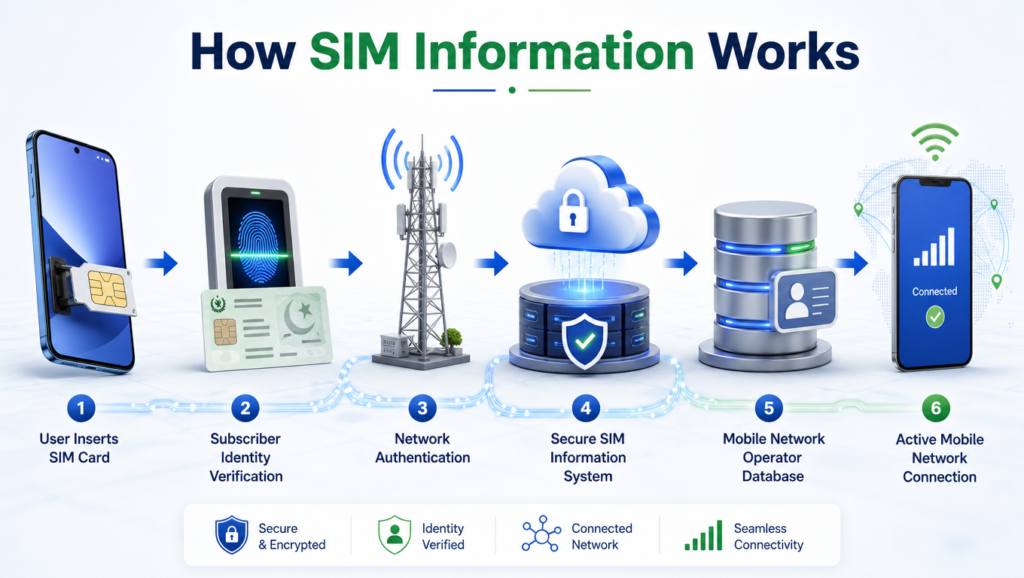
Understanding SIM Information becomes much easier once you know how mobile communication systems operate behind the scenes. Although using a SIM card appears simple, every mobile connection relies on a structured process involving subscriber registration, identity verification, network authentication, and secure communication between the subscriber and the mobile network operator.
Whenever you insert a SIM card into your mobile phone and switch on the device, several background processes begin automatically. These processes help the operator identify the subscriber, authenticate the SIM card, and establish a secure connection with the mobile network.
This entire system works within a regulated telecommunications framework designed to provide reliable communication while protecting subscriber information and maintaining network security.
The Journey of SIM Information
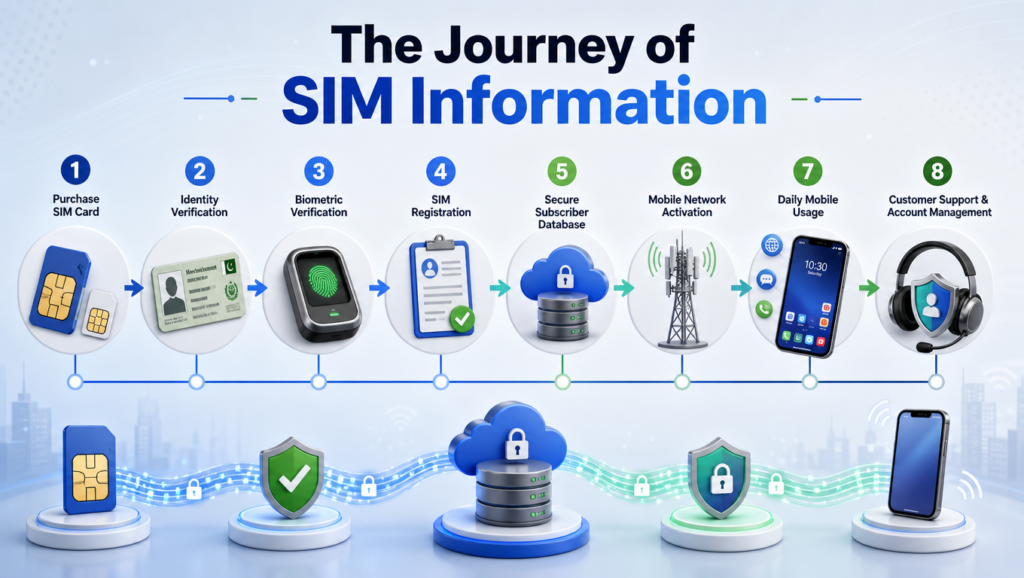
Every mobile connection follows a structured lifecycle.
It generally begins with:
- Subscriber registration.
- Identity verification.
- SIM activation.
- Network authentication.
- Service provisioning.
- Continuous subscriber management.
Each stage plays an important role in ensuring that mobile services remain secure, accurate, and available whenever required.
Step 1 – Subscriber Registration
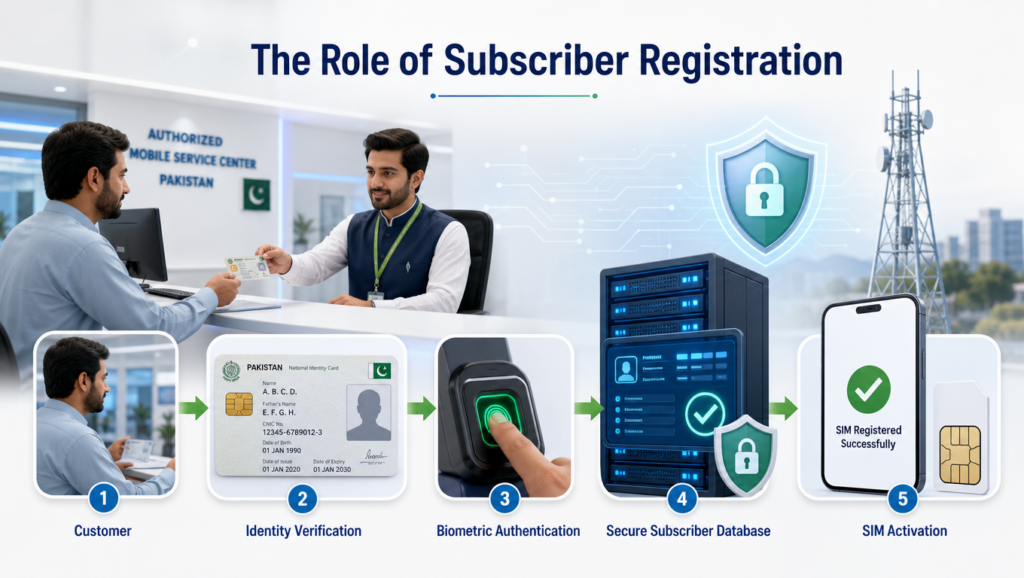
The first stage begins when a customer obtains a new SIM card through an authorized mobile network operator.
During this stage, the operator completes the required registration procedures according to applicable policies.
Subscriber registration establishes the foundation of the mobile account and creates the official subscriber record associated with the SIM.
Without registration, a SIM card cannot become part of the operator’s customer management system.
Step 2 – Identity Verification
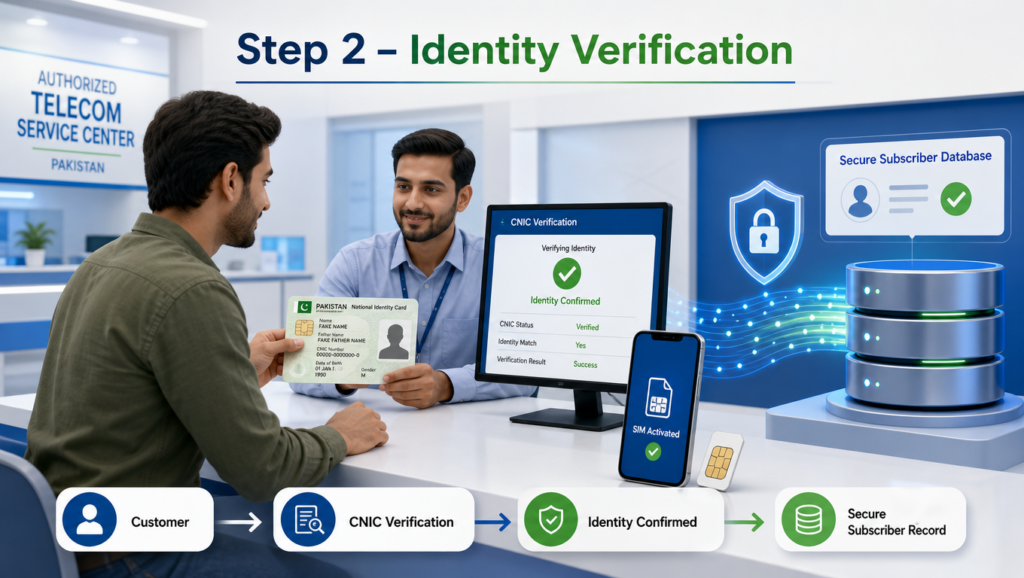
After registration, the subscriber’s identity is verified through the applicable verification procedures.
Identity verification helps:
- Confirm subscriber identity.
- Improve customer security.
- Reduce identity misuse.
- Support accurate subscriber records.
- Strengthen telecommunications security.
Verification is one of the most important components of modern SIM management.
Step 3 – SIM Activation
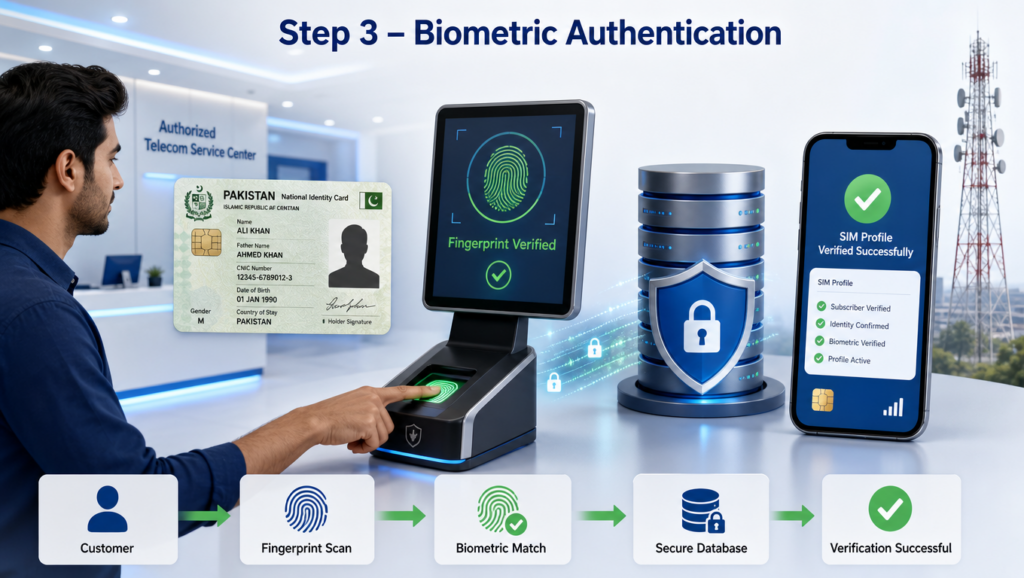
Once registration and verification requirements have been completed, the mobile operator activates the SIM card.
Activation allows the subscriber to begin using mobile services such as:
- Voice calls.
- SMS messaging.
- Mobile internet.
- Network-based services.
- Customer account features.
Activation connects the subscriber with the operator’s telecommunications network.
Step 4 – Network Authentication
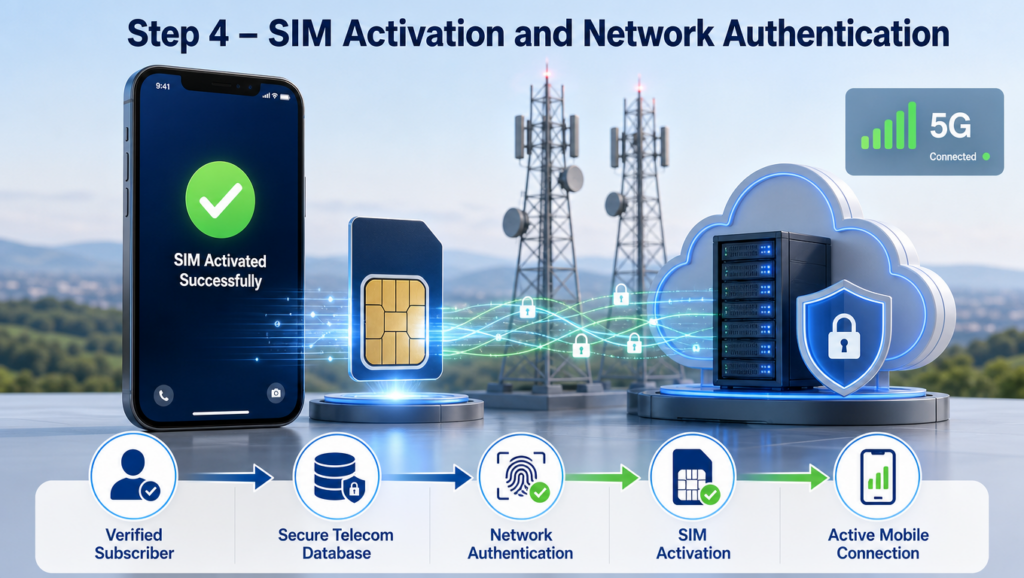
Whenever a mobile phone connects to the network, authentication takes place automatically.
During authentication, the network confirms that the SIM card is authorized to access available services.
This helps protect:
- Subscriber accounts.
- Mobile services.
- Network resources.
- Customer information.
Authentication occurs within seconds and usually remains invisible to the user.
Step 5 – Service Management
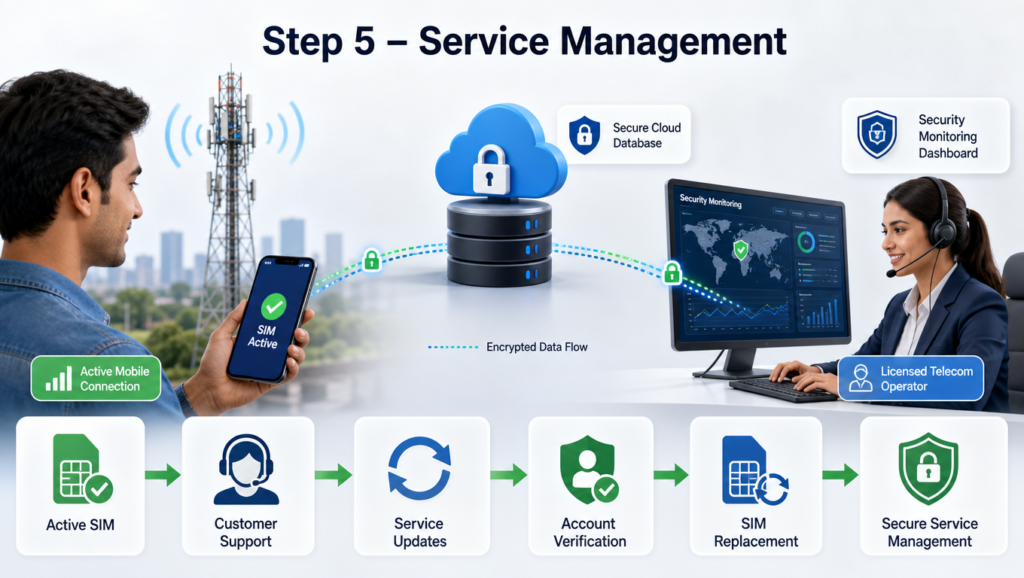
After successful authentication, the subscriber gains access to the mobile services associated with the account.
Operators continue managing:
- Customer support.
- Service updates.
- SIM replacement requests.
- Account verification.
- Security procedures.
- Subscriber information updates where applicable.
Service management continues throughout the lifetime of the SIM.
SIM Information Lifecycle
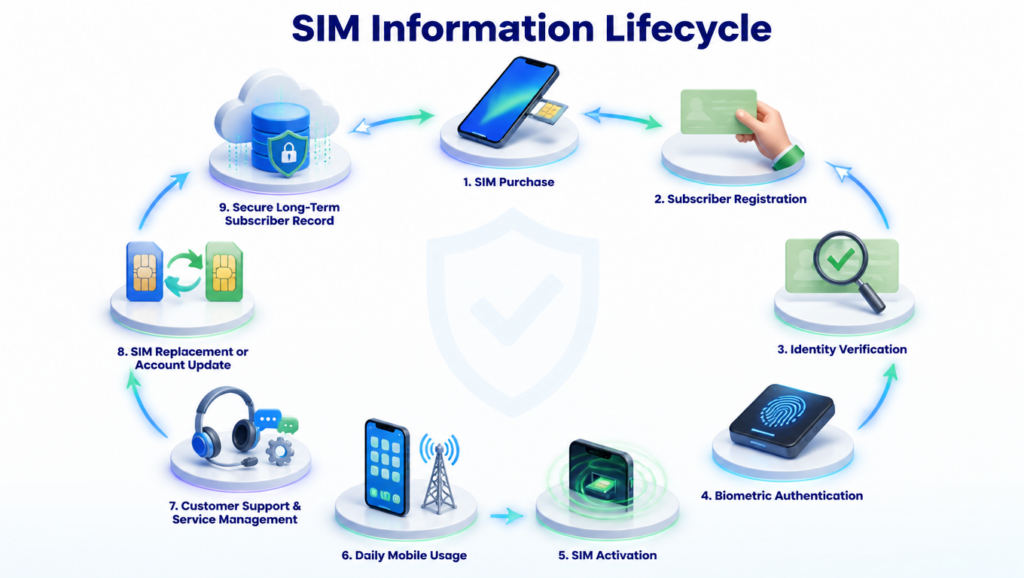
The overall process can be summarized as follows:
| Stage | Purpose |
|---|---|
| Subscriber Registration | Creates the subscriber record |
| Identity Verification | Confirms subscriber identity |
| SIM Activation | Enables mobile services |
| Network Authentication | Allows secure network access |
| Service Management | Supports ongoing subscriber services |
Each stage contributes to a secure and reliable mobile communication experience.
Why This Process Is Important
Every step in the SIM Information lifecycle has a specific purpose.
Together, these processes help operators:
- Deliver reliable mobile services.
- Protect subscriber information.
- Maintain accurate customer records.
- Improve network security.
- Support customer service.
- Reduce unauthorized account activity.
For subscribers, understanding this process makes it easier to appreciate why registration and verification are important components of modern telecommunications.
Common Misunderstandings
Many people believe that simply inserting a SIM card into a phone immediately creates a complete mobile account.
In reality, several background processes work together before a subscriber can access mobile services securely.
Others assume that registration ends after activation.
However, subscriber information continues to be managed throughout the entire lifecycle of the mobile connection.
Expert Insight
Although subscribers usually interact only with their mobile phone, licensed network operators manage a sophisticated telecommunications system behind the scenes.
From registration and identity verification to authentication and long-term account management, each stage helps ensure that mobile communication remains secure, reliable, and compliant with official telecommunications procedures.
Understanding this lifecycle provides valuable insight into how SIM Information supports millions of mobile users every day.
Key Takeaways
- SIM Information follows a structured lifecycle.
- Registration creates the subscriber record.
- Identity verification confirms the subscriber.
- SIM activation enables mobile services.
- Network authentication protects customer accounts.
- Service management continues throughout the lifetime of the SIM.
- Every stage contributes to secure and reliable mobile communication.
Evolution of SIM Information in Pakistan
The way SIM Information is managed in Pakistan has changed significantly over the past two decades. As mobile technology expanded and millions of people began using cellular services, the need for a more secure and reliable subscriber management system became increasingly important.
In the early years of mobile communication, SIM cards were primarily used for voice calls and text messaging. Mobile numbers were rarely connected to banking, government services, online accounts, or digital authentication. As a result, subscriber information systems were much simpler than they are today.
With the rapid growth of smartphones, mobile internet, and digital services, telecom operators gradually introduced stronger registration and verification procedures to improve customer security and maintain accurate subscriber records.
Today, SIM Information plays a vital role in supporting secure communication, identity verification, customer services, and modern digital ecosystems across Pakistan.
Early Days of Mobile Communication
When mobile services first became widely available in Pakistan, owning a mobile phone was considered a luxury.
During this period:
- Mobile subscribers were relatively few.
- Voice communication was the primary service.
- SMS messaging was becoming popular.
- Internet usage through mobile devices was very limited.
- Subscriber databases were much smaller.
As mobile technology became more affordable, the number of subscribers increased rapidly.
Growth of Mobile Subscribers
Over time, Pakistan experienced tremendous growth in mobile phone usage.
Several factors contributed to this expansion:
- Affordable smartphones.
- Competitive mobile packages.
- Expansion of network coverage.
- Growth of mobile internet.
- Increased digital awareness.
- Business communication.
- Online education.
- Digital commerce.
As subscriber numbers increased, managing accurate SIM Information became far more important than ever before.
Rise of Smartphones
The introduction of smartphones completely transformed the role of mobile SIM cards.
Instead of being used only for calls and SMS, mobile numbers became linked with:
- Banking applications.
- Digital wallets.
- Government services.
- Email accounts.
- Social media.
- Cloud storage.
- Business platforms.
- Ride-hailing apps.
- Food delivery services.
- Online learning platforms.
This shift significantly increased the importance of maintaining accurate subscriber information.
Digital Transformation
Pakistan’s growing digital economy has made mobile communication an essential part of everyday life.
Today, many important activities depend on a verified mobile number.
Examples include:
- Account authentication.
- Banking notifications.
- Online registrations.
- Business communication.
- Customer support.
- Digital payments.
- Secure logins.
- Two-factor authentication (2FA).
Because of this digital transformation, protecting SIM Information has become a shared responsibility between subscribers and mobile operators.
Stronger Identity Verification
As telecommunications evolved, stronger identity verification procedures became an important part of SIM registration.
The objectives include:
- Improving customer security.
- Reducing identity misuse.
- Maintaining accurate subscriber records.
- Supporting secure mobile services.
- Enhancing customer confidence.
Identity verification continues to play an important role in modern telecommunications systems.
Modern SIM Information Systems
Today’s SIM Information systems are far more advanced than those used during the early years of mobile communication.
Modern systems help operators:
- Manage millions of subscribers.
- Support secure customer verification.
- Maintain service records.
- Process subscriber requests.
- Improve customer experience.
- Strengthen network security.
These systems continue evolving alongside new technologies and changing customer needs.
Future Development
The future of SIM Information is expected to become even more digital.
Future improvements may include:
- Enhanced customer self-service.
- Faster verification systems.
- Improved cybersecurity.
- Better fraud detection.
- Advanced authentication technologies.
- Greater integration with digital services.
Although technology will continue to evolve, accurate subscriber information will remain one of the most important foundations of secure mobile communication.
Timeline of SIM Information Evolution
| Period | Major Development |
|---|---|
| Early Mobile Era | Voice calls and SMS became popular |
| Mobile Expansion | Rapid growth in subscriber numbers |
| Smartphone Era | Mobile internet and apps became widespread |
| Digital Economy | Banking, e-commerce, and digital services expanded |
| Modern Telecommunications | Secure verification and advanced subscriber management |
| Future | Smarter digital identity and stronger security systems |
Why This Evolution Matters
Understanding how SIM Information has evolved helps explain why today’s registration and verification procedures are much more advanced than they were in the past.
As mobile phones became central to communication, banking, education, healthcare, and business, protecting subscriber information became increasingly important.
This evolution has helped create a safer, more reliable, and more secure telecommunications environment for millions of mobile users.
Expert Insight
SIM Information has evolved from a simple subscriber record into an essential part of Pakistan’s digital infrastructure.
Today, it supports secure communication, identity verification, customer services, and access to many online platforms. As technology continues to advance, the importance of maintaining accurate subscriber information will only continue to grow.
Key Takeaways
- SIM Information has evolved significantly over the years.
- Smartphones transformed the role of mobile numbers.
- Digital services increased the importance of subscriber information.
- Identity verification became a core part of secure telecommunications.
- Modern SIM Information systems support millions of subscribers across Pakistan.
- Future technologies will continue improving subscriber security and digital identity management.
Role of the Pakistan Telecommunication Authority (PTA) in SIM Information
The Pakistan Telecommunication Authority (PTA) plays a central role in the country’s telecommunications sector by regulating mobile communication services, protecting consumer interests, and promoting a secure and reliable telecom environment. As millions of subscribers rely on mobile networks every day, the PTA helps establish the regulatory framework within which licensed mobile operators manage subscriber information and deliver communication services.
Although mobile network operators maintain individual subscriber records, they operate within policies and regulations that support transparency, consumer protection, and responsible telecommunications practices. This coordinated approach helps strengthen trust in Pakistan’s mobile communication system.
Understanding the role of the PTA gives subscribers a better understanding of how SIM Information fits into the broader telecommunications ecosystem.
What is the Pakistan Telecommunication Authority (PTA)?
The Pakistan Telecommunication Authority is Pakistan’s national telecommunications regulator.
Its responsibilities extend across multiple areas of the telecom industry, including:
- Promoting a competitive telecommunications sector.
- Protecting consumer interests.
- Supporting licensed telecom operators.
- Encouraging secure communication services.
- Promoting responsible telecommunications practices.
- Facilitating the continued development of Pakistan’s digital communications infrastructure.
Rather than managing individual customer accounts, the PTA provides the regulatory framework under which licensed operators deliver mobile services.
How PTA Supports SIM Information
SIM Information forms an important part of Pakistan’s telecommunications ecosystem.
The PTA supports this ecosystem by encouraging regulatory compliance, consumer protection, and secure subscriber management.
This contributes to:
- More reliable mobile services.
- Better subscriber protection.
- Improved registration practices.
- Stronger public confidence.
- A safer telecommunications environment.
These responsibilities help maintain an organized mobile communication system across the country.
Consumer Protection
One of the PTA’s most important objectives is consumer protection.
A well-regulated telecommunications environment benefits subscribers by encouraging:
- Fair telecom services.
- Responsible customer support.
- Reliable communication networks.
- Secure mobile services.
- Greater awareness of telecommunications practices.
Consumer confidence is strengthened when subscribers understand their rights and use official communication channels whenever assistance is required.
Supporting Secure Telecommunications
Modern telecommunications depend on accurate subscriber management and responsible security practices.
The PTA supports initiatives that contribute to:
- Secure communication.
- Responsible mobile services.
- Identity protection.
- Improved cybersecurity awareness.
- Better telecommunications governance.
These efforts help create a safer digital environment for both subscribers and operators.
Working Alongside Licensed Mobile Operators
Pakistan’s licensed mobile network operators are responsible for delivering day-to-day customer services.
These services include:
- SIM registration.
- Customer support.
- Subscriber verification.
- SIM replacement.
- Service activation.
- Account management.
While operators manage customer interactions directly, they do so within Pakistan’s telecommunications regulatory framework.
Why Official Guidance Matters
Many subscribers search the internet for answers about SIM Information.
However, not every online source provides accurate or up-to-date guidance.
Whenever subscribers require information regarding mobile services, registration, or telecommunications policies, official sources provide the most reliable reference point.
Using trusted information helps reduce confusion and encourages responsible use of mobile communication services.
PTA’s Contribution to Pakistan’s Digital Future
As Pakistan’s digital economy continues to expand, telecommunications play an increasingly important role in everyday life.
Mobile numbers now support:
- Online banking.
- Digital payments.
- E-commerce.
- Business communication.
- Educational platforms.
- Healthcare services.
- Government services.
- Secure account authentication.
A stable and well-regulated telecommunications environment helps support this continued digital growth.
Common Misconceptions About PTA
Several misconceptions exist regarding the PTA’s role.
Myth 1
PTA stores every customer’s personal SIM account.
Fact: Customer-specific subscriber records are maintained by licensed mobile network operators as part of their subscriber management systems.
Myth 2
PTA provides day-to-day customer support for every SIM card.
Fact: Customer support, account services, and subscriber requests are generally handled by the respective mobile operator.
Myth 3
PTA directly manages every SIM registration.
Fact: SIM registration and subscriber account management are carried out by licensed operators within Pakistan’s telecommunications framework.
PTA and Subscribers
Subscribers also have an important role in maintaining a secure telecommunications environment.
Good practices include:
- Following official registration procedures.
- Keeping subscriber information accurate.
- Using official customer support.
- Protecting identity documents.
- Staying informed through trusted sources.
Responsible subscriber behavior complements the broader efforts of telecom operators and regulatory institutions.
Expert Insight
The Pakistan Telecommunication Authority serves as an important pillar of Pakistan’s telecommunications ecosystem. By supporting regulation, consumer protection, and responsible telecommunications practices, it helps create an environment where licensed operators can deliver secure and reliable mobile services. Understanding the PTA’s role allows subscribers to better appreciate how SIM Information is managed within Pakistan’s modern telecom infrastructure.
Key Takeaways
- The PTA is Pakistan’s national telecommunications regulator.
- It provides the regulatory framework for the telecom sector.
- Licensed operators manage individual subscriber records and customer services.
- Consumer protection and secure telecommunications remain key priorities.
- Official guidance helps subscribers make informed decisions.
- A strong telecommunications framework supports Pakistan’s growing digital economy.
Role of NADRA in SIM Information and Identity Verification
Behind every secure mobile connection lies one essential element—identity verification. Before a mobile number becomes part of Pakistan’s telecommunications system, the identity of the subscriber must be verified through the official registration process. This helps ensure that mobile services are associated with the correct individual and supports a safer digital environment.
In Pakistan, the National Database and Registration Authority (NADRA) plays an important role in the national identity ecosystem. While licensed mobile network operators manage subscriber accounts and provide customer services, identity verification forms an important part of the registration framework that supports secure SIM Information management.
Understanding NADRA’s role helps subscribers appreciate why identity verification is required before a new mobile connection becomes active and why accurate identity records contribute to reliable telecommunications services.
What is NADRA?
The National Database and Registration Authority (NADRA) is Pakistan’s national identity management organization.
It is responsible for maintaining the country’s identity database and issuing national identity documents.
Its identity management system supports numerous public and private sector services that require reliable identity verification.
These include:
- National identity management.
- Citizen registration.
- Identity verification.
- Public sector services.
- Digital identity initiatives.
- Various verification processes across different sectors.
Because mobile communication depends on verified subscriber identities, accurate identity records contribute to secure telecommunications services.
Why Identity Verification is Necessary
Identity verification is one of the most important stages of SIM registration.
Its objectives include:
- Confirming the identity of the subscriber.
- Supporting accurate registration records.
- Reducing identity misuse.
- Improving customer protection.
- Strengthening trust within the telecommunications ecosystem.
Without proper identity verification, maintaining reliable subscriber records would become significantly more difficult.
How Identity Verification Supports SIM Information
SIM Information is much more than a mobile number.
Every registered mobile connection is associated with subscriber information that helps operators provide customer services throughout the lifecycle of the SIM.
Identity verification supports this process by helping ensure that subscriber records are linked to the correct individual during registration.
This improves:
- Registration accuracy.
- Customer verification.
- Subscriber management.
- Account recovery processes.
- Mobile security.
- Consumer confidence.
Accurate identity information benefits both subscribers and mobile operators.
Relationship Between NADRA and Mobile Operators
Many people assume that NADRA manages mobile subscriber accounts.
This is a common misunderstanding.
The responsibilities are different.
NADRA
Supports national identity verification.
Mobile Network Operators
Manage:
- Subscriber accounts.
- SIM registration.
- Customer services.
- SIM replacement.
- Service activation.
- Mobile account management.
Although these organizations perform different roles, both contribute to maintaining a secure telecommunications environment.
Identity Verification and Digital Security
As mobile numbers become connected with banking, government services, online accounts, and digital authentication, protecting subscriber identity becomes increasingly important.
Reliable identity verification helps strengthen:
- Digital trust.
- Customer confidence.
- Mobile account security.
- Authentication systems.
- Identity protection.
Strong identity management forms one of the foundations of modern digital communication.
Benefits of Accurate Identity Records
Maintaining accurate identity information provides long-term advantages.
These include:
- Faster customer support.
- Improved subscriber verification.
- Better account management.
- Easier recovery procedures.
- Reliable mobile services.
- Stronger digital identity protection.
Keeping personal identity information accurate also helps reduce unnecessary delays whenever official subscriber services are required.
Common Misconceptions About NADRA
Several misunderstandings exist regarding NADRA’s role in SIM Information.
Myth 1
NADRA manages every SIM account.
Fact: Mobile subscriber accounts are managed by licensed mobile network operators.
Myth 2
NADRA provides SIM customer support.
Fact: Customer support for SIM-related services is handled by the respective mobile operator.
Myth 3
Updating a mobile phone automatically updates identity records.
Fact: Changing a device does not alter the subscriber information maintained through official registration records.
Why Subscribers Should Keep Their Identity Information Accurate
Accurate identity information supports many important services beyond mobile communication.
These may include:
- Banking authentication.
- Government services.
- Secure online accounts.
- Customer verification.
- Mobile account recovery.
- Business communication.
Maintaining updated identity records where required helps ensure a smoother experience across multiple digital services.
Expert Insight
Reliable identity verification is one of the cornerstones of secure telecommunications. While mobile operators manage subscriber accounts and deliver customer services, verified identity information strengthens the registration process and supports the long-term integrity of Pakistan’s mobile communication system. As digital services continue to expand, accurate identity management will remain an essential component of responsible SIM Information.
Key Takeaways
- NADRA plays an important role in Pakistan’s identity management ecosystem.
- Identity verification supports accurate SIM registration.
- Mobile operators manage subscriber accounts and customer services.
- Accurate identity information improves registration quality and customer protection.
- Strong identity verification contributes to a more secure digital environment.
- Understanding these responsibilities helps subscribers better appreciate how SIM Information is managed.
Pakistan’s Mobile Network Operators and Their Role in SIM Information
Every mobile phone user interacts with a telecom operator, but very few understand the role these companies play in managing SIM Information. A mobile network operator is much more than a service provider—it is responsible for activating mobile connections, maintaining subscriber accounts, delivering network services, and supporting customers throughout the life of a SIM card.
Whenever a new SIM card is issued, replaced, upgraded, or restored, the subscriber normally communicates with the mobile operator rather than any other organization. For this reason, understanding the responsibilities of telecom operators helps explain how SIM Information is created, maintained, and updated over time.
Pakistan’s telecommunications sector consists of several licensed mobile operators, each providing nationwide or regional communication services while maintaining its own subscriber management systems.
What Does a Mobile Network Operator Do?
A mobile network operator performs a wide range of operational and customer service responsibilities that keep millions of subscribers connected every day.
These responsibilities commonly include:
- Activating new SIM cards.
- Maintaining subscriber accounts.
- Delivering voice and SMS services.
- Providing mobile internet connectivity.
- Processing SIM replacement requests.
- Managing value-added services.
- Offering customer support.
- Handling account-related requests.
Although these activities happen behind the scenes, they form the backbone of everyday mobile communication.
Subscriber Account Management
Every active SIM card is connected to a subscriber account maintained by the respective mobile operator.
This account helps the operator manage services such as:
- Mobile package activation.
- Billing and balance services.
- Customer verification.
- Account updates.
- Service preferences.
- Technical support.
Whenever subscribers contact customer service, the operator accesses this account to provide assistance after completing the required verification process.
Network Connectivity
One of the operator’s primary responsibilities is maintaining reliable network coverage.
This includes supporting:
- Voice communication.
- SMS delivery.
- Mobile internet access.
- Roaming services where available.
- Emergency communication.
- Network stability.
Reliable connectivity ensures subscribers can use their mobile services wherever network coverage is available.
Customer Support Services
Telecom operators also provide customer support throughout the lifetime of a SIM card.
Subscribers may contact customer support for assistance with:
- Network issues.
- SIM replacement.
- Service activation.
- Package information.
- Account-related inquiries.
- Technical guidance.
Efficient customer support contributes to a better user experience and helps resolve subscriber concerns more quickly.
Pakistan’s Licensed Mobile Operators
Pakistan’s mobile communication sector includes several licensed operators serving millions of subscribers across the country.
These include:
Jazz
One of Pakistan’s largest mobile network providers, offering nationwide voice, internet, and digital communication services.
Zong
Provides 4G connectivity and a broad range of consumer and business mobile services across Pakistan.
Ufone
Offers voice, SMS, internet, and customer-focused telecom services with nationwide coverage.
Telenor Pakistan
Provides mobile communication and digital services for individual and business customers in many parts of the country.
SCO (Special Communications Organization)
Provides telecommunications services in designated regions while supporting communication infrastructure in those areas.
Each operator manages its own subscriber accounts, customer services, and network infrastructure while operating within Pakistan’s telecommunications framework.
How Operators Keep Subscriber Information Updated
Subscriber information is not static.
Throughout the lifetime of a SIM card, operators may update account information whenever subscribers request eligible account-related services.
Examples include:
- Updating contact information where applicable.
- Replacing damaged SIM cards.
- Restoring interrupted services.
- Managing service subscriptions.
- Recording customer support interactions.
Keeping subscriber information accurate helps improve both service quality and customer support.
Importance of Customer Verification
Before processing many account-related requests, operators verify the identity of the subscriber.
Verification helps:
- Protect customer accounts.
- Reduce unauthorized access.
- Improve service security.
- Maintain account integrity.
- Support responsible subscriber management.
Verification procedures help ensure that account services are provided to the appropriate subscriber.
Operator Responsibilities vs Subscriber Responsibilities
Many people assume operators are responsible for every aspect of account security.
In reality, security is a shared responsibility.
Mobile Operator
Responsible for:
- Maintaining network infrastructure.
- Managing subscriber accounts.
- Providing customer support.
- Delivering communication services.
- Protecting network operations.
Subscriber
Responsible for:
- Protecting personal information.
- Keeping account details accurate.
- Following official procedures.
- Reporting issues promptly.
- Using mobile services responsibly.
When both parties fulfill their responsibilities, the overall telecommunications environment becomes more secure and reliable.
Choosing the Right Operator
Different subscribers have different communication needs.
Factors often considered include:
- Network coverage.
- Internet performance.
- Customer support quality.
- Available service packages.
- Business requirements.
- Regional availability.
Choosing an operator based on personal needs helps improve the overall mobile experience.
Expert Insight
Licensed mobile operators are at the center of Pakistan’s telecommunications ecosystem. They do much more than provide network access—they maintain subscriber accounts, deliver customer support, manage mobile services, and help ensure that millions of users remain connected every day. Understanding their responsibilities gives subscribers a clearer picture of how SIM Information is managed throughout the lifecycle of a mobile connection.
Key Takeaways
- Mobile operators manage subscriber accounts and deliver communication services.
- Customer support continues throughout the lifetime of a SIM card.
- Subscriber verification helps protect account security.
- Pakistan has multiple licensed mobile network operators serving different customer needs.
- Maintaining accurate subscriber information improves service quality and account management.
- Responsible communication between subscribers and operators strengthens the overall mobile ecosystem.
SIM Registration Process in Pakistan
Every mobile connection begins with one essential step—SIM registration. Before a SIM card can be used for calls, messages, or mobile internet, it must go through the operator’s registration process. This process helps create a subscriber record and enables the operator to provide mobile services securely and efficiently.
Many people assume registration simply means purchasing a SIM card from a retailer. In reality, registration involves several stages designed to establish a subscriber account, complete the required verification procedures, and activate the mobile connection.
Understanding this process helps subscribers know what to expect when obtaining a new SIM card and why each step is important.
Why SIM Registration Is Necessary
SIM registration supports both subscribers and the telecommunications ecosystem.
A structured registration process helps:
- Create an official subscriber account.
- Enable secure mobile services.
- Improve customer support.
- Reduce registration errors.
- Support accurate subscriber management.
- Maintain service continuity.
Without registration, a mobile operator cannot activate or manage a subscriber’s account.
Step 1 – Selecting a Mobile Network Operator
The process begins when a customer chooses a licensed mobile network operator.
The decision is often based on factors such as:
- Network coverage.
- Internet performance.
- Available packages.
- Customer support.
- Personal communication needs.
Selecting the right operator ensures the subscriber receives services that best match their requirements.
Step 2 – Identity Verification
After selecting an operator, the subscriber completes the required identity verification procedures.
This step helps confirm that the subscriber’s information matches the details required during registration.
Identity verification contributes to:
- Accurate subscriber records.
- Reliable customer management.
- Secure account creation.
- Better service quality.
Step 3 – Subscriber Registration
Once verification requirements have been completed, the operator creates the subscriber account.
During this stage, the operator associates the mobile connection with the verified subscriber record and prepares the account for activation.
Subscriber registration forms the foundation of every future interaction between the customer and the operator.
Step 4 – SIM Activation
After successful registration, the SIM card is activated.
Activation enables the subscriber to use services such as:
- Voice calls.
- SMS messaging.
- Mobile internet.
- Network-based services.
- Customer account features.
Activation marks the beginning of the SIM’s active lifecycle.
Step 5 – Ongoing Account Management
Registration does not end once the SIM becomes active.
Throughout the life of the mobile connection, operators continue managing:
- Account updates.
- Customer support.
- Service changes.
- SIM replacement requests.
- Subscriber verification when required.
- Technical assistance.
This ongoing management helps maintain a consistent customer experience.
SIM Registration Workflow
| Stage | Purpose |
|---|---|
| Choose an Operator | Select the preferred mobile network |
| Identity Verification | Confirm subscriber identity |
| Subscriber Registration | Create the subscriber account |
| SIM Activation | Enable communication services |
| Account Management | Support services throughout the SIM lifecycle |
Common Questions About SIM Registration
Many first-time subscribers have similar questions before obtaining a SIM card.
Examples include:
- How does registration work?
- Why is identity verification required?
- When does a SIM become active?
- What happens after activation?
- Who manages subscriber information?
Understanding the registration process answers these questions and helps subscribers use mobile services with greater confidence.
Registration Best Practices
When obtaining a new SIM card, subscribers should always follow good practices.
These include:
- Using authorized service channels.
- Providing accurate information during registration.
- Keeping personal documents secure.
- Reviewing account details where applicable.
- Contacting the operator if any issue arises.
Responsible registration practices contribute to a smoother customer experience.
Expert Insight
SIM registration is much more than the activation of a mobile number. It establishes the subscriber’s relationship with the mobile operator and creates the account that supports communication, customer service, and future account management. A well-managed registration process benefits both subscribers and operators by promoting reliability, security, and long-term service quality.
Key Takeaways
- SIM registration is the first step in creating a mobile subscriber account.
- Registration includes identity verification, account creation, and SIM activation.
- Licensed mobile operators manage the registration process.
- Accurate registration improves customer support and service management.
- Following official registration procedures helps ensure a secure and reliable mobile experience.
Biometric Verification System in Pakistan
Biometric verification has become an important part of modern telecommunications because it helps establish a stronger connection between a mobile subscriber and the registered SIM card. As mobile communication continues to support banking, digital services, business activities, and online authentication, reliable identity verification has become increasingly important for maintaining secure subscriber records.
Instead of relying only on personal information, biometric verification uses unique physical characteristics during the verification process. This additional verification step helps improve the accuracy of subscriber registration and strengthens confidence in the overall telecommunications system.
For most subscribers, biometric verification is completed quickly and forms part of the official procedures followed when registering or managing a mobile connection.
What is Biometric Verification?
Biometric verification is a method of confirming an individual’s identity using unique biological characteristics.
Unlike passwords or identification numbers, biometric characteristics are naturally unique to each person, making them an effective method of identity confirmation.
Within the telecommunications sector, biometric verification helps support:
- Subscriber registration.
- Identity confirmation.
- Customer verification.
- Account protection.
- Service security.
- Accurate subscriber records.
Why Biometric Verification is Important
The introduction of biometric verification has significantly improved the reliability of subscriber registration.
Its objectives include:
- Improving registration accuracy.
- Strengthening customer protection.
- Supporting secure mobile services.
- Enhancing subscriber confidence.
- Reducing identity-related risks.
These benefits help create a more trusted mobile communication environment for everyone.
How the Verification Process Works
Although the technical systems operate behind the scenes, the overall process follows a straightforward sequence.
A typical verification process includes:
- The subscriber visits an authorized service center.
- Identity verification procedures are completed.
- Biometric authentication is performed where required.
- The operator verifies the registration request.
- The subscriber account is updated or activated.
- Mobile services become available after successful processing.
Most subscribers complete this process within a short period, depending on the service being requested.
Benefits for Mobile Subscribers
Biometric verification provides several practical advantages for mobile users.
These include:
- Greater confidence in subscriber registration.
- Improved account protection.
- Better customer verification.
- Faster handling of eligible account requests.
- More reliable subscriber records.
- Stronger support for secure mobile services.
As mobile technology evolves, these benefits continue to become more valuable.
Benefits for Mobile Operators
Biometric verification also helps operators improve the quality of their services.
It supports:
- Accurate subscriber management.
- Better customer authentication.
- Improved service quality.
- More efficient account administration.
- Stronger operational security.
- Enhanced customer trust.
Reliable verification allows operators to manage millions of subscriber accounts more effectively.
Common Situations Where Verification May Be Required
Subscribers may encounter identity verification during various account-related services.
Examples include:
- Registering a new SIM card.
- Replacing a damaged SIM.
- Restoring selected subscriber services.
- Updating certain account information where applicable.
- Completing other verification-related requests.
The exact requirements depend on the type of service being requested and the operator’s procedures.
Common Misconceptions
Several misunderstandings exist regarding biometric verification.
Myth 1
Biometric verification is required every time a SIM card is used.
Fact: Everyday mobile usage does not normally require repeated biometric verification.
Myth 2
Biometric verification stores personal activities performed on the phone.
Fact: Biometric verification is related to identity confirmation and should not be confused with the personal content stored on a mobile device.
Myth 3
Changing a mobile phone requires repeating the complete registration process.
Fact: Replacing a device does not automatically require a new subscriber registration. The applicable requirements depend on the service being requested.
Best Practices During Verification
Subscribers can help ensure a smooth verification experience by following a few simple practices.
- Visit authorized service channels.
- Carry the required identification documents.
- Verify personal information carefully.
- Follow the instructions provided by customer representatives.
- Keep personal identity documents secure after completing the process.
These simple habits help reduce delays and improve the overall customer experience.
Expert Insight
Biometric verification represents one of the most significant improvements in modern subscriber management. By adding an additional layer of identity confirmation, it supports more accurate registration, strengthens customer protection, and contributes to a more secure telecommunications environment. As digital services continue to expand, reliable identity verification will remain an essential component of responsible mobile communication.
Key Takeaways
- Biometric verification strengthens subscriber identity confirmation.
- It supports accurate SIM registration and customer verification.
- Both subscribers and operators benefit from improved account security.
- Verification requirements depend on the service being requested.
- Following official verification procedures helps ensure reliable mobile services.
Official Methods to Verify SIM Information
As mobile communication has become an essential part of everyday life, many subscribers want to confirm that their SIM Information is accurate and associated with the correct subscriber account. Whether you have purchased a new SIM card, returned to Pakistan after living abroad, or simply want to review your mobile account, using official verification methods is always the safest approach.
Unfortunately, many websites promote unofficial services or make unrealistic claims about providing subscriber information. Such sources may be inaccurate, unreliable, or compromise user privacy. For this reason, subscribers should rely only on official channels offered by licensed mobile network operators and relevant authorities.
Using trusted verification methods not only protects your personal information but also helps ensure that any account-related request is handled correctly.
Why Verification Is Important
Reviewing your SIM Information from time to time helps ensure that your mobile account remains accurate and up to date.
Verification can help you:
- Confirm your subscriber information.
- Review account details when required.
- Resolve account-related issues.
- Support secure customer services.
- Improve confidence in your mobile account.
Regular verification also reduces confusion when requesting future subscriber services.
Official Verification Channels
Licensed mobile operators provide multiple ways for subscribers to receive assistance regarding their mobile accounts.
Depending on the service required, verification may be available through:
- Authorized customer service centers.
- Official customer support representatives.
- Operator websites.
- Official mobile applications.
- Helpline services.
The available options may vary between operators and according to the type of request.
Visiting an Authorized Service Center
For many account-related services, visiting an authorized service center remains one of the most reliable options.
Customer representatives can assist with:
- Subscriber verification.
- SIM replacement requests.
- Service activation.
- Account-related inquiries.
- Identity confirmation.
- General customer support.
When visiting a service center, subscribers should carry the identification documents required for the requested service.
Using Official Mobile Applications
Many mobile network operators now provide official mobile applications that allow customers to manage selected account features conveniently.
Depending on the operator, these applications may provide access to:
- Account information.
- Active packages.
- Usage summaries.
- Recharge services.
- Customer support.
- Service requests.
Official applications provide a convenient way to manage many routine services without visiting a service center.
Customer Helpline Support
Subscribers can also contact their operator’s customer support helpline for guidance.
Customer representatives may assist with:
- General account inquiries.
- Service information.
- Package details.
- Technical support.
- Guidance regarding available subscriber services.
For security reasons, representatives may complete identity verification before discussing account-related information.
Operator Websites
Official operator websites also serve as an important source of subscriber information.
These websites often include:
- Service guides.
- Frequently Asked Questions.
- Coverage information.
- Customer support resources.
- Contact details.
- Mobile application downloads.
Using official websites helps subscribers access reliable and up-to-date information.
Protecting Your Privacy During Verification
Whenever you request account-related services, protecting your personal information should remain a priority.
Good privacy practices include:
- Using official communication channels only.
- Avoiding unknown websites claiming to provide subscriber information.
- Never sharing sensitive account details unnecessarily.
- Confirming that you are communicating with the correct operator.
- Reporting suspicious activity through official customer support.
Practicing good digital hygiene helps protect your mobile account and personal information.
Warning About Unofficial Sources
Subscribers should be cautious of websites or individuals claiming to provide confidential subscriber records, unauthorized SIM data, or private account information.
Such claims may be misleading and could expose users to privacy risks or fraudulent activities.
Whenever assistance is required, official customer support remains the safest and most reliable option.
Best Practices for Subscribers
To make future account management easier, subscribers should:
- Keep their contact information updated where applicable.
- Store important account records safely.
- Follow official verification procedures.
- Use trusted communication channels.
- Contact customer support whenever clarification is needed.
These habits contribute to a safer and more reliable mobile experience.
Expert Insight
Verification is not simply about confirming account information—it is an important part of responsible mobile account management. By using official verification channels and protecting personal information, subscribers can reduce unnecessary risks while ensuring smoother access to future mobile services.
Key Takeaways
- Always use official channels to verify SIM Information.
- Authorized service centers and operator support remain the most reliable options.
- Official websites and mobile applications provide useful account services.
- Protecting personal information should always be a priority.
- Avoid relying on unofficial sources claiming to provide subscriber data.
SIM Information Security and Privacy
Every mobile subscriber shares a responsibility for protecting their SIM Information. While licensed mobile network operators implement security measures to safeguard subscriber accounts, users also play an important role in keeping their mobile identity secure. Simple precautions can significantly reduce the risk of unauthorized access, account misuse, and identity-related issues.
As smartphones become the primary gateway to banking, digital payments, government services, business communication, and online accounts, protecting SIM Information is no longer just a technical concern—it is an essential part of personal cybersecurity.
Understanding the risks and following safe practices can help subscribers maintain better control over their mobile accounts.
Why SIM Information Security Matters
A mobile number is often connected to multiple digital services.
These may include:
- Banking applications.
- Digital wallets.
- Email accounts.
- Social media platforms.
- Business communication.
- Government services.
- Two-factor authentication (2FA).
- Cloud-based applications.
Because one mobile number can provide access to several important services, protecting subscriber information helps strengthen overall digital security.
Common Security Risks
Although modern telecommunications systems include multiple security measures, subscribers should remain aware of common risks.
Some examples include:
- Sharing personal account information with unknown individuals.
- Responding to fraudulent phone calls.
- Clicking suspicious links received through SMS or messaging apps.
- Visiting fake customer support websites.
- Ignoring unusual activity on a mobile account.
Awareness is often the first step toward preventing security-related problems.
Protecting Your Mobile Identity
Good security begins with responsible account management.
Subscribers should consider the following practices:
- Keep personal identification documents secure.
- Avoid sharing account-related information unnecessarily.
- Use official customer support channels whenever assistance is required.
- Review account activity regularly where applicable.
- Report suspicious activity to the mobile operator without delay.
These habits contribute to better long-term account protection.
Safe Use of Public Networks
Public Wi-Fi networks are convenient but may not always provide the same level of security as trusted private connections.
When using public internet access:
- Avoid accessing sensitive accounts unless necessary.
- Use secure websites that support encrypted connections.
- Sign out of important accounts after use.
- Avoid saving passwords on shared devices.
Practicing safe browsing habits reduces unnecessary exposure to online threats.
Importance of Strong Authentication
Many online platforms now support additional security features such as two-factor authentication (2FA).
When available, enabling these features can help provide an extra layer of protection for accounts connected to your mobile number.
Good authentication practices include:
- Using strong passwords.
- Updating passwords regularly.
- Enabling additional security features where appropriate.
- Keeping recovery information current.
These steps improve the security of both mobile and online accounts.
Recognizing Suspicious Activity
Subscribers should pay attention to unexpected changes involving their mobile services.
Examples include:
- Unrecognized account notifications.
- Unexpected service interruptions.
- Messages requesting confidential information.
- Unknown calls claiming to represent official organizations.
- Requests for identity documents through unofficial channels.
Whenever something appears unusual, it is advisable to verify the situation directly with the mobile operator.
Privacy Best Practices
Protecting privacy is just as important as protecting account security.
Subscribers can improve privacy by:
- Sharing personal information only when necessary.
- Reading privacy notices before using digital services.
- Avoiding unofficial websites requesting sensitive details.
- Keeping mobile devices updated with the latest software.
- Locking smartphones with secure authentication methods.
Small privacy habits often provide significant long-term protection.
Building Good Security Habits
Cybersecurity is not achieved through a single action.
It is built through consistent daily habits.
Responsible subscribers generally:
- Stay informed about common online scams.
- Verify information before responding.
- Protect important personal documents.
- Use trusted communication channels.
- Review security settings regularly.
Developing these habits helps create a safer digital experience over time.
Expert Insight
Technology continues to evolve, but the importance of protecting SIM Information remains constant. Strong security practices, responsible account management, and informed decision-making help reduce risks while improving confidence in everyday mobile communication. Subscribers who prioritize privacy and security are better prepared to use digital services safely in an increasingly connected world.
Key Takeaways
- SIM Information security protects both mobile services and digital identity.
- Good security habits reduce the risk of unauthorized account activity.
- Public Wi-Fi should be used carefully when accessing important accounts.
- Strong authentication improves account protection.
- Privacy awareness is an essential part of responsible mobile usage.
- Official communication channels remain the safest source of account assistance.
Common Myths and Misconceptions About SIM Information
As the use of mobile phones has increased across Pakistan, many misconceptions about SIM Information have also become common. Some of these misunderstandings originate from social media posts, while others spread through word of mouth or unofficial websites. Although they may sound convincing, many of these claims are inaccurate and can lead to confusion.
Understanding the difference between facts and myths helps subscribers make informed decisions, protect their mobile accounts, and avoid unnecessary problems. The following misconceptions are among the most common.
Myth 1: The Person Using the SIM Is Always the Owner
One of the biggest misunderstandings is that anyone using a SIM card automatically becomes its owner.
Fact
A person may use a mobile number every day, but that alone does not determine the subscriber record maintained by the operator. Everyday usage and subscriber registration are separate concepts.
Myth 2: Changing a Mobile Phone Changes SIM Information
Many users believe that purchasing a new smartphone automatically changes the information associated with their SIM card.
Fact
A mobile phone and a SIM card are separate components. Replacing a device does not automatically change the subscriber information maintained for the mobile connection.
Myth 3: SIM Information Contains Everything About a Person
Some people assume SIM Information includes complete personal records, financial information, or the contents of a mobile phone.
Fact
SIM Information relates to subscriber and service management within the telecommunications environment. It should not be confused with personal files, photographs, messages, or applications stored on a mobile device.
Myth 4: Any Website Can Show SIM Information
Many websites claim they can instantly display subscriber information after entering a mobile number.
Fact
Subscribers should be cautious of such claims. Personal information should only be handled through authorized channels that follow applicable privacy and security requirements.
Myth 5: Registration Is Required Only Once
Some subscribers think that once a SIM card becomes active, they never need to interact with the operator again.
Fact
During the lifetime of a mobile connection, subscribers may need assistance with account-related services such as SIM replacement, account updates, customer support, or other operator-provided services.
Myth 6: A Lost SIM Card Is Only a Minor Inconvenience
Many users underestimate the importance of reporting a lost SIM card promptly.
Fact
A mobile number is often linked to banking services, email accounts, messaging platforms, and other digital services. Reporting issues through official customer support helps reduce unnecessary risks.
Myth 7: Public Wi-Fi Has No Effect on Mobile Security
Some people believe that using public internet connections has no relationship with the security of accounts connected to their mobile number.
Fact
When accessing important online accounts through public networks, subscribers should follow safe browsing practices and use trusted, secure connections whenever possible.
Myth 8: Customer Support Never Verifies Identity
Some subscribers become concerned when customer representatives ask identity-related questions before discussing an account.
Fact
Identity verification is a normal part of customer support. These verification steps help protect subscriber accounts and reduce the possibility of unauthorized access.
Why These Myths Continue to Spread
Several factors contribute to misinformation.
These include:
- Unverified social media posts.
- Misleading online content.
- Outdated information.
- Misunderstood technical concepts.
- Advice from unofficial sources.
Learning from reliable educational resources helps reduce confusion and improves awareness.
How to Identify Reliable Information
Subscribers should evaluate information carefully before accepting it as accurate.
Reliable information usually comes from:
- Official telecom operators.
- Government organizations.
- Trusted educational resources.
- Verified customer support.
- Publicly available official guidance.
Cross-checking important information helps avoid unnecessary misunderstandings.
Expert Insight
Technology evolves quickly, but misinformation spreads just as fast. Taking a few moments to verify information through trusted sources can prevent unnecessary confusion and improve the overall mobile experience. Informed subscribers are better equipped to manage their accounts responsibly and protect their digital identity.
Key Takeaways
- Many SIM-related myths originate from unofficial sources.
- Subscriber registration and everyday SIM usage are different concepts.
- Changing a phone does not automatically change subscriber information.
- Identity verification is a normal part of secure customer support.
- Reliable information should always be obtained through trusted and official sources.
Common SIM Information Mistakes and How to Avoid Them
Most SIM-related issues are not caused by technical problems. Instead, they often result from small mistakes made by subscribers during registration, account management, or everyday mobile usage. These mistakes may seem minor at first, but they can create unnecessary difficulties when requesting customer support, updating account information, or using services linked to a mobile number.
Understanding these common mistakes helps subscribers manage their SIM Information more responsibly and avoid avoidable complications in the future.
Mistake 1 – Not Confirming Registration Details
Many subscribers complete the registration process without reviewing the information associated with their mobile account.
Taking a few moments to confirm that the information provided during registration is accurate can help prevent future issues and reduce unnecessary correction requests.
Mistake 2 – Ignoring Important Messages from the Operator
Mobile operators occasionally send important service notifications to subscribers.
Some users ignore these messages without reading them.
These notifications may relate to:
- Service updates.
- Network maintenance.
- Account information.
- Security recommendations.
- Customer support announcements.
Reading official communications helps subscribers stay informed about their mobile services.
Mistake 3 – Delaying Account-Related Requests
Some subscribers continue using a mobile connection even after noticing account-related issues, hoping they will resolve automatically.
Delaying action may increase inconvenience.
Whenever assistance is required, contacting the operator through official customer support is generally the most appropriate approach.
Mistake 4 – Sharing Personal Information Carelessly
One of the most common mistakes is sharing sensitive account information with unknown individuals or through untrusted websites.
Subscribers should never disclose personal account details unless they are communicating through an official and verified support channel.
Protecting personal information is one of the simplest ways to improve account security.
Mistake 5 – Depending on Unofficial Sources
The internet contains thousands of pages discussing SIM-related topics.
Unfortunately, not all of them provide reliable information.
Before acting on advice found online, subscribers should verify that the information comes from a trusted and authoritative source.
This habit helps reduce confusion and improves decision-making.
Mistake 6 – Forgetting Account Security
Many people focus only on using their mobile number and rarely think about account security until a problem occurs.
Good security habits should become part of everyday mobile usage.
Simple steps such as protecting personal information, reviewing account activity where available, and contacting official customer support when necessary contribute to long-term account protection.
Mistake 7 – Using Outdated Information
Telecommunications services continue to evolve.
Procedures, customer services, and digital platforms may change over time.
Relying on outdated articles or old screenshots can result in incorrect assumptions.
Whenever clarification is required, subscribers should consult the latest information published through official channels.
Mistake 8 – Overlooking Privacy
Some subscribers willingly share screenshots, account details, or identity documents without considering potential privacy risks.
Before sharing any personal information, it is important to understand why it is being requested and whether the request comes from a legitimate source.
Protecting privacy helps reduce unnecessary exposure to identity-related risks.
How to Build Better SIM Management Habits
Responsible subscribers usually develop habits that make account management much easier.
These include:
- Following official guidance.
- Keeping important records organized.
- Staying informed about service updates.
- Using trusted communication channels.
- Protecting personal information.
- Reporting unusual account activity promptly.
These habits contribute to a smoother and more secure mobile experience.
Quick Checklist for Subscribers
Before requesting any SIM-related service, consider the following checklist:
✅ Review your account information carefully.
✅ Keep identification documents secure.
✅ Use official customer support whenever assistance is needed.
✅ Verify information before acting on online advice.
✅ Protect personal information from unknown sources.
✅ Stay informed through trusted telecommunications resources.
Expert Insight
Good account management is built on consistency rather than complexity. Most subscriber issues can be avoided by following official guidance, protecting personal information, and responding promptly whenever account-related assistance is required. Small preventive actions today often prevent larger problems in the future.
Key Takeaways
- Many SIM-related problems result from avoidable mistakes rather than technical failures.
- Reviewing registration details improves long-term account accuracy.
- Official customer support remains the safest source of assistance.
- Protecting personal information strengthens account security.
- Responsible account management begins with informed everyday habits.
SIM Information Fraud and Scam Awareness
As digital communication continues to grow, fraudsters are constantly developing new ways to deceive mobile users. Many scams no longer target only bank accounts—they also attempt to exploit mobile numbers because a single SIM card is often connected to multiple online services.
Understanding common fraud techniques helps subscribers recognize suspicious situations before they become serious problems. Awareness remains one of the strongest forms of protection against social engineering and identity-related scams.
The purpose of this section is not to create fear but to help subscribers recognize warning signs and respond responsibly whenever something appears unusual.
Why Mobile Subscribers Are Targeted
Mobile numbers have become an important part of daily life.
They are commonly linked with:
- Banking notifications.
- Digital wallets.
- Online shopping accounts.
- Email recovery.
- Messaging applications.
- Government services.
- Business communication.
- Two-factor authentication (2FA).
Because one mobile number may be connected to many digital services, fraudsters often attempt to manipulate subscribers into revealing sensitive information.
Common Scam Techniques
Fraud attempts can take many different forms.
Some of the most common examples include:
- Fake customer support calls.
- Fraudulent SMS messages.
- Phishing websites.
- Impersonation scams.
- Fake promotional offers.
- Requests for confidential information.
- Social engineering attacks.
These scams often rely on creating urgency so that the victim reacts without verifying the request.
Recognizing Warning Signs
Subscribers should be cautious whenever they encounter situations such as:
- Unexpected calls requesting personal information.
- Messages claiming immediate account suspension.
- Links directing users to unfamiliar websites.
- Requests to share identity documents.
- Offers that appear too good to be true.
- Pressure to make quick decisions.
Recognizing these warning signs early helps reduce unnecessary risks.
Protecting Yourself from Fraud
Developing safe digital habits is one of the best ways to reduce exposure to scams.
Recommended practices include:
- Verify the identity of anyone requesting account information.
- Communicate only through official customer support channels.
- Avoid clicking unknown links.
- Never share confidential information without confirming the source.
- Report suspicious activity promptly.
Simple precautions can prevent many common fraud attempts.
Social Engineering
Not every scam relies on technology.
Many fraud attempts involve psychological manipulation.
Social engineering occurs when someone attempts to gain trust before requesting sensitive information.
Examples include:
- Pretending to represent a telecom company.
- Claiming to offer technical support.
- Requesting urgent account verification.
- Creating false emergencies.
- Offering unrealistic rewards.
The objective is usually to persuade the subscriber to disclose information voluntarily.
Fake Websites
Some fraudulent websites are designed to imitate legitimate services.
Before entering personal information, subscribers should always check:
- Website address.
- Secure HTTPS connection.
- Official branding.
- Contact information.
- Authenticity of the source.
If something appears suspicious, it is better to leave the website and visit the operator’s official website directly.
Safe Communication Habits
Responsible communication greatly reduces fraud risks.
Subscribers should:
- Verify unexpected requests.
- Ignore suspicious messages.
- Contact official customer support independently.
- Keep personal documents private.
- Stay informed about common scam techniques.
These habits help create a safer online experience.
What To Do If Something Seems Suspicious
If you receive an unexpected request involving your mobile account:
- Remain calm.
- Do not share personal information immediately.
- Verify the request through official customer support.
- Ignore suspicious links or attachments.
- Report fraudulent activity through appropriate official channels where applicable.
Taking a few extra minutes to verify information can prevent much larger problems later.
Building Fraud Awareness
Fraud prevention is not achieved through one security feature.
It depends on awareness, careful decision-making, and responsible digital behavior.
Subscribers who remain informed about evolving scam techniques are generally better prepared to recognize suspicious situations before any damage occurs.
Education continues to be one of the strongest tools for protecting both personal information and digital identities.
Expert Insight
Modern scams often target people rather than technology. Fraudsters understand that trust, urgency, and curiosity can influence human decisions. By slowing down, verifying requests independently, and relying only on official communication channels, subscribers can significantly reduce the likelihood of becoming victims of fraud.
Key Takeaways
- Mobile subscribers are increasingly targeted by digital scams.
- Fraud often relies on deception rather than technical attacks.
- Fake customer support and phishing attempts remain common tactics.
- Verifying requests through official channels improves account safety.
- Awareness and responsible decision-making remain the most effective defenses.
Best Practices for Managing SIM Information
Managing SIM Information responsibly is not limited to the registration process. Good account management continues throughout the life of a mobile connection. By following a few practical habits, subscribers can reduce unnecessary complications, improve account security, and enjoy a smoother experience whenever they need assistance from their mobile network operator.
The recommendations below are based on responsible mobile usage and are suitable for both personal and business subscribers.
Keep Your Information Accurate
Accurate subscriber information helps ensure that future account-related services can be processed more efficiently.
Whenever applicable, review your account details and ensure that the information associated with your mobile connection remains accurate.
Keeping subscriber records current also helps reduce delays when requesting eligible services.
Use Only Authorized Service Channels
Whenever you require assistance, always communicate through authorized customer service channels provided by your mobile network operator.
Official channels provide reliable guidance, accurate information, and appropriate support for subscriber-related services.
Avoid relying on unknown websites or individuals claiming to provide unofficial account services.
Protect Personal Documents
Identity documents should always be handled carefully.
Good practices include:
- Store important documents securely.
- Avoid sharing unnecessary copies.
- Verify the purpose before providing identification.
- Keep physical and digital copies protected.
Responsible document management helps protect personal identity.
Review Your Mobile Account Regularly
Regular account reviews help subscribers stay informed about their mobile services.
Consider checking:
- Active service packages.
- Account notifications.
- Recharge history where available.
- Service updates.
- Customer communication.
Periodic reviews make it easier to identify anything unusual at an early stage.
Stay Updated With Official Announcements
Telecommunications services continue to evolve.
Operators may introduce:
- New customer services.
- Updated applications.
- Improved security features.
- Network upgrades.
- New support options.
Following official announcements helps subscribers benefit from these improvements.
Secure Your Smartphone
Protecting the mobile device itself is equally important.
Simple precautions include:
- Enable screen lock protection.
- Keep the operating system updated.
- Install applications from trusted sources.
- Remove unused applications.
- Lock the device when not in use.
A secure smartphone contributes to a more secure mobile experience.
Maintain Good Digital Habits
Responsible digital behavior supports long-term account protection.
Useful habits include:
- Verify unexpected requests.
- Think before sharing information.
- Use strong authentication where available.
- Review security settings periodically.
- Stay informed about new online threats.
Small daily habits often provide the greatest long-term benefits.
Know When to Contact Customer Support
Subscribers should never hesitate to contact official customer support whenever they require clarification.
Situations may include:
- Questions about mobile services.
- Account-related concerns.
- Technical issues.
- SIM replacement guidance.
- General subscriber assistance.
Seeking accurate information early often prevents larger problems later.
Build Long-Term Awareness
Technology changes continuously.
Subscribers who remain informed about telecommunications, cybersecurity, and responsible digital practices are better prepared to use mobile services confidently.
Continuous learning supports smarter decision-making and improves overall digital literacy.
Daily SIM Information Checklist
Use this simple checklist to maintain good subscriber practices.
✅ Use only official customer support.
✅ Keep personal information protected.
✅ Secure your smartphone with appropriate authentication.
✅ Review important account notifications.
✅ Stay informed about service updates.
✅ Verify information before acting on unexpected requests.
Expert Insight
Responsible SIM management is built through consistent habits rather than complicated technical knowledge. Subscribers who use official communication channels, protect their personal information, and remain informed about changing technologies are more likely to enjoy a secure and reliable mobile experience over the long term.
Key Takeaways
- Good SIM management continues after registration.
- Accurate subscriber information improves account management.
- Official customer support remains the safest source of assistance.
- Protecting identity documents strengthens personal security.
- Regular account reviews help identify issues early.
- Continuous learning supports safer and more confident mobile usage.
The Future of SIM Information
The telecommunications industry is evolving faster than ever before. Mobile phones are no longer used only for voice calls and text messages—they have become central to digital banking, online education, healthcare, business operations, cloud services, and secure authentication.
As technology continues to advance, the way SIM Information is managed is also expected to evolve. Future developments are likely to focus on improving convenience, strengthening security, and making subscriber services more efficient.
Although the core purpose of SIM Information will remain the same, the technologies supporting it are expected to become more intelligent and more integrated with digital ecosystems.
Growth of Digital Identity
Digital identity is becoming increasingly important across both public and private services.
A verified mobile connection now supports access to numerous online platforms, making reliable identity management an essential part of everyday life.
Future digital identity systems are expected to provide:
- Faster verification.
- Better account protection.
- Improved customer convenience.
- Stronger authentication methods.
- More secure digital interactions.
As digital transformation continues, mobile numbers will remain an important part of identity verification.
Rise of eSIM Technology
One of the biggest developments in mobile communication is the adoption of eSIM technology.
Unlike a traditional physical SIM card, an eSIM is embedded directly into compatible devices and can be activated digitally through supported mobile operators.
Potential advantages include:
- No physical SIM replacement.
- Faster activation.
- Easier device switching.
- Better support for multiple mobile profiles.
- Reduced plastic waste.
As compatible devices become more common, eSIM adoption is expected to continue growing worldwide.
Artificial Intelligence in Customer Support
Artificial Intelligence (AI) is already changing how telecom companies interact with customers.
Future customer services may include:
- Intelligent virtual assistants.
- Faster issue resolution.
- Personalized recommendations.
- Improved service availability.
- Better customer experiences.
AI is expected to assist customer support teams rather than completely replace human representatives.
Smarter Fraud Detection
Telecommunications companies continue investing in technologies that help identify suspicious account activity more quickly.
Future security systems may use advanced analytics to detect unusual behavior and strengthen account protection.
Potential improvements include:
- Faster fraud detection.
- Better account monitoring.
- Improved security alerts.
- Enhanced risk analysis.
- Stronger identity protection.
These technologies aim to improve customer confidence while reducing unnecessary risks.
Faster Digital Services
Subscribers increasingly expect services to be available online without lengthy processes.
Future developments may focus on:
- Improved self-service portals.
- More efficient account management.
- Better mobile applications.
- Faster customer support.
- Simplified service requests.
These improvements can make everyday account management more convenient for subscribers.
Cloud-Based Subscriber Management
Cloud technology is becoming an important part of modern telecommunications.
Cloud-based systems may help operators:
- Improve service reliability.
- Process customer requests more efficiently.
- Enhance system scalability.
- Support continuous service availability.
- Strengthen disaster recovery capabilities.
These technologies operate behind the scenes but contribute significantly to service quality.
Improved Cybersecurity
Cybersecurity will remain one of the highest priorities for telecommunications providers.
Future security strategies are expected to focus on:
- Stronger authentication.
- Better encryption.
- Advanced threat monitoring.
- Improved customer awareness.
- Continuous security improvements.
As online services continue expanding, protecting subscriber information will become even more important.
Sustainable Telecommunications
Environmental sustainability is becoming an important objective across many industries, including telecommunications.
Future initiatives may include:
- Greater use of digital services.
- Paperless customer processes.
- Energy-efficient infrastructure.
- Reduced environmental impact.
- Wider adoption of electronic documentation.
These changes can improve both operational efficiency and environmental responsibility.
Preparing for the Future
Subscribers also have a role in adapting to future technologies.
Useful habits include:
- Staying informed about new mobile technologies.
- Learning about new security features.
- Updating devices regularly.
- Using official applications.
- Following trusted telecommunications guidance.
Being open to new technologies helps subscribers benefit from future improvements while maintaining good security practices.
Expert Insight
The future of SIM Information will be shaped by innovation, automation, and stronger digital security. Technologies such as eSIM, artificial intelligence, cloud computing, and advanced cybersecurity are expected to make subscriber services more efficient and user-friendly. While these innovations will change how mobile services are delivered, the importance of accurate subscriber information and responsible account management will remain unchanged.
Key Takeaways
- SIM Information will continue evolving alongside digital technologies.
- eSIM technology is expected to become more common.
- Artificial intelligence will improve customer support.
- Future security systems may provide stronger fraud detection.
- Cloud technology will enhance telecommunications services.
- Continuous learning will help subscribers adapt to future developments.
Real-Life Situations Where SIM Information Becomes Important
Many people only think about SIM Information when they purchase a new SIM card. In reality, subscriber information becomes important in many everyday situations that most mobile users experience at least once.
Whether you are changing your smartphone, requesting customer support, replacing a damaged SIM, or using your mobile number for online services, accurate subscriber information helps ensure these activities are completed more smoothly.
Understanding these practical situations helps subscribers appreciate why maintaining correct SIM Information is important throughout the lifetime of a mobile connection.
Purchasing Your First SIM Card
For many people, obtaining their first SIM card marks the beginning of their digital journey.
The registration process establishes the subscriber account that will later support communication, online verification, banking notifications, and many other digital services.
Starting with accurate subscriber information provides a strong foundation for future mobile usage.
Replacing a Damaged SIM Card
SIM cards may become damaged over time due to physical wear or device-related issues.
When requesting a replacement, subscriber verification helps the operator process the request while protecting the associated account.
Maintaining accurate subscriber records can make this process more efficient.
Upgrading to a New Smartphone
Many users replace their smartphones every few years.
Although changing a mobile device does not normally change subscriber information, users should ensure that their SIM card is functioning properly and that important account details remain accessible after moving to the new device.
Preparing before switching devices can help prevent unnecessary interruptions.
Using a Mobile Number for Banking
Many financial services use mobile numbers as part of customer communication and account security.
Because of this, subscribers should always keep their mobile account accessible and ensure they can receive important notifications without interruption.
Responsible account management supports a smoother banking experience.
Business Communication
Business owners and professionals often rely on a single mobile number for communication with clients, suppliers, and colleagues.
Maintaining accurate subscriber information helps ensure continued access to important business conversations and customer interactions.
Reliable mobile communication contributes to stronger professional relationships.
Recovering Online Accounts
Many digital platforms allow users to recover account access through their registered mobile number.
If subscribers maintain control of their mobile connection, recovering access to important accounts becomes much easier whenever passwords are forgotten or security verification is required.
International Travel
Subscribers travelling abroad may depend on their mobile number for receiving important messages, authentication codes, or business communication.
Before travelling internationally, it is helpful to review available roaming services, account status, and operator guidance where applicable.
Planning ahead helps reduce unnecessary inconvenience during travel.
Long-Term Mobile Usage
Some subscribers continue using the same mobile number for many years.
Over time, this number may become associated with numerous digital services.
Regularly reviewing account information and maintaining responsible usage habits helps ensure that the mobile connection continues to support these services effectively.
Supporting Family Members
Many families assist elderly parents or younger family members with mobile services.
Understanding SIM Information enables family members to provide better guidance while encouraging responsible account management and safe digital practices.
Education within families also promotes greater awareness of mobile security.
Preparing for Unexpected Situations
Unexpected situations can arise at any time.
Examples include:
- A misplaced mobile phone.
- A damaged SIM card.
- Device replacement.
- Temporary service issues.
- Account-related questions.
Subscribers who understand how SIM Information works are generally better prepared to respond calmly and use the appropriate official support channels.
Why Practical Knowledge Matters
Understanding theory is valuable, but applying that knowledge in everyday situations is even more important.
Subscribers who understand how SIM Information relates to real-life activities are more likely to:
- Make informed decisions.
- Protect their mobile accounts.
- Use customer support effectively.
- Avoid unnecessary confusion.
- Manage their mobile services responsibly.
Practical knowledge transforms information into confident decision-making.
Expert Insight
The true value of SIM Information becomes most visible during everyday situations rather than technical discussions. Whether opening a bank account, changing a smartphone, travelling, or contacting customer support, well-managed subscriber information helps ensure a smoother and more reliable mobile experience. Small actions taken today often make future account management much easier.
Key Takeaways
- SIM Information is important throughout the lifetime of a mobile connection.
- Many everyday activities depend on accurate subscriber records.
- Good account management supports banking, business, and online services.
- Planning ahead reduces inconvenience during device changes or travel.
- Practical knowledge helps subscribers make better long-term decisions.
SIM Information Comparison Tables and Quick Reference Guide
After understanding how SIM Information works, many readers prefer a quick reference that summarizes important concepts in one place. Comparison tables make complex topics easier to understand and allow subscribers to find important information without reading the entire guide again.
The following tables summarize the key concepts discussed throughout this article in a simple and organized format.
SIM Card vs SIM Information
| SIM Card | SIM Information |
|---|---|
| A physical chip inserted into a mobile device. | Information associated with the subscriber account. |
| Enables network connectivity. | Supports subscriber identification and account management. |
| Can be replaced if damaged. | Remains associated with the subscriber account unless officially updated. |
| Installed inside the device. | Managed through the operator’s subscriber management system. |
Subscriber vs Mobile Operator
| Subscriber | Mobile Operator |
|---|---|
| Uses the mobile service. | Provides the mobile service. |
| Maintains personal account security. | Maintains network infrastructure and subscriber accounts. |
| Contacts customer support when assistance is required. | Provides customer support and account-related services. |
| Follows official procedures. | Delivers communication services and account management. |
Registration vs Verification
| Registration | Verification |
|---|---|
| Creates the subscriber account. | Confirms subscriber identity. |
| Usually completed when obtaining a SIM. | May be required during selected account-related services. |
| Establishes the mobile connection. | Helps protect account integrity. |
Physical SIM vs eSIM
| Physical SIM | eSIM |
|---|---|
| Removable card. | Embedded inside compatible devices. |
| Requires physical installation. | Can be activated digitally on supported devices. |
| Widely supported. | Availability depends on device and operator support. |
| Easy to replace physically. | Managed digitally after activation. |
Official Sources vs Unofficial Sources
| Official Sources | Unofficial Sources |
|---|---|
| Mobile operator websites. | Unknown websites. |
| Authorized service centers. | Unverified online claims. |
| Official customer support. | Social media rumors. |
| Published guidance from recognized organizations. | Information without reliable references. |
Good Practices vs Poor Practices
| Good Practices | Poor Practices |
|---|---|
| Use official customer support. | Trust unknown websites. |
| Protect personal information. | Share sensitive information unnecessarily. |
| Review account information periodically. | Ignore important account notifications. |
| Verify information before taking action. | Act on unverified advice. |
Common Questions and Quick Answers
| Question | Short Answer |
|---|---|
| What is SIM Information? | Information associated with a subscriber’s mobile account. |
| Who manages subscriber accounts? | Licensed mobile network operators. |
| Why is identity verification important? | It helps support accurate subscriber records and secure account management. |
| Where should subscribers seek assistance? | Official customer support channels. |
| How can users improve account security? | Follow responsible digital practices and protect personal information. |
Quick Reference Checklist
Use the following checklist whenever managing your mobile account.
| Task | Recommendation |
|---|---|
| Purchasing a SIM | Use an authorized service channel. |
| Requesting support | Contact the official customer service team. |
| Protecting personal information | Share details only through trusted channels. |
| Staying informed | Follow official announcements and updates. |
| Account management | Review important information periodically. |
Summary Table
| Topic | Importance |
|---|---|
| Subscriber Information | Helps identify the mobile subscriber. |
| Registration | Creates the subscriber account. |
| Verification | Supports identity confirmation. |
| Customer Support | Assists subscribers throughout the account lifecycle. |
| Security | Helps protect mobile accounts and personal information. |
| Best Practices | Improve long-term account management. |
Why Comparison Tables Matter
Long articles often contain a large amount of information. Comparison tables provide a quick overview that helps readers review important concepts in seconds instead of searching through multiple sections.
These tables are especially useful for:
- First-time readers.
- Students.
- Business users.
- Professionals.
- Mobile subscribers seeking quick answers.
They also improve readability and make complex information easier to understand.
Expert Insight
Well-organized information is easier to remember. Comparison tables simplify technical concepts by presenting related information side by side, allowing readers to understand differences, similarities, and best practices more efficiently. They also make this guide a practical reference that subscribers can revisit whenever needed.
Key Takeaways
- Comparison tables simplify complex topics.
- Quick reference charts improve readability.
- Structured information helps readers find answers faster.
- Organized summaries support better understanding.
- Practical reference tables add long-term value to the guide.
SIM Information Glossary (A–Z)
Telecommunications often include technical words that may be unfamiliar to many readers. This glossary explains the most important SIM Information terms in simple language, making it easier to understand the concepts discussed throughout this guide.
A — Activation
The process through which a mobile connection becomes ready for voice calls, SMS, mobile internet, and other network services after registration has been completed.
B — Biometric Verification
A method of confirming a subscriber’s identity using unique biological characteristics during the verification process.
C — CNIC
The Computerized National Identity Card issued to eligible citizens of Pakistan and commonly used for identity verification during subscriber registration.
D — Digital Identity
The collection of verified information that helps confirm an individual’s identity while using digital and online services.
E — eSIM
A digital SIM technology embedded inside compatible devices, allowing supported mobile services to be activated without inserting a physical SIM card.
F — Fraud
Any dishonest attempt to obtain personal information or misuse subscriber accounts through deception or unauthorized activities.
G — GSM
A globally recognized mobile communication standard used by many telecommunications networks.
H — Home Network
The primary mobile network with which a subscriber’s SIM card is associated.
I — Identity Verification
The process of confirming that subscriber information matches the required identification records before selected mobile services are provided.
J — Jazz
One of Pakistan’s licensed mobile network operators providing voice, internet, and digital communication services.
K — Know Your Customer (KYC)
A verification process used by organizations to confirm customer identity before providing certain services.
L — Licensed Mobile Operator
A telecommunications company authorized to provide mobile communication services within the applicable regulatory framework.
M — Mobile Number
The unique telephone number assigned to a subscriber’s mobile connection.
N — NADRA
Pakistan’s national identity management organization responsible for maintaining national identity records and supporting identity verification services.
O — Operator
A licensed company that provides mobile communication services and manages subscriber accounts.
P — PTA
The Pakistan Telecommunication Authority, responsible for regulating Pakistan’s telecommunications sector.
Q — QR Code
A machine-readable code sometimes used by organizations for digital verification, service access, or information sharing.
R — Registration
The process of creating a subscriber account before a SIM card becomes active.
S — SIM Card
A Subscriber Identity Module that enables a compatible mobile device to connect to a mobile network.
T — Two-Factor Authentication (2FA)
An additional security method requiring a second verification step before granting access to an online account.
U — Ufone
One of Pakistan’s licensed telecommunications providers offering voice, internet, and digital services.
V — Verification
The process of confirming subscriber information before selected account-related services are completed.
W — Wireless Network
A communication system that allows mobile devices to connect without physical cables.
X — XML
A structured data format commonly used for exchanging information between computer systems.
Y — Subscriber Lifecycle
The complete journey of a subscriber account from registration through ongoing account management.
Z — Zong
One of Pakistan’s licensed mobile operators providing nationwide telecommunications services.
Why This Glossary Is Helpful
Telecommunications terminology can sometimes appear technical, especially for first-time mobile users.
A simple glossary helps readers:
- Understand unfamiliar terms.
- Learn technical concepts more quickly.
- Navigate the guide more easily.
- Build confidence when discussing SIM-related topics.
- Use official terminology correctly.
This reference section also allows readers to revisit important definitions whenever needed.
Expert Insight
Understanding telecommunications terminology makes it easier to interpret official guidance, communicate with customer support, and manage mobile services confidently. Even a basic understanding of common SIM Information terms can significantly improve the overall user experience.
Key Takeaways
- The glossary explains important SIM Information terms in simple language.
- Understanding technical terminology improves digital awareness.
- Official telecommunications terms become easier to understand through practical definitions.
- A well-structured glossary serves as a long-term reference for subscribers.
Frequently Asked Questions (FAQs)
The following questions are among the most commonly asked by mobile subscribers who want to understand SIM Information, subscriber registration, identity verification, and responsible mobile account management in Pakistan.
1. What is SIM Information?
SIM Information refers to the subscriber-related information associated with a registered mobile connection. It supports account management, customer services, and communication between the subscriber and the mobile network operator.
2. Why is SIM Information important?
It helps operators manage subscriber accounts, provide customer support, process account-related services, and maintain reliable mobile communication.
3. Is SIM Information the same as a SIM card?
No.
A SIM card is the physical component inserted into a mobile device, while SIM Information refers to the subscriber and service-related information associated with that mobile connection.
4. Who manages SIM Information?
Licensed mobile network operators manage subscriber accounts and related information as part of their customer management systems.
5. What is subscriber registration?
Subscriber registration is the process of creating an official mobile account before a SIM card becomes active for communication services.
6. Why is identity verification required?
Identity verification helps improve registration accuracy, strengthen account security, and support responsible subscriber management.
7. What is biometric verification?
Biometric verification is a method of confirming identity using unique biological characteristics during selected registration or account-related procedures.
8. Can I continue using the same mobile number after changing my phone?
Yes.
Changing a mobile phone does not normally change the subscriber account associated with the SIM card.
9. What should I do if my SIM card is damaged?
Contact your mobile network operator through an authorized service channel for guidance regarding replacement options.
10. Does changing a SIM card automatically change subscriber information?
No.
Replacing a SIM card does not automatically change the subscriber information associated with the account.
11. Why should I use official customer support?
Official customer support provides accurate guidance, protects subscriber privacy, and helps ensure account-related requests are handled appropriately.
12. Can unofficial websites provide reliable SIM Information?
Subscribers should exercise caution and rely on trusted official sources whenever seeking account-related assistance or guidance.
13. What is the role of a mobile network operator?
Operators activate SIM cards, manage subscriber accounts, provide customer support, and deliver communication services.
14. What is the role of PTA?
The Pakistan Telecommunication Authority regulates the telecommunications sector and supports the overall regulatory framework for telecom services.
15. What is the role of NADRA?
NADRA manages Pakistan’s national identity system and supports identity verification processes used across various services.
16. Why should subscribers protect personal information?
Protecting personal information reduces privacy risks and helps strengthen the security of mobile accounts.
17. Can one mobile number be connected to multiple digital services?
Yes.
Many subscribers use the same mobile number for banking, messaging applications, online accounts, business communication, and authentication services.
18. What are good security habits for mobile subscribers?
Using official customer support, protecting personal information, securing mobile devices, and staying informed about common online threats.
19. What should I do if I receive a suspicious message?
Avoid responding immediately. Verify the request through official customer support before taking any action.
20. Why is cybersecurity important for mobile users?
Mobile numbers are connected to many important online services, making good cybersecurity habits essential for protecting digital accounts.
21. What is eSIM technology?
An eSIM is a digital version of a traditional SIM that is embedded inside compatible devices and can be activated electronically.
22. How does AI help telecommunications?
Artificial intelligence can improve customer support, automate routine services, and enhance the overall customer experience.
23. Why should I review my mobile account regularly?
Periodic reviews help subscribers stay informed about account information, service updates, and important notifications.
24. How can I improve my mobile account security?
Use secure authentication, protect personal information, update devices regularly, and communicate only through trusted channels.
25. Why should I avoid unofficial sources?
Unofficial sources may provide inaccurate information or expose subscribers to unnecessary privacy and security risks.
26. What should I do before replacing my smartphone?
Ensure your SIM card is working properly, back up important data, and confirm that you can still access services linked to your mobile number.
27. Can businesses benefit from proper SIM management?
Yes.
Well-managed mobile accounts support reliable communication, customer service, and day-to-day business operations.
28. Why is SIM Information becoming more important?
As mobile numbers become central to digital services, secure subscriber management becomes increasingly valuable for both individuals and businesses.
29. Where can I learn more about SIM Information?
Official mobile operator resources, PTA guidance, and trusted educational materials remain the best sources of information.
30. What is the most important advice for mobile subscribers?
Use official communication channels, protect personal information, remain informed, and manage your mobile account responsibly.
Expert Insight
Frequently asked questions reflect the real concerns of mobile subscribers. Clear, practical answers help readers understand important concepts quickly while reducing confusion. A well-structured FAQ section also serves as a long-term reference that users can revisit whenever they need guidance.
Key Takeaways
- FAQs provide quick answers to common subscriber questions.
- Short, accurate responses improve readability and user experience.
- Well-written FAQs help readers find information faster.
- Structured FAQ sections support both users and search engines.
Official Resources and Trusted References
When learning about SIM Information, it is always best to rely on trustworthy and official sources. Telecommunications policies, customer services, identity verification procedures, and mobile technologies continue to evolve over time. Depending on unofficial websites or outdated information can lead to unnecessary confusion.
Official organizations and licensed mobile operators regularly publish updated guidance, customer support information, service announcements, and educational resources for subscribers.
The following organizations are among the most trusted sources for SIM-related information in Pakistan.
Pakistan Telecommunication Authority (PTA)
The Pakistan Telecommunication Authority is the national regulator responsible for overseeing Pakistan’s telecommunications sector.
Subscribers can use the PTA’s official resources to learn about:
- Telecommunications regulations.
- Consumer awareness.
- Mobile industry updates.
- Public notices.
- Official announcements.
- General telecom guidance.
Whenever telecom-related clarification is required, the PTA remains one of the most reliable reference sources.
National Database and Registration Authority (NADRA)
NADRA manages Pakistan’s national identity infrastructure.
Its official resources provide information regarding:
- National identity services.
- Identity documentation.
- Citizen services.
- Digital identity initiatives.
- Public awareness.
- Official announcements.
Subscribers seeking identity-related guidance should always consult official NADRA resources.
Licensed Mobile Network Operators
Each licensed mobile operator provides dedicated customer support, educational resources, and self-service options through official websites and mobile applications.
Subscribers should always use these official platforms when seeking assistance regarding:
- Mobile services.
- Account support.
- SIM replacement.
- Package information.
- Network coverage.
- Customer care.
Jazz
Jazz offers customer resources through its official website, mobile application, customer support centers, and helpline services.
Subscribers can access information regarding available services, mobile packages, account management, and customer assistance directly from official Jazz channels.
Zong
Zong provides official customer support resources covering mobile communication services, internet solutions, digital services, and subscriber assistance.
Official Zong platforms also include service updates and customer self-service features.
Ufone
Ufone maintains official customer service channels that provide guidance regarding mobile services, account management, service packages, and technical assistance.
Subscribers should rely on these official resources whenever account-related information is required.
Telenor Pakistan
Telenor Pakistan offers official customer support, digital self-service tools, mobile applications, and educational resources designed to help subscribers manage their accounts more efficiently.
Special Communications Organization (SCO)
SCO provides telecommunications services within designated regions and offers official customer support through its authorized communication channels.
Subscribers using SCO services should always refer to official resources for the latest information.
Why Official Sources Matter
Using trusted sources provides several advantages.
These include:
- Accurate information.
- Updated guidance.
- Reliable customer support.
- Better privacy protection.
- Reduced misinformation.
- Greater confidence when making account-related decisions.
Official organizations remain the most dependable source of telecommunications information.
How to Evaluate Online Information
Before accepting any SIM-related information, consider the following questions:
- Does the information come from an official organization?
- Is the content regularly updated?
- Are contact details clearly available?
- Does the website explain its services transparently?
- Is the guidance consistent with recognized telecommunications practices?
Asking these questions helps subscribers identify trustworthy information.
Building Reliable Digital Habits
Responsible internet usage begins with choosing credible sources.
Subscribers should develop habits such as:
- Bookmarking official websites.
- Following verified announcements.
- Confirming information before sharing it.
- Ignoring unsupported claims.
- Reporting suspicious websites where appropriate.
Reliable information supports better decision-making and contributes to a safer online environment.
Expert Insight
Access to information has never been easier, but accuracy remains more important than quantity. Subscribers who rely on official organizations and licensed mobile operators are more likely to receive trustworthy guidance and avoid misinformation. Building the habit of verifying information through recognized sources is one of the simplest ways to become a more informed and responsible mobile user.
Key Takeaways
- Official organizations remain the most reliable source of SIM-related information.
- Licensed mobile operators provide trusted customer support and account services.
- Verified information helps reduce confusion and misinformation.
- Responsible subscribers should always confirm important information through official channels.
- Developing good information habits improves long-term digital awareness.
Expert Recommendations for Better SIM Information Management
Understanding SIM Information is only the first step. The real benefit comes from applying that knowledge in everyday life. Mobile communication has become an essential part of modern living, and responsible account management helps subscribers enjoy reliable services while reducing unnecessary inconvenience.
The following recommendations are based on practical mobile usage habits and are intended to help subscribers manage their accounts more effectively over the long term.
Make Informed Decisions
Technology changes rapidly, and new mobile services continue to appear every year.
Before making decisions related to your mobile account:
- Read official guidance.
- Compare available options.
- Understand the purpose of the service.
- Ask questions if something is unclear.
- Avoid making decisions based solely on online rumors.
Well-informed decisions usually lead to better long-term results.
Develop Long-Term Digital Awareness
Many people learn about mobile services only when they face a problem.
A better approach is to remain informed continuously.
Subscribers should develop basic knowledge about:
- Mobile communication.
- Digital privacy.
- Online account protection.
- Customer rights.
- Responsible technology usage.
Continuous learning makes future account management much easier.
Keep Personal Records Organized
Maintaining organized records saves time whenever account-related assistance is required.
Useful records may include:
- Mobile operator details.
- Customer support contact information.
- Service-related documents where applicable.
- Important account notifications.
- Device purchase records.
Good organization helps reduce confusion during future requests.
Review Digital Services Periodically
Over time, many subscribers connect their mobile number to numerous online platforms.
Occasionally reviewing these services helps you:
- Remove accounts you no longer use.
- Update outdated contact information.
- Improve account organization.
- Maintain better control over your digital presence.
Periodic reviews contribute to better digital hygiene.
Stay Prepared for Device Changes
Most people eventually replace their smartphones.
Before changing devices:
- Back up important information.
- Confirm access to essential accounts.
- Review authentication methods.
- Update important applications after setup.
- Verify that communication services are working correctly.
Preparation reduces unnecessary interruptions.
Understand Your Communication Needs
Different subscribers use mobile services differently.
For example:
Students may prioritize affordability.
Professionals often require reliable communication.
Businesses may focus on uninterrupted customer contact.
Frequent travelers may value roaming services.
Understanding your own communication needs helps you choose services that match your lifestyle.
Encourage Responsible Mobile Usage
Knowledge becomes more valuable when shared.
Parents, teachers, employers, and community leaders can help improve digital awareness by encouraging responsible mobile usage within their families, workplaces, and communities.
Simple education today can prevent many avoidable problems tomorrow.
Continue Learning About Technology
The telecommunications industry will continue evolving.
Future developments may include:
- Improved digital identity systems.
- More advanced authentication technologies.
- Smarter customer service tools.
- Better cybersecurity solutions.
- Expanded digital communication services.
Subscribers who remain curious and informed will benefit most from these innovations.
A Simple Five-Step Action Plan
To summarize the recommendations discussed throughout this guide, follow this practical action plan:
Step 1
Use official sources whenever seeking information.
Step 2
Protect your personal information and identity documents.
Step 3
Review your mobile account periodically.
Step 4
Stay informed about new technologies and service updates.
Step 5
Practice responsible digital habits every day.
These five habits provide a strong foundation for long-term SIM Information management.
Expert Perspective
Responsible mobile usage is not measured by how advanced a smartphone is or how many digital services a person uses. It is measured by awareness, informed decision-making, and consistent good habits. Subscribers who understand how their mobile account fits into their wider digital life are better prepared to use technology confidently, responsibly, and securely for years to come.
Key Takeaways
- Good account management begins with informed decisions.
- Organized records make future account requests easier.
- Continuous learning improves digital confidence.
- Responsible habits support long-term mobile security.
- Technology will continue evolving, making digital awareness increasingly valuable.
Final Summary
Mobile communication has transformed the way people live, work, study, and interact with the digital world. A single mobile number now supports far more than voice calls and text messages—it often serves as a gateway to banking, online services, business communication, digital authentication, education, healthcare, and countless other everyday activities.
Because of this growing dependence on mobile technology, understanding SIM Information has become an essential part of responsible digital living. Subscribers who understand how their mobile accounts are managed are better equipped to make informed decisions, communicate with confidence, and use mobile services more effectively.
Throughout this guide, we have explored every major aspect of SIM Information—from the basic definition and subscriber registration to identity verification, telecom operators, privacy, fraud awareness, security, future technologies, and practical account management.
Rather than focusing on shortcuts or unsupported claims, this guide has emphasized knowledge, responsible usage, and official communication channels. These principles remain valuable regardless of how telecommunications technology continues to evolve.
What This Guide Covered
By reading this guide, you have learned about:
- The meaning of SIM Information.
- How subscriber accounts are created.
- The role of mobile network operators.
- The importance of identity verification.
- Telecommunications in Pakistan.
- Responsible account management.
- Privacy awareness.
- Scam prevention.
- Digital security habits.
- Future mobile technologies.
- Practical recommendations for subscribers.
Together, these topics provide a complete understanding of how SIM Information supports modern mobile communication.
Why Responsible Mobile Usage Matters
Technology continues to become more advanced every year, but responsible usage will always remain more important than technology itself.
Subscribers who:
- Stay informed,
- Protect their personal information,
- Follow official guidance,
- Use trusted communication channels,
- Continue learning about digital technology,
are far more likely to enjoy reliable mobile services while avoiding unnecessary difficulties.
Responsible habits not only benefit individual subscribers but also contribute to a stronger and more trustworthy digital ecosystem.
Looking Ahead
The future of telecommunications will introduce new technologies, smarter digital services, and more convenient customer experiences.
Innovations such as:
- Artificial Intelligence.
- eSIM technology.
- Cloud-based telecommunications.
- Advanced cybersecurity.
- Digital identity services.
will continue changing the way subscribers interact with mobile communication.
However, one principle will remain unchanged:
Accurate subscriber information and responsible account management will always form the foundation of secure mobile communication.
Final Thoughts
Whether you are a student obtaining your first SIM card, a professional managing business communication, a family supporting multiple mobile users, or simply someone interested in understanding telecommunications, learning about SIM Information is an investment in your digital awareness.
Technology works best when users understand how it operates.
The more informed subscribers become, the easier it is to use mobile services confidently, protect personal information, and adapt to future technological developments.
We hope this guide has provided practical knowledge, answered your questions, and helped you better understand one of the most important components of today’s connected world.
As telecommunications continue to evolve, staying informed, thinking critically, and relying on trusted information will always remain the best approach.
Final Checklist for Every Subscriber
Before you leave, remember these simple recommendations:
✅ Learn how your mobile services work.
✅ Use only official customer support channels.
✅ Protect your personal information.
✅ Stay informed about telecommunications updates.
✅ Review your mobile account periodically.
✅ Think carefully before sharing sensitive information.
✅ Continue learning about digital technology.
✅ Encourage responsible mobile usage within your family and community.
Closing Message
Knowledge is one of the strongest tools for using technology responsibly.
A well-informed subscriber is better prepared to make confident decisions, understand new technologies, protect personal information, and benefit from the opportunities offered by modern telecommunications.
Thank you for reading this complete SIM Information (2026) Guide. We hope it serves as a valuable reference whenever you need reliable information about SIM Information, subscriber management, and responsible mobile communication in Pakistan.