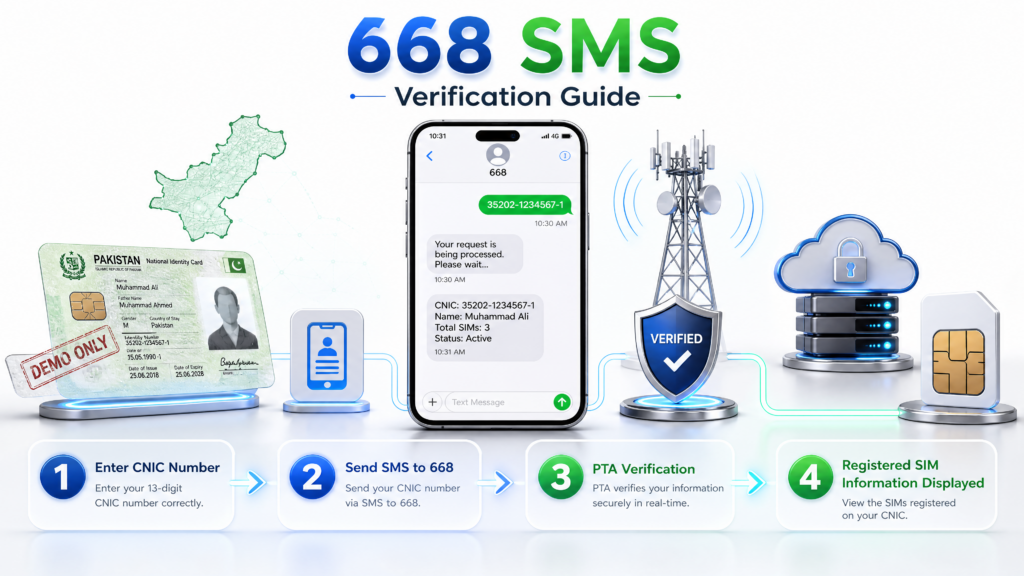
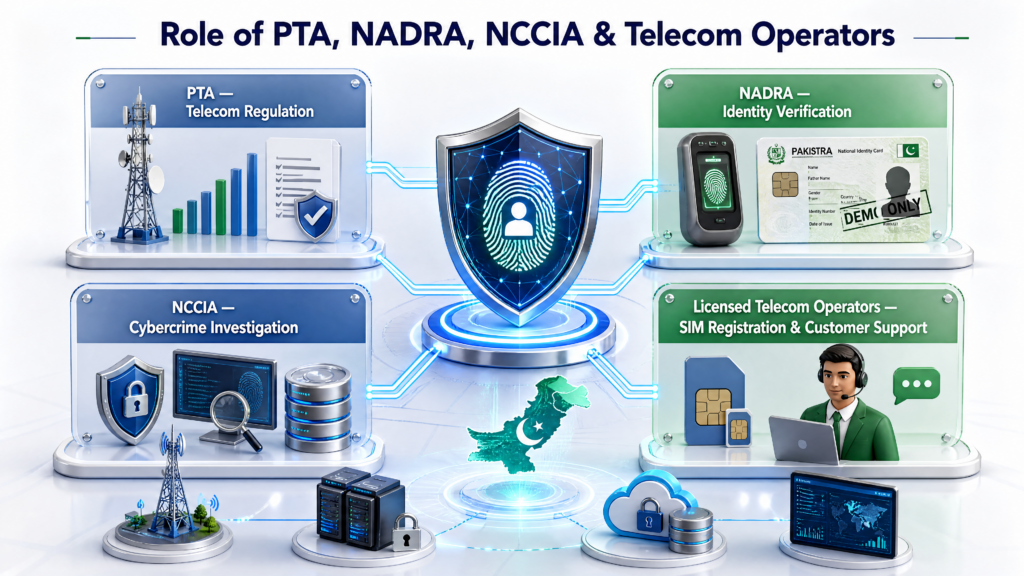
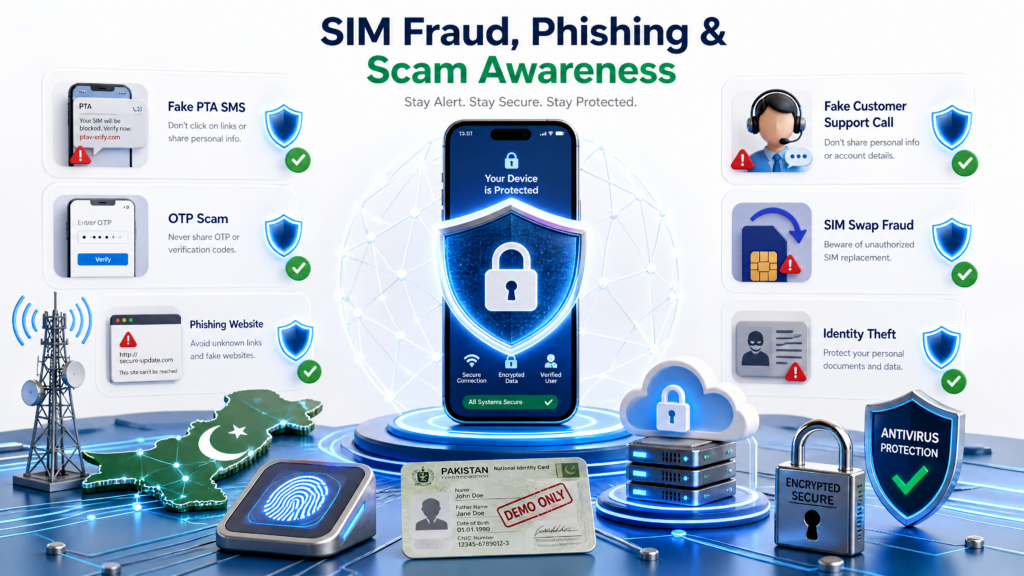
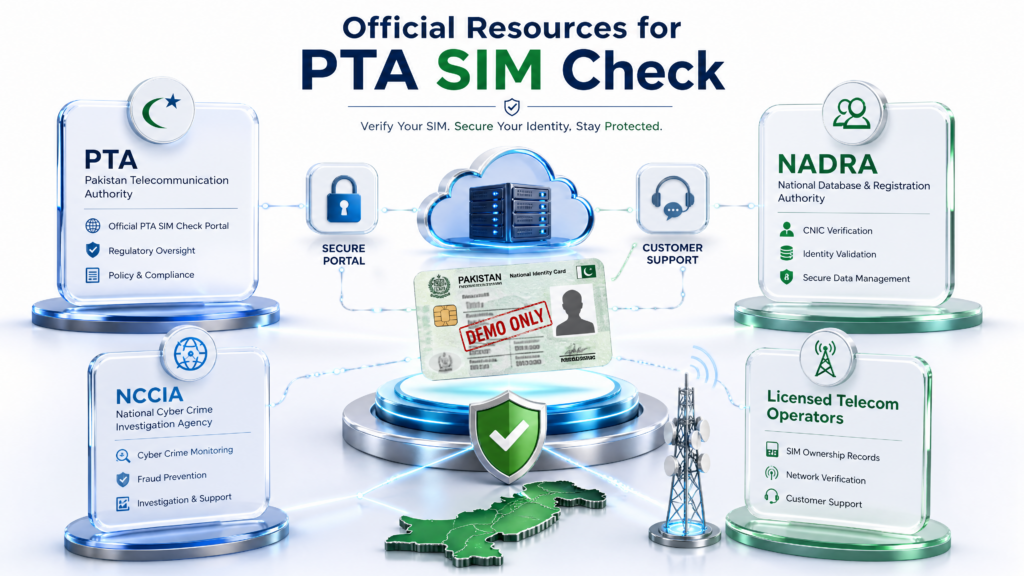
Mobile phones have become an essential part of everyday life in Pakistan. A single mobile number is now used for communication, online banking, digital wallets, social media, business transactions, government services, and two-factor authentication. Because of this, ensuring that your SIM card is registered under your own identity is more important than ever.
Many people purchase a SIM card without understanding who the registered subscriber actually is. Others continue using mobile numbers that were originally registered under the name of a family member or another individual. While this may seem harmless, it can create challenges when requesting subscriber services, verifying ownership, replacing a SIM card, or recovering access to important online accounts.
SIM ownership is no longer just a telecom requirement—it has become a key part of protecting your digital identity. Understanding how SIM ownership works helps subscribers safeguard their personal information, use mobile services responsibly, and avoid common ownership-related issues.
This comprehensive guide explains every major aspect of SIM ownership in Pakistan in a clear, practical, and easy-to-understand manner. It covers the official registration process, subscriber verification, ownership responsibilities, security best practices, fraud awareness, and the role of Pakistan’s telecommunications system in maintaining accurate subscriber records.
Whether you are purchasing your first SIM card, verifying an existing mobile connection, updating subscriber information, or simply learning how SIM ownership works in Pakistan, this guide provides reliable knowledge for every mobile user.
Unlike basic articles that cover only one aspect of the topic, this guide explores the complete SIM ownership lifecycle—from registration and verification to security, legal responsibilities, best practices, and future developments. Our goal is to provide accurate, trustworthy, and user-focused information that helps readers make informed decisions while following official procedures.
Why This Guide Is Different
Many online articles explain SIM ownership only at a basic level, leaving important questions unanswered. Some contain outdated information, while others rely on unofficial sources that may create confusion instead of providing practical guidance.
This guide has been designed to be a complete educational resource rather than a brief overview. It combines clear explanations, practical examples, security recommendations, and officially recognized concepts to help readers understand how SIM ownership works in Pakistan.
Instead of focusing on a single topic, this article covers the complete SIM ownership journey—from registration and verification to subscriber responsibilities, identity protection, fraud prevention, and long-term mobile security. Every section is written in simple language so that readers can easily understand both the concepts and their real-world importance.
Whether you are learning about SIM ownership for the first time or looking for detailed information, this guide provides accurate, well-structured, and user-focused content to help you make informed decisions.
Who Should Read This Guide?
This guide is designed for anyone who wants to better understand SIM ownership in Pakistan, including:
- Individuals purchasing a new SIM card.
- Mobile users who want to verify subscriber ownership.
- Families managing multiple mobile connections.
- Business owners using corporate SIM cards.
- Overseas Pakistanis using local mobile services.
- Students obtaining their first mobile connection.
- Users planning to update or review subscriber information.
- Individuals interested in improving mobile security and protecting their digital identity.
- Anyone seeking reliable information about Pakistan’s SIM ownership system.
Whether you are a beginner or an experienced mobile user, this guide explains every concept in simple, practical language, making it easy to understand without compromising accuracy or reliability.
What You Will Learn
By the end of this guide, you will have a clear understanding of:
- What SIM ownership means in Pakistan.
- How the SIM registration and ownership process works.
- Why SIM ownership verification is important.
- The roles of PTA, NADRA, and mobile network operators.
- Official methods for verifying SIM ownership.
- How ownership-related requests are handled.
- The documentation commonly required for subscriber services.
- Best practices for protecting your mobile identity.
- Common security risks and fraud prevention tips.
- Subscriber rights and responsibilities.
- Common misconceptions about SIM ownership.
- Practical recommendations for managing your SIM securely.
The guide is organized in a logical sequence, with each section building on the previous one to provide a clear and complete understanding of SIM ownership in Pakistan.
SIM Ownership Pakistan (2026): Quick Answer
SIM Ownership Pakistan refers to the official registration of a mobile SIM card under the identity of its verified subscriber. Mobile connections are registered through the subscriber verification procedures followed by licensed mobile network operators in accordance with Pakistan’s telecommunications framework.
The registered subscriber is recognized by the mobile network operator as the official owner of the SIM card. Subscriber information is used when processing services such as SIM replacement, ownership-related requests, customer verification, and other account services, subject to the operator’s applicable procedures.
Understanding SIM ownership helps protect your digital identity, reduce the risk of identity misuse, support secure mobile services, and encourage responsible management of your mobile connection.
Official Information Notice
This guide is intended for educational and informational purposes only. It explains SIM ownership concepts, subscriber responsibilities, security best practices, and general registration procedures using publicly available information. For services related to your specific mobile connection, always contact your mobile network operator through its official customer support channels.
This article does not provide access to private subscriber records, confidential databases, unauthorized lookup services, or any method of obtaining personal information unlawfully.
For SIM ownership verification or subscriber-related services, readers should always use the official support channels provided by their mobile network operator and follow the guidance issued by the Pakistan Telecommunication Authority (PTA), where applicable.
Why SIM Ownership Matters in 2026
The role of a mobile number has evolved significantly over the past decade. Today, a single SIM card is often linked to many essential digital services, making accurate SIM ownership more important than ever.
A registered mobile number may be connected with:
- Online banking and financial services
- Digital wallets
- Government services
- Identity verification
- Two-factor authentication (2FA)
- WhatsApp and other messaging apps
- Email account recovery
- Business and corporate accounts
- Freelancing platforms
- Social media accounts
- E-commerce and online shopping
- Ride-hailing services
- Food delivery applications
- Educational platforms
- Healthcare applications
Because one mobile number now provides access to so many services, protecting SIM ownership has become an essential part of safeguarding your digital identity, maintaining account security, and ensuring uninterrupted access to important online platforms.
Because mobile numbers are now connected to many essential digital services, keeping your SIM registered under your own identity is an important part of protecting your digital life.
Using a mobile number that is registered under someone else’s name may create difficulties when requesting subscriber services, recovering online accounts, completing identity verification, or accessing security-related features linked to that number.
Key Highlights of This Guide
This guide provides a complete understanding of SIM ownership in Pakistan, covering both the practical and security aspects of mobile subscriber management.
You’ll learn about:
- SIM ownership and subscriber registration.
- The official registration process.
- Biometric verification.
- The roles of PTA, NADRA, and mobile network operators.
- Official SIM ownership verification methods.
- Ownership-related procedures and subscriber services.
- Documentation commonly required for SIM-related requests.
- Subscriber rights and responsibilities.
- Mobile security best practices.
- Common scams, fraud awareness, and prevention tips.
- Frequently asked questions.
- Practical recommendations for protecting your digital identity.
Every section is written in clear, easy-to-understand language, making this guide suitable for both first-time mobile users and experienced subscribers.
Who Should Read This Guide?
This guide is valuable for anyone who wants to understand SIM ownership in Pakistan, including:
New Mobile Users
Learn how the official SIM registration process works, what documents are commonly required, and why registering a SIM under your own identity is important.
Existing Subscribers
Understand how SIM ownership works, when ownership verification may be required, and why maintaining accurate subscriber information is essential.
Families
Parents and guardians managing mobile connections for family members can better understand subscriber responsibilities and the importance of accurate registration.
Business Owners
Organizations using multiple mobile connections can learn the fundamentals of responsible subscriber management and corporate mobile usage.
Overseas Pakistanis
Individuals returning to Pakistan can familiarize themselves with the official registration process before obtaining or using a local mobile connection.
Students
Students obtaining their first mobile number can understand the registration process and the importance of responsible SIM ownership from the beginning.
Professionals
Professionals who rely on their mobile number for banking, business communication, online services, and account authentication can learn how proper SIM ownership supports long-term security.
What Makes This Guide Different?
Many online articles focus on only one aspect of SIM ownership, such as SIM registration or ownership verification, without explaining how the entire system works.
This guide takes a broader approach by covering the complete SIM ownership lifecycle in one place. It combines practical guidance, security best practices, and easy-to-understand explanations to help readers understand both the technical and everyday aspects of SIM ownership.
Throughout this guide, you’ll learn:
- Why SIM ownership is important.
- How Pakistan’s SIM registration system works.
- The role of subscriber verification and biometric authentication.
- How SIM ownership supports digital identity and account security.
- Common ownership-related mistakes and how to avoid them.
- Best practices for protecting your personal information and mobile services.
Our objective is to provide accurate, practical, and trustworthy information that helps readers understand SIM ownership and make informed decisions while following official procedures.
Table of Contents
This guide includes the following major sections:
- What is SIM Ownership?
- Understanding Mobile Subscriber Registration
- History of SIM Registration in Pakistan
- Role of PTA
- Role of NADRA
- Biometric Verification System
- How SIM Ownership Works
- Official Registration Process
- Ownership Verification Methods
- Ownership Transfer Process
- Required Documentation
- Subscriber Rights
- Subscriber Responsibilities
- Common Mistakes
- Security Risks
- Fraud Prevention
- Frequently Asked Questions (FAQs)
- Official Resources
- Best Practices
- Final Summary
Each section has been organized in a logical order, allowing readers to understand the complete SIM ownership process from beginning to end.
Before You Continue
Before learning how to verify or manage SIM ownership, it is important to understand what SIM Ownership actually means.
Many people believe that purchasing or using a SIM card automatically makes them its legal owner. In reality, ownership is determined by the official subscriber registration maintained by the mobile network operator after the required identity verification and registration procedures have been completed.
Understanding this concept is essential because every topic discussed throughout this guide builds upon it.
In the next section, we’ll explain what SIM Ownership means, how it is established, who is recognized as the registered subscriber, and why official registration is an important part of Pakistan’s mobile telecommunications system.
What is SIM Ownership Pakistan?
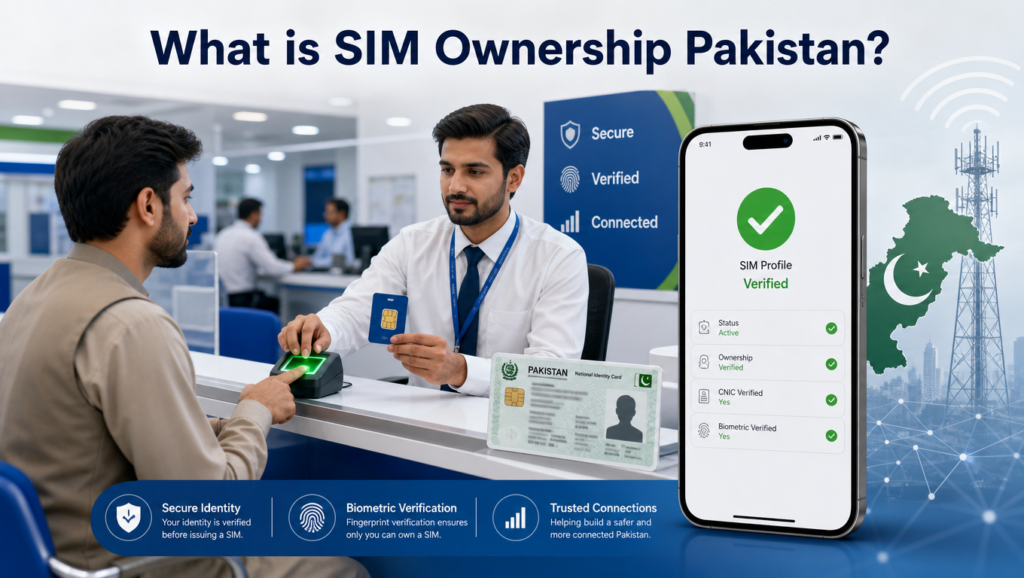
SIM Ownership Pakistan refers to the official registration of a mobile SIM card under the identity of its verified subscriber. A SIM becomes associated with a subscriber after the required registration and identity verification procedures are completed by a licensed mobile network operator in accordance with Pakistan’s telecommunications framework.
In simple terms, the registered subscriber is recognized by the mobile network operator as the official owner of the SIM card. This subscriber record is maintained by the operator and is used when processing services such as customer verification, SIM replacement, ownership-related requests, and other subscriber services.
Many people assume that simply possessing or using a SIM card makes them its legal owner. However, possession and ownership are two different concepts. A person may use a mobile number every day, but if it was originally registered under another individual’s identity, the official subscriber record remains associated with the registered subscriber unless it is updated through the operator’s applicable procedures.
This distinction is important because mobile numbers are now linked to banking services, digital wallets, online accounts, government services, and two-factor authentication (2FA). Maintaining accurate SIM ownership helps protect your digital identity and ensures smoother access to subscriber-related services whenever verification is required.
Understanding SIM Ownership in Simple Words
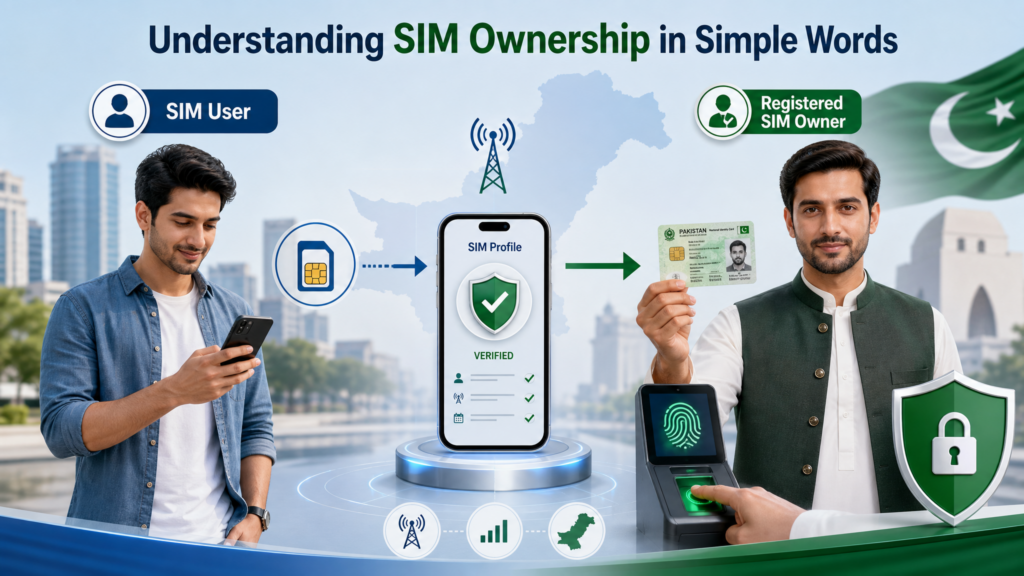
Imagine purchasing a vehicle.
Driving the vehicle every day does not automatically make you its legal owner. Legal ownership is determined by the official registration records maintained by the relevant authority.
A SIM card works in much the same way.
Using a mobile number every day does not necessarily mean you are its registered owner. Official ownership belongs to the individual whose identity was verified during the registration process.
This is why mobile network operators verify the registered subscriber before processing services such as:
- SIM replacement
- SIM blocking
- SIM restoration
- Ownership-related requests
- Subscriber verification
- Subscriber information updates
Successful identity verification is generally required before these subscriber services can be processed. ✅
Definition of a Registered Subscriber
A registered subscriber is the person whose:
- CNIC was submitted during SIM registration.
- Identity was verified through official biometric verification.
- Mobile number was activated by the telecom operator.
- Subscriber record exists within the operator’s customer database.
This registered subscriber is recognized as the lawful owner of the mobile connection.
Who is Considered the Legal Owner?
The legal owner is always the person whose verified identity appears in the operator’s subscriber records.
The following information is generally associated with the registered subscriber:
- Full Name
- CNIC Number
- Biometric Verification Status
- Mobile Number
- Network Operator
- Registration Date
- Subscriber Profile
This information enables telecom companies to verify ownership whenever subscriber services are requested.
Why Legal Ownership Matters

Many important services depend upon ownership verification.
Examples include:
- Obtaining a replacement SIM after loss.
- Recovering a blocked mobile connection.
- Completing biometric verification.
- Changing subscriber information.
- Transferring ownership.
- Resolving registration disputes.
- Updating customer records.
- Accessing operator support services.
If a SIM is not registered under your own identity, completing these procedures may become significantly more difficult.
Ownership vs Usage
Many users confuse these two concepts.
| Ownership | Usage |
|---|---|
| Legal Registration | Daily Use |
| Verified Identity | Physical Possession |
| Official Subscriber | Current User |
| Recognized by Telecom Operator | May Not Be Registered |
| Required for Official Services | Not Proof of Ownership |
A person may use a SIM for several years, but if it remains registered under another person’s CNIC, the legal ownership does not change automatically.
Real-Life Example 1
Ali purchases a SIM card using his own CNIC.
His fingerprints are verified.
The telecom operator activates the connection.
Ali becomes the legal owner of the SIM.
Even if another family member occasionally uses the phone, ownership remains with Ali because his verified identity was used during registration.
Real-Life Example 2
Ahmed receives a SIM card from his cousin.
The SIM was originally registered under the cousin’s CNIC.
Ahmed continues using the number for several years.
Although Ahmed is the regular user, he is not the legal owner because the registration record still belongs to his cousin.
If Ahmed later needs a replacement SIM, ownership verification will normally require the registered subscriber.
Real-Life Example 3
A company purchases multiple SIM cards for employees.
The SIMs are officially registered through the company’s approved subscriber process.
Different employees may use different numbers.
However, ownership records remain associated according to the official registration maintained by the operator.
Why Pakistan Uses Official SIM Ownership
The SIM ownership system exists to improve:
- National security.
- Identity verification.
- Subscriber accountability.
- Mobile fraud prevention.
- Digital identity protection.
- Cybercrime investigations.
- Consumer protection.
- Telecom regulation.
Without subscriber registration, anonymous mobile connections could easily be misused for illegal activities.
Official registration helps reduce these risks while protecting genuine mobile users.
How Ownership is Established
SIM ownership is normally established through a sequence of official steps:
- The subscriber presents a valid CNIC.
- Identity details are verified.
- Biometric verification is completed.
- Subscriber information is recorded.
- The telecom operator activates the SIM.
- Ownership is linked to the verified subscriber profile.
Once these steps are completed successfully, the subscriber becomes the recognized owner of the mobile connection.
Can Ownership Change Automatically?
No.
Ownership does not change simply because another individual starts using the SIM.
Similarly, ownership does not automatically change because:
- The SIM changes hands.
- The phone is sold.
- A family member uses the number.
- Someone else pays the mobile balance.
- The device is replaced.
Ownership normally changes only after the official procedures required by the telecom operator have been completed.
Common Misconceptions About SIM Ownership
Many users believe:
❌ Buying a SIM from someone makes them the owner.
❌ Using a SIM for many years transfers ownership automatically.
❌ Saving contacts proves ownership.
❌ Recharge history determines ownership.
❌ Phone possession proves ownership.
These assumptions are incorrect.
Only the official subscriber registration maintained by the telecom operator determines legal ownership.
Why Ownership Verification Protects Users
Ownership verification provides several important benefits.
It helps:
- Prevent identity theft.
- Reduce unauthorized SIM usage.
- Improve subscriber security.
- Protect banking authentication.
- Secure two-factor authentication.
- Support account recovery.
- Prevent fraudulent ownership claims.
- Improve telecom record accuracy.
As mobile numbers continue to play a larger role in digital identity, ownership verification becomes increasingly important for every subscriber.
Expert Note
From a cybersecurity perspective, a mobile number is no longer just a communication tool. It serves as a digital identity credential that is often connected with financial accounts, authentication systems, and personal records.
For this reason, ensuring that your SIM is officially registered under your own verified identity is considered one of the most important security practices for mobile users in Pakistan.
Key Takeaways
- SIM ownership refers to the official legal registration of a mobile connection.
- The registered subscriber is the legal owner.
- Daily use does not automatically establish ownership.
- Official registration is completed after identity and biometric verification.
- Ownership affects many subscriber services, including SIM replacement and verification.
- Possession and ownership are not the same.
- Official records maintained by telecom operators determine lawful ownership.
- Understanding SIM ownership helps protect your digital identity and reduces the risk of fraud.
How SIM Registration Works in Pakistan

Before understanding SIM ownership in depth, it is important to know how the official SIM registration system operates in Pakistan.
Every mobile connection follows a structured registration process before it becomes active. This process has been developed to ensure that every SIM card is associated with a verified individual rather than remaining anonymous.
The registration system combines identity verification, biometric authentication, telecom operator procedures, and regulatory oversight to create a secure mobile ecosystem.
When a subscriber purchases a new SIM card, several verification stages are completed before the number is activated. These stages help confirm that the subscriber is genuine and that the registration complies with applicable telecommunications regulations.
Purpose of the SIM Registration System
Pakistan’s SIM registration system has several important objectives.
Its primary goals include:
- Protecting subscriber identity.
- Preventing anonymous mobile usage.
- Reducing telecom fraud.
- Supporting digital security.
- Improving customer record accuracy.
- Strengthening national telecommunications management.
- Protecting banking authentication systems.
- Improving emergency response capabilities.
- Assisting lawful investigations where legally applicable.
- Ensuring every active SIM is linked with a verified subscriber.
The system benefits both mobile operators and subscribers by maintaining reliable ownership records.
How SIM Registration Begins
The registration process usually starts when a customer visits an authorized franchise, customer service center, or official retailer of a mobile network operator.
The subscriber selects a mobile network and requests a new SIM connection.
Before activation, the telecom operator begins identity verification.
The subscriber is generally required to present a valid Computerized National Identity Card (CNIC) or another officially accepted identification document where applicable.
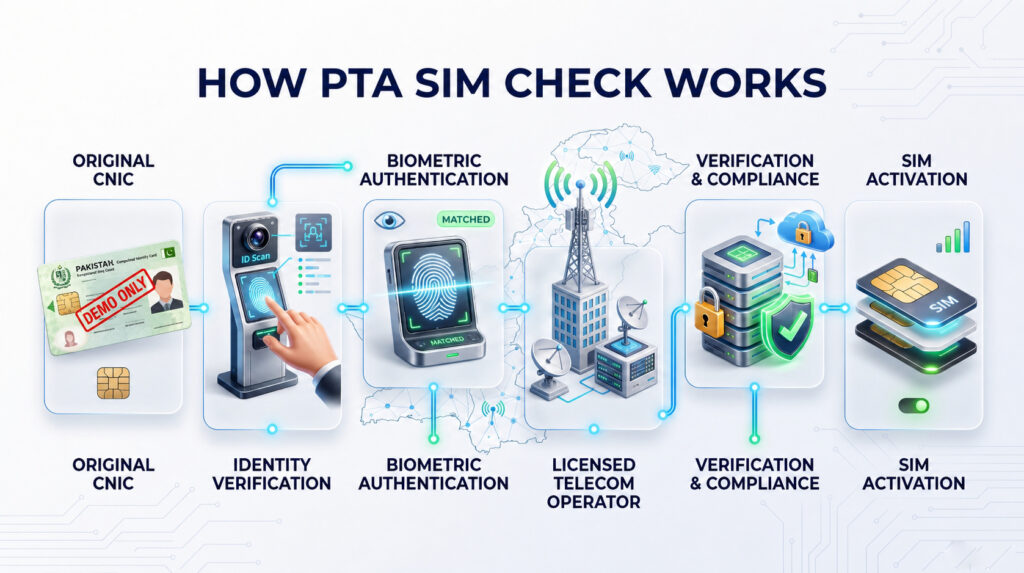
Step-by-Step SIM Registration Process
The official registration process generally follows these stages.
Step 1 – Customer Visits an Authorized Retailer
The customer visits an authorized mobile network franchise or customer service center.
Using authorized channels helps ensure that subscriber information is processed according to official procedures.
Step 2 – Identity Verification
The representative verifies the subscriber’s identity using official identification documents.
This stage helps confirm that the applicant is eligible to register the requested mobile connection.
Identity verification reduces the possibility of fraudulent registrations.
Step 3 – Subscriber Information Collection
Basic subscriber information is collected during registration.
Depending on official procedures, this may include information necessary to establish the subscriber profile.
The telecom operator records this information within its customer management system.
Step 4 – Biometric Verification
One of the most important stages is biometric verification.
The subscriber provides fingerprint authentication using the official biometric verification system.
Biometric verification confirms that the person requesting the SIM is the same individual associated with the identification record.
This significantly improves registration accuracy.
Step 5 – Verification Response
After biometric authentication, the registration request is processed according to the operator’s verification procedures.
If the verification is successful, the registration process continues.
If verification cannot be completed successfully, additional verification or corrective action may be required before activation.
Step 6 – SIM Activation
Once all required verification stages have been completed successfully, the telecom operator activates the mobile connection.
The subscriber becomes the officially registered owner of the SIM.
SIM Registration Workflow
The complete registration process can be summarized as follows:
| Stage | Description |
|---|---|
| Customer Request | Subscriber requests a new SIM. |
| Identity Verification | Official identity is verified. |
| Biometric Authentication | Fingerprints are verified. |
| Subscriber Record Creation | Customer profile is created. |
| Operator Verification | Registration is reviewed. |
| SIM Activation | Mobile number becomes active. |
| Ownership Established | Subscriber becomes the registered owner. |
Who Participates in the Registration Process?
Several organizations contribute to the registration ecosystem.
Subscriber
Provides accurate identification information and completes biometric verification.
Mobile Network Operator
Processes the registration request, creates the subscriber record, activates the SIM, and manages customer services.
Pakistan Telecommunication Authority (PTA)
Acts as the national telecommunications regulator and establishes policies governing subscriber registration and mobile network operations.
NADRA
Supports identity verification infrastructure used during official biometric authentication.
Why Biometric Verification Is Important
Before biometric verification became standard practice, fraudulent registrations were easier to perform.
Today, fingerprint verification provides an additional layer of protection by helping confirm that the individual requesting the SIM matches the official identity record.
Benefits include:
- Reduced identity fraud.
- Better subscriber authentication.
- Improved telecom security.
- Protection against unauthorized registrations.
- Higher confidence in subscriber records.
What Happens After Registration?
After successful activation, the subscriber gains access to the services offered by the mobile operator.
The SIM can then be used for:
- Voice calls.
- SMS messaging.
- Mobile internet.
- Banking OTPs.
- Digital wallets.
- Government verification services.
- Mobile applications.
- Two-factor authentication.
The subscriber’s ownership record remains associated with the mobile connection unless officially updated according to the operator’s procedures.
Common Reasons Registration May Be Delayed
Although most registrations are completed smoothly, delays may occur for several reasons.
Examples include:
- Identity verification issues.
- Biometric authentication mismatch.
- Incomplete subscriber information.
- Technical verification delays.
- Operator system maintenance.
- Documentation problems.
Following official procedures carefully helps reduce these delays.
Best Practices During SIM Registration
Subscribers should follow these recommendations:
- Register SIMs only through authorized channels.
- Use valid identification documents.
- Ensure personal information is accurate.
- Complete biometric verification personally.
- Keep registration records safe.
- Avoid registering SIMs on behalf of unknown individuals.
- Contact the operator if subscriber information changes.
These practices improve both security and record accuracy.
Registration vs Activation
Many users assume these terms mean the same thing, but they describe different stages.
| Registration | Activation |
|---|---|
| Identity is verified. | SIM becomes operational. |
| Subscriber record is created. | Network services begin. |
| Ownership is established. | Calls, SMS, and data become available. |
| Administrative process. | Service process. |
Registration normally occurs before activation.
Common Misunderstandings
Some people believe:
- Buying a SIM online automatically activates ownership.
- Using another person’s CNIC has no consequences.
- Biometric verification is optional.
- SIM activation alone proves legal ownership.
These assumptions are incorrect.
Official registration and successful identity verification remain fundamental components of the subscriber registration process.
Expert Insight
Modern telecommunications depend heavily on accurate subscriber records.
Because mobile numbers are increasingly connected with banking, digital identity, online authentication, and government services, maintaining accurate ownership information has become a critical part of cybersecurity and consumer protection.
Subscribers who understand how registration works are better prepared to protect their mobile identity and avoid future ownership-related complications.
Key Takeaways
- SIM registration is the official process of creating a verified subscriber record.
- Identity verification and biometric authentication are essential steps.
- Registration establishes legal ownership.
- Activation occurs after successful verification.
- Authorized retailers and telecom operators manage the registration process.
- Accurate subscriber information improves security and protects digital identity.
- Understanding the registration system helps users make informed decisions and comply with official requirements.
The Organizations Behind Pakistan’s SIM Ownership System
When people think about SIM ownership, they usually focus only on the mobile network operator. In reality, Pakistan’s SIM registration system works because multiple organizations perform different responsibilities.
Every officially registered SIM passes through a structured ecosystem involving identity verification, subscriber registration, telecom regulation, and network management.
Understanding the responsibilities of these organizations helps users appreciate why SIM ownership is taken seriously and why accurate subscriber records are essential for both public safety and digital security.
The three main participants are:
- Pakistan Telecommunication Authority (PTA)
- National Database and Registration Authority (NADRA)
- Mobile Network Operators (Jazz, Zong, Ufone, Telenor, SCO where applicable)
Each organization performs a different role while working together to maintain an organized telecommunications environment.
Overview of the SIM Ownership Ecosystem
The SIM ownership process can be simplified into the following workflow:
Subscriber
      │
      ▼
Authorized Franchise / Customer Center
      │
      ▼
Identity Verification
      │
      ▼
Biometric Authentication
      │
      ▼
Mobile Network Operator
      │
      ▼
SIM Activation
      │
      ▼
Official Subscriber Record
      │
      ▼
Regulatory Compliance
Every stage has an important purpose.
Role of Pakistan Telecommunication Authority (PTA)
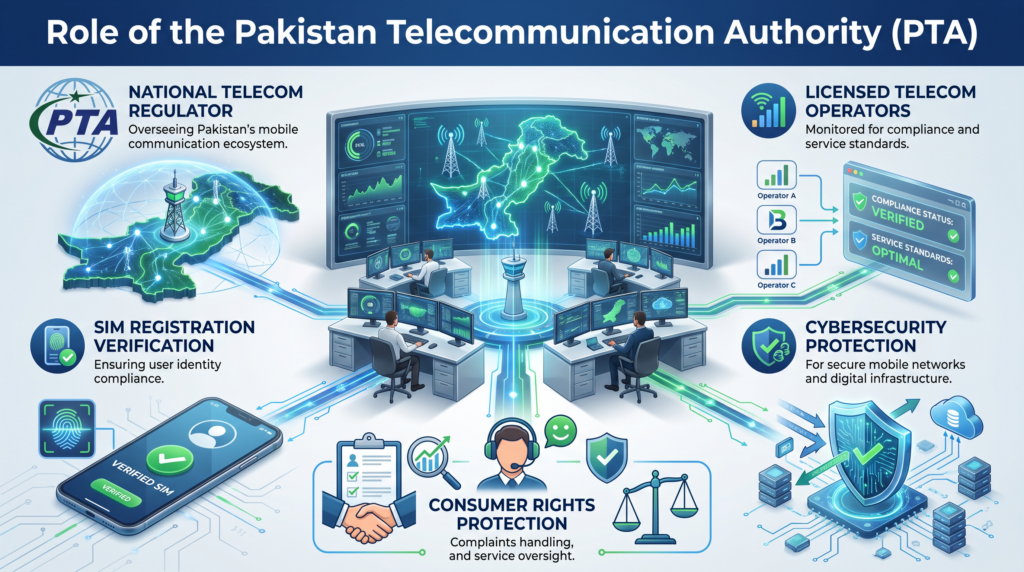
The Pakistan Telecommunication Authority (PTA) is the country’s telecommunications regulator.
Its responsibility is not to sell SIM cards directly to consumers.
Instead, PTA develops policies, regulations, licensing requirements, and compliance standards that telecom operators must follow.
PTA works to ensure that Pakistan’s telecommunications system remains secure, organized, and reliable.
Major Responsibilities of PTA
PTA is responsible for:
- Regulating mobile network operators.
- Developing subscriber registration policies.
- Monitoring telecom compliance.
- Supporting consumer protection.
- Improving telecommunications security.
- Managing regulatory standards.
- Promoting responsible mobile usage.
- Encouraging lawful subscriber verification.
- Supporting digital communications infrastructure.
PTA plays an oversight role rather than managing individual subscriber accounts.
Why PTA Is Important for SIM Ownership
Without a central regulator, every telecom operator could potentially follow different registration procedures.
PTA helps ensure consistency by establishing national regulatory standards.
This creates a more secure telecommunications environment for all subscribers.
Benefits include:
- Standardized registration procedures.
- Better consumer protection.
- Improved network accountability.
- Stronger digital security.
- Higher confidence in subscriber records.
Does PTA Store Every Subscriber’s Personal Data?
Many people misunderstand PTA’s role.
PTA regulates telecommunications.
Individual subscriber accounts and customer service operations are generally managed by the respective mobile network operators according to applicable laws and regulations.
This distinction is important because many users incorrectly assume PTA directly controls every subscriber account.
Role of NADRA

Another essential organization involved in SIM ownership is the National Database and Registration Authority (NADRA).
NADRA manages Pakistan’s national identity system.
The organization is responsible for maintaining official identity records and issuing national identity documents.
During SIM registration, identity verification depends upon official identification processes.
This helps ensure that the person requesting a mobile connection is genuinely associated with the presented identity.
Why Identity Verification Matters

Identity verification helps protect subscribers against:
- Identity theft.
- Fake registrations.
- Fraudulent mobile accounts.
- Unauthorized subscriber records.
- Duplicate identity misuse.
Without identity verification, fraudulent registrations would become much easier.
Biometric Verification
One of the strongest security measures within Pakistan’s SIM registration system is biometric verification.
Instead of relying only on printed documents, biometric verification confirms that the individual requesting registration matches the official identity record.
Advantages include:
- Higher registration accuracy.
- Reduced identity fraud.
- Improved customer authentication.
- Better subscriber protection.
- Increased confidence in official records.
Biometric verification has become one of the foundations of Pakistan’s subscriber registration framework.
Role of Mobile Network Operators
Mobile network operators interact directly with subscribers.
These companies provide mobile services while managing customer registration according to regulatory requirements.
Examples of operators include:
Each operator maintains subscriber records for its own customers.
Responsibilities of Mobile Operators
Mobile operators generally perform the following tasks:
- Register new subscribers.
- Process biometric verification.
- Activate SIM cards.
- Maintain customer records.
- Provide customer support.
- Handle ownership-related requests.
- Process SIM replacement.
- Process ownership transfer requests.
- Update subscriber information.
- Manage billing and network services.
These responsibilities continue throughout the lifetime of the subscriber relationship.
Subscriber Responsibilities
The system also depends upon responsible subscriber behavior.
Every user should:
- Provide accurate identification.
- Complete biometric verification personally.
- Keep registration information updated.
- Report lost SIM cards promptly.
- Protect personal identity documents.
- Use official customer service channels.
- Avoid registering SIMs for unknown individuals.
Responsible subscribers contribute to a safer telecommunications environment.
How These Organizations Work Together
Although each organization has different responsibilities, they work together to create a secure registration ecosystem.
The process typically follows this structure:
Subscriber
↓
Provides identity.
↓
Mobile Operator
↓
Processes registration.
↓
Identity Verification
↓
Confirms subscriber identity.
↓
Regulatory Compliance
↓
Ensures official registration standards are followed.
↓
SIM Activation
↓
Subscriber becomes the registered owner.
Why Multiple Organizations Are Necessary
Some users ask why SIM registration cannot be managed by a single organization.
The answer is simple.
Different responsibilities require different expertise.
For example:
| Organization | Primary Responsibility |
|---|---|
| PTA | Telecom regulation |
| NADRA | National identity management |
| Mobile Operator | Customer registration and network services |
| Subscriber | Accurate information and responsible usage |
This division improves transparency, efficiency, and accountability.
Consumer Protection Benefits
The SIM ownership ecosystem protects consumers in several important ways.
It helps:
- Reduce fake registrations.
- Improve customer verification.
- Protect subscriber identities.
- Support banking authentication.
- Strengthen telecom security.
- Improve complaint resolution.
- Reduce unauthorized ownership claims.
These protections benefit millions of mobile subscribers across Pakistan.
Common Misconceptions
Several myths continue circulating online.
Myth 1
PTA directly activates every SIM.
Reality: Activation is performed by the respective telecom operator after completing the required registration procedures.
Myth 2
Any retailer can register a SIM without verification.
Reality: Official registration requires compliance with applicable verification procedures.
Myth 3
Biometric verification is unnecessary.
Reality: Biometric verification remains an important part of subscriber authentication.
Myth 4
Using another person’s SIM automatically transfers ownership.
Reality: Usage does not automatically change legal registration.
Security Best Practices
Subscribers should always remember the following recommendations.
✔ Register SIMs only through official channels.
✔ Never share biometric verification with unauthorized individuals.
✔ Keep CNIC information secure.
✔ Verify subscriber records when necessary.
✔ Contact your operator immediately if a SIM is lost.
✔ Avoid purchasing pre-registered SIM cards.
✔ Protect OTPs and verification codes.
✔ Review mobile account activity regularly.
Expert Insight
The strength of Pakistan’s telecommunications system depends upon cooperation between regulators, identity verification authorities, telecom operators, and subscribers.
Every participant performs a specific responsibility that contributes to a more secure digital environment.
As mobile numbers continue to become central to banking, e-commerce, government services, healthcare, education, and online authentication, maintaining accurate subscriber ownership records becomes increasingly important for protecting digital identities.
Understanding the responsibilities of PTA, NADRA, and telecom operators helps subscribers make informed decisions while using official procedures instead of relying on misinformation found on unofficial websites.
Key Takeaways
- PTA regulates Pakistan’s telecommunications sector.
- NADRA supports identity verification through the national identity system.
- Mobile operators manage subscriber registration and customer services.
- SIM ownership is established through official registration procedures.
- Each organization has a different but complementary responsibility.
- Accurate subscriber records improve digital security and consumer protection.
- Official registration remains the safest way to establish lawful SIM ownership.
Official SIM Ownership Verification Methods in Pakistan
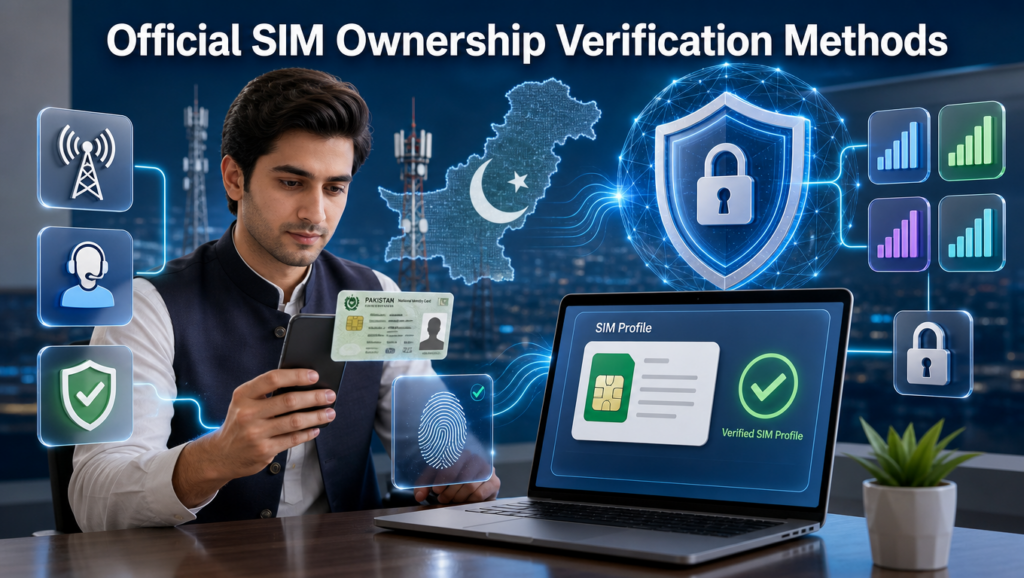
Knowing that a SIM card is active is not the same as confirming that it is officially registered under your own identity. SIM ownership verification is the process of confirming whether the subscriber information associated with a mobile connection matches the lawful registered owner maintained by the relevant telecom operator.
Ownership verification has become increasingly important because mobile numbers are now connected with banking applications, digital wallets, online accounts, government services, educational platforms, healthcare systems, and two-factor authentication. A single mobile number often becomes a person’s digital identity, making accurate ownership records essential.
Whether you recently purchased a new SIM card, have been using the same number for years, or simply want to ensure your subscriber information is accurate, understanding official verification methods helps protect both your identity and your mobile services.
Why SIM Ownership Verification Is Important
Many subscribers only think about ownership verification after a problem occurs.
However, verifying ownership before issues arise can help avoid unnecessary complications later.
Ownership verification helps you:
- Confirm your mobile number is correctly registered.
- Reduce the risk of identity misuse.
- Prepare for SIM replacement requests.
- Improve account recovery success.
- Protect banking authentication.
- Maintain accurate subscriber records.
- Avoid ownership disputes.
- Improve overall digital security.
Routine verification is considered a good security practice, especially for numbers used with important online accounts.
When Should You Verify SIM Ownership?
Ownership verification is recommended in several situations.
Purchasing a New SIM
Always ensure the new connection has been officially registered according to the required verification process.
Before Linking Banking Services
Many banking platforms rely on your mobile number for authentication and transaction verification.
Using a correctly registered number improves account security.
After Long-Term SIM Usage
Some people continue using SIM cards that were originally registered many years ago.
Reviewing subscriber information periodically helps ensure records remain accurate.
Before Requesting a Replacement SIM
If your SIM card becomes damaged or stops working, operators generally verify subscriber information before issuing a replacement.
Before Ownership Transfer
Verification helps confirm the existing subscriber record before ownership-related procedures begin.
Following Identity Changes
Whenever subscriber information requires updating according to operator procedures, verification may become necessary.
Official Verification Channels
Subscribers should always rely on official communication channels provided by their mobile network operator.
Using unofficial websites or unknown applications may expose personal information unnecessarily.
Official channels generally include:
- Customer Service Centers
- Authorized Franchises
- Official Mobile Applications
- Official Customer Support
- Official Operator Websites
- Official Verification Services where available
Always ensure you are communicating directly with the authorized operator.
Operator Verification Process
Although every operator may have slight procedural differences, the overall verification process generally follows similar principles.
Step 1
The subscriber requests verification.
Step 2
Identity confirmation is performed according to applicable procedures.
Step 3
Subscriber records are reviewed.
Step 4
Verification is completed.
Step 5
If updates are required, the operator explains the next official steps.
Information Commonly Verified
During ownership verification, the operator may verify information necessary to confirm the subscriber’s identity.
Examples include:
- Subscriber identity.
- Registered mobile connection.
- Verification status.
- Customer profile.
- Registration information.
- Identity confirmation.
The exact process depends on the operator’s procedures and applicable regulations.
Common Reasons for Verification Failure
Verification may not always be completed immediately.
Possible reasons include:
Incorrect Subscriber Information
Minor errors within subscriber records may require correction.
Identity Mismatch
If verification information does not match the registered subscriber, additional verification may be necessary.
Incomplete Registration
Older registrations may require updated verification according to current procedures.
Technical Issues
Temporary system maintenance or connectivity problems may delay verification.
Documentation Problems
Incomplete or invalid documentation can affect the verification process.
Verification Checklist
Before requesting ownership verification, ensure that:
✔ Your identification documents are available.
✔ Personal information is accurate.
✔ You visit an authorized operator location if required.
✔ You follow official verification instructions.
✔ You avoid sharing sensitive information with unofficial sources.
Following these simple precautions helps reduce delays.
Official vs Unofficial Verification
Many online platforms claim to provide subscriber information.
Subscribers should understand the difference between official and unofficial sources.
| Official Verification | Unofficial Sources |
|---|---|
| Uses authorized procedures | May contain inaccurate information |
| Protects subscriber privacy | Privacy cannot be guaranteed |
| Follows applicable regulations | May not follow official standards |
| Provides customer support | Limited accountability |
| Managed by authorized entities | Unknown reliability |
Whenever ownership confirmation is required, official channels remain the safest choice.
Common Mistakes During Verification
Many users unintentionally create delays by making avoidable mistakes.
Examples include:
- Visiting unauthorized retailers.
- Using outdated identification documents.
- Providing incorrect information.
- Ignoring operator instructions.
- Assuming daily usage proves ownership.
- Sharing personal verification details with strangers.
Avoiding these mistakes improves the verification experience.
Security Tips During Verification
Protecting your personal information is just as important as completing verification itself.
Follow these recommendations:
- Never share OTP codes with unknown individuals.
- Keep your CNIC secure.
- Verify that you are dealing with an authorized representative.
- Do not disclose confidential information through unofficial websites.
- Avoid downloading unknown verification applications.
- Report suspicious activity immediately to your operator.
These habits strengthen your overall digital security.
Expert Recommendation
From a cybersecurity perspective, every subscriber should treat their mobile number as a valuable digital asset.
Today, one mobile number may control access to banking, email accounts, business platforms, cloud storage, social media, and government services.
Periodic ownership verification helps ensure that these services remain connected to the correct subscriber identity and reduces the possibility of future account recovery problems.
Maintaining accurate subscriber information is one of the simplest yet most effective ways to protect your digital identity.
Quick Summary
Ownership verification helps confirm that:
- Your SIM is associated with the correct subscriber.
- Subscriber records remain accurate.
- Identity information is properly maintained.
- Future ownership-related services can be completed more efficiently.
- Your mobile number remains a secure part of your digital identity.
Regular verification supports better security, stronger identity protection, and improved confidence in your mobile services.
✅ Key Takeaways
- SIM ownership verification confirms the registered subscriber.
- Official operator channels should always be preferred.
- Verification improves digital identity protection.
- Subscriber information should remain accurate and up to date.
- Avoid unofficial websites or unknown applications.
- Responsible verification practices reduce future ownership-related problems.
Required Documents for SIM Ownership in Pakistan
One of the most common questions asked by mobile subscribers is:
“Which documents are required to register or verify SIM ownership in Pakistan?”
The answer depends on the type of subscriber, the telecom operator’s official procedures, and the nature of the requested service. Whether you are purchasing a new SIM card, updating your subscriber information, replacing a damaged SIM, or completing an ownership-related request, accurate documentation plays a vital role in protecting both the subscriber and the telecommunications network.
Official documentation helps mobile operators verify identity, maintain accurate customer records, and ensure that every active mobile connection is associated with the correct individual according to applicable regulations.
Providing complete and accurate documentation also reduces processing delays and helps prevent identity-related disputes.
Why Documentation Is Important
Documentation is not simply an administrative requirement.
It helps telecom operators:
- Confirm subscriber identity.
- Prevent identity fraud.
- Maintain accurate customer records.
- Support biometric verification.
- Reduce unauthorized registrations.
- Improve customer security.
- Protect mobile subscribers.
- Ensure regulatory compliance.
Without proper documentation, subscriber verification may not be completed successfully.
Basic Documents Commonly Required
Although requirements may vary depending on the specific service requested, subscribers are generally expected to present valid identification during official registration or ownership-related procedures.
The following table provides a general overview.
| Purpose | Common Requirement |
|---|---|
| New SIM Registration | Valid identity verification |
| SIM Replacement | Identity confirmation |
| Ownership Verification | Subscriber authentication |
| Customer Information Update | Identity verification |
| Ownership Transfer | Verification of eligible parties (according to operator procedures) |
Always follow the latest instructions provided by your mobile network operator.
Valid Identification
Accurate identity verification forms the foundation of Pakistan’s SIM ownership system.
Subscribers should always present valid and authentic identification during official registration procedures.
Using incorrect, expired, altered, or unauthorized documents may delay processing or prevent successful verification.
Maintaining updated identity records also helps simplify future customer service requests.
Who Can Register a SIM?
Generally, a mobile connection should be registered by the individual who intends to become its lawful subscriber.
The registered subscriber is responsible for maintaining accurate information and complying with applicable telecom requirements.
Examples of eligible subscribers may include:
- Pakistani citizens with valid identification.
- Individuals meeting operator eligibility requirements.
- Customers completing official registration procedures.
- Business entities registering corporate connections through approved processes where applicable.
Specific eligibility requirements may vary according to operator policies and applicable regulations.
Individual Subscriber Registration
Most mobile subscribers fall into this category.
An individual subscriber registers a mobile connection using their own verified identity through official registration procedures.
Benefits include:
- Direct ownership.
- Easier customer support.
- Simplified SIM replacement.
- Better account recovery.
- Improved identity protection.
- Faster ownership verification.
Whenever possible, subscribers should register SIM cards under their own identity rather than relying on another individual’s registration.
Family SIM Usage
Many families share mobile devices or allow relatives to use a SIM card temporarily.
While shared usage may be practical in some situations, legal ownership generally remains associated with the officially registered subscriber.
Examples include:
- Parents allowing children to use a mobile number.
- Elderly family members receiving assistance from relatives.
- Temporary usage during travel.
- Emergency communication.
Daily usage does not automatically change official ownership records.
Business and Corporate SIM Ownership
Organizations often require multiple mobile numbers for employees.
Corporate connections are generally managed according to operator procedures designed for business customers.
Business subscribers may use mobile services for:
- Customer support.
- Sales teams.
- Delivery services.
- Field operations.
- Employee communication.
- Official business correspondence.
Companies should maintain accurate internal records to ensure responsible management of corporate mobile connections.
Overseas Pakistanis
Many overseas Pakistanis continue using Pakistani mobile numbers for banking, family communication, and digital services.
Before requesting ownership-related services, overseas subscribers should consult their mobile operator regarding the latest procedures and available customer support options.
Using official communication channels helps ensure accurate guidance.
Students and First-Time Subscribers
Students obtaining their first mobile connection should carefully complete the official registration process.
A properly registered SIM provides long-term benefits, including:
- Easier verification.
- Secure banking authentication.
- Reliable educational platform access.
- Better digital identity protection.
- Simplified future customer service requests.
Starting with correct registration helps avoid unnecessary ownership complications later.
Updating Subscriber Information
Over time, subscriber information may require updating.
Examples include:
- Correcting personal information.
- Updating customer records.
- Completing additional verification when requested.
- Maintaining accurate subscriber profiles.
Keeping records current helps improve future service quality and ownership verification.
Common Documentation Mistakes
Many ownership-related delays occur because of avoidable documentation errors.
Examples include:
❌ Providing inaccurate information.
❌ Visiting unauthorized registration centers.
❌ Using incomplete documentation.
❌ Ignoring operator instructions.
❌ Assuming previous registration never requires review.
Avoiding these mistakes saves time and improves the overall customer experience.
Best Practices Before Visiting an Operator
Before requesting ownership-related services, subscribers should:
✔ Carry valid identification.
✔ Verify that the service center is authorized.
✔ Review operator instructions.
✔ Ensure personal information is accurate.
✔ Keep important documents secure.
✔ Follow official registration procedures.
These simple precautions reduce delays and improve verification success.
Subscriber Responsibilities
Every registered subscriber shares responsibility for maintaining accurate ownership information.
Subscribers should:
- Protect personal identity documents.
- Avoid allowing unknown individuals to register SIMs on their behalf.
- Report lost SIM cards promptly.
- Keep registration information accurate.
- Follow official procedures whenever ownership-related services are required.
Responsible subscriber behavior strengthens both personal security and the national telecommunications system.
Expert Insight
Documentation is often viewed as a routine administrative requirement, but it serves a much larger purpose.
Every verified subscriber record contributes to a safer telecommunications environment by reducing identity misuse, improving customer protection, and supporting secure digital communication.
As Pakistan’s digital economy continues to grow, maintaining accurate subscriber documentation becomes increasingly important for protecting online identities, financial services, and mobile-based authentication systems.
Key Takeaways
- Proper documentation supports secure SIM ownership.
- Accurate identity verification protects subscribers.
- Individual registration provides the strongest ownership protection.
- Corporate and family usage should follow official procedures.
- Maintaining updated subscriber records improves future customer services.
- Responsible documentation practices help reduce identity-related risks.
Can SIM Ownership Be Transferred in Pakistan?
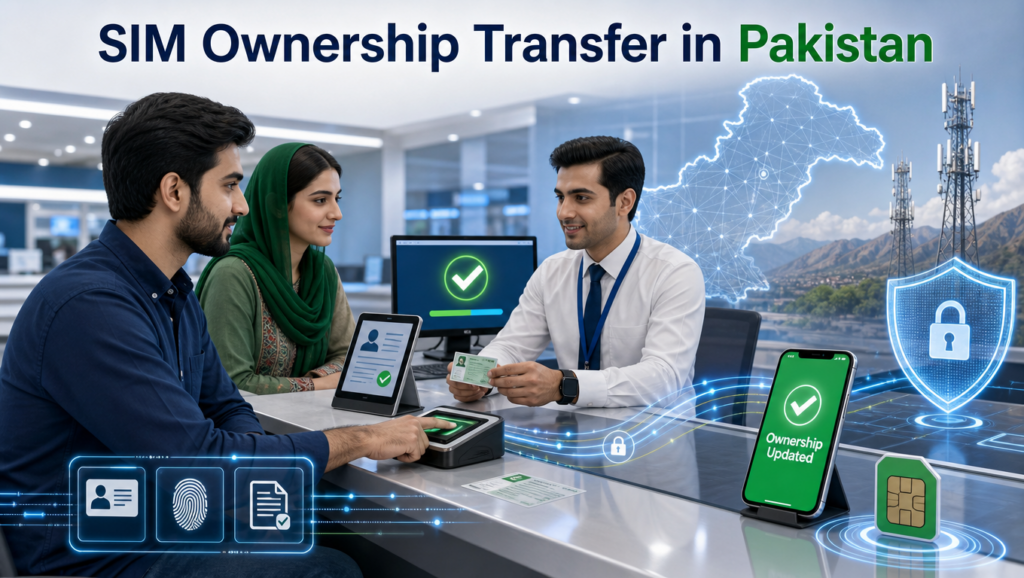
One of the most frequently asked questions among mobile subscribers is whether a SIM card can be transferred from one person’s name to another.
The short answer is that ownership-related requests should always be handled through the official procedures of the respective mobile network operator. Ownership is not transferred simply because a SIM changes hands or another individual begins using it.
A mobile number may remain in daily use by someone other than the registered subscriber for months or even years. However, this does not automatically change the official subscriber record maintained by the operator.
Whenever ownership-related changes are required, subscribers should contact their mobile operator and follow the latest official requirements and verification procedures.
Why Do People Want to Transfer SIM Ownership?
There are many legitimate situations where subscribers may wish to update or transfer ownership through official channels.
Some common examples include:
- A family member has been using the SIM for many years.
- A business number needs to be reassigned.
- A mobile connection was originally registered by another person.
- The original subscriber is no longer using the number.
- Customer records require updating.
- Subscriber information needs correction after an official review.
Each situation should be handled according to the operator’s approved procedures.
Ownership Transfer vs Daily Usage
Many users mistakenly believe that using a SIM for a long period automatically makes them the owner.
This is incorrect.
The following table explains the difference.
| Daily Usage | Official Ownership |
|---|---|
| Using the SIM regularly | Registered subscriber in operator records |
| Paying recharge bills | Verified ownership record |
| Using the number for banking | Official registration remains unchanged |
| Physical possession | Legal subscriber information |
Using a SIM and legally owning it are two separate concepts.
When Should Ownership Information Be Updated?
Subscriber information may need review in situations such as:
Long-Term Family Usage
A parent may register a SIM initially, while another family member becomes its long-term user.
Business Mobile Connections
Organizations often review subscriber records when employees change roles or leave the company.
Record Corrections
Occasionally, subscriber information may need updating according to operator procedures.
Identity Protection
Keeping subscriber records accurate helps reduce future verification issues.
General Official Process
Although procedures vary between operators, ownership-related requests generally follow a structured process.
Step 1
Contact the official customer support channel or visit an authorized customer service center.
Step 2
Explain the ownership-related request.
Step 3
Complete any required identity verification.
Step 4
Provide any documentation requested by the operator.
Step 5
Follow the operator’s instructions regarding the request.
Step 6
Wait for the operator to complete the review according to its procedures.
Important Verification
Ownership-related requests usually require identity verification because mobile numbers are connected with sensitive services such as:
- Banking authentication
- Digital wallets
- Government services
- Two-factor authentication
- Online accounts
- Business communication
Identity verification helps protect both the existing subscriber and the individual requesting the service.
Why Telecom Operators Verify Ownership Carefully
Operators cannot simply change subscriber records without proper verification.
Careful verification helps prevent:
- Identity theft
- Unauthorized ownership claims
- Fraudulent registrations
- Account misuse
- Subscriber disputes
These protections benefit every mobile subscriber.
Common Situations
Situation 1
A son has been using his father’s SIM for several years.
Although the son is the regular user, the subscriber record may still belong to the father until officially updated according to operator procedures.
Situation 2
A company issues a mobile number to an employee.
When the employee leaves, the company reviews the allocation according to its internal policies and the operator’s procedures.
Situation 3
A subscriber discovers that the mobile connection is not associated with the expected subscriber information.
The safest approach is to contact the operator directly for guidance.
Common Mistakes
Subscribers should avoid:
❌ Purchasing already registered SIM cards from unknown individuals.
❌ Assuming recharge history proves ownership.
❌ Sharing identity documents with unauthorized persons.
❌ Using unofficial agents.
❌ Ignoring subscriber verification.
Best Practices
To reduce future ownership issues:
✔ Register mobile connections under your own identity.
✔ Keep subscriber information updated.
✔ Protect your CNIC.
✔ Report lost SIMs promptly.
✔ Use official operator channels.
✔ Keep important registration documents secure.
✔ Never purchase suspicious pre-registered SIMs.
Expert Advice
From a digital security perspective, every mobile number should remain connected with its rightful subscriber.
Today, one mobile number often controls access to banking applications, government portals, email recovery, social media accounts, cloud services, and online payments.
Maintaining accurate ownership records significantly reduces the risk of identity-related complications in the future.
Ownership Transfer Myths
Many misconceptions continue circulating online.
Myth
Changing the phone automatically changes SIM ownership.
Reality
The device and the subscriber record are separate.
Myth
Using a SIM for several years automatically transfers ownership.
Reality
Usage alone does not change official subscriber records.
Myth
Recharge receipts prove ownership.
Reality
Recharge history is not the same as official subscriber registration.
Myth
Buying a SIM from another person makes you the legal owner.
Reality
Official subscriber records determine ownership, not private transactions.
Comparison Table
| Situation | Recommended Action |
|---|---|
| New SIM | Complete official registration |
| Long-term family use | Verify subscriber information with the operator |
| Business connection | Follow official business procedures |
| Lost SIM | Contact the operator immediately |
| Ownership concern | Use official customer support |
Security Reminder
Every subscriber should periodically review the mobile numbers they actively use and ensure those numbers are associated with the correct subscriber information through official channels where appropriate.
Good record management today can prevent major verification problems in the future.
Key Takeaways
- SIM ownership does not automatically change through daily usage.
- Official subscriber records determine legal ownership.
- Ownership-related requests should always be handled through the relevant mobile operator.
- Identity verification protects subscribers from fraud.
- Maintaining accurate subscriber information improves long-term security.
- Avoid unofficial services or private ownership claims.
Why SIM Ownership Security Is More Important Than Ever
A mobile SIM card is no longer just a tool for making phone calls or sending text messages. In today’s digital world, a single mobile number often serves as the primary identity used across banking, e-commerce, government portals, healthcare applications, educational platforms, business accounts, cloud services, and social media.
Because one mobile number can unlock access to many important services, protecting SIM ownership has become one of the most important aspects of digital security.
If the ownership of a mobile connection is not properly managed, unauthorized access, identity misuse, account recovery issues, and security complications may become more likely. Understanding these risks helps subscribers take practical steps to protect their mobile identity while using official procedures.
The Connection Between SIM Ownership and Digital Identity
Many people think their identity is protected only by their CNIC or passport.
In reality, your mobile number has become another critical part of your digital identity.
Today, a mobile number may be linked with:
- Banking applications
- Debit and credit card verification
- Internet banking
- Mobile wallets
- Government services
- Tax portals
- Email recovery
- Social media accounts
- Messaging applications
- Cloud storage
- Online shopping accounts
- Business communication
- Educational platforms
- Healthcare applications
If the registered subscriber information is not accurate, recovering or securing these accounts may become more difficult.
What Is Identity Misuse?
Identity misuse occurs when someone attempts to use another person’s identity for unauthorized purposes.
Although SIM ownership systems are designed to reduce such risks, subscribers should still follow good security practices.
Examples of identity misuse may include:
- Using someone else’s identity without authorization.
- Attempting unauthorized subscriber changes.
- Misusing personal documents.
- Fraudulent account recovery attempts.
- Unauthorized mobile service requests.
Protecting your identity begins with maintaining accurate subscriber information.
Understanding SIM Swap Fraud
One of the most discussed mobile security risks worldwide is SIM swap fraud.
SIM swap fraud refers to situations where an attacker attempts to gain control of a victim’s mobile number through unauthorized means.
The objective is often to intercept SMS verification codes or gain access to online accounts linked to the victim’s mobile number.
While operators use verification procedures to reduce these risks, subscribers should also remain alert.
Why Criminals Target Mobile Numbers
A mobile number often protects access to valuable digital accounts.
Examples include:
- Banking verification
- Password recovery
- Financial applications
- Business accounts
- Government services
- Social media
- Email authentication
This is why protecting SIM ownership is just as important as protecting passwords.
Warning Signs That Require Attention
Subscribers should remain alert if they notice unusual situations such as:
- Unexpected loss of network service.
- Authentication messages arriving unexpectedly.
- Unknown requests involving subscriber information.
- Unauthorized account recovery notifications.
- Suspicious customer service calls requesting personal information.
If any unusual activity occurs, contact your mobile operator immediately using official customer support channels.
Practical Security Tips
Every mobile subscriber should follow these simple habits.
Keep Your Identity Documents Safe
Never share copies of your CNIC or other identity documents with unknown individuals.
Use Official Customer Support
Whenever ownership-related assistance is required, communicate directly with the official customer service channels of your mobile operator.
Protect Verification Codes
One-time passwords (OTPs) and verification codes should never be shared with anyone claiming to represent a bank, telecom operator, or government agency unless you have independently verified the request through official channels.
Review Important Accounts
Periodically review the mobile number linked to your:
- Bank accounts
- Email accounts
- Government portals
- Social media
- Business platforms
Keeping this information accurate reduces future recovery issues.
Report Lost SIM Cards Promptly
If a SIM card is lost or stolen, contact your operator immediately through official customer support.
Prompt reporting helps reduce the possibility of unauthorized use.
Common Security Mistakes
Many subscribers unintentionally increase their own risk.
Examples include:
❌ Purchasing pre-registered SIM cards.
❌ Sharing identity documents through messaging apps.
❌ Responding to suspicious phone calls.
❌ Believing unofficial verification websites.
❌ Ignoring unexpected account notifications.
❌ Allowing unknown individuals to complete registration procedures on their behalf.
Avoiding these mistakes significantly improves mobile security.
Safe vs Unsafe Practices
| Safe Practices | Unsafe Practices |
|---|---|
| Register SIM through authorized channels | Buy unknown pre-registered SIMs |
| Keep CNIC secure | Share identity documents carelessly |
| Verify official communications | Trust unknown callers |
| Protect OTP codes | Share verification messages |
| Contact official customer support | Use unofficial agents |
Cybersecurity Best Practices
Good cybersecurity begins with simple daily habits.
Subscribers should:
- Use strong passwords for online accounts.
- Enable multi-factor authentication where available.
- Update account recovery information regularly.
- Review linked mobile numbers periodically.
- Protect identity documents.
- Avoid suspicious links and phishing messages.
- Stay informed about common fraud techniques.
These habits complement the official SIM ownership system and strengthen overall digital security.
Protecting Your Family
Families should also discuss mobile security together.
Parents can help children understand:
- Why personal information should remain private.
- How to recognize suspicious messages.
- Why verification codes should never be shared.
- How to identify official customer support.
- The importance of responsible mobile usage.
Digital awareness is one of the strongest forms of protection.
Expert Insight
Modern mobile numbers function as digital identity keys rather than simple communication tools.
A secure SIM ownership record helps support safe access to financial services, online accounts, government platforms, and business communication.
Subscribers who combine official registration with good cybersecurity habits significantly reduce the likelihood of identity-related problems.
Security is not achieved through one action alone—it is the result of consistent responsible behaviour.
Quick Security Checklist
Before finishing this section, ask yourself:
✔ Is my SIM officially registered?
✔ Do I know which mobile number is linked to my banking accounts?
✔ Have I protected my identity documents?
✔ Do I avoid sharing OTP codes?
✔ Do I contact only official customer support?
✔ Have I reviewed my important online accounts recently?
If you answered Yes to these questions, you are already following many recommended security practices.
Key Takeaways
- Your mobile number is part of your digital identity.
- SIM ownership plays an important role in account security.
- Protecting subscriber information reduces identity-related risks.
- Good cybersecurity habits complement official registration procedures.
- Official customer support should always be preferred.
- Responsible mobile usage strengthens long-term digital security.
SIM Ownership Rules in Pakistan
SIM ownership is not only about registering a mobile number—it also involves responsibilities that help maintain a secure and well-managed telecommunications system.
Every mobile subscriber should understand that once a SIM card is officially registered, the registered subscriber becomes responsible for its appropriate use according to the applicable laws, regulations, and the terms of service of the relevant mobile network operator.
Understanding these responsibilities helps subscribers protect their digital identity while avoiding unnecessary complications in the future.
Why SIM Ownership Rules Matter
Many people assume that once a SIM is activated, nothing else needs attention. In reality, accurate ownership records are important throughout the life of the mobile connection.
SIM ownership rules help:
- Protect subscriber identity.
- Improve customer security.
- Maintain accurate records.
- Reduce fraudulent registrations.
- Support digital authentication.
- Improve telecom service quality.
- Protect online financial services.
- Strengthen consumer confidence.
A properly maintained subscriber record benefits both the customer and the telecom operator.
Responsibilities of a Registered Subscriber
The registered subscriber should always ensure that the mobile connection remains associated with accurate and up-to-date information.
Some important responsibilities include:
- Providing correct identity information during registration.
- Completing required verification procedures personally.
- Protecting the SIM card from unauthorized access.
- Keeping identity documents secure.
- Reporting lost or stolen SIM cards without unnecessary delay.
- Following the official procedures for ownership-related services.
- Avoiding unauthorized use of personal identity documents.
Responsible ownership reduces security risks and helps maintain reliable subscriber records.
Rights of Mobile Subscribers
Every subscriber also has important rights when dealing with their mobile network operator.
Subscribers generally have the right to:
- Receive customer support through official channels.
- Request information about available customer services.
- Report service-related issues.
- Request SIM replacement according to operator procedures.
- Seek assistance regarding ownership-related concerns.
- Receive guidance about subscriber verification requirements.
- Access official complaint mechanisms where available.
Understanding these rights allows customers to communicate more confidently with their telecom operator.
Why Accurate Subscriber Records Are Important
Accurate subscriber information supports many essential services.
Examples include:
- Banking authentication.
- Password recovery.
- SIM replacement.
- Customer support verification.
- Mobile wallet access.
- Online account recovery.
- Government service authentication.
Even small errors in subscriber information can sometimes create unnecessary delays during verification.
Keeping customer records updated helps avoid these situations.
Maximum SIM Limit
Pakistan’s telecommunications framework includes rules regarding the number of mobile SIMs that may be associated with an individual subscriber.
Subscribers should always rely on official information from the Pakistan Telecommunication Authority (PTA) and their respective mobile network operator regarding current limits and applicable requirements.
Because regulations may change over time, official sources should always be considered the most reliable reference.
Responsible SIM Usage
Owning a registered SIM also means using it responsibly.
Responsible usage includes:
- Keeping the SIM under your own control.
- Protecting personal information.
- Avoiding suspicious transactions.
- Reporting unusual account activity.
- Following operator instructions.
- Maintaining secure online practices.
Responsible behaviour contributes to a safer telecommunications environment for everyone.
SIM Ownership and Financial Security
Today, mobile numbers play a significant role in financial services.
Many users connect their mobile number with:
- Banking applications.
- Mobile wallets.
- Payment services.
- Online shopping.
- Investment platforms.
- Business accounts.
If subscriber information becomes inaccurate, recovering access to these services may become more difficult.
Therefore, ownership management has become an important part of financial security.
Protecting Your Registered Mobile Number
Subscribers should adopt several practical habits.
These include:
✔ Use a screen lock on your phone.
✔ Protect your SIM with a PIN where available.
✔ Keep recovery information updated.
✔ Review linked online accounts periodically.
✔ Avoid sharing confidential information.
✔ Contact official customer support whenever ownership-related questions arise.
These habits strengthen both personal security and digital identity protection.
Common Subscriber Mistakes
Many problems occur because subscribers unintentionally overlook simple precautions.
Common mistakes include:
- Ignoring changes in subscriber information.
- Delaying ownership-related updates.
- Sharing personal identification carelessly.
- Trusting unofficial customer support.
- Believing social media rumours about SIM registration.
Staying informed through official sources helps reduce these risks.
Subscriber Rights vs Subscriber Responsibilities
| Subscriber Rights | Subscriber Responsibilities |
|---|---|
| Receive customer support | Provide accurate information |
| Request ownership assistance | Protect personal documents |
| Report service issues | Follow official procedures |
| Seek complaint resolution | Report lost SIM promptly |
| Access official guidance | Maintain accurate records |
Both rights and responsibilities work together to create a secure customer experience.
Compliance With Official Procedures
Whenever ownership-related services are required, subscribers should:
- Contact the official operator.
- Follow verification instructions.
- Provide accurate information.
- Complete required authentication.
- Retain important documentation when appropriate.
Avoid attempting shortcuts or relying on unofficial intermediaries.
Best Practices for Long-Term SIM Ownership
Long-term subscriber security depends on consistent good habits.
Recommended practices include:
- Review your registered mobile numbers periodically.
- Keep identity information updated.
- Protect your CNIC and other important documents.
- Monitor banking and authentication accounts linked to your mobile number.
- Use official customer service channels only.
- Stay informed about important telecom updates.
These simple habits help maintain secure ownership throughout the lifetime of the mobile connection.
Expert Insight
SIM ownership should not be viewed as a one-time registration event.
Instead, it should be considered an ongoing responsibility that continues for as long as the subscriber uses the mobile connection.
By combining accurate registration, responsible mobile usage, strong cybersecurity practices, and official customer support, subscribers can significantly reduce identity-related risks while improving long-term account security.
Quick Compliance Checklist
Before completing this guide, consider the following questions:
✔ Is your SIM officially registered?
✔ Is your personal information accurate?
✔ Do you know which accounts are linked to your mobile number?
✔ Do you use only official customer support?
✔ Have you protected your identity documents?
✔ Do you regularly review your important online accounts?
If the answer is Yes, you are already following many recommended ownership and security practices.
Key Takeaways
- SIM ownership includes both rights and responsibilities.
- Accurate subscriber information improves security.
- Responsible mobile usage protects digital identity.
- Official customer support should always be preferred.
- Keeping records updated simplifies future ownership-related services.
- Long-term ownership management contributes to safer digital communication.
Common SIM Ownership Problems in Pakistan
Most subscribers only think about SIM ownership when they encounter a problem. A mobile connection may work perfectly for years, but ownership-related issues often become visible when a subscriber needs a replacement SIM, updates personal information, changes devices, or tries to recover access to important accounts.
Fortunately, many of these problems can be prevented by understanding how SIM ownership works and by following official procedures whenever ownership-related services are required.
This section explains the most common ownership challenges faced by mobile users in Pakistan and the practical steps that can help resolve them through official channels.
Problem 1 — Using a SIM Registered Under Someone Else’s Name
This is one of the most common situations.
Many people continue using mobile numbers that were originally registered by:
- Parents
- Brothers
- Sisters
- Friends
- Employers
- Previous owners
Although the SIM may function normally, the registered subscriber remains the official owner according to the operator’s records.
This difference usually becomes important when ownership verification or customer service is required.
Recommended Action
If you are unsure about the registration status of your SIM, contact your mobile network operator through official customer support and ask about the available verification or ownership-related procedures.
Problem 2 — Lost SIM Card
Losing a SIM card can create both communication and security problems.
If the lost number is linked with:
- Banking applications
- Email accounts
- Social media
- Business platforms
- Government services
prompt action becomes especially important.
Recommended Action
- Contact your mobile operator immediately.
- Request assistance through official customer support.
- Monitor important online accounts linked to the lost number.
- Update recovery information if necessary.
Prompt reporting helps reduce the risk of unauthorized use.
Problem 3 — Damaged SIM Card
SIM cards may become damaged due to:
- Physical wear
- Water exposure
- Heat damage
- Improper handling
- Device compatibility issues
A damaged SIM does not necessarily affect ownership.
The subscriber record normally remains associated with the registered owner.
Recommended Action
Visit an authorized customer service center and follow the official SIM replacement procedure provided by your operator.
Problem 4 — Identity Verification Issues
Occasionally, subscribers may experience delays during verification because of:
- Incomplete customer information.
- Verification mismatches.
- Outdated records.
- Documentation issues.
These situations do not automatically indicate a problem with ownership.
They simply require proper verification according to the operator’s procedures.
Problem 5 — Changing Mobile Devices
Many subscribers mistakenly believe that changing a phone changes SIM ownership.
It does not.
The mobile device and the SIM subscriber record are completely separate.
You can change your smartphone multiple times while the ownership of the SIM remains exactly the same.
Problem 6 — Family Members Sharing One SIM
Within many households, one SIM card may be used by different family members over time.
For example:
A parent purchases a SIM.
Several years later, an adult child becomes the regular user.
Although daily usage changes, the registered subscriber usually remains unchanged unless the operator’s official procedures are completed.
Problem 7 — Corporate Mobile Numbers
Businesses often assign mobile numbers to employees.
When employees change departments or leave the organization, the company should review the allocation of business numbers according to its internal policies and the operator’s procedures.
Proper record management reduces administrative confusion.
Problem 8 — Forgotten Registration Details
Some subscribers simply do not remember when or how their SIM was originally registered.
This situation is common for numbers that have been used for many years.
Rather than relying on assumptions, subscribers should communicate directly with their operator whenever ownership clarification is required.
Comparison Table
| Problem | Possible Impact | Recommended Approach |
|---|---|---|
| SIM registered under another person | Ownership-related service delays | Contact the operator through official channels |
| Lost SIM | Risk of unauthorized use | Report immediately |
| Damaged SIM | Service interruption | Request replacement through official procedures |
| Verification issue | Processing delay | Complete the required verification |
| Shared family SIM | Ownership confusion | Verify subscriber information if needed |
| Business SIM | Administrative changes | Follow operator and company procedures |
Mistakes That Make Problems Worse
Many ownership issues become more complicated because subscribers:
- Ignore early warning signs.
- Delay contacting customer support.
- Trust unofficial information shared on social media.
- Purchase already registered SIM cards.
- Share personal identity documents carelessly.
- Fail to update important records.
Simple preventive measures often eliminate these risks.
Best Practices for Avoiding Ownership Problems
Follow these recommendations:
✔ Register mobile numbers under your own identity.
✔ Keep subscriber information accurate.
✔ Protect your identity documents.
✔ Save official customer support numbers.
✔ Review important online accounts regularly.
✔ Report lost SIMs immediately.
✔ Keep your contact information updated where required.
Expert Insight
Most SIM ownership problems are not caused by technical failures—they are caused by outdated subscriber records, misunderstandings about ownership, or delays in following official procedures.
Subscribers who maintain accurate records and communicate through official customer support rarely experience serious ownership-related complications.
Good record management today can prevent significant inconvenience in the future.
Key Takeaways
- Many ownership problems are preventable.
- Daily usage does not always reflect legal ownership.
- Lost or damaged SIM cards should be reported through official channels.
- Subscriber records should remain accurate.
- Official customer support is always the safest source of guidance.
- Responsible ownership management protects both communication services and digital identity.
SIM Ownership Myths vs Facts
As mobile technology has become part of everyday life, many misconceptions about SIM ownership have spread through social media posts, messaging apps, online discussions, and unofficial websites. Some of this information is outdated, while other claims are simply incorrect.
Believing these myths can create confusion and sometimes lead users to make poor decisions about their mobile connections.
Understanding the difference between facts and misconceptions helps subscribers protect their digital identity and make informed decisions using official information.
Why Do SIM Ownership Myths Spread?
Several factors contribute to misinformation.
These include:
- Outdated advice shared online.
- Misunderstanding of telecom procedures.
- Social media rumours.
- Confusion between daily usage and legal ownership.
- Unverified claims published on unofficial websites.
- Misinterpretation of operator policies.
Because mobile services continue to evolve, subscribers should rely on current information from official sources whenever ownership-related questions arise.
Myth 1 — “Using a SIM for Many Years Makes You the Legal Owner”
This is one of the most common misunderstandings.
Many people believe that long-term usage automatically changes the ownership of a SIM card.
Fact
Daily usage alone does not establish legal ownership.
Official ownership is based on the subscriber record maintained by the mobile operator after the required registration and verification procedures have been completed.
Myth 2 — “The Person Who Pays the Mobile Balance Is the Owner”
Some users believe that regularly recharging a SIM proves ownership.
Fact
Recharge history does not determine legal ownership.
Ownership is based on the officially registered subscriber information, not on payment activity.
Myth 3 — “Changing the Phone Changes the SIM Owner”
People often replace their smartphones and assume the ownership of the SIM changes as well.
Fact
A mobile phone and a SIM card are two separate things.
Replacing the device does not affect the subscriber record associated with the SIM.
Myth 4 — “Buying a Pre-Registered SIM Makes You the Owner”
Occasionally, people purchase mobile connections from unofficial sources believing that physical possession is enough.
Fact
Possessing a SIM card does not automatically make you its registered subscriber.
Whenever ownership-related questions arise, subscribers should communicate directly with their operator through official channels.
Myth 5 — “All Online Websites Provide Official SIM Information”
Many websites claim to provide subscriber information instantly.
Fact
Subscribers should be cautious when interacting with unofficial websites that request sensitive personal information or promise services that cannot be verified.
Whenever ownership confirmation is required, official customer support and authorized operator channels remain the safest option.
Myth 6 — “Biometric Verification Is No Longer Important”
Some users believe biometric verification only matters during the first registration.
Fact
Identity verification continues to play an important role whenever certain subscriber services require confirmation of the registered customer.
Following official verification procedures helps protect both the subscriber and the operator.
Myth 7 — “A Family Member’s SIM Automatically Becomes Mine”
Within many households, SIM cards are shared between family members.
Fact
Regular family usage does not automatically update the official subscriber record.
Ownership-related changes should always follow the operator’s approved procedures.
Myth 8 — “SIM Ownership Only Matters for Phone Calls”
Many people think SIM ownership only affects voice communication.
Fact
Today, one mobile number may be linked with:
- Banking authentication.
- Mobile wallets.
- Government services.
- Online accounts.
- Email recovery.
- Business communication.
- Two-factor authentication.
Because of these connections, accurate ownership information has become more important than ever.
Myth 9 — “Keeping the SIM Safe Is Enough”
Physical protection is important, but it is only one part of mobile security.
Fact
Subscribers should also protect:
- Identity documents.
- Online accounts.
- Recovery information.
- Authentication methods.
- Verification codes.
Digital security requires multiple layers of protection.
Myth 10 — “SIM Ownership Never Needs to Be Reviewed”
Some subscribers assume that once a SIM is registered, no further attention is required.
Fact
It is good practice to periodically review the mobile numbers connected to important services and ensure subscriber information remains accurate according to official records where applicable.
Myths vs Facts Comparison Table
| Common Myth | Actual Fact |
|---|---|
| Long-term usage changes ownership | Official registration determines ownership |
| Recharge history proves ownership | Payment history is not proof of ownership |
| Changing phones changes ownership | Device and subscriber record are separate |
| Pre-registered SIM means legal ownership | Registration records determine ownership |
| Every website provides reliable information | Official sources are the safest reference |
| Biometric verification is unnecessary | Verification remains important for subscriber security |
| Family usage changes ownership automatically | Official procedures are required where applicable |
| SIM ownership only affects calling | Mobile numbers support many digital services |
Why Believing Myths Can Create Problems
Incorrect information may result in:
- Delayed customer support.
- Verification difficulties.
- Confusion regarding subscriber rights.
- Increased exposure to fraud.
- Poor security practices.
- Unnecessary ownership disputes.
Making decisions based on verified information helps reduce these risks.
Practical Advice for Subscribers
To avoid misinformation:
✔ Verify important information through official customer support.
✔ Ignore rumours shared on social media.
✔ Do not trust unknown websites requesting sensitive information.
✔ Follow official registration and verification procedures.
✔ Keep personal records accurate and secure.
Expert Insight
Technology evolves quickly, and so do mobile services.
Advice that was accurate several years ago may no longer reflect current procedures.
Subscribers who rely on official guidance, maintain accurate records, and stay informed are better prepared to protect their mobile identity and avoid unnecessary ownership-related complications.
Key Takeaways
- Many common beliefs about SIM ownership are incorrect.
- Official subscriber records determine ownership.
- Daily usage, recharge history, and phone changes do not automatically change ownership.
- Official customer support should always be the primary source of information.
- Understanding the facts helps improve security and reduce confusion.
Best Practices for Managing SIM Ownership
Owning a mobile SIM card is not simply about making calls or accessing mobile internet. Today, a SIM card often becomes the primary identity used across multiple digital services. Because of this, responsible SIM ownership requires regular attention, accurate record management, and good security habits.
Whether you own one SIM card or multiple mobile connections, following a few practical best practices can help you protect your identity, reduce future complications, and make interactions with your mobile operator much easier.
This section explains the habits that experienced mobile users and cybersecurity professionals recommend for maintaining secure SIM ownership over the long term.
Register Every SIM Under Your Own Identity
The safest approach is to ensure that every mobile connection you actively use is officially associated with your own verified identity wherever applicable.
Doing so provides several long-term advantages.
These include:
- Easier customer support.
- Faster verification.
- Better account recovery.
- Reduced ownership disputes.
- Improved digital security.
- Better management of banking authentication.
Using officially registered connections also improves confidence whenever subscriber-related services are required.
Keep Subscriber Information Updated
Life changes over time.
Subscribers may change their contact details, communication preferences, or other information maintained within customer records.
Whenever official procedures require updates, keeping subscriber information accurate helps prevent unnecessary verification delays.
Updated records improve:
- Customer service.
- Identity verification.
- Account recovery.
- Ownership management.
- Future operator support.
Protect Your Identity Documents
Identity documents are among the most valuable personal assets.
Subscribers should:
- Store important documents securely.
- Avoid unnecessary sharing.
- Never send sensitive documents to unknown individuals.
- Verify the identity of anyone requesting personal information.
- Follow official communication channels whenever documentation is required.
Protecting identity documents helps reduce the possibility of misuse.
Maintain Good Mobile Security Habits
Good SIM ownership is closely connected with overall mobile security.
Simple habits include:
- Lock your smartphone with a secure passcode.
- Keep device software updated.
- Review installed applications regularly.
- Remove unused apps.
- Avoid downloading software from unknown sources.
- Use trusted application stores whenever possible.
Although these practices are not directly related to SIM registration, they strengthen the overall protection of your mobile identity.
Review Your Digital Accounts
Many subscribers link the same mobile number to numerous online services.
Examples include:
- Banking.
- Government portals.
- Email.
- Social media.
- Cloud storage.
- Business accounts.
- Educational services.
- Healthcare applications.
Reviewing these connections periodically helps ensure your contact information remains accurate.
Use Official Customer Support
Whenever ownership-related assistance is required, communicate directly with the official support channels of your mobile operator.
Official support generally provides:
- Verified information.
- Secure verification procedures.
- Accurate subscriber guidance.
- Customer protection.
Avoid relying on unofficial intermediaries who cannot verify subscriber records.
Avoid Sharing Sensitive Information
Subscribers should remain cautious when sharing:
- Verification codes.
- Identity documents.
- Personal account information.
- Subscriber details.
- Recovery information.
Even when someone claims to represent a trusted organization, always verify the request through official communication channels before sharing sensitive information.
Monitor Important Notifications
Many online services send notifications whenever account settings change.
Pay attention to unexpected messages relating to:
- Password resets.
- Account recovery.
- Banking authentication.
- New device logins.
- Subscriber verification requests.
Unexpected notifications should never be ignored.
Keep Emergency Contact Information Ready
In case a mobile device or SIM becomes unavailable, knowing how to contact your mobile operator quickly can reduce inconvenience.
Subscribers should keep official customer support information readily available instead of searching for it during an emergency.
Preparation saves valuable time.
Organize Your Mobile Numbers
Some people manage several mobile numbers for:
- Personal communication.
- Business.
- Freelancing.
- Online services.
- Family communication.
Keeping a simple record of which number is used for which purpose makes long-term management much easier.
Long-Term SIM Ownership Checklist
The following checklist summarizes recommended practices.
| Best Practice | Recommended |
|---|---|
| Register SIM under your own identity | ✔ |
| Protect identity documents | ✔ |
| Review important online accounts | ✔ |
| Keep subscriber information updated | ✔ |
| Use official customer support | ✔ |
| Protect verification codes | ✔ |
| Monitor account notifications | ✔ |
| Maintain good mobile security | ✔ |
These habits require very little effort but provide significant long-term benefits.
Creating a Personal Mobile Security Routine
Subscribers often create routines for financial planning or health.
Creating a simple mobile security routine is equally valuable.
For example:
Monthly
- Review important online accounts.
- Check recovery information.
- Update passwords where necessary.
Every Few Months
- Review linked mobile numbers.
- Remove unused applications.
- Check device security settings.
When Required
- Contact official customer support.
- Update subscriber information.
- Replace damaged SIM cards.
- Review account recovery options.
A structured routine reduces the likelihood of future problems.
Expert Insight
Strong SIM ownership is not achieved through a single registration event.
Instead, it results from responsible habits maintained over time.
Subscribers who protect their identity documents, communicate through official channels, monitor important online accounts, and maintain accurate subscriber records significantly improve their overall digital security.
Small habits performed consistently often provide greater protection than complex technical solutions.
Key Takeaways
- Register mobile connections under your own verified identity whenever applicable.
- Keep subscriber information accurate.
- Protect identity documents carefully.
- Use official customer support for ownership-related assistance.
- Review online accounts regularly.
- Monitor unexpected account notifications.
- Develop a simple long-term mobile security routine.
Frequently Asked Questions (FAQs)
Below are some of the most common questions asked by mobile subscribers in Pakistan regarding SIM ownership, registration, verification, security, and subscriber responsibilities.
1. What is SIM ownership?
SIM ownership refers to the official registration of a mobile SIM card under the identity of a verified subscriber. The registered subscriber is recognized by the mobile network operator as the lawful owner of that mobile connection. Ownership is established after the required registration and identity verification procedures are successfully completed.
2. Why is SIM ownership important?
SIM ownership is important because mobile numbers are now connected with banking services, government portals, email accounts, social media, digital wallets, business communication, and two-factor authentication. Keeping the correct ownership information helps protect your digital identity and simplifies future customer service requests.
3. Who is considered the legal owner of a SIM card?
The legal owner is generally the individual whose identity was officially verified during the registration process and whose subscriber information is recorded by the mobile network operator.
4. Does using a SIM card make me its owner?
No.
Regular use of a SIM card does not automatically establish legal ownership. Ownership is determined by the official subscriber registration maintained by the mobile operator.
5. Can a family member use my SIM card?
Yes, family members may use a mobile phone or SIM card in certain situations. However, regular usage does not automatically change the official subscriber record associated with the SIM.
6. Does changing my smartphone affect SIM ownership?
No.
Changing your mobile phone has no effect on the ownership of your SIM card. The device and the subscriber registration are completely separate.
7. What happens if my SIM card is lost?
If your SIM card is lost, you should contact your mobile network operator through its official customer support channels as soon as possible. Acting quickly helps protect your mobile services and reduces the possibility of unauthorized use.
8. What should I do if my SIM card becomes damaged?
A damaged SIM card does not usually change subscriber ownership. Contact your operator and follow the official SIM replacement procedure applicable to your mobile connection.
9. Can I buy a pre-registered SIM card?
Purchasing pre-registered SIM cards from unofficial sources is not recommended. Subscribers should obtain mobile connections only through authorized registration procedures provided by their mobile network operator.
10. Why is biometric verification used?
Biometric verification helps confirm that the person requesting registration matches the official identity record. This improves subscriber security and reduces identity-related fraud.
11. Is SIM ownership connected with banking services?
Many banking applications use a registered mobile number for account verification, transaction alerts, and authentication. Maintaining accurate subscriber information therefore supports smoother access to these services.
12. Does paying for mobile recharge prove ownership?
No.
Recharge history does not determine the legal ownership of a SIM card. Ownership is based on the official subscriber record maintained by the operator.
13. How often should I review my SIM ownership information?
There is no fixed schedule, but it is a good practice to review important subscriber information whenever you:
- Purchase a new SIM.
- Replace an existing SIM.
- Link the number to banking services.
- Update important personal information.
14. Why should I protect my mobile number?
Your mobile number is often linked to:
- Banking accounts.
- Email recovery.
- Government services.
- Social media.
- Business platforms.
- Online shopping.
Protecting your mobile number helps protect your digital identity.
15. Can one person have multiple SIM cards?
Telecom regulations may permit multiple mobile connections subject to applicable rules and operator procedures. Subscribers should always follow the latest official guidance issued by the relevant authorities and their mobile operator.
16. Is SIM ownership the same as SIM registration?
The two terms are closely related but not identical.
- SIM registration is the process of creating a subscriber record.
- SIM ownership refers to the subscriber officially associated with that record after successful registration.
17. Can I verify SIM ownership online?
The availability of verification services depends on the official channels provided by your mobile network operator. Always use authorized websites, customer service centers, or official mobile applications where available.
18. Why should I avoid unofficial websites?
Unofficial websites may provide outdated, misleading, or unreliable information and may request sensitive personal data. Official sources are generally the safest option for ownership-related information and services.
19. What should I do if my subscriber information appears incorrect?
If you believe your subscriber information requires review, contact your mobile network operator through official customer support and follow the guidance provided for your specific situation.
20. What is the safest way to manage SIM ownership?
The safest approach includes:
- Register your SIM through official procedures.
- Protect your identity documents.
- Keep subscriber information accurate.
- Use only official customer support.
- Protect verification codes.
- Review important online accounts regularly.
Following these habits helps maintain secure and responsible SIM ownership.
Quick FAQ Summary Table
| Question | Short Answer |
|---|---|
| What is SIM ownership? | Official subscriber registration |
| Does daily usage mean ownership? | No |
| Does changing phones change ownership? | No |
| Is recharge proof of ownership? | No |
| Should I use official channels? | Yes |
| Is biometric verification important? | Yes |
| Should I protect OTPs? | Absolutely |
| Are unofficial websites recommended? | No |
Expert Note
The most secure mobile subscribers are not necessarily the most technical users—they are the ones who follow official procedures, keep their subscriber information accurate, protect their identity documents, and stay cautious about sharing personal information online.
Advanced Frequently Asked Questions About SIM Ownership Pakistan
The following questions address more detailed situations that subscribers commonly encounter. These answers are designed to help readers understand official SIM ownership concepts while encouraging the use of authorized operator channels whenever ownership-related assistance is required.
21. Can I continue using a SIM that was originally registered by a family member?
Some families share mobile numbers for practical reasons, but long-term usage does not automatically change the official subscriber record. If ownership-related services are needed in the future, the mobile operator’s official procedures will apply.
22. What happens if the registered SIM owner cannot be contacted?
Ownership-related requests depend on the operator’s official verification procedures. If the registered subscriber is unavailable, the operator will explain the options that may be available under its current policies.
23. Does changing my CNIC automatically update SIM ownership?
No.
Receiving a renewed or updated CNIC does not automatically modify subscriber records. If any update is required, it should be completed through the official procedures of the mobile operator.
24. Can a SIM card be used for business purposes?
Yes.
Many businesses use mobile numbers for customer communication, sales, delivery services, support teams, and employee coordination. Business users should manage their mobile connections responsibly and maintain accurate subscriber records.
25. Is one SIM card enough for all online services?
Many people use a single mobile number for banking, email, government services, and social media.
While this is common, it is important to secure that number because it becomes the primary recovery method for multiple accounts.
26. Why should I avoid sharing OTP verification codes?
One-Time Passwords (OTPs) are security credentials used to confirm your identity.
Sharing these codes with anyone—even someone claiming to represent a trusted organization—may expose important online accounts to unauthorized access.
27. Can I register multiple SIM cards?
The number of SIM cards that may be associated with an individual is subject to applicable regulations and operator procedures. Subscribers should always refer to official guidance from their mobile operator and relevant authorities for current limits.
28. How does SIM ownership help protect online banking?
Banks often use a registered mobile number for transaction alerts, authentication, and account recovery.
Maintaining accurate SIM ownership information supports secure access to these services and helps reduce future verification issues.
29. Should I periodically review my mobile numbers?
Yes.
Reviewing the mobile numbers connected to your banking, email, government, and business accounts is a good digital security practice.
30. Does replacing a damaged SIM affect ownership?
No.
Replacing a damaged SIM card generally restores service while the subscriber record remains associated with the registered owner, subject to the operator’s verification procedures.
31. Can I use the same SIM in different phones?
Yes.
Changing the mobile device does not normally affect the subscriber registration associated with the SIM.
32. What should I do before selling my smartphone?
Before selling or giving away a mobile device:
- Remove your SIM card.
- Sign out of important accounts.
- Erase personal data from the device.
- Restore factory settings if appropriate.
These steps help protect your privacy.
33. Is my mobile number part of my digital identity?
Yes.
Today, your mobile number often functions as an important digital identifier because it is linked with authentication systems, financial services, online accounts, and communication platforms.
34. Can unofficial websites verify my SIM ownership?
Subscribers should exercise caution when using unofficial websites that request personal information or claim to provide ownership verification.
Whenever ownership confirmation is required, official operator channels remain the safest option.
35. What should I do if I receive suspicious calls requesting my SIM information?
Do not share personal details, identity documents, verification codes, or account information.
Instead, contact your mobile operator directly using official customer support.
36. Why is accurate subscriber information important?
Accurate records simplify:
- Customer support.
- SIM replacement.
- Account recovery.
- Ownership-related services.
- Identity verification.
Maintaining updated information reduces future complications.
37. How can families manage multiple SIM cards responsibly?
Families should maintain clear records showing which mobile number is used by each member and ensure important ownership-related matters follow the operator’s official procedures.
38. What should business owners know about SIM ownership?
Businesses should:
- Maintain organized records.
- Assign mobile numbers responsibly.
- Review employee allocations periodically.
- Protect business communication channels.
Good record management improves operational efficiency.
39. Is SIM ownership only important for security?
No.
Proper SIM ownership also supports:
- Better customer service.
- Easier account recovery.
- Improved digital identity management.
- Reliable communication.
- Long-term subscriber convenience.
40. What is the most important advice for every mobile subscriber?
The most valuable recommendation is simple:
- Register your SIM through official procedures.
- Protect your identity documents.
- Keep subscriber information accurate.
- Use official customer support.
- Follow good cybersecurity practices.
- Stay informed through trusted sources.
These habits provide long-term protection for both your mobile services and your digital identity.
Advanced FAQ Summary Table
| Topic | Best Practice |
|---|---|
| Family SIM usage | Understand that usage and ownership are different |
| Business SIMs | Maintain organized subscriber records |
| Banking | Keep your registered mobile number secure |
| Lost phone | Protect accounts and contact the operator if needed |
| OTP security | Never share verification codes |
| Device changes | Device replacement does not change ownership |
| Official guidance | Use authorized customer support only |
| Digital identity | Treat your mobile number as an important security asset |
Expert Recommendation
SIM ownership should not be viewed as a technical requirement—it is an essential part of responsible digital life.
Whether you are a student, professional, business owner, freelancer, or senior citizen, maintaining accurate subscriber information and following official procedures helps protect your communication, financial accounts, and online identity for years to come.
Key Takeaways
- Official subscriber records determine SIM ownership.
- Good record management simplifies future services.
- Mobile numbers play a central role in digital identity.
- Families and businesses should manage SIM usage responsibly.
- Official customer support remains the safest source of ownership-related assistance.
- Responsible security habits strengthen long-term protection.
Understanding SIM Ownership Through Comparisons
Many subscribers become confused because terms like SIM ownership, SIM registration, SIM verification, and SIM activation are often used interchangeably. Although these concepts are related, they describe different stages of the subscriber lifecycle.
Understanding these differences helps mobile users make better decisions and communicate more effectively with their mobile network operator whenever ownership-related assistance is required.
SIM Ownership vs SIM Registration
These two terms are closely connected but they do not mean exactly the same thing.
SIM registration is the process of creating a subscriber record after completing the required identity verification. SIM ownership refers to the officially recognized subscriber associated with that record.
Comparison Table
| SIM Registration | SIM Ownership |
|---|---|
| Registration process | Result of registration |
| Creates subscriber profile | Identifies legal subscriber |
| Includes identity verification | Linked to verified subscriber |
| Performed during activation | Continues throughout SIM lifecycle |
| Administrative process | Subscriber status |
SIM Ownership vs SIM Verification
SIM verification confirms that subscriber information matches the operator’s records.
Ownership identifies who the registered subscriber is.
Comparison Table
| SIM Ownership | SIM Verification |
|---|---|
| Official subscriber | Confirmation process |
| Long-term status | Temporary verification |
| Based on registration | Based on record checking |
| Determines subscriber identity | Confirms subscriber information |
| Remains until officially updated | Performed whenever required |
SIM Ownership vs SIM Activation
Many people think activation automatically proves ownership.
These are different concepts.
Comparison Table
| SIM Ownership | SIM Activation |
|---|---|
| Subscriber identity | Service activation |
| Linked with registration | Enables network access |
| Long-term relationship | Beginning of mobile service |
| Customer record | Technical network process |
SIM Card vs Mobile Number
People often confuse the SIM card with the mobile number itself.
The SIM card is the physical component inserted into a device, while the mobile number is the service assigned by the operator.
Comparison Table
| SIM Card | Mobile Number |
|---|---|
| Physical chip | Assigned telephone number |
| Inserted into phone | Used for communication |
| Stores subscriber information required for network access | Used for calls and messaging |
| Can be replaced following official procedures | Normally remains the same during SIM replacement (subject to operator procedures) |
Individual Subscriber vs Business Subscriber
Pakistan has both personal and business mobile subscribers.
Individual Subscriber
Normally used for:
- Personal communication.
- Banking.
- Family.
- Social media.
- Online accounts.
Business Subscriber
Usually used for:
- Customer support.
- Employee communication.
- Sales teams.
- Delivery services.
- Business operations.
Comparison Table
| Individual | Business |
|---|---|
| Personal use | Organizational use |
| Single subscriber | Managed by organization |
| Individual responsibility | Administrative management |
| Personal identity | Business communication |
Official Sources vs Unofficial Information
One of the biggest challenges today is distinguishing reliable information from misleading online content.
Comparison Table
| Official Sources | Unofficial Sources |
|---|---|
| Verified information | Accuracy may vary |
| Customer support | Limited accountability |
| Current procedures | May contain outdated information |
| Privacy-focused | Privacy cannot always be verified |
| Trusted guidance | Reliability uncertain |
Whenever ownership-related information is required, official sources should always be preferred.
Responsible Subscriber vs Negligent Subscriber
Good SIM ownership depends on responsible behaviour.
Responsible Subscriber
- Uses official registration.
- Protects identity documents.
- Reviews important accounts.
- Reports lost SIMs quickly.
- Follows operator guidance.
Negligent Subscriber
- Shares sensitive information.
- Ignores account notifications.
- Trusts unknown callers.
- Uses unofficial registration services.
- Delays reporting security issues.
Comparison Table
| Responsible | Negligent |
|---|---|
| Protects identity | Shares personal information carelessly |
| Uses official channels | Uses unofficial services |
| Reviews accounts | Ignores account activity |
| Reports problems early | Delays action |
| Maintains records | Keeps outdated information |
Physical Possession vs Legal Ownership
This misunderstanding causes more confusion than almost any other topic.
Holding a SIM card in your hand does not necessarily make you its legal owner.
Comparison Table
| Physical Possession | Legal Ownership |
|---|---|
| Current user | Registered subscriber |
| Daily use | Official registration |
| Temporary control | Official customer record |
| Can change anytime | Changes only through official procedures |
Short-Term Convenience vs Long-Term Security
Sometimes people choose convenience instead of proper registration.
Although this may appear easier initially, maintaining accurate subscriber records provides much stronger long-term protection.
Comparison Table
| Convenience | Security |
|---|---|
| Immediate solution | Long-term protection |
| May ignore verification | Encourages proper registration |
| Higher future risk | Lower future risk |
| Temporary benefit | Permanent advantages |
Which Approach Is Best?
The safest long-term strategy is simple.
✔ Register your SIM through official procedures.
✔ Keep subscriber information accurate.
✔ Protect identity documents.
✔ Use official customer support.
✔ Review your online accounts regularly.
✔ Follow good cybersecurity practices.
These recommendations apply whether you own one SIM card or several mobile connections.
Expert Insight
Many subscriber problems occur because people confuse similar terms such as registration, ownership, activation, and verification.
Once these concepts are understood separately, managing SIM ownership becomes much easier.
Knowledge is one of the strongest forms of digital security.
Key Takeaways
- SIM registration and SIM ownership are related but different.
- Verification confirms subscriber information.
- Activation enables network services.
- Physical possession does not automatically establish ownership.
- Official sources should always be preferred over unofficial information.
- Responsible subscriber behaviour improves long-term security.
- Understanding these differences helps avoid common ownership-related misunderstandings.
The Future of SIM Ownership in Pakistan
The telecommunications industry is changing faster than ever before. Mobile phones are no longer limited to voice calls and text messages. Today, they support banking, education, healthcare, digital commerce, government services, cloud computing, smart devices, and online identity verification.
As these technologies continue to evolve, SIM ownership will also become more advanced.
Future mobile subscribers will likely experience stronger identity protection, smarter verification systems, improved cybersecurity, and more convenient digital services while continuing to follow official registration requirements.
Understanding these upcoming trends helps subscribers prepare for the next generation of mobile communication.
From Communication Tool to Digital Identity
Twenty years ago, a SIM card was mainly used for making calls.
Today, it has become a digital identity credential.
A single mobile number may now be connected with:
- Online banking
- Government portals
- Healthcare systems
- Educational platforms
- Business communication
- Digital wallets
- Cloud services
- Social media
- E-commerce accounts
- Two-factor authentication
This transformation means protecting SIM ownership is becoming just as important as protecting your CNIC, passport, or financial information.
Growth of eSIM Technology
One of the biggest developments in modern telecommunications is the introduction of eSIM (Embedded SIM) technology.
Unlike traditional SIM cards, an eSIM is built directly into compatible devices.
Instead of inserting a physical SIM, users activate their mobile connection digitally through their operator’s supported process.
Potential advantages include:
- No physical SIM card to insert or remove.
- Easier device switching (where supported).
- Better support for international travel.
- More efficient management of multiple mobile profiles on compatible devices.
As adoption grows, subscribers should continue to follow the activation and verification procedures provided by their mobile operator.
Stronger Digital Identity Verification
Future telecommunications systems are expected to place even greater emphasis on secure identity verification.
Possible improvements may include:
- Faster verification processes.
- Improved fraud detection.
- Better account protection.
- Enhanced authentication technologies.
- More secure subscriber management systems.
These developments aim to improve both convenience and security.
Artificial Intelligence in Telecom Security
Artificial Intelligence (AI) is increasingly being used across many industries, including telecommunications.
AI-powered systems may help operators:
- Detect unusual account activity.
- Identify suspicious usage patterns.
- Improve fraud prevention.
- Strengthen customer support.
- Enhance network security.
- Improve service reliability.
AI is expected to support—not replace—official verification and customer protection processes.
Cybersecurity Will Become Even More Important
As mobile numbers become connected to more digital services, cybersecurity will continue to grow in importance.
Subscribers should expect increased focus on:
- Identity protection.
- Authentication security.
- Fraud prevention.
- Account monitoring.
- Secure customer verification.
- Digital privacy.
Responsible mobile usage will remain one of the strongest forms of protection.
The Rise of Digital Government Services
Many governments around the world are expanding digital public services.
As more services become available online, mobile numbers may continue to play an important role in:
- Identity verification.
- Appointment systems.
- Public notifications.
- Digital communication.
- Citizen services.
Maintaining accurate subscriber information supports reliable access to these services.
Smarter Customer Support
Customer support is also evolving.
Future improvements may include:
- Faster response times.
- Better self-service options.
- Improved digital assistance.
- More secure verification methods.
- Enhanced customer experience.
Regardless of technological changes, subscribers should continue using official support channels.
Better Protection Against Fraud
Telecommunications providers continuously improve systems designed to reduce unauthorized activity.
Future developments may focus on:
- Earlier detection of suspicious behaviour.
- Improved verification safeguards.
- Enhanced customer notifications.
- Better identity protection.
- Stronger account recovery processes.
These improvements benefit both subscribers and operators.
Mobile Identity Will Continue to Grow
Your mobile number is becoming one of your most important digital identifiers.
Over the coming years, it may be used even more widely for:
- Secure authentication.
- Digital signatures (where supported).
- Online identity confirmation.
- Financial services.
- Connected devices.
- Smart city services.
- Internet of Things (IoT) applications.
This makes responsible SIM ownership increasingly valuable.
Preparing for the Future
Subscribers can prepare today by following a few simple habits.
✔ Register mobile connections through official procedures.
✔ Keep subscriber information accurate.
✔ Protect identity documents.
✔ Use strong online security practices.
✔ Stay informed about operator announcements.
✔ Review important online accounts regularly.
These habits remain valuable regardless of future technology changes.
Future Trends Comparison
| Today | Future Direction |
|---|---|
| Physical SIM cards | Wider eSIM adoption on supported devices |
| Basic verification | Smarter identity verification |
| Manual processes | More digital customer services |
| Traditional support | Enhanced self-service and AI-assisted support |
| Password-based access | Stronger multi-factor authentication |
| Standard fraud detection | More advanced fraud prevention systems |
What Will Never Change?
Although technology will continue to evolve, several principles are likely to remain constant.
Subscribers should always:
- Protect their identity.
- Use official communication channels.
- Maintain accurate subscriber information.
- Follow operator guidance.
- Practice good cybersecurity habits.
Technology changes—but responsible digital behaviour remains essential.
Expert Insight
The future of SIM ownership is not just about new technology—it is about stronger trust.
As digital services continue expanding, the relationship between subscriber identity, mobile communication, and online security will become even more important.
Subscribers who understand these changes and adopt responsible habits today will be better prepared for tomorrow’s digital ecosystem.
Key Takeaways
- SIM ownership is evolving alongside digital technology.
- eSIM adoption is expected to increase on compatible devices.
- AI may improve fraud detection and customer support.
- Mobile numbers will continue to play a central role in digital identity.
- Good cybersecurity habits will remain essential.
- Official procedures and accurate subscriber information will continue to support secure mobile services.
Trusted Sources for SIM Ownership Information
The internet contains thousands of articles about SIM ownership, registration, verification, and mobile subscriber services. While some guides provide useful educational information, others may contain outdated instructions, incomplete explanations, or misleading claims.
For this reason, every mobile subscriber should know where reliable information can be found.
Whenever you need guidance regarding SIM ownership, registration, verification, replacement, or subscriber services, always prefer official communication channels and trusted organizations.
Using reliable sources helps protect your personal information and reduces the risk of acting on inaccurate advice.
Pakistan Telecommunication Authority (PTA)
The Pakistan Telecommunication Authority (PTA) is the national regulator responsible for overseeing Pakistan’s telecommunications sector.
Its responsibilities include:
- Regulating telecom operators.
- Establishing telecommunications policies.
- Promoting consumer protection.
- Encouraging secure telecom practices.
- Supporting regulatory compliance.
- Monitoring licensed operators.
Subscribers should consult PTA announcements whenever they need information about national telecommunications policies or public guidance.
NADRA
The National Database and Registration Authority (NADRA) manages Pakistan’s national identity database and identity documentation.
Within the SIM registration ecosystem, identity verification plays an important role in confirming subscriber information according to applicable procedures.
Accurate identity records support:
- Better subscriber verification.
- Improved consumer protection.
- Stronger identity security.
- Reduced identity misuse.
Mobile Network Operators
Customer-specific services are provided by the respective telecom operator.
Subscribers should contact their own operator whenever assistance is required regarding:
- SIM registration.
- SIM replacement.
- Subscriber verification.
- Customer information.
- Mobile services.
- Ownership-related questions.
- Technical support.
Using official customer support reduces confusion and improves service quality.
Why Official Information Matters
Official information offers several advantages.
It is generally:
- More reliable.
- Better maintained.
- Consistent with current procedures.
- Supported by customer service.
- Focused on protecting subscriber privacy.
Unofficial information may become outdated over time or may not reflect current operator practices.
How to Identify Reliable Information
Before relying on any article or online advice, ask yourself the following questions.
Is the information current?
Telecommunications procedures can change over time.
Does the source clearly explain the topic?
Reliable educational resources focus on helping readers understand concepts rather than making unrealistic promises.
Does the source encourage official verification?
Trustworthy guides encourage readers to use authorized customer support whenever ownership-related services are required.
Does the source respect user privacy?
Reliable websites avoid requesting unnecessary personal information.
Does the content explain both benefits and responsibilities?
Balanced educational content helps readers make informed decisions.
Subscriber Action Checklist
The following checklist summarizes the most important actions every subscriber should consider.
Identity Protection
✔ Keep your identity documents secure.
✔ Avoid sharing personal information unnecessarily.
✔ Verify suspicious requests before responding.
SIM Ownership
✔ Register SIM cards through official procedures.
✔ Keep subscriber information accurate.
✔ Review important mobile numbers periodically.
Digital Security
✔ Protect online accounts.
✔ Enable additional security features where available.
✔ Keep recovery information updated.
Customer Support
✔ Contact official operator support when assistance is required.
✔ Follow operator guidance carefully.
✔ Keep important customer service information available.
Long-Term Record Management
✔ Maintain organized records.
✔ Review linked accounts periodically.
✔ Monitor important notifications.
Subscriber Self-Assessment
Ask yourself these questions.
| Question | Yes | No |
|---|---|---|
| Is my SIM officially registered? | ☐ | ☐ |
| Do I know which mobile number is linked to my banking services? | ☐ | ☐ |
| Have I protected my identity documents? | ☐ | ☐ |
| Do I avoid sharing OTP codes? | ☐ | ☐ |
| Do I use official customer support only? | ☐ | ☐ |
| Have I reviewed my important online accounts recently? | ☐ | ☐ |
| Do I keep subscriber information accurate? | ☐ | ☐ |
| Do I understand the difference between ownership and daily usage? | ☐ | ☐ |
If most of your answers are Yes, you are already following many recommended practices for responsible SIM ownership.
Golden Rules for Every Subscriber
Remember these simple principles.
Rule 1
Register your mobile connection through official procedures.
Rule 2
Protect your personal identity information.
Rule 3
Use only authorized customer support.
Rule 4
Treat your mobile number as an important part of your digital identity.
Rule 5
Stay informed using trusted educational resources and official announcements.
Common Warning Signs
Be cautious if you encounter:
- Requests for OTP codes.
- Unverified callers asking for personal details.
- Websites requesting unnecessary identity information.
- Unrealistic promises regarding subscriber information.
- Suspicious links received through SMS or messaging applications.
Whenever something appears unusual, verify it directly with your mobile operator.
Expert Insight
Digital security is not built through a single action.
Instead, it is created by consistently following responsible habits over time.
Subscribers who combine official registration, accurate record management, cybersecurity awareness, and trusted information sources enjoy a safer and more reliable mobile experience.
The strongest protection is informed decision-making supported by official guidance.
Reader Roadmap
After completing this guide, you should now understand:
- What SIM ownership means.
- How registration works.
- Why ownership matters.
- The role of telecom operators.
- Identity verification.
- Security practices.
- Ownership responsibilities.
- Common misconceptions.
- Long-term mobile identity management.
These concepts form the foundation of responsible SIM ownership in Pakistan.
Key Takeaways
- Always rely on trusted and official sources for ownership-related information.
- Keep subscriber information accurate and up to date.
- Protect your identity documents and verification codes.
- Treat your mobile number as part of your digital identity.
- Follow responsible security habits throughout the lifetime of your mobile connection.
Executive Summary
SIM ownership has become one of the most important aspects of digital life in Pakistan. A mobile number is no longer used only for making calls or sending messages—it now acts as a gateway to banking, government services, online accounts, business communication, education, healthcare, and identity verification.
Throughout this guide, we have explored every major aspect of SIM ownership, including registration, ownership verification, identity protection, subscriber responsibilities, security best practices, future trends, and practical recommendations.
The central message is clear:
Responsible SIM ownership is an essential part of protecting your digital identity.
By understanding how subscriber registration works and by following official procedures whenever ownership-related services are required, mobile users can significantly reduce security risks and enjoy a safer digital experience.
What We Learned in This Guide
This guide explained the complete lifecycle of SIM ownership in Pakistan.
We covered:
- The meaning of SIM ownership.
- The difference between ownership, registration, activation, and verification.
- The role of mobile network operators.
- Identity verification concepts.
- Security recommendations.
- Fraud awareness.
- Digital identity management.
- Common misconceptions.
- Best practices.
- Future developments.
- Frequently asked questions.
Together, these topics provide a complete understanding of responsible SIM ownership.
Why Accurate Subscriber Information Matters
One of the most important lessons from this guide is that accurate subscriber information benefits both the user and the telecom ecosystem.
Maintaining correct records can help:
- Simplify customer support.
- Improve account recovery.
- Reduce identity-related risks.
- Support secure banking authentication.
- Improve long-term digital identity management.
- Reduce ownership misunderstandings.
Keeping subscriber information accurate should be viewed as a long-term responsibility rather than a one-time task.
Building Good Digital Habits
Strong security is not achieved through technology alone.
It is built through daily habits.
Examples include:
- Protecting personal information.
- Avoiding suspicious links.
- Never sharing OTP codes.
- Using official customer support.
- Reviewing important accounts periodically.
- Keeping identity documents secure.
- Staying informed through trusted sources.
Small habits performed consistently often provide the greatest protection.
Responsible SIM Ownership Benefits Everyone
Responsible ownership does not only protect an individual subscriber.
It also contributes to:
- Better customer service.
- Improved telecom record accuracy.
- Stronger consumer confidence.
- More secure digital communication.
- Better fraud prevention.
- Safer online authentication.
Every responsible subscriber helps strengthen Pakistan’s overall telecommunications environment.
Long-Term Mobile Identity Management
As technology continues to evolve, your mobile number will become even more important.
It may continue supporting:
- Banking authentication.
- Digital payments.
- Government platforms.
- Educational services.
- Healthcare systems.
- Business communication.
- Cloud services.
- Smart devices.
- Future digital identity solutions.
For this reason, maintaining responsible SIM ownership today prepares subscribers for tomorrow’s digital ecosystem.
Expert Recommendations
Based on the topics covered throughout this guide, the following recommendations are strongly encouraged.
Recommendation 1
Always register mobile connections through official procedures.
Recommendation 2
Protect your personal identity documents.
Recommendation 3
Keep subscriber information accurate whenever updates are required.
Recommendation 4
Use only official customer support for ownership-related services.
Recommendation 5
Treat your mobile number as an important part of your digital identity.
Recommendation 6
Follow good cybersecurity practices alongside responsible SIM ownership.
Recommendation 7
Stay informed using trusted educational resources and official announcements rather than rumours or unverified social media posts.
Final Action Plan
To help readers apply everything discussed in this guide, here is a simple action plan.
Step 1
Review the mobile numbers you currently use.
Step 2
Ensure your subscriber information is accurate.
Step 3
Protect identity documents and verification codes.
Step 4
Review online accounts linked to your mobile number.
Step 5
Save official customer support information.
Step 6
Stay informed about important telecom updates.
Step 7
Practice responsible digital security every day.
Complete SIM Ownership Checklist
| Task | Status |
|---|---|
| SIM obtained through official procedures | ☐ |
| Subscriber information reviewed | ☐ |
| Identity documents protected | ☐ |
| Online accounts reviewed | ☐ |
| OTP security understood | ☐ |
| Official support information saved | ☐ |
| Mobile security habits followed | ☐ |
| Responsible ownership maintained | ☐ |
This checklist can be revisited periodically as part of your overall digital security routine.
Final Expert Insight
SIM ownership should not be viewed as a technical requirement or an administrative formality.
Instead, it should be understood as a key element of responsible digital citizenship.
Every mobile subscriber has an opportunity to strengthen personal security by maintaining accurate subscriber records, following official procedures, protecting personal information, and developing good cybersecurity habits.
As mobile technology continues to evolve, these practices will become even more valuable.
Conclusion
SIM ownership is the foundation of responsible mobile communication in Pakistan.
By understanding the difference between registration, ownership, verification, and activation, subscribers are better equipped to make informed decisions and protect their digital identity.
Whether you are a new mobile user, an experienced professional, a student, a business owner, or a family managing multiple mobile numbers, responsible SIM ownership supports secure communication, better customer service, and long-term digital confidence.
Technology will continue to change, but one principle will always remain important:
Protect your identity, keep your subscriber information accurate, and rely on official procedures whenever ownership-related services are required.
Following these principles helps create a safer digital future for every mobile subscriber.
Final Key Takeaways
- SIM ownership is an important part of digital identity.
- Official registration and accurate subscriber records support secure mobile services.
- Responsible security habits protect both communication and online accounts.
- Official customer support should always be preferred.
- Good record management simplifies future ownership-related services.
- Responsible subscribers contribute to a stronger and more secure telecommunications environment.